
3-Inch Toothpick FPV Drone Build: Ultra-Light Indoor Flier
The 3-inch toothpick FPV drone is one of the most satisfying builds in the hobby. Lightweight, fast, nimble, and small enough to fly inside a large room or a covered car park — the toothpick class occupies a sweet spot that a 5-inch can never reach. If you want to fly year-round regardless of weather, the toothpick is your answer.
This complete build guide walks you through selecting every component, assembling the frame, soldering the stack, configuring Betaflight, and tuning for the best possible indoor performance. Written for the Indian hobbyist market, all parts mentioned are either available on Zbotic.in or commonly stocked by Indian drone component suppliers.
- What Is a Toothpick FPV Drone?
- Why 3-Inch? Size Comparison and Advantages
- Complete Components List with Specifications
- Frame Assembly Step by Step
- Soldering the FC/ESC Stack
- Camera and VTX Installation
- Betaflight Configuration
- PIDs and Filter Tuning for Indoors
- Pre-Flight Checklist and First Flight Tips
- Frequently Asked Questions
- Conclusion
1. What Is a Toothpick FPV Drone?
The name “toothpick” comes from the ultra-slim carbon fibre arms of these frames — they look like toothpicks sticking out from a central stack. The design philosophy is radical weight reduction: every gram saved translates directly to longer flight time and sharper handling at low thrust levels.
A typical toothpick build weighs between 90g and 130g all-up weight (AUW) with battery. Compare that to a 5-inch racing quad at 300–400g AUW and you immediately understand why the toothpick flies so differently. It’s not just smaller — it’s fundamentally a different flying experience.
Toothpicks can use single-blade or bi-blade propellers, run 1S or 2S battery chemistry, and use brushed or brushless motors — though modern builds overwhelmingly use brushless motors on 2S for the best performance-to-weight ratio.
2. Why 3-Inch? Size Comparison and Advantages
Within the toothpick class, prop sizes range from 1.6-inch (ultra-micro) to 3.5-inch. The 3-inch sweet spot offers:
- Enough thrust to fly outdoors in calm conditions and handle light wind
- Small enough to fly in large indoor spaces like warehouses, gymnasiums, and open halls
- Standard components — 3-inch uses the same 20x20mm stack mounting as full-size quads
- Better motor selection — more motor choices available at 3-inch than at smaller sizes
- Improved camera options — can fit standard FPV cameras without camera cages
Quick Size Reference
| Class | Prop Size | Typical AUW | Best For |
|---|---|---|---|
| Micro Whoop | 1.6″ | 25–40g | Tiny indoor spaces |
| Toothpick 2″ | 2″ | 50–70g | Room flying |
| Toothpick 3″ | 3″ | 90–130g | Indoor + calm outdoor |
| Long Range 3.5″ | 3.5″ | 120–160g | Outdoor with wind |
| Full-size 5″ | 5″ | 280–400g | Racing and freestyle |
3. Complete Components List with Specifications
Here is a complete bill of materials for a competent 3-inch toothpick build. This targets a budget-to-mid-range build suitable for Indian beginners who want good performance without overspending.
Frame
Recommended: HGLRC XJB 145mm or BetaFPV Toothpick frame (145mm wheelbase). Look for carbon fibre arms at least 2mm thick for durability. Weight target: 25–35g bare frame.
Motors
Recommended: 1404 or 1408 brushless motors in 3000–4000 KV range (for 2S–3S). At 3-inch, motor diameter matters more than height. 1404 (14mm diameter, 4mm height) motors are the gold standard for toothpick class.
ESC / FC Stack
A 4-in-1 ESC stack on a 20x20mm mounting pattern is the cleanest solution. Look for 12A–20A ESC rating (more than enough for 3-inch). Pair with an F4 or F7 flight controller running Betaflight.

35A V2.1 2-5S 4-in-1 Brushless ESC for RC Drone FPV Racing
A compact all-in-one ESC stack on 20x20mm mounts. Plenty of headroom for a 3-inch toothpick — if you ever upgrade to 4-inch or 5-inch, this ESC moves with you.
View on ZboticFPV Camera
At 3-inch, weight is critical. Choose a camera under 5g. The micro format cameras (16x16mm or 14x14mm) are ideal. Avoid full-size cameras (28mm wide) as they won’t fit the narrow toothpick camera bays.

1/3″ CMOS 700TVL Mini FPV Camera 2.1mm Lens PAL/NTSC
Lightweight and compact FPV camera well-suited for indoor builds. The 2.1mm lens provides a wide field of view, ideal for navigating tight indoor spaces at speed.
View on ZboticVideo Transmitter (VTX)
For indoor flying, a 25mW VTX is perfectly adequate and keeps weight and heat to a minimum. Use a linear whip antenna rather than a cloverleaf — smaller and lighter for indoor use.
Battery
2S LiPo in the 350–450 mAh range is the sweet spot for a 3-inch toothpick. Aim for a high-discharge rate — 80C or above. GNB and Tattu make excellent 2S packs available in India.
Propellers
3-inch bi-blade props (3016 or 3020 pitch) are standard. Have at least 6–8 sets ready before your first flight session — toothpick props snap easily on hard crashes.
4. Frame Assembly Step by Step
Toothpick frame assembly is straightforward but requires care given the small screws and delicate carbon fibre arms.
- Lay out all frame parts and identify the top plate, bottom plate, arm pieces (usually 4 individual arms), and hardware bag.
- Thread arm screws loosely through the bottom plate arm mounts. Do not tighten yet — you need to align all arms first.
- Check arm symmetry: measure diagonally across opposite motor mounts. Both diagonals must be equal (e.g., 145mm on a 145mm frame).
- Tighten arm screws in a cross pattern (tighten one, then the opposite, then the other two). This prevents warping.
- Install motor standoffs or spacers if your frame uses them to add height for the FC stack.
- Mount the ESC/FC stack using M2 nylon or aluminium standoffs on the 20x20mm holes. Use rubber anti-vibration grommets for the FC mounting — this is critical for gyro performance.
Important: Use a thread-locking compound (blue Loctite or similar) on all structural screws. Vibration from motors will back out untreated screws within a few flights.
5. Soldering the FC/ESC Stack
This is where most beginners make mistakes. Take your time, use flux, and work with a proper soldering iron temperature (330–350°C for most FPV work).
Key Solder Joints on a 4-in-1 ESC
- Battery lead: The most important joint. Use 16AWG silicone wire. Pre-tin the ESC pad and the wire separately, then join them. A cold or weak joint here will cause voltage drops and potentially crash your drone.
- Motor wires: Each motor has 3 wires — solder them to the ESC motor pads. Direction (CW/CCW) is set in Betaflight or by swapping any 2 of the 3 wires, so order doesn’t matter initially.
- FC-to-ESC connection: Usually a short ribbon cable or a few signal wires for DSHOT protocol. Follow your FC’s wiring diagram exactly.
- Camera and VTX: Connect camera video output → VTX video input. Power the camera from the FC’s filtered 5V or the VTX’s pass-through power. Never power both from the same raw battery pad — voltage spikes will destroy the camera.
Common Soldering Mistakes to Avoid
- Not tinning pads before joining — always pre-tin both surfaces
- Overheating motor pads — 2–3 seconds maximum per joint
- Using too little solder — joints should be shiny and convex, not flat or dull
- Bridging adjacent pads — use a solder wick to fix bridges immediately
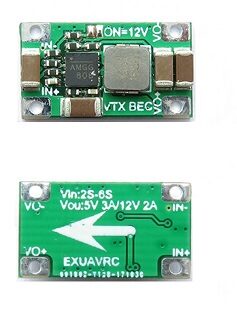
2-6S 5V 5A BEC For Quadcopter Drone
A standalone BEC for powering accessories cleanly. Useful if your FC’s 5V rail is underpowered or if you want clean, filtered power for the FPV camera and VTX on larger builds.
View on Zbotic6. Camera and VTX Installation
The FPV camera sits in the frame’s camera bay, usually protected by printed or carbon camera brackets. Set the camera angle for indoor flying — 10–15 degrees of forward tilt is ideal. Too much tilt (30+ degrees used in racing) makes slow indoor flying feel unstable and disorienting.
Mount the VTX antenna pointing upward and away from other electronics. For indoor flying, a short linear (whip) antenna works fine. Avoid running the antenna wire near motor wires or battery leads — this causes interference in the video feed.
Indoor VTX Power: Always set your VTX to 25mW when flying indoors. Higher power causes severe multipath interference in enclosed spaces, making the video feed worse, not better.
7. Betaflight Configuration
Betaflight is the flight controller firmware of choice for almost all FPV racing and freestyle builds. Here’s a step-by-step setup guide for your toothpick:
Step 1: Flash the Firmware
Download Betaflight Configurator (latest stable release). Connect your FC via USB, select the correct target (check your FC manual), and flash the latest stable Betaflight version.
Step 2: Ports Tab
Enable UART for your receiver protocol (ELRS uses CRSF — enable it on the UART where your receiver is connected). Enable a second UART for the VTX if you want smart audio control.
Step 3: Configuration Tab
- ESC/Motor Protocol: DSHOT300 (or DSHOT600 if your ESC supports it)
- Gyro and PID update frequency: 8kHz/4kHz or 4kHz/4kHz for smaller FCs
- Enable: Airmode, Anti-gravity, I-term relax
- Motor direction: set correctly for your frame layout (X configuration)
Step 4: Receiver Tab
Set receiver mode to SERIAL (CRSF for ELRS receivers). Bind your radio and verify all channels respond correctly in the Receiver tab. Set failsafe to DROP (not LAND) for indoor flying.
Step 5: Modes Tab
Assign modes to your transmitter switches:
- ARM: Switch A (always use a dedicated ARM switch, never a stick combination for racing)
- ANGLE mode: Switch B (useful for early indoor practice)
- ACRO mode: Default (no mode switch needed — it’s the baseline)
- BEEPER: Switch C (helps find crashed quads in grass/clutter)
8. PIDs and Filter Tuning for Indoors
Indoor flying changes the tuning requirements compared to outdoor freestyle flying. Indoors, you want:
- Lower P-gains: Reduces oscillation on tight manoeuvres in confined spaces
- Higher D-gains: More damping for the quick direction changes of indoor flying
- Aggressive RPM filter: Critical — low-mass toothpick frames resonate differently than heavy 5-inch builds
Starter PID Values for a 3-Inch Toothpick (Betaflight 4.4+)
| Axis | P | I | D | F |
|---|---|---|---|---|
| Roll | 42 | 80 | 26 | 120 |
| Pitch | 46 | 85 | 28 | 120 |
| Yaw | 42 | 100 | 0 | 100 |
These are starting values — every build is different. Use the Betaflight Blackbox logger to analyse actual flight data and tune from there.
9. Pre-Flight Checklist and First Flight Tips
Pre-Flight Checklist
- All motor screws tightened with thread locker
- Props seated and tightened fully (finger-tight plus 1/4 turn)
- Correct prop rotation on each motor (verified in Betaflight motor tab — without props first)
- All solder joints visually inspected — no cold joints, no bridges
- Antenna secured and away from props
- VTX set to 25mW
- Battery fully charged
- Goggles on, video feed confirmed clear
- Arm switch in DISARMED position before connecting battery
First Flight Tips
Start in Angle mode if you have never flown FPV before. Angle mode self-levels the quad and prevents flips. This lets you focus on orientation and control without fighting physics.
Keep throttle low for the first few packs. Hover at knee height, practice gentle movements, and land before the battery voltage drops below 3.5V per cell.
Fly in a large clear space for the first session — even a large living room or garage will be more forgiving than an obstacle-filled warehouse.
Frequently Asked Questions
What is the best 3-inch frame available in India?
Popular options include the HGLRC XJB, Flywoo Explorer, and iFlight Cidora SL5 (in 3-inch variant). For budget builds, several generic 145mm toothpick frames are available from Indian suppliers. Look for 2mm or 2.5mm arm thickness for durability.
Can a 3-inch toothpick fly outdoors in India?
Yes, on calm days. In India’s monsoon season, stick to indoor flying with a toothpick. On windy days (wind above 15 km/h), a 3-inch toothpick will feel unstable and hard to control. A 5-inch build handles wind much better.
How long does one battery last on a 3-inch toothpick?
With a 2S 450mAh pack and moderate indoor flying, expect 3–5 minutes of flight. Aggressive flying reduces this to 2–3 minutes. For longer sessions, buy 6–8 battery packs and use a parallel charging board.
Is a toothpick dangerous to fly indoors near people?
A 3-inch toothpick without prop guards can cause cuts. Always clear the flying area of bystanders. For flying near people, consider 2-inch builds with prop guards. The smaller props cut less deeply, and prop guards add a physical barrier. Never fly an unguarded drone over people.
What tools do I need to build a toothpick?
Essential: soldering iron (60W with temperature control), flux, solder (60/40 or 63/37 rosin core), heat shrink tube, M2 hex screwdrivers, a multimeter, and tweezers. Nice to have: helping hands (third-hand tool), flux remover spray, and a small vice.
Conclusion
The 3-inch toothpick FPV build is one of the most rewarding projects you can undertake as a drone hobbyist. It teaches you every fundamental skill — soldering, component selection, Betaflight configuration, and PID tuning — but in a format that’s small, affordable, and flyable even in Indian summers when the great outdoors isn’t welcoming.
The toothpick’s light weight means crashes are survivable, repair costs are low, and the flying experience is genuinely addictive. Once you’ve dialled in your toothpick indoors, transitioning to a 5-inch outdoor build will feel like a natural next step.
Get All Your Toothpick Build Components at Zbotic
From ESCs and cameras to props and power boards — everything you need for your 3-inch toothpick build, sourced and shipped across India.
Browse FPV Components






Add comment