
Wire Gauge Chart AWG to mm²: Indian Standard Comparison Guide
Understanding wire gauge AWG to mm² conversion is essential for every electronics hobbyist and engineer working in India. Whether you are wiring a DIY Arduino project, building a power supply, or selecting cables for a motor driver, choosing the wrong wire gauge can lead to overheating, voltage drops, or even fire hazards. This comprehensive guide bridges the gap between the American Wire Gauge (AWG) system, the metric mm² system, and India’s own IS standards — so you can confidently select the right wire every time.
What Is AWG and Why Does It Matter?
AWG stands for American Wire Gauge, a standardised wire measurement system developed in the United States. Despite being an American standard, AWG is widely referenced in electronics datasheets, component specs, and hobbyist tutorials worldwide — including in India. The AWG system uses a counter-intuitive numbering scheme: the higher the AWG number, the thinner the wire. So AWG 28 is much thinner than AWG 10.
AWG ratings matter because they define:
- Wire diameter — physical size of the conductor
- Cross-sectional area — determines current-carrying capacity
- Resistance per meter — affects voltage drop over long runs
- Flexibility — stranded wires at the same AWG are more flexible than solid
In the Indian electronics market, jumper wires, breadboard wires, and signal cables are often labelled in AWG (commonly AWG 24 or AWG 28), while power cables and mains wiring are sold in mm². Knowing how to convert between them saves time, prevents errors, and keeps your projects safe.
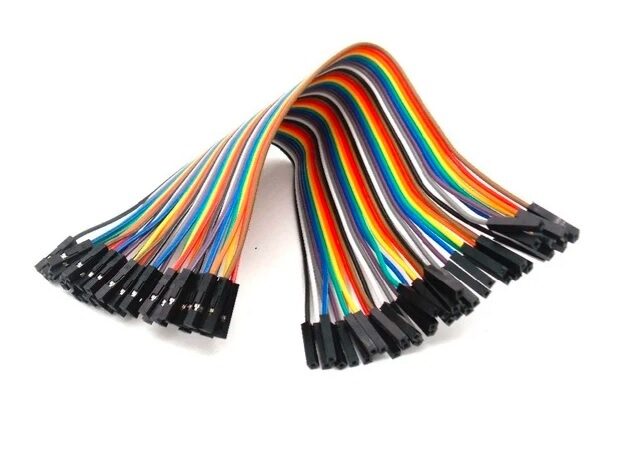
10CM Female To Female Breadboard Jumper Wires 2.54MM – 40Pcs
Standard AWG 28 flexible jumper wires — perfect for breadboard prototyping with Arduino, Raspberry Pi, and sensor modules.
The Metric mm² System Used in India
India primarily follows the metric system for wire sizing in electrical installations, governed by the Bureau of Indian Standards (BIS). The cross-sectional area expressed in square millimetres (mm²) directly tells you how much copper is in the wire — making it a more intuitive measure of current-carrying capacity than AWG.
Common metric wire sizes available in India include: 0.5 mm², 0.75 mm², 1.0 mm², 1.5 mm², 2.5 mm², 4 mm², 6 mm², 10 mm², 16 mm², 25 mm², and above. For electronics and low-voltage projects, you will mostly work with 0.1 mm² to 2.5 mm² conductors.
The relationship between diameter (d) and area (A) is: A = π × (d/2)². This means a wire of 1 mm diameter has an area of approximately 0.785 mm², not 1 mm². Keep this in mind when comparing wire diameters versus cross-section specs on datasheets.
Indian Standard (IS) Wire Sizes Explained
The key Indian Standards governing wires are:
- IS 8130:2013 — Conductors for insulated electric cables and flexible cords
- IS 694:2010 — PVC insulated cables for working voltages up to and including 1100V
- IS 9968 — Elastomer insulated cables
IS 8130 specifies conductor sizes in mm² and also defines the number of strands and strand diameter for each size. For example:
| IS 8130 Size (mm²) | No. of Strands | Strand Dia (mm) | Nearest AWG |
|---|---|---|---|
| 0.5 | 16 | 0.20 | AWG 20 |
| 0.75 | 24 | 0.20 | AWG 18 |
| 1.0 | 32 | 0.20 | AWG 17 |
| 1.5 | 30 | 0.25 | AWG 15 |
| 2.5 | 50 | 0.25 | AWG 13 |
One important note for Indian buyers: local wire vendors often use the term “core” loosely. Always verify by cross-checking the mm² rating on the cable jacket rather than relying on strand count alone.
Complete AWG to mm² Conversion Chart
Here is the complete reference chart covering AWG sizes most relevant to electronics hobbyists and makers in India:
| AWG | Diameter (mm) | Area (mm²) | Resistance (Ω/km) | Typical Use in India |
|---|---|---|---|---|
| AWG 10 | 2.588 | 5.26 | 3.28 | High-current DC circuits, inverter wiring |
| AWG 12 | 2.053 | 3.31 | 5.21 | Motor wiring, solar panel leads |
| AWG 14 | 1.628 | 2.08 | 8.28 | Power supply output, general wiring |
| AWG 16 | 1.291 | 1.31 | 13.2 | LED strip power, servo wires |
| AWG 18 | 1.024 | 0.823 | 20.9 | Adapter cords, DC wiring up to 10A |
| AWG 20 | 0.812 | 0.518 | 33.3 | Hook-up wire, chassis wiring |
| AWG 22 | 0.644 | 0.326 | 52.9 | Signal wiring, PCB connections |
| AWG 24 | 0.511 | 0.205 | 84.2 | Breadboard jumper wires, sensor cables |
| AWG 26 | 0.405 | 0.129 | 134 | Ribbon cable, thin signal wiring |
| AWG 28 | 0.321 | 0.0810 | 213 | Jumper wires, low-current signals |
| AWG 30 | 0.255 | 0.0509 | 339 | Fine enamelled wire, coil winding |
Quick conversion formula: Area in mm² = (AWG diameter in mm)² × 0.7854. Or use the approximation: diameter in mm ≈ 0.127 × 92^((36−AWG)/39).
Current Carrying Capacity Reference Table
In India’s hot climate (average ambient temperature 35–45°C in summer), you should derate wire current capacity by 15–20% compared to the standard 25°C ratings. Here is a practical reference for copper conductors with PVC insulation:
| AWG / mm² | Max Current at 25°C (A) | Derated for India 40°C (A) | Safe for DIY Projects (A) |
|---|---|---|---|
| AWG 28 / 0.08 mm² | 0.5 | 0.4 | 0.3 |
| AWG 24 / 0.2 mm² | 2.1 | 1.7 | 1.5 |
| AWG 20 / 0.5 mm² | 11 | 9 | 7 |
| AWG 18 / 0.82 mm² | 16 | 13 | 10 |
| AWG 16 / 1.3 mm² | 22 | 18 | 15 |
| AWG 14 / 2.1 mm² | 32 | 26 | 20 |
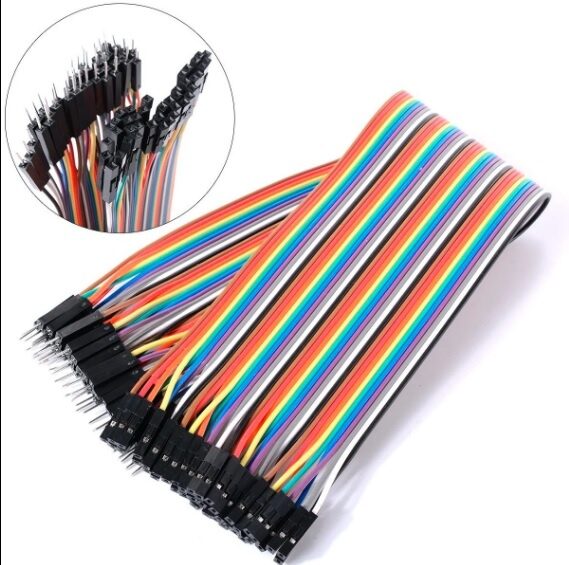
10CM Male To Female Breadboard Jumper Wires 2.54MM – 40Pcs
AWG 28 flexible jumper wires for connecting modules to breadboards. Great for microcontroller projects and sensor interfacing.
How to Choose the Right Wire for Your Project
When selecting wire for your next project, follow this decision framework:
Step 1: Determine Maximum Current
Calculate the maximum current your circuit will draw. Add a 25–30% safety buffer. For example, if your motor draws 3A, plan for at least 4A capacity in your wire choice.
Step 2: Consider Voltage Drop
For runs longer than 30 cm at significant current, check voltage drop: V_drop = I × R × L, where R is the resistance per metre from your wire spec and L is the wire length in metres. For a 5V Arduino system, aim to keep drop under 0.1V.
Step 3: Choose Stranded vs Solid
Stranded wire is better for moving parts or breadboard connections — it handles flexing without breaking. Solid wire (also called single-core) has lower resistance and is better for permanent PCB connections and chassis wiring.
Step 4: Check Insulation Rating
In India, PVC insulation is most common. For high-temperature environments (near heat sinks, inside enclosures), opt for silicone insulation rated at 180–200°C. For mains connections, always use IS 694 compliant cable.
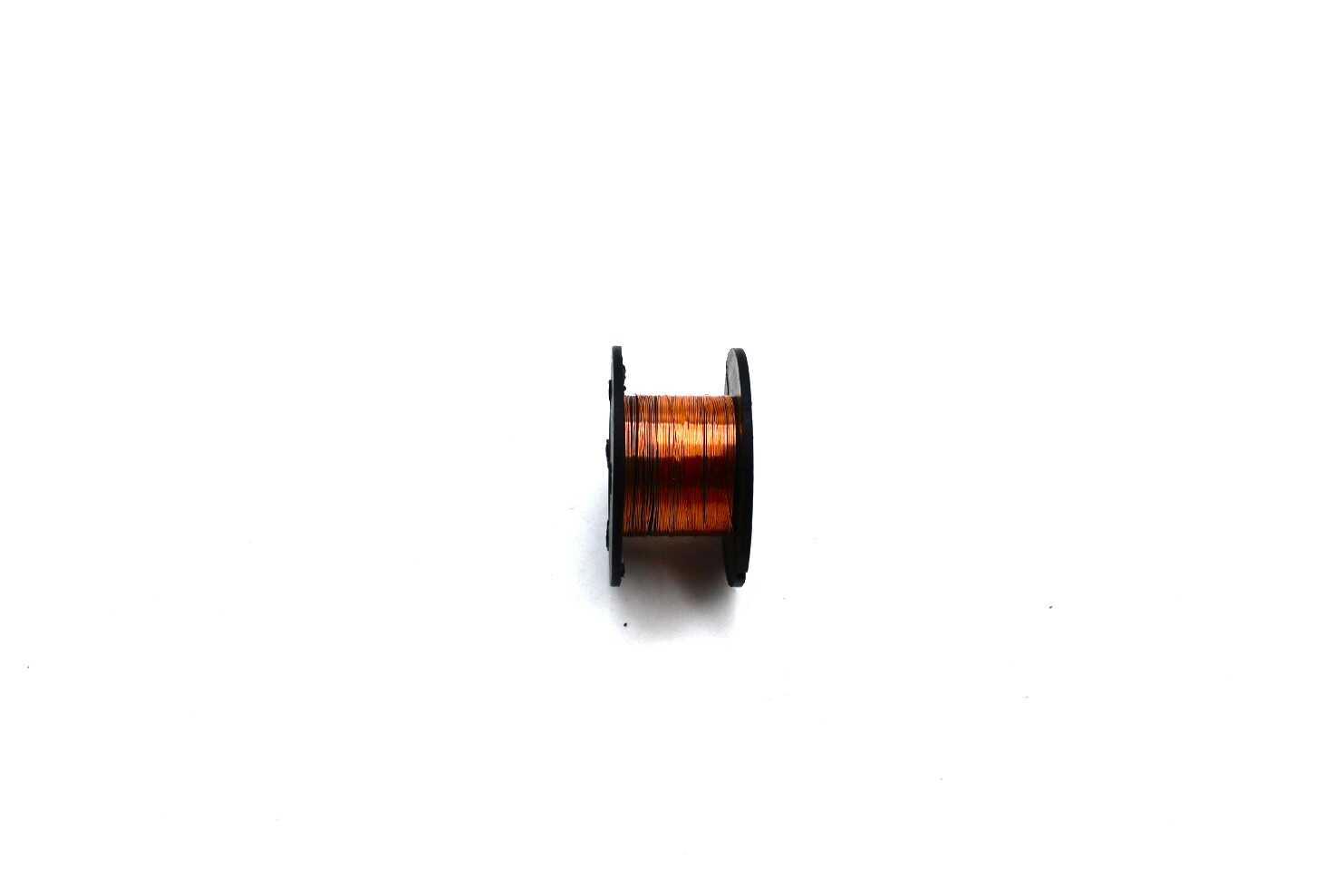
0.1MM Copper Soldering Solder PPA Enamelled Repair Reel Wire
Ultra-fine 0.1mm (approximately AWG 38) enamelled copper wire — ideal for coil winding, transformer repair, and fine soldering work.
Common Wire Gauge Mistakes and How to Avoid Them
Even experienced makers make these wire selection errors. Here is how to avoid them:
Mistake 1: Confusing Wire Diameter with Cross-Section
A 1 mm diameter wire does NOT equal 1 mm² cross-section. The actual cross-section of a 1 mm diameter solid conductor is just 0.785 mm². This error commonly leads to undersized wires being used for power circuits. Always work with the mm² figure, not the diameter.
Mistake 2: Ignoring Ambient Temperature Derating
Standard wire current ratings assume 25°C ambient. In Indian summer conditions (40–45°C), current ratings drop significantly. Use derating factor of 0.82 at 40°C for PVC insulated cables. This is specified in IS 3961 Part 2.
Mistake 3: Mixing AWG and mm² Without Converting
Using an AWG 24 wire where a datasheet specifies 0.5 mm² will result in an undersized conductor. AWG 24 is 0.205 mm² — less than half of 0.5 mm². Always convert before substituting.
Mistake 4: Underestimating Connector Resistance
Even correctly sized wires can fail at connections. Loose terminals, oxidised contacts, and underrated connectors add resistance that causes heat. Clean connections with isopropyl alcohol and use appropriate terminal blocks or solder them properly.
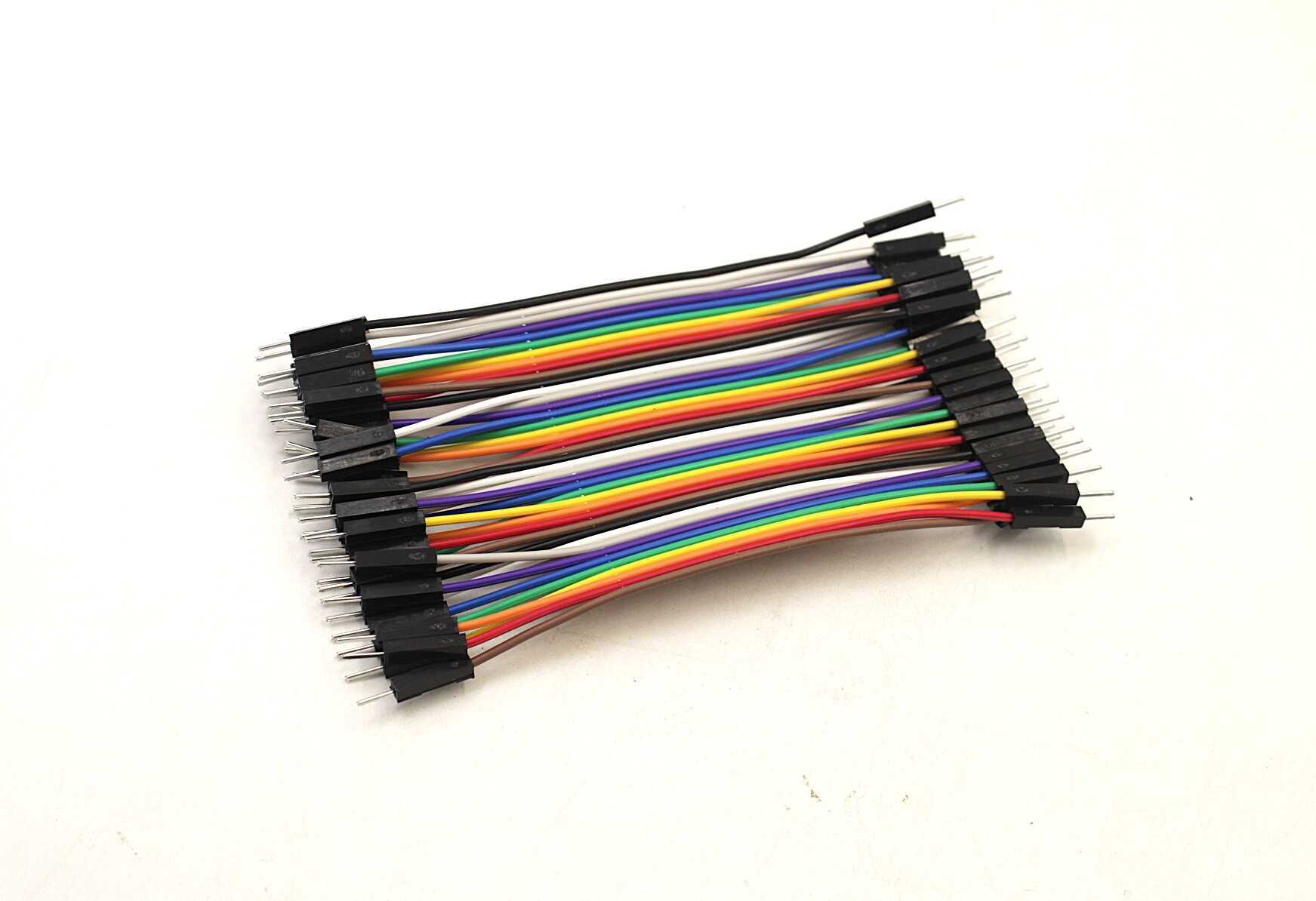
10CM Male To Male Breadboard Jumper Wires 2.54MM – 40Pcs
40-piece set of AWG 28 male-to-male jumper wires for quick breadboard connections. A must-have for every electronics hobbyist’s kit.
Frequently Asked Questions
Q: What AWG wire is used in Indian breadboard jumper wires?
Most standard breadboard jumper wires sold in India (including popular 40-piece packs) use AWG 28 wire, which is 0.32 mm in diameter and 0.08 mm² in cross-section. These are rated for signal-level currents up to about 0.5A — suitable for all Arduino and sensor connections.
Q: How do I convert AWG to mm² quickly?
A quick approximation: mm² ≈ 0.1288 × (0.8929)^AWG. For commonly used sizes: AWG 24 ≈ 0.2 mm², AWG 22 ≈ 0.33 mm², AWG 20 ≈ 0.5 mm², AWG 18 ≈ 0.82 mm². These values are close enough for practical project planning.
Q: Does IS standard wire match AWG exactly?
No, IS standard wire sizes (like 1.0 mm², 1.5 mm², 2.5 mm²) do not match AWG sizes exactly. They fall between AWG gauges. The nearest AWG to 1.5 mm² is AWG 15 (1.65 mm²), but 1.5 mm² IS wire is slightly smaller. Always use the exact mm² rating when sizing wires to IS specifications.
Q: What wire gauge is safe for a 12V LED strip in India?
A 5-metre 12V LED strip typically draws 2–5A depending on type (single colour vs RGB, chip density). For up to 5A, use at least AWG 20 (0.5 mm²) for the supply run. For runs over 1 metre, step up to AWG 18 (0.82 mm²) to minimise voltage drop and colour inconsistency at the far end of the strip.
Q: Where can I buy IS standard wires in India for DIY projects?
For small-quantity purchases, local electrical shops carry IS 694 PVC wires in sizes from 0.5 mm² upwards. For electronics-grade signal wires and jumper wires in AWG sizes, online stores like Zbotic.in offer a wide selection at affordable prices with fast delivery across India.
Explore Zbotic’s full range of wires, jumper cables, and electronics components — all sourced for quality and shipped fast across India. From AWG 28 breadboard jumpers to heavy-duty power cables, we have everything your project needs.





Add comment