
The VL53L1X is ST Microelectronics’ second-generation long-range Time-of-Flight (ToF) proximity sensor — and it is one of the most impressive distance-sensing chips available to hobbyists and professional developers alike. With a maximum range of 4 metres, sub-millimetre resolution, a configurable field of view, and a dead-simple I2C interface, it outperforms every ultrasonic and IR sensor in its price bracket for precision applications.
This comprehensive guide covers everything you need to know: from the physics behind Time-of-Flight measurement, through hardware wiring and library setup, to advanced features like multi-zone detection and multi-sensor arrays.
1. What Is the VL53L1X?
The VL53L1X is a second-generation member of ST’s FlightSense product family. It is a fully integrated module containing:
- A 940 nm Class 1 VCSEL (Vertical Cavity Surface Emitting Laser) — eye-safe and invisible
- A 16×16 SPAD (Single Photon Avalanche Diode) detector array
- An on-chip processing engine that handles all timing, calibration, and distance computation
- An I2C interface for reading results and configuring the sensor
The entire sensor measures just 4.9 × 2.5 × 1.56 mm in its bare die form. Breakout boards add an LDO regulator (making them 5 V tolerant), decoupling capacitors, and pin headers for easy breadboard use.
The VL53L1X improves on the earlier VL53L0X in three key ways: longer maximum range (4 m vs 2 m), configurable region of interest (ROI) for multi-zone measurement, and a higher measurement frequency (up to 50 Hz).
2. Key Specifications
| Parameter | Value |
|---|---|
| Ranging distance | 4 cm – 4 m (long-distance mode) |
| Accuracy | ±20 mm typical at close range |
| Laser wavelength | 940 nm (near-IR, Class 1 eye-safe) |
| SPAD array | 16 × 16 (256 SPADs) |
| Field of view | 27° FWHM (full-width half max) |
| I2C address | 0x29 (re-configurable in software) |
| Supply voltage (VIN) | 2.6 V – 5.5 V (breakout boards) |
| Active current | ~19 mA (ranging mode) |
| Standby current | ~5 µA |
| Max measurement rate | 50 Hz |
| Operating temperature | -20°C to +85°C |
| Package size (bare) | 4.9 × 2.5 × 1.56 mm |
3. Time-of-Flight: The Physics
Conventional distance sensors — including the HC-SR04 ultrasonic module — compute distance by measuring how long a wave (sound or light) takes to travel to a target and return. The VL53L1X takes this concept to its physical limit by measuring individual photons.
Each SPAD (Single Photon Avalanche Diode) is a miniature avalanche photodiode biased above its breakdown voltage. When a single photon strikes it, it triggers an avalanche multiplication event that produces a measurable current pulse. A precision on-chip TDC (Time-to-Digital Converter) timestamps each photon arrival to picosecond resolution.
The sensor fires a modulated train of laser pulses and builds a histogram of photon return times. Statistical signal processing on the histogram extracts the peak corresponding to the target reflection, even in the presence of ambient photon noise. This is why the VL53L1X performs far better in bright environments than simpler IR sensors — it separates the signal from the noise mathematically.
Distance formula: d = (c × t) / 2 where c = speed of light (3×10⁸ m/s) and t = photon travel time. Since light travels 1 mm in ~3.3 ps, the TDC must have sub-10 ps resolution to achieve millimetre accuracy.
4. Ranging Modes Explained
The VL53L1X supports three distance modes, each trading range for noise immunity:
Short Distance Mode
- Maximum range: ~1.3 m
- Better ambient light immunity
- Recommended for bright indoor environments
Medium Distance Mode
- Maximum range: ~3 m
- Balanced performance
- Good for most indoor robotics
Long Distance Mode (Default)
- Maximum range: ~4 m (dark/low ambient light)
- Higher noise sensitivity; avoid direct sunlight
- Best for indoor ranging or shaded outdoor use
In addition, the timing budget (20 ms to 500 ms per measurement) controls how long the sensor integrates photon returns. A longer budget improves accuracy and maximum range at the cost of reduced update rate. For fast robotics, use 20–33 ms. For maximum precision, use 100–200 ms.
5. Hardware Wiring
Most VL53L1X breakout boards expose 6–7 pins. Here is the typical connection to an Arduino Uno:
| VL53L1X Pin | Arduino Uno Pin | Notes |
|---|---|---|
| VIN / 3V3 | 5V | Breakout’s LDO handles 5V→3.3V |
| GND | GND | Common ground |
| SDA | A4 (SDA) | I2C data |
| SCL | A5 (SCL) | I2C clock |
| XSHUT | Any digital pin (e.g. D7) | LOW = shutdown; needed for multi-sensor |
| GPIO1 | Optional (D8) | Interrupt output when data ready |
Note for ESP32/ESP8266: These run at 3.3 V. Connect VIN to 3.3 V directly or use a breakout board with its own regulator. SDA/SCL are configurable — commonly GPIO21/22 on ESP32.
6. Arduino Code with Pololu Library
Install the VL53L1X library by Pololu from the Arduino Library Manager (search “VL53L1X Pololu”). Then use this basic sketch:
#include <Wire.h>
#include <VL53L1X.h>

VL53L1X sensor;

void setup() {
  Serial.begin(115200);
  Wire.begin();
  Wire.setClock(400000); // Fast I2C

  sensor.setTimeout(500);
  if (!sensor.init()) {
    Serial.println("Failed to detect sensor!");
    while (1);
  }

  // Set long distance mode and 50ms timing budget
  sensor.setDistanceMode(VL53L1X::Long);
  sensor.setMeasurementTimingBudget(50000); // microseconds
  sensor.startContinuous(50); // 50ms between readings
}

void loop() {
  sensor.read();
  Serial.print("Distance: ");
  Serial.print(sensor.ranging_data.range_mm);
  Serial.print(" mm  Status: ");
  Serial.println(sensor.ranging_data.range_status);
  delay(10);
}
Understanding range_status
- 0 (RangeValid): Clean reading, use this value
- 2 (SigmaFail): Target too diffuse or far — discard
- 4 (OutOfRangeFail): No target detected
- 7 (WrapAroundFail): Target may be beyond max range
Always check range_status == 0 before using the distance value in your logic.
7. Running Multiple VL53L1X Sensors
All VL53L1X sensors share the same default I2C address (0x29). To use multiple sensors on one I2C bus, you must assign unique addresses at startup using the XSHUT pin to selectively enable each sensor:
#define XSHUT_1 6
#define XSHUT_2 7

VL53L1X sensor1, sensor2;

void setup() {
  Wire.begin();
  // Boot sensor 1, assign 0x30
  pinMode(XSHUT_1, OUTPUT);
  pinMode(XSHUT_2, OUTPUT);
  digitalWrite(XSHUT_1, LOW);
  digitalWrite(XSHUT_2, LOW);
  delay(10);

  digitalWrite(XSHUT_1, HIGH);
  delay(10);
  sensor1.init();
  sensor1.setAddress(0x30);

  // Boot sensor 2, assign 0x31
  digitalWrite(XSHUT_2, HIGH);
  delay(10);
  sensor2.init();
  sensor2.setAddress(0x31);

  sensor1.startContinuous(50);
  sensor2.startContinuous(50);
}
With this approach you can chain 3–4 sensors on a single Arduino I2C bus. For more sensors, consider a TCA9548A I2C multiplexer.
8. Region of Interest (ROI) Feature
One of the VL53L1X’s most powerful and underused features is its programmable Region of Interest (ROI). The 16×16 SPAD array can be configured to activate only a rectangular sub-region, effectively narrowing the sensor’s field of view from the full 27° down to as little as 4°×4°.
This has two practical benefits:
- Crosstalk reduction: In a narrow corridor, only look directly forward and ignore walls to the sides.
- Multi-zone detection: By alternating the ROI between left/centre/right zones and taking rapid measurements, you can simulate a wider-angle sensor array with a single chip.
Example — set a narrow 4×4 SPAD ROI centred on the array:
sensor.setROISize(4, 4); // 4x4 SPADs (minimum: 4x4)
sensor.setROICenter(199); // Centre SPAD index
The Pololu library exposes setROISize() and setROICenter(). Consult ST’s application note AN5281 for the full SPAD mapping table.
9. Tips for Reliable Readings
Cover Window Cleanliness
The VL53L1X die has a tiny glass cover window. Dust, fingerprints, or condensation on this window can scatter the laser and produce wildly inaccurate readings. Handle breakout boards by their edges and clean with lens tissue if needed.
Crosstalk Compensation
If your sensor is mounted behind a cover glass (e.g. inside a product enclosure), laser reflections from the glass add a fixed offset to all readings. You must run the crosstalk calibration routine to subtract this. ST’s UM2356 user manual details the procedure.
Temperature Compensation
The VL53L1X includes an internal temperature sensor. For best accuracy over large temperature swings (common in Indian outdoor deployments), call sensor.setLightAmbientMode() to enable autonomous temperature re-calibration.
Power Supply Decoupling
The VCSEL laser draws pulsed current spikes up to ~40 mA. Add a 100 nF ceramic capacitor directly at the sensor’s VCC and GND pins to prevent voltage droops from corrupting I2C communication.
10. Project Ideas
Drone Altitude Hold
Mount the VL53L1X pointing downward on a quadcopter frame. Feed readings into a PID loop to maintain a fixed height above ground. The 50 Hz update rate is sufficient for typical multirotor control loops running at 400 Hz+ when combined with attitude data from an IMU.
People Counter / Bidirectional Doorway Counter
Mount two VL53L1X sensors side by side above a doorway, with the ROI set to a narrow beam. Detect the entry or exit direction by noting which sensor triggers first. Log counts to an SD card or transmit via MQTT over Wi-Fi.
Robot Cliff Detection
Point the sensor downward at a 45° angle on a floor-cleaning robot. If the reading suddenly increases beyond a threshold, the robot is approaching a step or drop — reverse immediately.
Automatic Hand Sanitiser Dispenser
Detect a hand placed 5–15 cm below the dispenser nozzle. Trigger a solenoid or peristaltic pump via a MOSFET. Add a minimum trigger interval to prevent continuous dispensing.
Smart Shoe Rack with Presence Detection
Install a sensor at each shelf level. When shoes are placed, light an LED strip row via PWM. The narrow beam ensures only that shelf’s occupancy is detected, not adjacent shelves.
11. Recommended Products from Zbotic
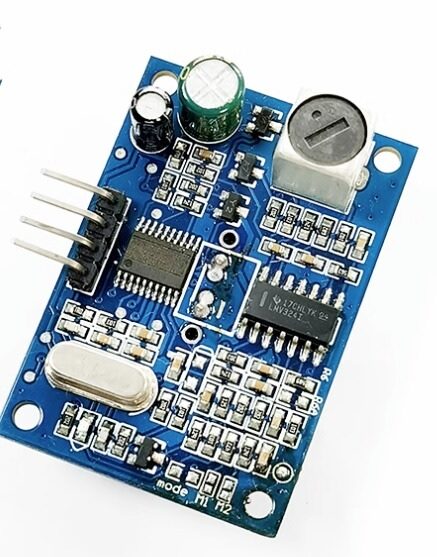
JSN-SR04T Waterproof Ultrasonic Rangefinder Module v3.0
A robust alternative for outdoor ranging applications where ToF sensors may be affected by ambient light. Waterproof design survives rain and splashes.
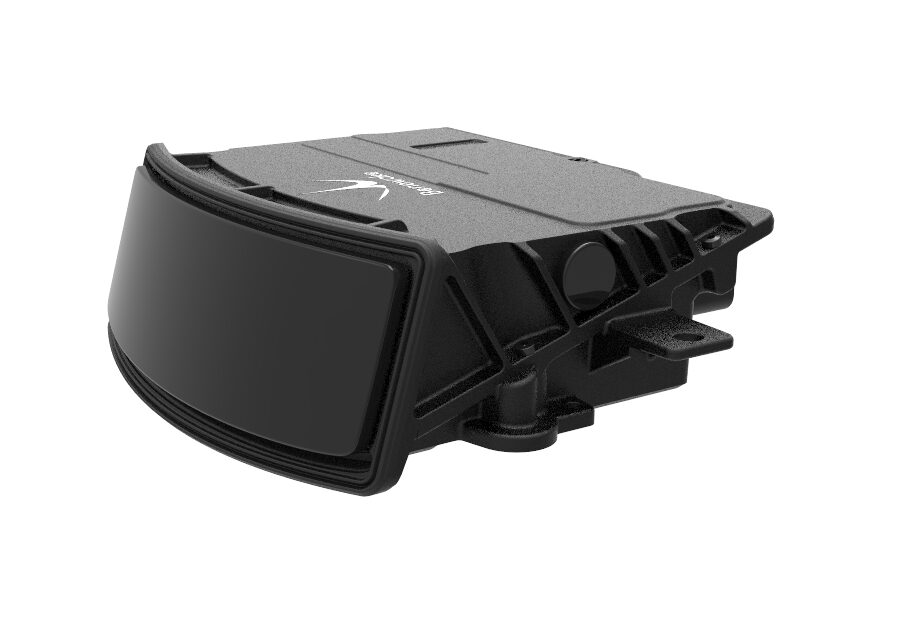
Benewake AD2-S-X3 High-Performance Automotive-Grade LiDAR
When VL53L1X’s 4 m range isn’t enough, step up to this professional automotive LiDAR for autonomous vehicles and advanced robotics.
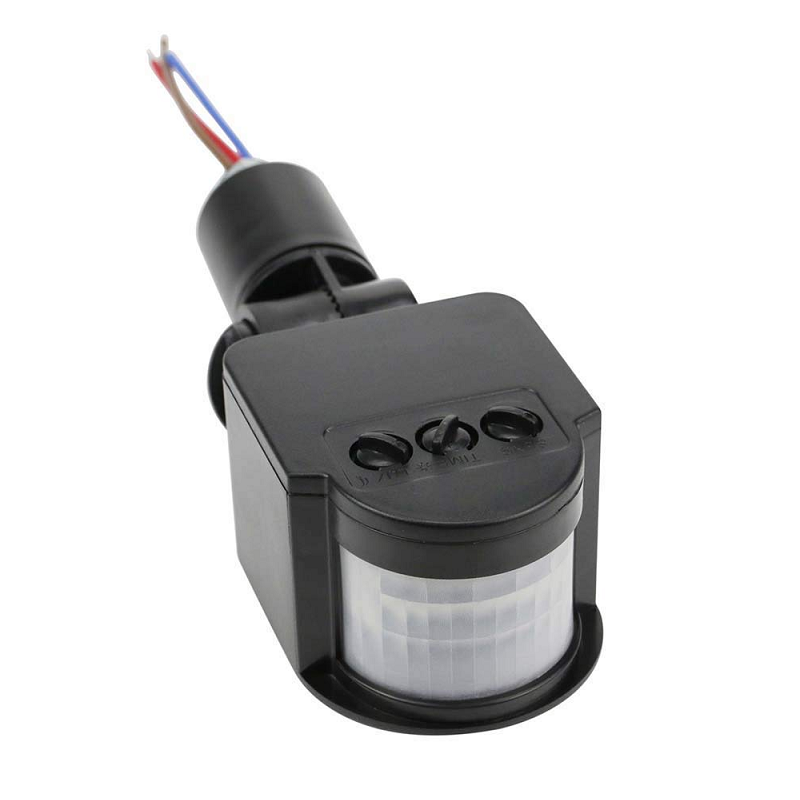
AC 220V PIR Human Body Motion Sensor Detector
Pair with a VL53L1X in smart entry systems: PIR wakes the system from sleep, then ToF measures exact distance for precise presence detection.
12. Frequently Asked Questions
What is the minimum detectable distance for the VL53L1X?
The datasheet specifies a minimum ranging distance of approximately 4 cm. Below this, the crosstalk from the cover window and the VCSEL’s near-field divergence prevent reliable measurement. For sub-4 cm proximity detection, a simple IR reflectance sensor is more appropriate.
Does the VL53L1X work with ESP32 and Raspberry Pi?
Yes. For ESP32, use the standard Wire library with custom SDA/SCL pins. For Raspberry Pi, install the pololu-vl53l1x Python package or use the smbus2 library with raw I2C commands. The sensor is 3.3 V native, making it directly compatible with both platforms.
Why is my VL53L1X reading 8190 mm (maximum value)?
A reading of 8190 mm (or 0xFFFF) indicates no target was detected within the maximum range, or the signal was too weak to process. Check your timing budget (try 100 ms+), reduce ambient light, or shorten the measurement distance. Also verify the range_status is 0 (RangeValid) before trusting the reading.
Can I use the VL53L1X through a glass window?
Partially. Standard soda-lime glass is partially transparent to 940 nm. You will see significant crosstalk from the glass surface itself, and real target readings will be less accurate. If mounting behind glass is necessary, run the crosstalk calibration routine described in ST’s application note AN5300.
How does the VL53L1X compare to the VL53L0X?
The VL53L1X doubles the maximum range (4 m vs 2 m), adds the ROI feature for multi-zone detection, and runs at a higher update rate. The VL53L0X is still a good choice for applications needing only 1–2 m range where cost is a priority, as it is slightly cheaper.
13. Conclusion
The VL53L1X is a remarkable sensor that packs photon-level timing precision into a tiny I2C package. Its 4 m range, sub-millimetre resolution, configurable ROI, and straightforward Arduino library make it the ideal upgrade from basic ultrasonic and IR sensors for any project requiring accurate, fast, and compact distance measurement.
Whether you are building a drone altitude controller, a smart doorway counter, or a precision robotic positioning system, the VL53L1X delivers accuracy that far exceeds what is possible with sound-based sensing — at a price point that remains accessible to Indian hobbyists and students.
Add Precision to Your Next Project
Explore all distance and proximity sensors available at Zbotic — stocked and shipped fast across India.

Add comment