
Two Wire vs Four Wire Power: Kelvin Sensing Explained
Imagine you are measuring the internal resistance of a 18650 battery cell to determine its health. You connect your multimeter, note the reading, and conclude the cell is fine. But what if your leads, connectors, and contact resistance are adding 10–50mΩ of error on top of the cell’s actual 80–120mΩ internal resistance? Your measurement could be off by 30–50% — enough to misdiagnose a healthy cell as degraded. This is exactly the problem that two wire four wire power Kelvin sensing addresses. Once you understand this technique, you will use it everywhere from battery testing to precision current shunt measurement.
Two-Wire Measurement and Its Limitations
A two-wire measurement is what virtually every hobbyist does by default. You take your multimeter, touch two probes to a component, and read the value. Current flows out of one probe, through the device under test (DUT), and back through the other probe. The same two wires carry both the excitation current and the voltage measurement signal.
This works perfectly well for high-resistance measurements. If you are measuring a 10kΩ resistor and your probe leads add 0.5Ω, the error is 0.005% — completely negligible. But as the resistance you are measuring gets smaller, the lead resistance becomes a larger fraction of the total, and accuracy collapses.
Consider measuring a 0.1Ω shunt resistor (like the one used in an INA219 module). If your leads add 0.1Ω of contact and wire resistance, you are reading 0.2Ω — a 100% error. Even high-quality bench multimeter leads have 0.05–0.5Ω of resistance, depending on length and quality. Banana plug contacts add another 5–50mΩ. Clip contacts add yet more.
The Problem of Lead Resistance
Lead resistance is unavoidable in any physical connection. It comes from three sources:
- Wire resistance — copper wire has 0.0172Ω·mm²/m resistivity. A 1-metre 24AWG wire (0.205mm²) adds about 84mΩ. A pair of leads doubles this.
- Contact resistance — every connection point (plug, socket, clip, probe tip) adds resistance. A clean banana plug contributes 5–20mΩ; a corroded or loose one can add 100mΩ or more.
- PCB trace resistance — a 10mm long, 0.5mm wide PCB trace on 35µm copper adds about 10mΩ. In high-current paths, multiple such traces accumulate.
For measurements below 1Ω, these errors are significant. For measurements below 10mΩ (milliohm-level, such as contact resistance testing or cell internal resistance measurement), two-wire methods become completely unreliable.
Four-Wire Kelvin Sensing Explained
The four-wire Kelvin method, named after Lord Kelvin (William Thomson) who developed it in the 1860s, elegantly eliminates lead resistance from voltage measurements. The insight: separate the current-carrying path from the voltage-sensing path.
Instead of two wires, you use four:
- Wire 1 and Wire 2 (Force wires, I+ and I−): Carry the excitation current through the DUT. These wires will have voltage drops across their resistance, but that does not matter because we are not measuring voltage on these wires.
- Wire 3 and Wire 4 (Sense wires, V+ and V−): Connected directly at the DUT terminals (ideally at the exact point of current entry and exit). These wires carry virtually zero current because they connect to a high-impedance voltmeter. With near-zero current flowing, the voltage drop across these wires is also near-zero — regardless of their resistance.
The voltmeter reads only the voltage across the DUT, uncontaminated by any lead resistance voltage drop. Since V = I × R_DUT (with a known excitation current I), you can calculate R_DUT with very high accuracy.
How Kelvin Sensing Works: Step by Step
Let us trace through a concrete example. You want to measure a 50mΩ shunt resistor.
- Inject current: A precision current source forces 1A through the Force wires (I+ and I−) and through the 50mΩ shunt. The Force wires might each have 100mΩ of resistance, but the current source does not care — it forces 1A regardless of the wire resistance, just at a higher voltage.
- Measure voltage: The Sense wires (V+ and V−) connect directly at the shunt’s terminals. With 1A flowing through 50mΩ, the shunt develops 50mV across it. The high-impedance voltmeter connected to the Sense wires draws essentially 0A, so the voltage drop along the Sense wires is 0A × R_wire = 0V.
- Calculate resistance: R = V / I = 50mV / 1A = 50mΩ — exactly correct, regardless of Force wire resistance.
The key insight that makes this work: voltage sensing requires high impedance (no current), and current forcing does not require accurate voltage across the supply wires. By separating these two functions, each pair of wires only needs to do one job well.
Practical Applications
Battery Internal Resistance Testing
A battery’s internal resistance (IR) is one of the best indicators of its health and age. Fresh 18650 cells have IR of 50–150mΩ. Aged or damaged cells climb to 300mΩ or higher. Accurate IR measurement requires four-wire techniques because the values are so small. Professional battery analysers (like the Hioki BT3562 or ISDT chargers with IR mode) all use four-wire Kelvin measurement internally.
Current Shunt Calibration
Current shunt resistors used in power monitors (like the INA219) are specified to within ±0.5–1% tolerance. To verify the actual resistance value (for calibration), you must use four-wire measurement. A two-wire measurement on a 0.1Ω shunt will read 0.15–0.25Ω due to lead resistance, making calibration impossible.
Contact Resistance Testing
Switch contacts, relay contacts, and PCB via resistance are all in the milliohm range. Four-wire measurement is the only reliable way to measure these. In production testing, automated test equipment always uses Kelvin probes for contact resistance verification.
Battery Weld Resistance
In 18650 battery packs, the nickel strip spot welds that connect cells have resistance of 0.5–5mΩ. Poor welds increase series resistance and reduce pack efficiency. Quality checking requires four-wire milliohm measurement.
PCB Trace and Connector Verification
In high-current PCB designs (>10A), trace resistance matters for heat and voltage drop. A 4-wire measurement at design verification stage catches routing problems before production.
Kelvin Sensing with Arduino and INA219
You can implement a practical four-wire measurement system with Arduino and the INA219 current sensor module, though with some limitations.
The INA219 has separate VIN+ and VIN− pins for the current path (Force), and the voltage measurement is performed internally across the shunt. However, the module as shipped has the shunt resistor physically close to the pins, so there is minimal lead resistance on the voltage sense path. This is why the INA219 is reasonably accurate out of the box.
To improve accuracy further:
- Remove the SMD shunt resistor from the INA219 module
- Solder four wires to the module pads: two for current injection, two for voltage sensing
- Route the sense wires directly to the DUT terminals, keeping them separate from the current-carrying wires
- This gives you a genuine four-wire Kelvin measurement system with µA-level sense current from the INA219’s internal ADC
For the excitation current, use the module’s normal current path with known test current. The INA219 will measure the voltage accurately and report true resistance.
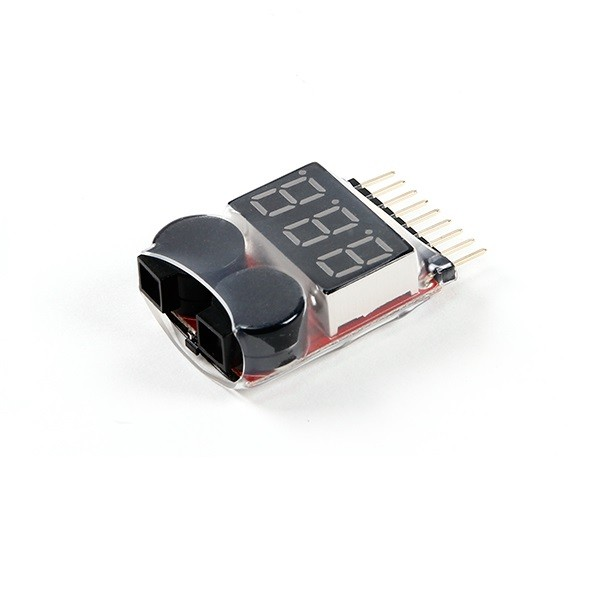
1-8S Lipo Battery Voltage Tester without Alarm
Plug directly into your LiPo balance connector for instant per-cell voltage readings. A great starting point for understanding cell voltage before diving into Kelvin measurement.
Kelvin Clips, Probes, and Connectors
To make four-wire measurement practical in the field, specialised hardware exists:
Kelvin Clips
A Kelvin clip looks like a normal crocodile clip but has a split jaw — each half of the jaw is electrically isolated from the other. One half connects to the Force circuit, the other to the Sense circuit. A single clip makes both connections at exactly the same physical point on the DUT, ensuring the sense point is at the true DUT terminal.
Four-Wire Banana Plug Cables
Standard multimeter leads with paired banana plugs let you run separate Force and Sense connections. For milliohm measurement, the Force cables can be thick 16AWG wire for low resistance, and the Sense cables can be thin 28AWG wire (since they carry no current).
Spring-Pin (Pogo Pin) Fixtures
For production testing of PCBs, pogo pin test fixtures can be designed with four-wire kelvin contacts at each test point. This is standard practice in electronics manufacturing for impedance and resistance verification.
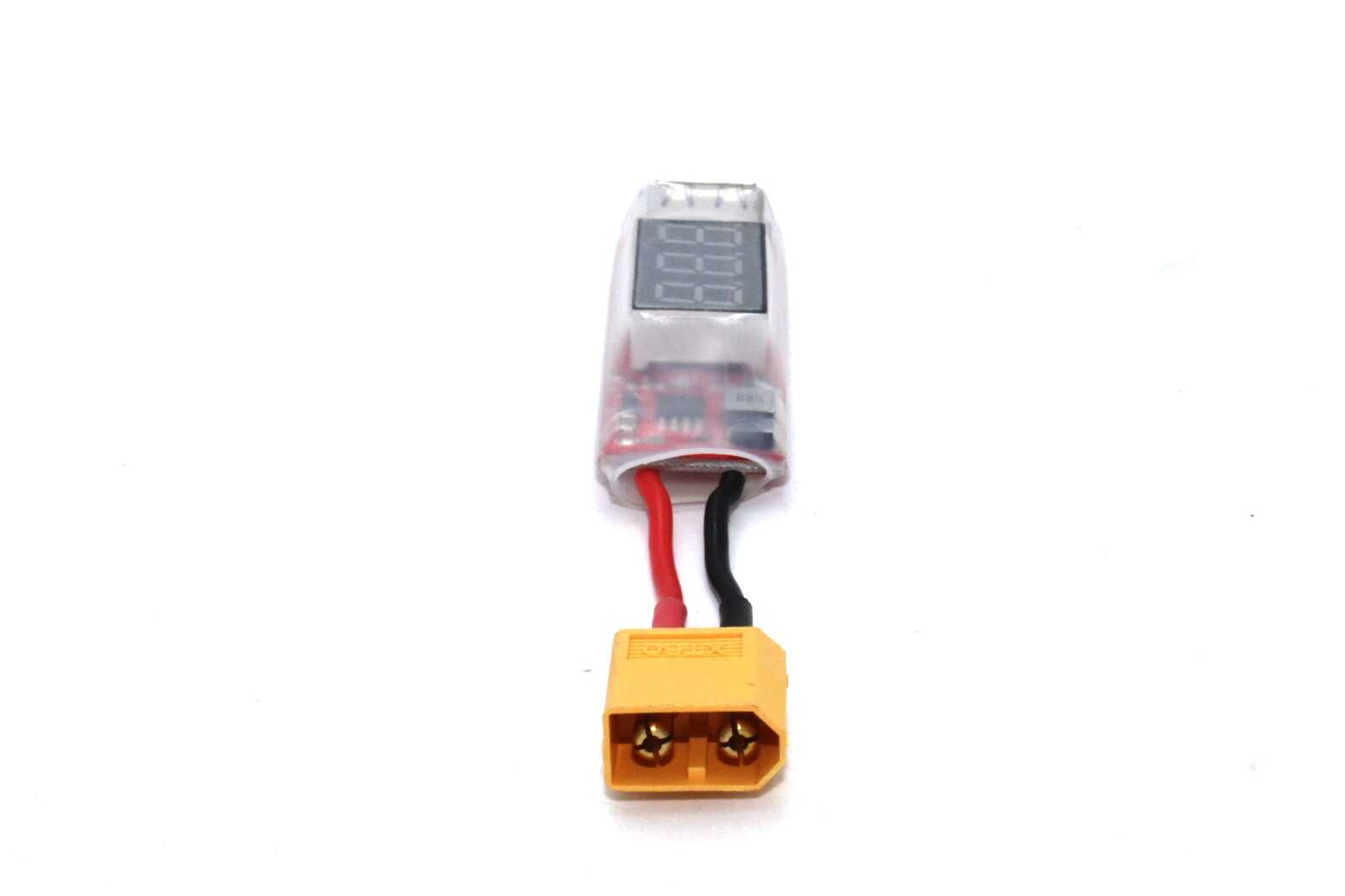
2S-6S LiPo Battery XT60 to USB Adapter with Voltage Display
The built-in voltage display uses a two-wire tap directly at the XT60 connector, demonstrating how connection point placement (near the terminals) improves voltage reading accuracy.
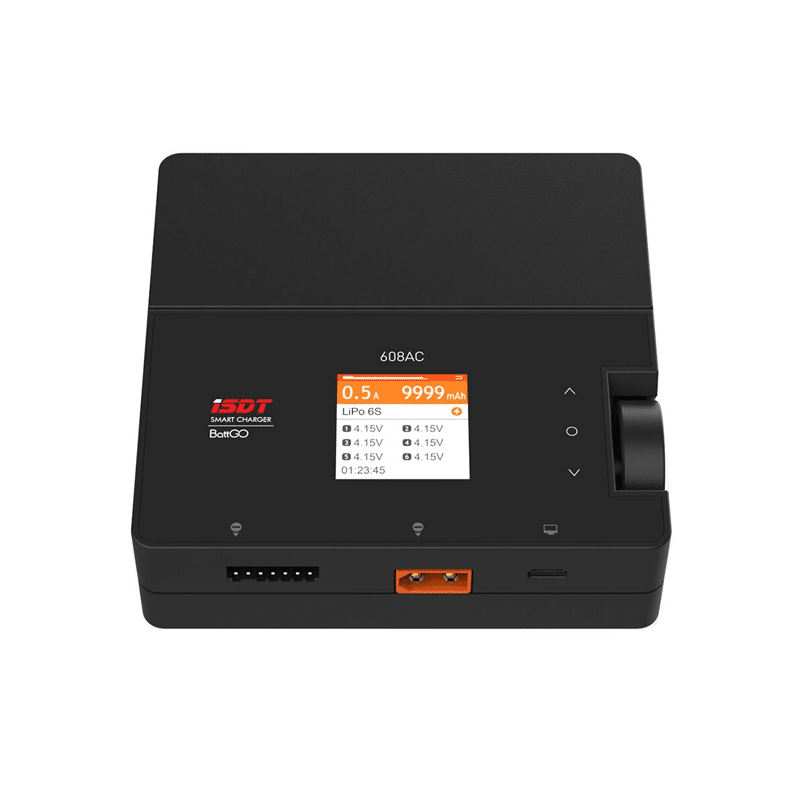
ISDT 608 AC LiPo Battery Charger – AC 50W/DC 200W Dual Mode
Professional dual-mode charger/discharger with per-cell monitoring. Its internal voltage sensing uses precision differential measurement equivalent to Kelvin sensing principles.
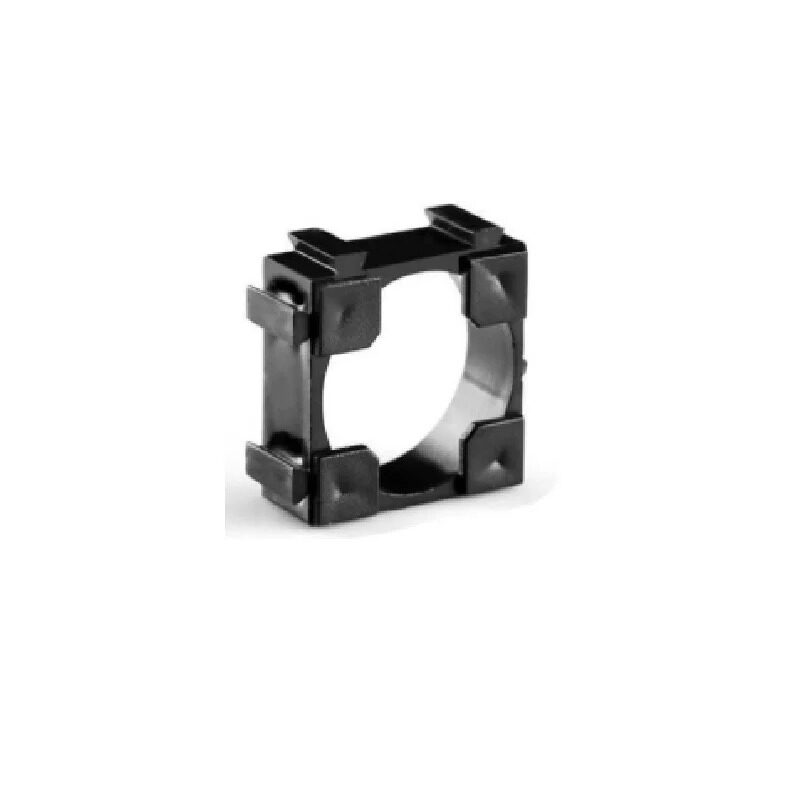
1 x 18650 Battery Holder with 18.4MM Bore Diameter – pack of 4
Reliable single-cell 18650 holder for building test fixtures. Using separate sense wires soldered directly to the holder terminals gives you a Kelvin-connected cell test setup.
Frequently Asked Questions
Does my standard multimeter support four-wire measurement?
Most basic multimeters do not. Four-wire (Kelvin) measurement requires the meter to have separate Force and Sense terminals and a precision current source. Bench multimeters like the Keysight 34461A, Fluke 8846A, or any meter with a dedicated resistance mode using separate HI/LO force and sense terminals support it. Look for specifications mentioning “4-wire ohms” or “Kelvin measurement” in the meter’s datasheet.
Can I implement Kelvin sensing on a standard two-terminal resistor?
Yes, with a small modification. Solder an additional pair of thin wires directly to the resistor body, as close to the resistor element as possible (not at the legs). These become your sense wires. The original legs carry the current. This turns any standard resistor into a four-terminal Kelvin-connected component.
What is the minimum resistance I can measure with a Kelvin setup?
With a precision milliohm metre or a quality bench DMM, Kelvin measurement can accurately resolve down to 1µΩ (microohm) with proper technique and shielding. For Arduino-based setups using INA219, the practical floor is around 1–5mΩ due to noise in the 12-bit ADC.
Why is the technique called Kelvin sensing?
Lord Kelvin (Sir William Thomson, 1824–1907) invented the four-terminal resistance measurement method and the Kelvin double bridge (a specialised circuit for measuring very low resistances with high accuracy). The technique and the specialised clip probes designed to implement it were named in his honour.
Does Kelvin sensing help with voltage drop measurement across PCB traces?
Absolutely. To measure the voltage drop across a PCB trace carrying high current, place your Force connections at the trace ends (or at the power source and load) and your Sense connections at the exact points of interest on the trace. The DMM will show only the trace voltage drop, unaffected by your probe cable resistance. This is the correct way to measure I²R losses in power electronics.
From LiPo voltage testers and 18650 battery holders to professional ISDT chargers with internal resistance measurement, Zbotic.in has the tools every serious Indian maker needs for precision battery work. Explore our power category and take the guesswork out of your next build.




Add comment