
Tilt sensing is one of those fundamental requirements that appears in projects ranging from anti-theft systems to gesture-controlled drones. But not all tilt sensors are created equal. The humble SW-520D tilt switch, the versatile MPU-6050 IMU, and the precision ADXL345 accelerometer represent three completely different approaches to the same problem — and choosing the wrong one can waste your budget, complicate your code, or simply give unreliable results.
This guide breaks down each sensor in depth, compares them head-to-head across every relevant dimension, and tells you definitively which one to use for your specific application.
SW-520D: The Simple Tilt Switch
The SW-520D is the most basic tilt sensor possible: a small cylindrical metal tube containing two contacts and two to four metal balls. When the tube is roughly upright, the balls roll to the bottom and bridge the two contacts — completing the circuit. When tilted beyond approximately 45°, the balls roll away and the circuit opens.
Specifications:
- Operating voltage: 3V–5V DC
- Contact resistance: <10 Ω (when closed)
- Tilt angle detection: Typically 45° ± 15° from vertical (manufacturer-dependent)
- Response time: <2ms (mechanical switch)
- Operating temperature: -20°C to +80°C
- Life expectancy: ~100,000 operations
- Price: ₹20–50 per unit
How It Works: Dead simple — it’s a mechanical switch. No ADC, no I2C, no calibration. Connect one pin to a digital input (with pull-up resistor) and the other to GND. When closed, the input reads LOW. When open (tilted), the input reads HIGH (thanks to pull-up).
Strengths:
- Dirt cheap — buy 10 for under ₹200
- No programming needed beyond digitalRead()
- Works at any voltage from 3V–5V
- Extremely low power — just a mechanical contact
- Durable and vibration-resistant (within limits)
Weaknesses:
- Binary output only — you know “tilted” or “not tilted”, nothing in between
- No axis information — can’t tell which direction the tilt is
- Bounce issues — the metal balls cause contact bounce that needs software debouncing
- Cannot determine angle in degrees
- Vibration can cause false triggers
- Fixed tilt threshold — cannot be adjusted in software
MPU-6050: The 6-Axis IMU
The MPU-6050 is an InvenSense 6-axis MEMS Inertial Measurement Unit combining a 3-axis accelerometer and a 3-axis gyroscope on a single chip. It communicates via I2C and includes an on-chip Digital Motion Processor (DMP) that can perform sensor fusion calculations, outputting orientation quaternions without loading the host MCU.
Specifications:
- Power supply: 3.3V (level-shifted to 5V on GY-521 module)
- Interface: I2C (up to 400 kHz) or SPI (for raw MPU-6000)
- I2C address: 0x68 (AD0 = GND) or 0x69 (AD0 = VCC)
- Accelerometer range: ±2g, ±4g, ±8g, ±16g (configurable)
- Gyroscope range: ±250, ±500, ±1000, ±2000 °/s
- ADC resolution: 16-bit for both accelerometer and gyroscope
- Accelerometer sensitivity: 16,384 LSB/g at ±2g range
- Temperature sensor: Built-in (-40°C to +85°C)
- FIFO buffer: 1024 bytes
- Power consumption: 3.9 mA (all sensors on), 5 μA (sleep)
- Price: ₹120–250 for GY-521 module
Strengths:
- Provides both angle and angular velocity — the only option for tracking rotation over time
- 16-bit ADC gives ±2g range with 0.06 mg resolution
- DMP handles sensor fusion, offloading the MCU
- FIFO buffer prevents data loss during processing delays
- Interrupt output for motion detection, free-fall, tap detection
- Two devices on same I2C bus using different addresses
Weaknesses:
- More complex to program — requires either Jeff Rowberg’s I2Cdev library or MPU6050 library
- Gyroscope drift — angle estimate drifts over time without magnetometer correction
- 3.3V logic (requires level shifting for 5V Arduino, though GY-521 module includes this)
- More power-hungry than ADXL345 in continuous mode
- Overkill for pure tilt detection if you don’t need rotation rate
ADXL345: The Precision 3-Axis Accelerometer
The ADXL345 from Analog Devices is a small, thin, low-power, 3-axis MEMS accelerometer with 13-bit ADC resolution. It supports both I2C and SPI. Unlike the MPU-6050, it has no gyroscope — but its accelerometer is actually more precise and power-efficient. Its standout features are the built-in activity/inactivity detection, tap/double-tap detection, and free-fall detection — all handled in hardware without MCU involvement.
Specifications:
- Power supply: 2.0V–3.6V (I/O pins 1.7V–3.5V)
- Interface: I2C (up to 400 kHz) or SPI (up to 5 MHz)
- I2C address: 0x53 (ALT ADDRESS = GND) or 0x1D (ALT ADDRESS = VCC)
- Measurement range: ±2g, ±4g, ±8g, ±16g (configurable)
- ADC resolution: 13-bit (10-bit at lower ranges)
- Sensitivity: 3.9 mg/LSB at ±2g (10-bit mode)
- Output data rate: 0.10 Hz to 3200 Hz
- Power consumption: 40 μA at 100 Hz, 0.1 μA standby
- Built-in functions: Activity/inactivity detection, tap/double-tap, free-fall
- Price: ₹200–400 for GY-291 module
Strengths:
- Extremely low power — 40 μA makes it perfect for battery-powered applications
- Hardware tap, free-fall, and motion detection via interrupt pins — MCU can sleep
- FIFO with 32-sample depth — prevents data loss, allows burst reading
- SPI support for high-speed applications
- Better static accuracy than MPU-6050 accelerometer alone
- More stable tilt angle calculation (no gyro drift contamination)
Weaknesses:
- Accelerometer only — cannot track orientation over time during dynamic movement
- 3.3V logic requires level shifting for 5V Arduinos
- Cannot compute orientation during free-fall (gravity reference lost)
- I2C address conflict if using multiple ADXL345 chips
Head-to-Head Comparison Table
| Feature | SW-520D | MPU-6050 | ADXL345 |
|---|---|---|---|
| Price | ₹20–50 | ₹120–250 | ₹200–400 |
| Tilt detection | Binary (yes/no) | Angle in degrees | Angle in degrees |
| Rotation tracking | No | Yes (gyro) | Static only |
| Resolution | 1-bit | 16-bit | 13-bit |
| Power draw | ~0 mA | 3.9 mA | 0.04 mA |
| Programming difficulty | Trivial | Moderate | Easy–Moderate |
| Best for | Simple alarms | Drones, robots | Wearables, IoT |
Wiring All Three Sensors
SW-520D to Arduino
SW-520D Pin 1  →  Arduino D2 (via 10kΩ pull-up to 5V)
SW-520D Pin 2  →  GND
// No VCC pin needed — just a passive switch
MPU-6050 (GY-521 Module) to Arduino Uno
GY-521 Pin    →    Arduino
-----------        -------
VCC           →    3.3V (or 5V — GY-521 has onboard regulator)
GND           →    GND
SCL           →    A5 (I2C SCL)
SDA           →    A4 (I2C SDA)
INT           →    D2 (optional, for interrupt-driven reads)
AD0           →    GND (I2C address 0x68)
ADXL345 (GY-291 Module) to Arduino Uno
GY-291 Pin    →    Arduino
-----------        -------
VCC           →    3.3V
GND           →    GND
SCL           →    A5 (I2C SCL) via 4.7kΩ to 3.3V
SDA           →    A4 (I2C SDA) via 4.7kΩ to 3.3V
INT1          →    D2 (interrupt for tap/free-fall detection)
CS            →    3.3V (enables I2C mode)
SDO/ALT       →    GND (I2C address 0x53)
Arduino Code Examples
SW-520D with Debouncing
const int TILT_PIN = 2;
const int DEBOUNCE_MS = 50;
bool lastState = HIGH;
unsigned long lastChange = 0;

void setup() {
  pinMode(TILT_PIN, INPUT_PULLUP);
  Serial.begin(9600);
}

void loop() {
  bool current = digitalRead(TILT_PIN);
  if (current != lastState && millis() - lastChange > DEBOUNCE_MS) {
    lastState = current;
    lastChange = millis();
    Serial.println(current == LOW ? "UPRIGHT" : "TILTED");
  }
}
MPU-6050 Tilt Angle (uses Jeff Rowberg’s MPU6050 library)
#include <Wire.h>
#include <MPU6050.h>

MPU6050 mpu;

void setup() {
  Wire.begin();
  Serial.begin(115200);
  mpu.initialize();
}

void loop() {
  int16_t ax, ay, az, gx, gy, gz;
  mpu.getMotion6(&ax, &ay, &az, &gx, &gy, &gz);

  // Convert to g-force
  float axg = ax / 16384.0;
  float ayg = ay / 16384.0;
  float azg = az / 16384.0;

  // Calculate tilt angles
  float pitch = atan2(axg, sqrt(ayg*ayg + azg*azg)) * 180.0 / PI;
  float roll  = atan2(ayg, sqrt(axg*axg + azg*azg)) * 180.0 / PI;

  Serial.print("Pitch: "); Serial.print(pitch, 2);
  Serial.print(" Roll: "); Serial.println(roll, 2);
  delay(100);
}
ADXL345 Tilt Angle (uses Adafruit ADXL345 library)
#include <Wire.h>
#include <Adafruit_ADXL345_U.h>

Adafruit_ADXL345_Unified accel = Adafruit_ADXL345_Unified(12345);

void setup() {
  Serial.begin(115200);
  if (!accel.begin()) { Serial.println("ADXL345 not found!"); while(1); }
  accel.setRange(ADXL345_RANGE_2_G);
}

void loop() {
  sensors_event_t event;
  accel.getEvent(&event);

  float pitch = atan2(event.acceleration.x,
    sqrt(event.acceleration.y * event.acceleration.y +
         event.acceleration.z * event.acceleration.z)) * 180.0 / PI;
  float roll = atan2(event.acceleration.y,
    sqrt(event.acceleration.x * event.acceleration.x +
         event.acceleration.z * event.acceleration.z)) * 180.0 / PI;

  Serial.print("Pitch: "); Serial.print(pitch);
  Serial.print(" Roll: "); Serial.println(roll);
  delay(100);
}
Which Sensor Should You Choose?
Choose SW-520D when: You need to detect “has this object been disturbed from its position?” and that’s all. Anti-theft alarms, mail box alerts, fall detection for elderly (simple version), toy activators that respond to shaking. Budget is critical. You want maximum simplicity.
Choose MPU-6050 when: You need both angle and rotation rate. Applications: self-balancing robots (the gyro prevents slow drift from imbalance corrections), drone flight controllers, gesture-controlled cars, IMU for robotics joints. The DMP is invaluable for real-time orientation estimation during fast movement.
Choose ADXL345 when: You need precise tilt angle with very low power consumption. Applications: battery-powered tilt sensors for remote IoT (sleep most of the time, wake on motion interrupt), wrist-worn gesture interfaces, seismic activity loggers, precision level indicators, industrial machine tilt monitoring with alarm thresholds set in hardware.
Use MPU-6050 + magnetometer (MPU-9250) when: You need absolute heading (compass direction) plus pitch and roll. Required for UAVs and autonomous ground vehicles that need to hold a heading against wind/disturbance.
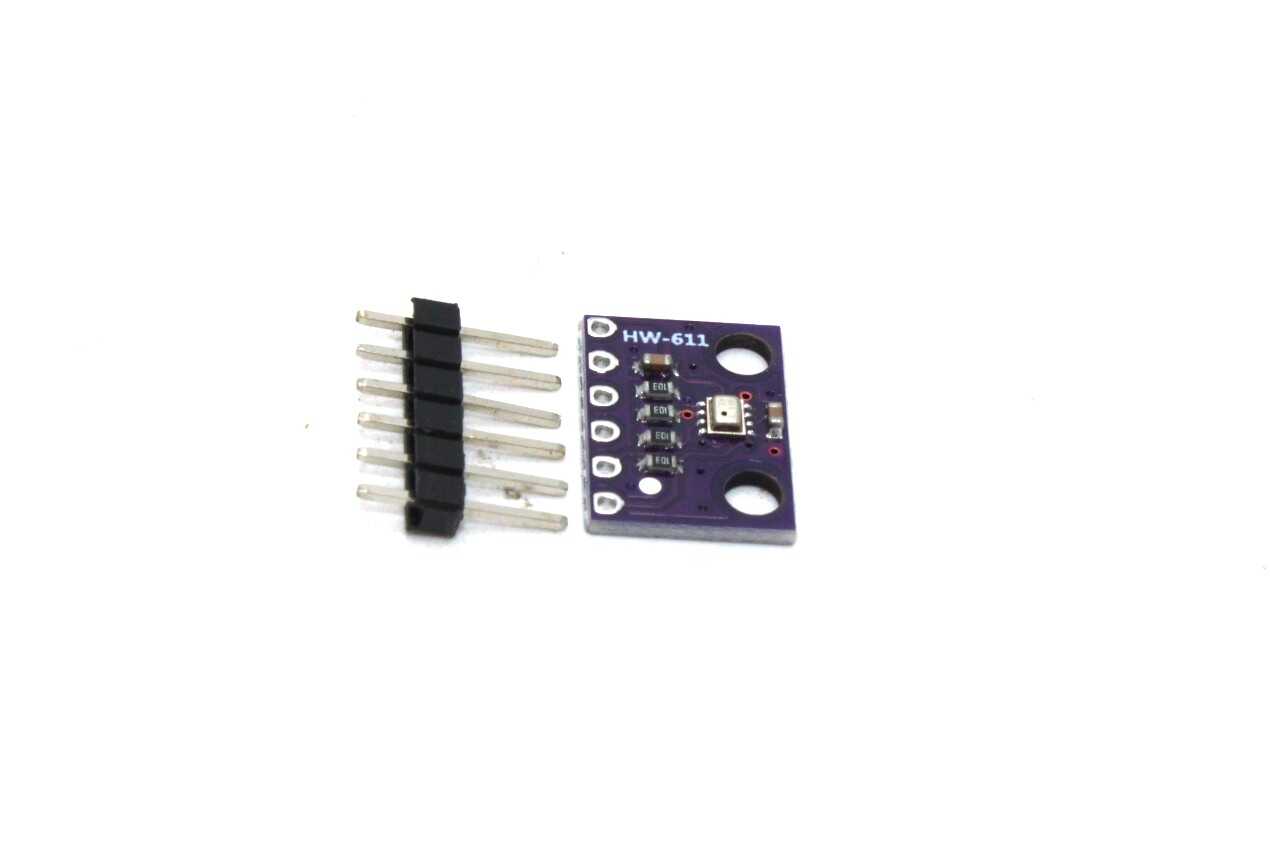
BMP280 Barometric Pressure and Altitude Sensor
Combine BMP280 altitude sensing with your IMU for a complete drone or rocketry navigation system — pressure altitude + tilt angle gives full 3D positioning data.
Advanced Use Cases
Self-Balancing Robot with MPU-6050: The classic Arduino balancing robot uses MPU-6050 with a complementary filter (or Kalman filter) combining accelerometer angle and gyro rate. The angle error feeds a PID controller driving two DC motors. The gyro is essential here because the accelerometer alone is too noisy during fast motion.
Industrial Tilt Monitor with ADXL345: ADXL345’s hardware threshold detection is perfect for industrial applications where you need to wake a microcontroller only when tilt exceeds a setpoint. Set the activity threshold register, connect INT1 to a wake-up pin, and run the system in deep sleep consuming <100 μA until a tilt event occurs.
Gesture Wand with SW-520D Array: Mount 4–6 SW-520D sensors on a wand at different angles. Different tilt combinations produce different binary codes that map to different gestures. Crude but effective for theatrical props, educational toys, and simple game controllers.
Fall Detection System: Combine ADXL345 free-fall detection with a threshold-based recovery check. If free-fall is detected (no gravity vector >0.3g for 50ms) followed by sudden impact (>3g), trigger an alarm. This is the core of many elderly fall detection wearables.
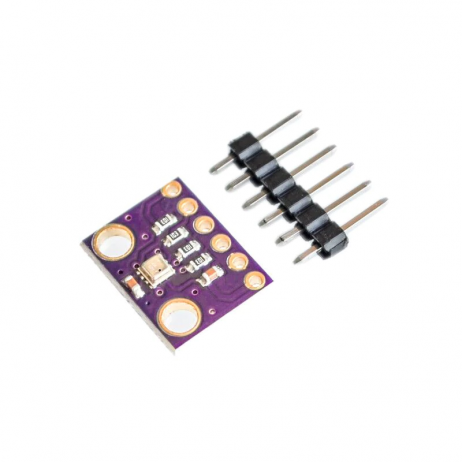
GY-BME280-3.3 Precision Altimeter Atmospheric Pressure Sensor
Pair the BME280 with your MPU-6050 or ADXL345 for altitude + orientation data — ideal for weather balloons, UAVs, and indoor positioning systems.
Frequently Asked Questions
Can the SW-520D detect the direction of tilt?
No. The SW-520D is a binary sensor — it tells you whether tilt has occurred past its threshold, but not which direction. For directional tilt, you need either an array of SW-520Ds oriented in different axes, or a proper accelerometer like ADXL345 or MPU-6050.
What is the angular accuracy of the MPU-6050?
The MPU-6050 accelerometer can compute tilt angles to about ±1–2° accuracy under static conditions. During vibration or movement, noise increases. Using a Kalman filter combining accelerometer and gyroscope improves dynamic accuracy to about ±0.5°. The standalone accelerometer measurement degrades significantly in high-vibration environments.
Why does my MPU-6050 drift over time?
Gyroscope drift is inherent to MEMS gyroscopes. Even at rest, the gyro output is not exactly zero due to bias offset. When you integrate the gyro rate to compute angle, this small bias accumulates over time and the computed angle drifts. Solutions: (1) Regularly correct the integrated angle using the accelerometer’s gravity vector. (2) Use a Kalman or complementary filter. (3) Re-zero the gyro at known positions. (4) Calibrate the gyro bias at startup and subtract it from readings.
Can I use two ADXL345 sensors on the same I2C bus?
Yes, but only two. The ADXL345 has two I2C addresses: 0x53 (ALT = GND) and 0x1D (ALT = VCC). If you need more than two, use SPI instead — each device gets its own CS pin and they share MOSI/MISO/SCK. SPI also supports the full 5 MHz data rate for high-speed acquisition.
Is the GY-521 module the same as the MPU-6050?
The GY-521 is a breakout board that contains the MPU-6050 chip plus a 3.3V voltage regulator and I2C pull-up resistors. This makes it easy to use with both 3.3V and 5V Arduinos. The MPU-6050 is the chip inside. When people say “MPU-6050” in hobbyist contexts, they usually mean the GY-521 module.
Can I use these sensors with ESP32?
All three work with ESP32. The SW-520D connects to any GPIO pin (use INPUT_PULLUP). The MPU-6050 connects to ESP32’s I2C pins (GPIO21 = SDA, GPIO22 = SCL by default). The ADXL345 is 3.3V native, making it a perfect match for ESP32’s 3.3V I/O pins with no level shifting needed.
Conclusion
Choosing between SW-520D, MPU-6050, and ADXL345 comes down to three questions: How much information do you need? How much power can you spend? How much complexity can you handle?
The SW-520D is unbeatable for rock-simple binary tilt detection. The MPU-6050 is the powerhouse choice for any project needing dynamic orientation tracking — drones, robots, gesture control. The ADXL345 occupies the sweet spot for precision static tilt with ultra-low power, making it the sensor of choice for battery-powered wearable and IoT applications.
For most beginner Arduino projects, start with the SW-520D to understand tilt basics, then graduate to the ADXL345 when you need actual angle data, and reach for the MPU-6050 when your project involves movement and you need rotation rate information too.


Add comment