
India’s abundant sunshine makes it one of the best countries in the world for solar power — yet many first-time solar system builders end up with undersized batteries that die overnight, or oversized panels that deliver no return on investment. Getting the solar panel and battery system size calculator right for Indian conditions requires understanding your load, your location’s peak sun hours, system losses, and the behaviour of lithium and lead-acid batteries in extreme heat. This guide walks you through the complete sizing process step by step.
Table of Contents
- Why Correct Sizing Matters in India
- Step 1: Calculate Your Daily Load (Wh/day)
- Step 2: Peak Sun Hours Across India
- Step 3: Calculate Solar Panel Size
- Step 4: Calculate Battery Bank Size
- Choosing Battery Chemistry: Lithium vs. Lead-Acid
- Building an 18650-Based Solar Battery Bank
- Accounting for System Losses
- Example Sizing: 3 Common Indian Scenarios
- Frequently Asked Questions
Why Correct Sizing Matters in India
India’s diverse geography creates vastly different solar potential. Rajasthan and Gujarat receive over 6 peak sun hours per day, while the northeast states and Kerala during monsoon may receive as little as 2–3 peak sun hours. Getting the panel-to-battery ratio wrong is expensive: too few panels means your batteries never fully charge; too few battery amp-hours means your system runs dry before dawn.
Temperature also plays a critical role. Lead-acid batteries lose significant capacity above 35°C — common in Indian summers. Lithium batteries handle heat better but cost more upfront. The sizing calculator must account for these seasonal variations, especially if your system needs to be reliable during the intense heat of April–June or the reduced sun of monsoon months.
Step 1: Calculate Your Daily Load (Wh/day)
Start by listing every electrical load the solar system needs to power. For each device, note the wattage and hours of daily use:
| Device | Typical Wattage | Hours/Day | Wh/Day |
|---|---|---|---|
| LED Light (10W) | 10 W | 6 h | 60 Wh |
| Ceiling Fan | 75 W | 8 h | 600 Wh |
| Mobile Charging | 10 W | 2 h | 20 Wh |
| TV (32-inch LED) | 50 W | 4 h | 200 Wh |
| Router/Modem | 10 W | 16 h | 160 Wh |
| Total | 1,040 Wh |
Add 20–25% buffer for wiring losses, inverter inefficiency, and unplanned usage: 1,040 × 1.25 = 1,300 Wh/day design load.
For small maker/hobbyist setups — a weather station, remote camera, soil sensor array — the loads are much smaller. An ESP32 sensor node with cellular backup and an LED indicator typically draws 0.5–2 W, translating to just 12–48 Wh/day.
Step 2: Peak Sun Hours Across India
“Peak sun hours” (PSH) is the number of hours per day when sunlight intensity averages 1,000 W/m² — the standard test condition for solar panels. This is NOT total daylight hours; a 12-hour day might only yield 5 PSH because of morning/evening low angles and cloud cover.
Typical annual average PSH values for key Indian regions:
- Rajasthan, Gujarat, MP (Thar Desert region): 5.5–6.5 PSH — best in India
- Maharashtra, Karnataka, Andhra Pradesh: 5.0–5.8 PSH
- Delhi, Haryana, Punjab: 4.8–5.5 PSH (lower in winters)
- Tamil Nadu, Telangana: 5.0–5.5 PSH
- Kerala, Coastal Karnataka: 4.0–5.0 PSH (monsoon heavily reduces this)
- Northeast (Assam, Meghalaya, etc.): 3.5–4.5 PSH
- J&K, Himachal Pradesh (high altitude): 5.0–6.0 PSH (clear air at altitude)
For a reliable off-grid system, design for your worst-month PSH, not the annual average. If you’re in Mumbai, plan for ~3.5 PSH during monsoon (June–August) rather than the summer average of 5.5 PSH.
Step 3: Calculate Solar Panel Size
The formula for required panel wattage is:
Required Panel Wattage = Daily Load (Wh) ÷ (PSH × System Efficiency)
System efficiency accounts for charge controller losses (~5%), wiring losses (~3%), and battery round-trip efficiency (~85% for lithium, ~75% for lead-acid). Combined efficiency factor: ~0.75–0.80.
Using our example (1,300 Wh/day load, 5 PSH, lithium battery, 0.80 efficiency):
Panel Wattage = 1,300 ÷ (5 × 0.80) = 1,300 ÷ 4.0 = 325 W
So a single 330W or 340W solar panel, or two 165W panels, would meet this load under average conditions. For the worst-month (3.5 PSH monsoon scenario):
Panel Wattage = 1,300 ÷ (3.5 × 0.80) = 464 W
This means adding a second panel (total ~500W) provides monsoon reliability. For maker/IoT projects with tiny loads, a 10W or 20W panel may be more than sufficient.
Step 4: Calculate Battery Bank Size
Battery sizing depends on how many days of autonomy you need (how many days the system can run without sun) and the depth of discharge (DoD) you’ll allow:
Battery Capacity (Ah) = (Daily Load Wh × Autonomy Days) ÷ (System Voltage × DoD)
For a 12V system, 2 days autonomy, 80% DoD (lithium), 1,300 Wh/day:
Battery = (1,300 × 2) ÷ (12 × 0.80) = 2,600 ÷ 9.6 = 271 Ah at 12V
This would require approximately 271 Ah worth of 18650 cells in a 12V (3S4P per 18650 group) configuration — or more practically, a commercial lithium battery bank. For a lead-acid system with 50% DoD:
Battery = (1,300 × 2) ÷ (12 × 0.50) = 433 Ah at 12V
The lead-acid system needs significantly more capacity because you can only use half before damaging the batteries.
Choosing Battery Chemistry: Lithium vs. Lead-Acid
For Indian solar installations, the two most common battery choices are lead-acid (tubular/VRLA) and lithium iron phosphate (LiFePO4). Here’s how they compare for Indian conditions:
| Factor | Lead-Acid Tubular | LiFePO4 |
|---|---|---|
| Upfront Cost (₹/kWh) | ₹8,000–12,000 | ₹20,000–35,000 |
| Usable DoD | 50% | 80–90% |
| Cycle Life | 400–600 cycles | 2,000–4,000 cycles |
| Heat Performance (>40°C) | Degrades 30–40% | Marginal degradation |
| Maintenance | Requires water top-up | Zero maintenance |
| Weight | Heavy | 60–70% lighter |
| 10-year Total Cost | Higher (multiple replacements) | Lower |
For maker projects and small systems, the 18650 lithium-ion format (NMC/NCA chemistry) is often the most cost-effective — especially if you can source cells from old laptop batteries. For larger residential systems, LiFePO4 is now the clear winner in India given falling prices.
Building an 18650-Based Solar Battery Bank
For hobbyists and makers, building a small solar battery bank from 18650 cells is a rewarding project. A typical 12V, 20Ah battery for a small solar system requires:
- Configuration: 3S10P (3 cells in series × 10 parallel groups = 30 cells total)
- Voltage: 3 × 3.7V = 11.1V nominal (12V-class)
- Capacity: 10 × 3,000mAh = 30,000mAh (30Ah) — enough for 20Ah usable at 67% DoD
- BMS: A 3S 10A–20A BMS board for overcharge, over-discharge, and short-circuit protection
- Charger: 12.6V CC/CV MPPT charge controller input
The 18650 format works well for solar backup power for microcontroller nodes, CCTV cameras, weather stations, and small lighting systems. For higher-capacity home backup, assembling hundreds of 18650 cells becomes impractical — that’s where commercial LiFePO4 packs make more sense.
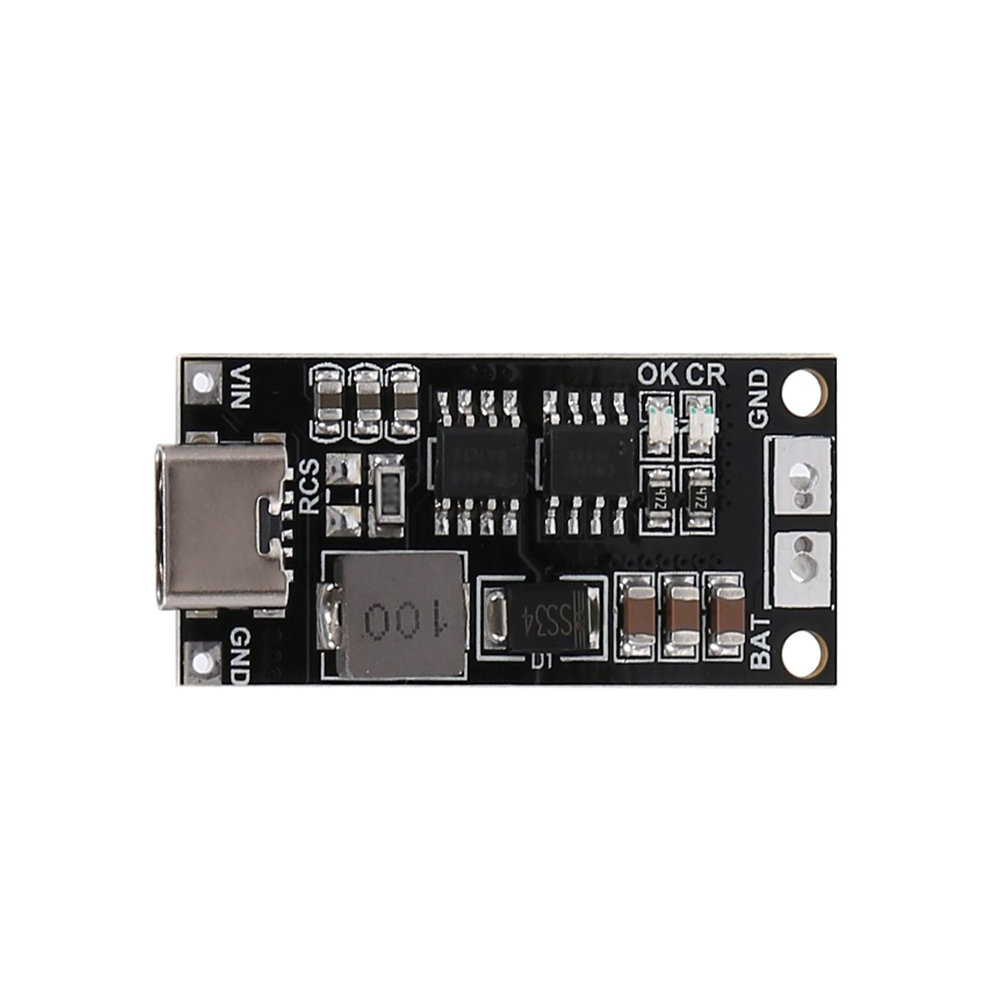
18650 Polymer Lithium Ion Charger Type-C to 3S 12.6V 2A Booster Module
Charge a 3S 18650 pack (12.6V fully charged) directly from a USB Type-C source at up to 2A. Perfect for solar-charged 12V DIY battery systems — eliminates the need for a separate CC/CV charger module.
Accounting for System Losses
Real solar systems never deliver 100% of theoretical output. Key loss factors to include in your sizing:
- Panel temperature derating: Solar panels lose ~0.4% efficiency per °C above 25°C. In 45°C Indian summer conditions, panels may operate at 35–40°C above ambient (85–90°C cell temp), causing 15–25% power loss. Select panels with a low temperature coefficient (Pmax) for hot-climate installations.
- Dust and soiling: Dusty conditions in Rajasthan, agricultural areas, and urban pollution can reduce output by 5–20% between cleaning cycles. Clean panels monthly at minimum.
- Charge controller efficiency: MPPT controllers operate at 93–97% efficiency; PWM controllers are 75–80%. Always choose MPPT for systems above 100W.
- Wiring and connector losses: Size wires generously (use wire sizing calculators for your current and cable run distance) to keep resistive losses under 3%.
- Battery round-trip efficiency: Lithium ~95–97%; lead-acid ~75–85%.
- Inverter efficiency: Good quality inverters operate at 88–95% efficiency at 50–80% load. Oversized inverters running at 10% load can drop below 80%.
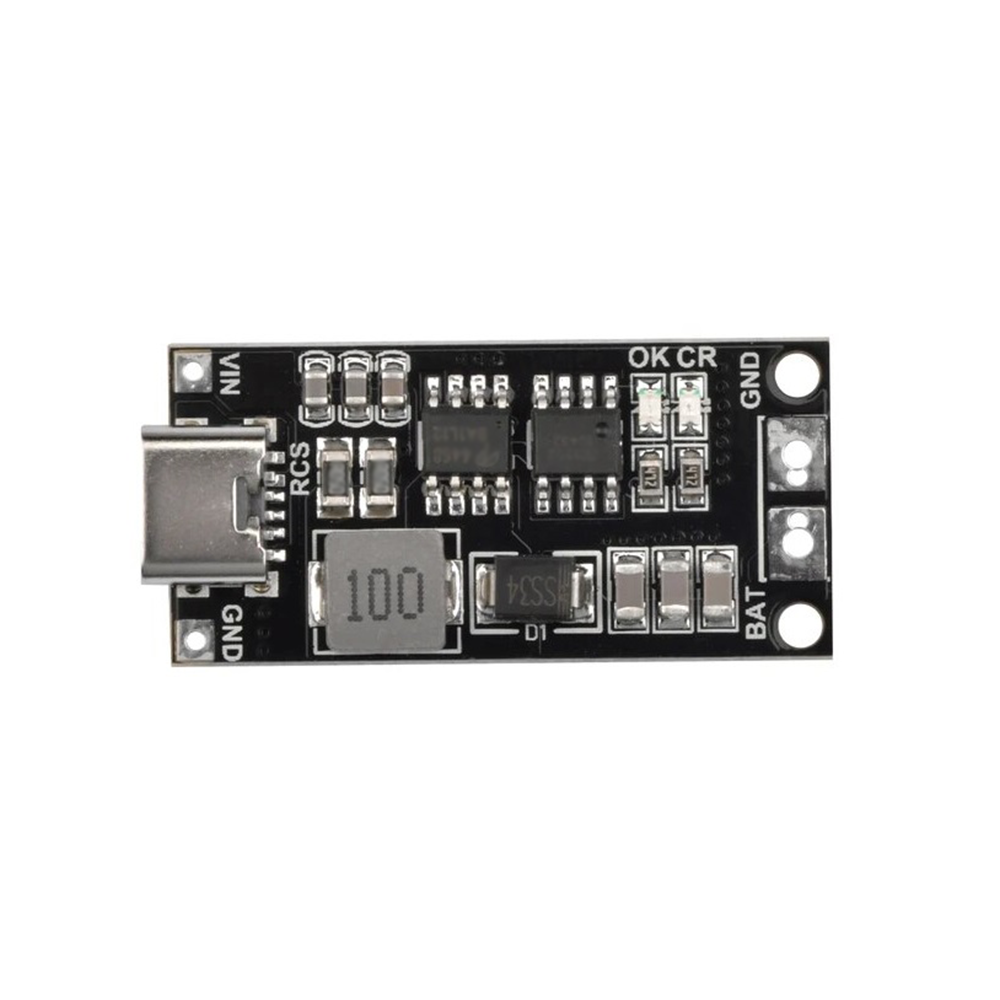
18650 Polymer Lithium Ion Charger Type-C to 3S 12.6V 4A Booster Module
The higher-current 4A version of the 3S booster charger. Ideal for faster recharging of 3S 18650 packs in solar applications where available charge time is limited.
Example Sizing: 3 Common Indian Scenarios
Scenario A: Rural Home Lighting + Fan (Off-Grid, UP Village)
Load: 4 × 10W LED lights (6h) + 1 × 75W fan (8h) = 840 Wh/day. With 25% buffer: 1,050 Wh/day.
Location: UP — 5.0 PSH average, design for 4.0 PSH (monsoon).
Panel: 1,050 ÷ (4.0 × 0.78) = 336W → Use 350W panel.
Battery: 2 days autonomy, LiFePO4, 80% DoD, 12V: (1,050 × 2) ÷ (12 × 0.80) = 219 Ah → Use 200Ah LiFePO4 (standard size).
Scenario B: Rooftop IoT Weather Station (Maker Project, Chennai)
Load: ESP32 + sensors + LoRa transmitter + LED indicator = 1.5W avg × 24h = 36 Wh/day. With 25% buffer: 45 Wh/day.
Location: Chennai — design for 4.5 PSH (monsoon worst-case).
Panel: 45 ÷ (4.5 × 0.80) = 12.5W → Use 20W panel (headroom for cloudy days).
Battery: 3 days autonomy, 18650 pack, 70% DoD, 3.7V equiv (1S): (45 × 3) ÷ (3.7 × 0.70) = 52 Ah → But we’re using a 5V boost system, so: 3 × 18650 cells in parallel (3 × 3,000mAh = 9,000mAh at 3.7V = 33 Wh at 3S) — actually use a 3S2P pack (18 Wh usable) for a compact solution with 24h+ autonomy.
Scenario C: Small Shop CCTV + POS Backup (Hybrid, Jaipur)
Load: 4 cameras (30W total, 24h) + POS terminal (50W, 10h) = 1,220 Wh/day. Buffer: 1,525 Wh/day.
Location: Jaipur — excellent 6.0 PSH, but size for 4.5 PSH (cloudy days).
Panel: 1,525 ÷ (4.5 × 0.80) = 424W → Use 2 × 250W panels.
Battery: 1 day autonomy (hybrid — grid backup available), LiFePO4, 80% DoD, 24V: (1,525 × 1) ÷ (24 × 0.80) = 79 Ah → Use 100Ah 24V LiFePO4.
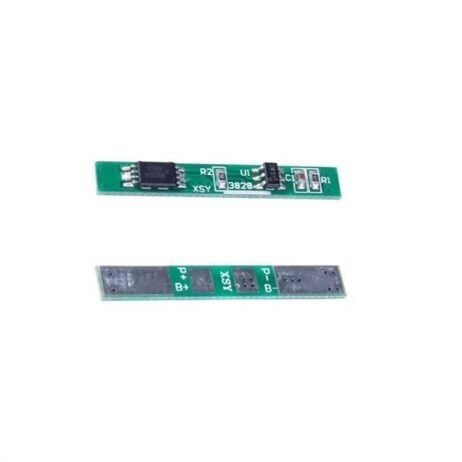
1S 3.7V 2A 1MOS BMS Li-ion 18650 Battery Protection Board
Essential protection board for single 18650 cells used in solar IoT nodes. Prevents overcharge from solar input and deep discharge from extended cloudy periods — critical for reliable field deployments.
Frequently Asked Questions
Q1: What is the minimum solar panel size for charging a 12V 100Ah battery in India?
To charge a 100Ah battery from 50% to full in one day (5 PSH average): you need ~100Ah × 0.5 ÷ 5h ÷ 0.90 (MPPT efficiency) = ~11A, or about 11A × 12V = 132W. In practice, a 150W or 200W panel is recommended to provide margin for a cloudy day or high-load day.
Q2: Can I connect solar panels directly to 18650 batteries without a charge controller?
Never. A solar panel’s open-circuit voltage can be significantly higher than its rated voltage. A 12V panel has a VOC of ~22V — enough to damage 18650 cells instantly. Always use an MPPT or PWM charge controller matched to your battery chemistry.
Q3: How does monsoon affect my solar system sizing in coastal India?
Monsoon can reduce effective sun hours by 40–60% for 3–4 months. If you’re sizing for year-round off-grid operation in coastal Karnataka, Kerala, or the Northeast, you must either design for the worst-month PSH (increasing panel and battery size significantly) or budget for a generator/grid backup during the monsoon months.
Q4: What is the MNRE subsidy for solar battery systems in India?
As of 2025, PM Surya Ghar Muft Bijli Yojana provides subsidies for rooftop grid-tied solar installations (without battery storage) of up to ₹18,000/kW for the first 2 kW and ₹9,000/kW for the next 1 kW. Battery-storage systems are not yet subsidised under mainstream schemes, though some state governments (Gujarat, Rajasthan) have standalone battery storage programmes. Always check the latest MNRE guidelines.
Q5: How long do solar batteries last in Indian conditions?
Quality LiFePO4 batteries installed with proper BMS and temperature management last 10–15 years in Indian conditions. Lead-acid tubular batteries typically last 3–5 years in hot climates. The higher upfront cost of lithium is almost always recovered through longer service life and lower replacement frequency.
Start Your Solar Project with the Right Components
Whether you’re building a solar-powered IoT node for your farm, a home lighting system for your village, or a rooftop backup for your urban apartment, getting the sizing right upfront saves you money and frustration down the road. Use the formulas in this guide, account for Indian sun hours and temperature realities, and choose the right battery chemistry for your budget and use case.
Zbotic stocks 18650 cells, BMS boards, charging modules, battery holders, and accessories for every stage of your solar battery project. Visit our Batteries, Power & Charging section to get started!







Add comment