
Table of Contents
- Introduction: Why the Horn Matters in Servo Design
- How a Servo Motor Works
- Complete Guide to Servo Horn Types
- Propeller (Single-Arm) Horn
- Disc (Round/Circular) Horn
- Multi-Arm (X/Y Cross) Horn
- Custom and Specialty Horns
- Spline Compatibility: 20T, 24T, 25T Explained
- Plastic vs Aluminium Horns
- Application Guide: Which Horn for Which Project
- Recommended Products from Zbotic
- Frequently Asked Questions
Introduction: Why the Horn Matters in Servo Design
When most people buy a servo motor for a robotics project, they focus on torque rating, operating voltage, and rotation range — all important specifications. But the servo horn (also called a servo arm or servo wheel) is equally critical: it is the mechanical interface between the servo’s output shaft and whatever mechanism you are trying to move. Choosing the wrong horn type can mean insufficient leverage, mechanical binding, poor positional accuracy, or even stripping the servo’s output spline under load.
In Indian robotics competitions (like e-Yantra, Robocon, or college project showcases), the servo horn selection is frequently an afterthought that later causes failures during demonstrations. This guide covers every common servo motor horn type in detail, explains the engineering reasoning behind each design, and gives you practical guidance for selecting the right horn for your specific robotics application.
Whether you are working with micro servos like the SG90, standard servos like the MG996R, or high-torque digital servos, understanding horn geometry will make your mechanisms more reliable, more precise, and easier to assemble.
How a Servo Motor Works
Before choosing a horn, it helps to understand what the servo’s output shaft is actually doing. A standard RC/hobby servo contains:
- A DC motor (typically with a gearbox for torque multiplication)
- A potentiometer linked to the output shaft to measure actual angle
- A control circuit that compares the commanded angle (from PWM signal) with the measured angle and drives the motor accordingly
The output shaft rotates between defined limits (usually 0°–180° for a standard servo) and holds its position against external loads up to the torque rating. The horn is press-fitted (and usually screw-secured) onto the output shaft’s splined end, transmitting this angular motion to your mechanism.
The effective radius of the horn — the distance from the shaft centre to the linkage attachment point — directly determines the mechanical trade-off between force and movement range:
- Longer radius: More linear travel per degree of servo rotation, but lower force at the attachment point (for the same servo torque)
- Shorter radius: Less travel per degree but more force at the attachment point
This is the lever-arm principle. A 2 kg·cm servo at 1 cm radius = 2 kg force. At 2 cm radius = 1 kg force. Selecting horn length is therefore a fundamental mechanical design decision, not just a compatibility question.
Complete Guide to Servo Horn Types
The hobby and robotics industry has standardised on several distinct horn geometries. Each has specific strengths and is better suited to particular applications. Let us examine each in detail.
Propeller (Single-Arm) Horn
The propeller horn — also called a single-arm horn — has one straight or slightly tapered arm extending from the spline hub. It resembles a small aircraft propeller, hence the name. Holes are spaced along the arm at regular intervals (typically every 5 mm) to allow precise radius selection for linkage attachment.
Characteristics
- Asymmetric rotation: the arm sweeps through an arc on one side of centre
- Very clean motion for push-pull linkage systems
- Easy to adjust effective radius by using different holes
- Compact and lightweight
- Comes in various arm lengths (typically 15 mm, 25 mm, and 35 mm variants)
Best Applications
- RC aircraft control surfaces: Elevator, rudder, and aileron linkages — the definitive use case
- Robot joints with limited range: When the joint only needs to move through 60°–120°, a single arm is cleaner than a disc
- Linear actuator mechanisms: Converting rotary servo motion to push-pull rod motion
- Gripper fingers: Servo drives one arm that opens and closes the gripper via a linkage
Choosing the Right Length
For a robot arm joint where you need maximum torque (e.g., a shoulder joint carrying heavy payload), use the shortest hole position on the horn to maximise force. For a gripper finger where you need wide travel range, use the outermost hole for maximum linear movement per degree of servo rotation.
Disc (Round/Circular) Horn
The disc horn (also called a round horn or wheel horn) is a circular disc with multiple mounting holes arranged radially. The disc rotates with the servo output shaft and holes are provided at various radii for linkage attachment — or the disc face itself is used as a mounting surface for mechanisms directly coupled to the servo.
Characteristics
- Symmetric geometry: works equally in either direction of rotation
- Multiple radius options in a single piece
- Flat mounting surface for attaching custom brackets, 3D-printed components, or directly coupling to another mechanism
- Higher rotational inertia than propeller horn (relevant for high-speed applications)
- Stronger than propeller horn under bending loads due to disc structure
Best Applications
- Robotic wrists and rotary joints: When the servo drives rotation directly (the horn is the joint), disc horns provide a large, flat surface for mounting the forearm or gripper assembly
- Camera pan/tilt mechanisms: Camera brackets bolt directly to the disc face
- Steering mechanisms: In wheeled robots, a disc horn gives clean, symmetric steering action
- Continuous rotation applications: Modified continuous-rotation servos often use disc horns as wheels in small robot platforms
- High-load applications: When a propeller horn might flex or bend under load, the disc’s stiffer structure handles torque better
Aluminium Disc Horns
Aluminium disc horns (like the 25T aluminium disc horn for MG995/MG996) are particularly popular in competition robotics because they provide much greater rigidity than plastic alternatives. Under high servo torque (e.g., 13 kg·cm from an MG996R), plastic disc horns can crack or deform under sustained load. An aluminium disc horn eliminates this failure mode entirely at modest cost.
Multi-Arm (X/Y Cross) Horn
Multi-arm horns come in two-arm (180° between arms), three-arm (120°), and four-arm (90°, X or cross pattern) configurations. Each arm has holes for linkage attachment at multiple radii, giving you several attachment options in a single part.
Characteristics
- Multiple connection points at different radii and angles
- Better rotational balance than single-arm horn (reduced vibration at high speed)
- The most common default horn supplied with servo motors
- X horns (four-arm) provide the most versatility
Best Applications
- Standard servo use with a single linkage: Use one arm, ignore the others. X horn is the most universal choice when you are not sure which configuration you need.
- Dual-linkage mechanisms: Two opposite arms on a 2-arm horn allow two linkages to be driven from a single servo (differential steering, push-pull actuation)
- Balancing mechanisms: The symmetric mass distribution reduces vibration when the servo sweeps rapidly
Custom and Specialty Horns
Beyond the three main categories, the robotics community uses several specialty horn types:
Wheel Horns
A solid rubber or plastic wheel pressed onto the servo spline, used when the servo itself is the wheel drive motor (usually requires a continuous-rotation servo). Popular in small floor robots like Sumo bots and micromouse competitors.
Pulley Horns
A grooved pulley mounted on the servo spline to drive a timing belt or string. Used in cable-driven grippers, robot fingers, and certain camera gimbals. Allows the servo to be placed remotely from the moving joint, reducing the mass at the joint.
3D-Printed Custom Horns
With affordable FDM printers (₹15,000–25,000 in India), printing custom horns is now accessible to hobbyists. You can design a horn that directly interfaces with your specific mechanism geometry, eliminating adapter brackets. Print in PETG or ABS for functional parts; PLA works for light-duty prototypes. Always include a pilot hole sized for the servo screw and model the spline interface precisely.
Spline Compatibility: 20T, 24T, 25T Explained
The output shaft of a servo motor has a splined profile — a series of ridges around the shaft that engage matching ridges in the horn hub. The number after T indicates the number of teeth (spline ridges):
- 20T (Futaba standard): Used by Futaba and compatible servos. Less common in budget servos available in India.
- 24T (Hitec standard): Used by Hitec servos and their compatibles.
- 25T (JR/Sanwa standard): The most common spline in the budget hobby and maker servo market in India — used by SG90, MG90S, MG995, MG996R, and most servo clones. If in doubt, this is the spline to buy horns for.
Using a horn with the wrong spline count will feel like it fits initially but will have play (slop) or will not seat fully, causing positioning errors and stripping the spline under load. Always verify spline compatibility before ordering replacement horns.
Identifying your servo’s spline: Check the original horn that came with the servo and count the teeth. Alternatively, look up the model number — SG90, MG90S, MG995, and MG996R are all 25T.
Plastic vs Aluminium Horns
Most servo motors come with nylon/plastic horns as standard. These are adequate for light-duty applications but have limitations:
| Property | Plastic Horn | Aluminium Horn |
|---|---|---|
| Weight | Very light (~1–2 g) | Heavier (~4–8 g) |
| Rigidity | Flexes under heavy load | Rigid, no deflection |
| Durability | Cracks under cyclic stress | Excellent, lasts the servo’s lifetime |
| Cost | Very cheap (₹5–15) | Moderate (₹60–150) |
| Best use | SG90 micro servos, prototyping | MG995/MG996, competition robots |
In competition robotics — particularly in applications like robot arms, bipedal walkers, or any mechanism that will see sustained load at near-maximum servo torque — always upgrade to aluminium horns for the high-torque joints. The additional weight is minor compared to the reliability improvement.
Application Guide: Which Horn for Which Project
Robot Arm (6-DOF)
- Shoulder (high torque, limited range): Aluminium disc horn (MG996R) — rigidity for heavy forearm weight
- Elbow and wrist (moderate torque): Aluminium or sturdy plastic disc horn
- Gripper open/close: Propeller horn — linkage converts servo rotation to finger movement
RC Aircraft
- All control surfaces: Propeller horn — standard in RC aviation for 50+ years
- Retractable undercarriage: Disc horn for direct coupling to the gear mechanism
Wheeled Robot (Differential Drive)
- Steering (if used): Disc horn for direct arm coupling or propeller horn for push-pull steering link
- Wheel drive (continuous rotation servo): Wheel horn or direct coupling
Humanoid Robot (Head Pan/Tilt)
- Disc horn on each servo — the pan plate and tilt bracket bolt directly to the disc surface, giving maximum rigidity and alignment accuracy
Camera Gimbal
- Disc horn for roll/pitch axes — camera mount attaches to disc face
- Pulley or disc horn for remote-cable-driven tilt if servo must be positioned away from camera mass
Recommended Products from Zbotic
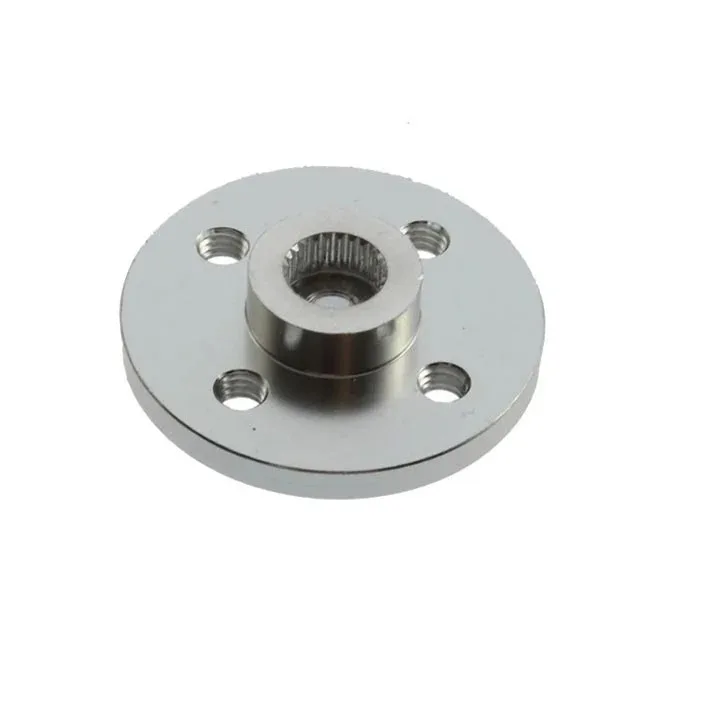
Aluminum Servo Horn 25T Round Disc (MG995/MG996)
CNC-machined aluminium disc horn with 25T spline for MG995 and MG996 servos. Eliminates the flex and cracking issues of plastic horns in high-torque robotics applications. Essential upgrade for competition builds.

Servo MG996 13KG 180° (High Quality)
The definitive high-torque servo for robot arms and RC vehicles. Metal gears, 13 kg·cm torque, 25T spline — pairs perfectly with the aluminium disc horn above for demanding robotics applications.

TowerPro SG90 Servo Motor (180°)
The iconic 9g micro servo, included with a complete set of plastic horn types: propeller, disc, and cross arm. Perfect entry point for learning which horn works best for your mechanism before investing in aluminium horns.
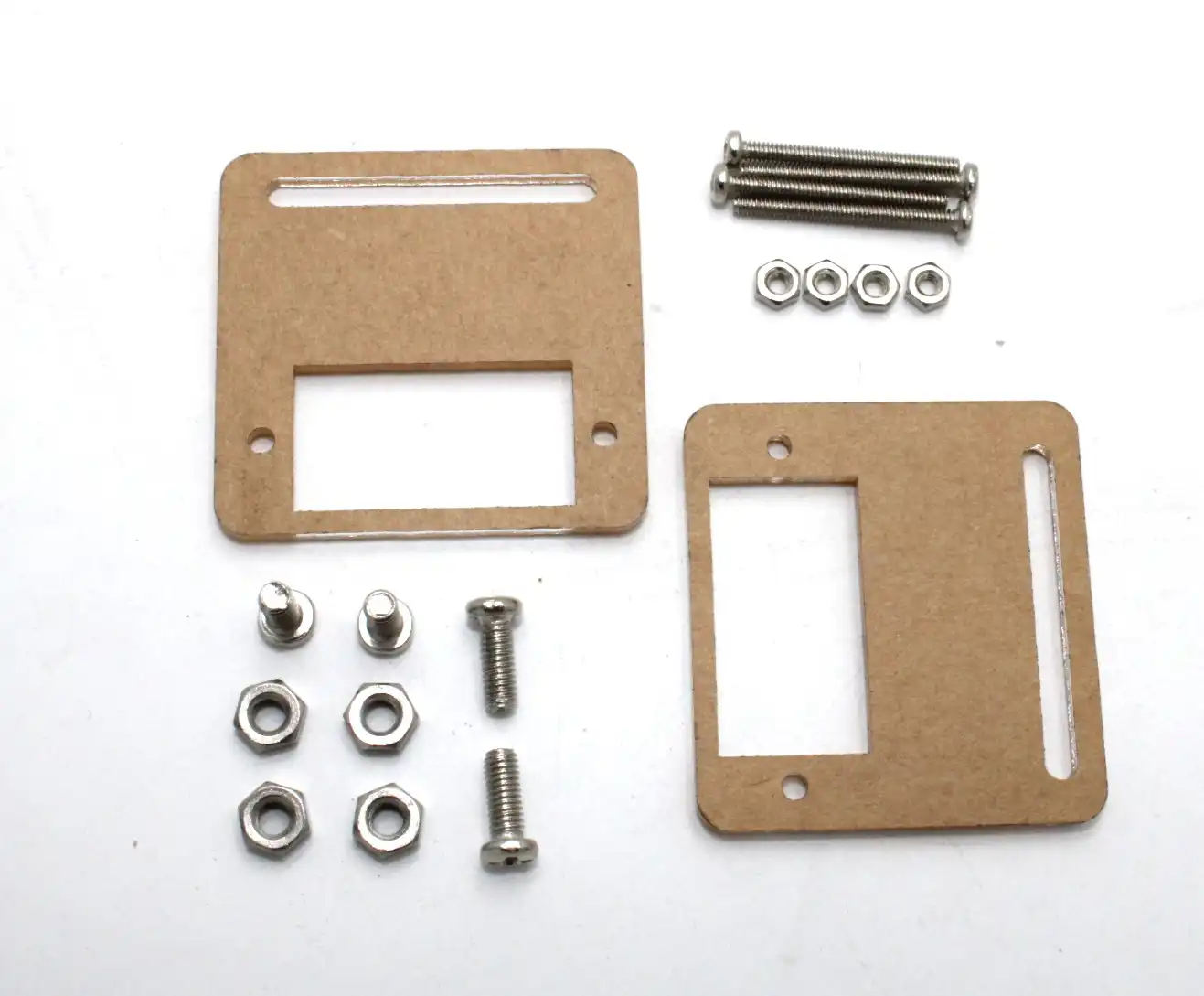
Servo Mount Holder Bracket for SG90/MG90 (Pack of 2)
Proper servo mounting brackets that complement disc and arm horns in robot builds. Keeps servos rigidly aligned, reducing mechanical slop that horn selection alone cannot compensate for.
Frequently Asked Questions
Can I use any servo horn on any servo?
No — the spline count must match. Using a horn with the wrong spline count will result in poor engagement (loose fit, stripping under load) or the horn will not seat onto the shaft at all. Check your servo’s spline count (most budget servos are 25T) and buy the matching horn. The servo’s screw hole at the tip is generally standardised across brands, so the retention screw is usually interchangeable.
How tight should the servo horn be on the shaft?
The horn should press firmly onto the splined shaft with hand pressure or light tapping — snug but not loose. The retaining screw provides axial retention (prevents the horn from being pulled off the shaft) but does not provide rotational retention — that is the job of the spline engagement. If the horn rotates on the shaft without the screw, the spline fit is too loose and the horn will wear the spline over time.
What causes servo horn stripping?
The most common cause is using a plastic horn with a high-torque servo at near-maximum load. The plastic spline hub deforms or cracks. Solution: use an aluminium horn, or reduce the mechanical load through linkage geometry adjustments. A secondary cause is repeated over-torquing when the mechanism hits a hard stop — always build in soft stops or compliant joints to prevent the servo from running against a rigid end stop.
Is a longer horn arm always better for more movement?
Longer arms give more linear displacement per degree but reduce the force at the attachment point proportionally. The optimal length depends on your mechanism: if you need large movement range with low force (e.g., opening a lightweight door), use a longer arm. If you need high force with limited travel (e.g., clamping a gripper), use a shorter arm. You can always extend the arm’s effective length with push-rod linkages.
My servo makes a buzzing noise at rest. Is the horn causing this?
An incorrect horn causing mechanical load at the stop position can contribute to servo buzz. More commonly, buzz is caused by the servo hunting (oscillating around the target position) due to a mechanical load that shifts the position slightly. Check if the mechanism connected to the horn is applying a torque that the servo must constantly fight to maintain position. A servo at neutral position under zero load should be nearly silent.
Can I use an SG90 horn on an MG996R servo?
Both use 25T splines, so the horn will physically fit. However, the SG90’s plastic horn is not designed to handle the 13 kg·cm torque of the MG996R and will crack under load. Always use a horn rated for your servo’s torque — the aluminium 25T disc horn is the correct choice for MG996R in any demanding application.
Build Better Robots with the Right Servo Hardware
The right servo horn is the difference between a mechanism that works reliably under competition conditions and one that fails at the worst moment. Zbotic stocks servo motors, aluminium horns, mounting brackets, and servo extension cables for every stage of your robotics project.


Add comment