
One of the most underrated decisions in DIY robotics is robot wheel traction and tire type selection. The wrong wheel on the wrong surface leads to wheel slip, wasted motor power, missed encoder counts, and failed navigation. Whether you are building a line follower, a warehouse robot, a sumo bot, or a terrain rover, understanding wheel-surface interaction is fundamental. This guide covers every major wheel type, explains how different surfaces affect traction, and helps you choose the right setup for your project.
Traction Basics: Friction, Weight, and Slip
Traction is the friction force between a wheel and a surface that allows the wheel to propel the robot without spinning in place. It depends on two things:
- Normal force (N): The weight pressing the wheel onto the surface. A heavier robot or a wheel carrying more of the robot’s weight generates more normal force.
- Coefficient of friction (μ): A property of the wheel material and surface combination. Rubber on concrete has a high μ (~0.7). Plastic on smooth tile has a low μ (~0.2).
Maximum traction = μ × N. Beyond this force, the wheel slips. Slip is the enemy of odometry-based navigation — if your encoders track wheel rotation but the wheel is slipping, your position estimate drifts badly.
Key design rules:
- Distribute robot weight evenly across all drive wheels
- Never use caster wheels as drive wheels (high slip, directional instability)
- Increase wheel diameter to cross small obstacles and reduce slip on rough surfaces
- Softer rubber compounds increase μ but wear faster
Surface Types and Their Traction Demands
Different operating environments demand very different wheel strategies:
Smooth Indoor Floors (Tiles, Linoleum, Hardwood)
Low rolling resistance, moderate friction. Plastic wheels work but rubber-coated wheels give much better control. This is the ideal surface for line-followers and competition robots. Avoid thin plastic wheels — they wobble and skip. Use wheels with a flat or slightly rounded profile for consistent ground contact.
Carpet
Carpet fibres catch on thin wheels and create asymmetric drag. Use wide, large-diameter wheels. Mecanum wheels perform poorly on thick carpet — fibres reduce roller spin and cause binding. Standard rubber wheels with wide treads work best.
Outdoor Concrete/Asphalt
High friction, but surface irregularities cause vibration and wheel hop. Use pneumatic tires or foam-filled wheels for shock absorption. Hard plastic wheels will bounce and skip over cracks, causing missed encoder steps.
Rough Terrain (Gravel, Soil, Grass)
Requires aggressive tread, wide contact patch, and high ground clearance. Off-road treaded rubber tires on 60–100mm wheels with knobby patterns are ideal. Four-wheel-drive or six-wheel-drive setups prevent single-axle bogging.
Smooth Polished Competition Surfaces
Used in sumo and line-following competitions. Silicone or urethane-compound wheels (Shore A 30–50) deliver the highest grip on polished wood or acrylic. Some teams coat wheels with skateboard grip tape for maximum traction in sumo.
Wheel and Tire Types Explained
Here is a breakdown of the most common wheel types used in hobby robotics:
Plastic/Nylon Wheels
Cheap, lightweight, rigid. Suitable only for smooth tile surfaces where low friction is acceptable. Used on budget chassis kits. High slip, low durability on rough surfaces.
Rubber-Coated Wheels
The most versatile option. A hard plastic hub with a rubber tire insert gives good friction on most indoor surfaces. Available in 65mm, 80mm, and 130mm diameters. Perfect for 2WD and 4WD chassis builds.
Foam/TPU Wheels
Soft, deformable, excellent grip. Used in FTC (First Tech Challenge) robots and precision indoor bots. Conform to surface irregularities for maximum contact area. Wear out faster than rubber.
Pneumatic Tires
Air-filled tires like bicycle inner tubes scaled down. Best for outdoor terrain robots — absorb shock, maintain contact on bumpy surfaces. Require more maintenance (inflation, puncture risk).
Tank Treads
Maximum traction and surface contact across all terrain types. Difficult to steer (skid-steering only), high current draw. Best for slow, heavy terrain robots. Not suitable for precise odometry.
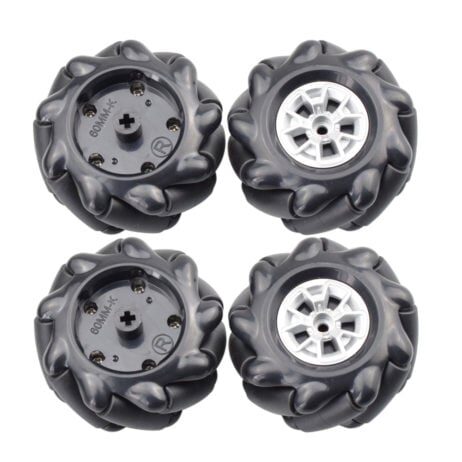
60MM-K Mecanum Wheel (Pack of 4) – Black
60mm mecanum wheels compatible with 6.7mm couplings. Omnidirectional movement on smooth surfaces. Ideal for compact indoor robots requiring strafing and holonomic motion.
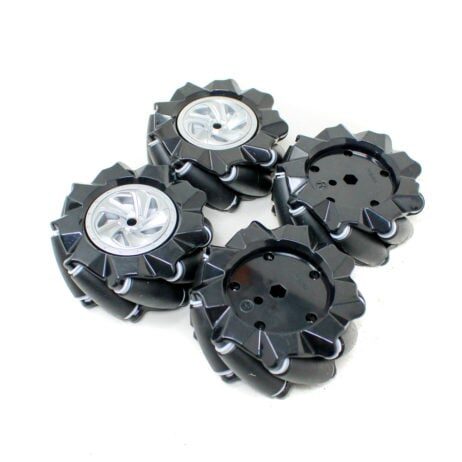
80MM-A Mecanum Wheel (Pack of 4) – Black
Larger 80mm mecanum wheels for robots needing more load capacity and ground clearance. Compatible with 6.7mm D-shaft couplings. Smooth operation on tile and polished floors.
Mecanum Wheels: Omnidirectional Traction
Mecanum wheels deserve special attention because they change how traction works entirely. Each mecanum wheel has rollers mounted at 45° to the wheel axis. When all four wheels spin in coordinated patterns, the robot can translate in any direction — forward, backward, sideways, diagonally — without rotating the chassis.
Traction characteristics of mecanum wheels:
- Each wheel generates force at 45° to its spin axis, not directly forward/backward
- Lateral traction (holding position on a slope) is lower than standard wheels
- They work best on smooth, hard, level surfaces — carpet and gravel greatly reduce efficiency
- The small rollers lose contact on surface cracks wider than the roller diameter
- Encoders are essential — speed asymmetry between wheels causes drift in open-loop control
Wheel placement rule: Mecanum wheels must be arranged so the rollers form an X pattern when viewed from above. Mirroring left-right pairs is critical — confusing A-type and B-type wheels results in the robot spinning instead of strafing.
Use 4mm or 5mm hex couplings to attach mecanum wheels to motor shafts. Ensure all four couplings are tightened evenly to prevent wobble.
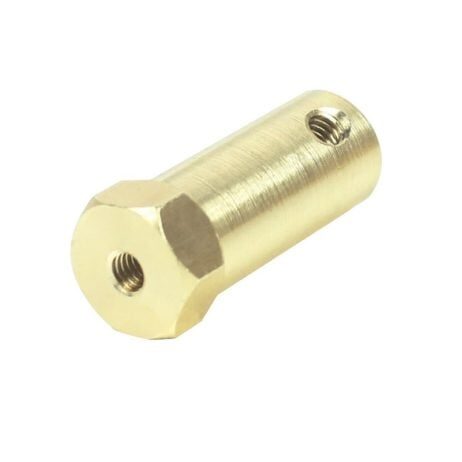
4mm Hex Coupling for Robot Smart Car Wheel (30mm)
Solid 4mm hex shaft coupling for securely mounting mecanum and standard wheels to TT motor shafts. 30mm length, compatible with most robot car wheels.
Wheel Sizing and Motor Matching
Wheel diameter directly affects speed and torque at the contact patch. The relationship is simple:
- Larger wheel = higher top speed, lower torque (same motor RPM covers more ground per revolution)
- Smaller wheel = lower speed, higher torque (more force at the surface for climbing or pushing)
The formula: Speed (mm/s) = (Motor RPM / 60) × π × Wheel diameter (mm)
For a TT motor at 200 RPM with a 65mm wheel: (200/60) × π × 65 = ~680 mm/s ≈ 0.68 m/s. For a sumo robot needing maximum pushing force, use a smaller wheel (40–50mm) with a high-torque geared motor.
Match wheel width to the surface: narrower wheels (20–25mm) reduce friction and turn more easily on smooth surfaces. Wider wheels (40–60mm) increase traction and stability on rough terrain.
Chassis Selection and Wheel Mounting
Your chassis determines how wheels mount and what wheel sizes fit. Round chassis allow tight turning radii. Rectangular chassis provide more payload space. Always check the motor shaft diameter and coupling type before ordering wheels.
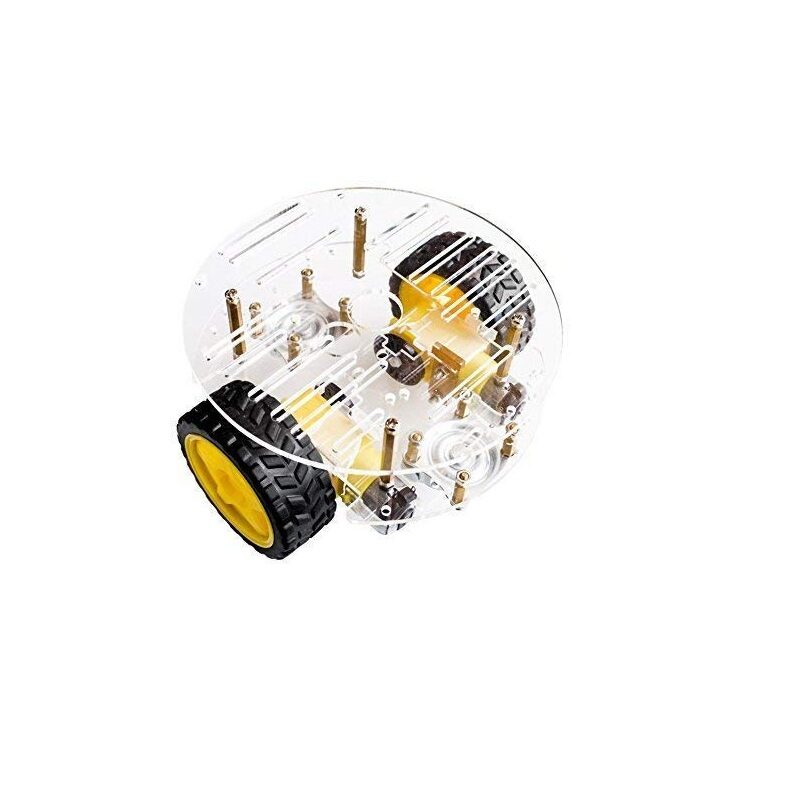
2WD Mini Round Double-Deck Smart Robot Car Chassis DIY Kit
Compact round chassis with dual-deck acrylic plates, TT motors, and 65mm rubber wheels. Great starter platform for testing wheel-surface traction on indoor floors.
Practical Tips for Better Traction
- Add weight strategically: Place heavy components (batteries, controllers) over drive wheels to maximize normal force and traction.
- Use compliant mounts: Suspension or spring-loaded motor mounts keep wheels in contact on uneven surfaces. Even a simple foam pad under the motor reduces wheel hop.
- Clean your wheels: Dust and hair wrapped around axles or embedded in rubber dramatically reduce traction. Wipe rubber wheels with isopropyl alcohol before traction-critical testing.
- Align wheels precisely: Toe-in or toe-out causes scrubbing drag. Use a straight edge to ensure all wheels are parallel (for differential drive) or at exactly 45° (for mecanum).
- Use PID on motor speed: Encoder-based closed-loop speed control compensates for traction differences between wheels, preventing drift on slight surface variations.
- Test your surface: Build a small test rig with your chosen wheels before committing to a full robot build. A few minutes of friction testing saves hours of troubleshooting later.
Frequently Asked Questions
What wheels are best for indoor tile floors?
Rubber-coated wheels (65mm or 80mm diameter) give the best balance of traction and rolling resistance on smooth indoor tile. Mecanum wheels work if omnidirectional motion is needed.
Do mecanum wheels work on carpet?
Poorly. The small rollers catch on carpet fibers, reducing strafe efficiency significantly. Standard rubber wheels are far better on carpet.
How do I stop my robot from drifting?
Use wheel encoders with PID speed control, verify wheel alignment, and ensure all drive wheels make full contact with the surface. Drift usually comes from wheel speed asymmetry.
What is the difference between A-type and B-type mecanum wheels?
The roller angle orientation is mirrored. On a four-wheel robot, you need two A-type and two B-type wheels arranged so rollers form an X pattern when viewed from above.
Can I use larger wheels on a small TT motor chassis?
Yes, but larger wheels reduce torque at the contact patch. If your robot needs to climb ramps or carry heavy loads, keep wheel diameter small (65–80mm) with a high-torque motor.
Build a Better Robot by Starting with the Right Wheels
Choosing the right wheels and understanding surface traction is the foundation of reliable robot locomotion. Whether you need precision odometry on tile, omnidirectional strafing in a competition arena, or rough-terrain mobility outdoors, there is a wheel type optimized for your use case. Zbotic stocks mecanum wheels, hex couplings, and complete robot chassis kits — everything you need to build and test your robot’s drivetrain from the ground up.







Add comment