
The resin 3D printer market has evolved dramatically heading into 2026. What was once a niche technology requiring extensive post-processing expertise is now accessible to hobbyists, jewellery makers, dental technicians, and miniature painters across India. Three brands dominate the consumer resin market: Anycubic, Elegoo, and the newcomer Bambu Lab — and each takes a meaningfully different approach to the core challenges of resin printing.
This comparison breaks down the 2026 lineups from all three brands across every metric that matters to real-world buyers in India: print quality, build volume, speed, software, noise, safety, and total cost of ownership including resin availability and import costs.
How MSLA Resin Printing Works
Before comparing brands, a quick primer on the technology. Modern consumer resin printers use MSLA (Masked Stereolithography) technology. An LCD screen — the mask — selectively blocks UV light from an LED array beneath it. The unblocked UV light cures a thin layer of liquid photopolymer resin on the build platform. The platform lifts, fresh resin flows in below the cured layer, and the next layer is exposed. This repeats layer by layer until the print is complete.
The LCD screen is the critical component. Resolution is determined by the physical pixel size — not the screen resolution number alone, but the pixel pitch in micrometres. A 12K 10.1-inch screen has smaller pixels than a 12K 7.1-inch screen, meaning finer details. Monochrome LCD screens cure resin much faster than colour screens (used in older printers) and last far longer — monochrome screens typically last 2,000–3,000 hours vs 500 hours for colour.
All modern consumer resin printers (Anycubic, Elegoo, Bambu) now use monochrome LCD screens. The differentiation is in screen resolution, UV power distribution uniformity, Z-axis precision, and software intelligence.
Anycubic 2026 Lineup
Anycubic entered 2026 with a refined lineup that builds on the Photon series. Their key 2026 machines include the Photon Mono M7 Pro and the Photon Ultra 2.
Anycubic Photon Mono M7 Pro: This is Anycubic’s flagship mid-range machine for 2026. Key specs include a 12K monochrome LCD (11.5-inch), 218×123×245mm build volume, and Anycubic’s ACF (Anti-Crushing Film) technology that reduces the peel force needed to separate each layer from the FEP/nACF release layer. This dramatically reduces print failures on large, dense prints. Layer times run at 1.5–2.5 seconds per layer for standard resins.
Anycubic Photon M3 Plus / M3 Max: For users needing large build volumes, the M3 Max offers a massive 298×164×300mm build plate — one of the largest in the consumer segment. This makes it popular with cosplay prop makers, architectural model makers, and dental labs requiring large single-piece prints.
Anycubic strengths in 2026:
- Broad range of printers from entry-level to large format
- ACF film technology reduces peel failures on complex prints
- Good resin compatibility — works with most third-party resins
- Photon Workshop slicer has improved significantly and is now competitive
- Strong community and repair support ecosystem globally
Anycubic weaknesses:
- Build quality on budget models can feel plasticky
- UV light uniformity at screen edges can be inconsistent on some models
- Customer support quality is variable for Indian buyers
Elegoo 2026 Lineup
Elegoo has consistently been seen as the value-for-money choice in the resin market, and their 2026 lineup — centred on the Saturn 4 Ultra and Mars 5 Ultra — reinforces this position while pushing into premium territory.
Elegoo Saturn 4 Ultra: The headline feature is Elegoo’s tilt-release mechanism (similar in concept to Anycubic’s ACF), which reduces peel forces and dramatically speeds up printing. The Saturn 4 Ultra offers a 12K screen on a large-format build plate (218×123×260mm) with sub-2-second layer times. It includes an integrated air purifier — valuable for Indian users printing in apartments without dedicated ventilation.
Elegoo Mars 5 Ultra: The entry point into Elegoo’s Ultra range. A 7K (8.9-inch) screen with a 153×86×165mm build volume. An excellent choice for miniature painters and jewellery casters who don’t need large build volumes but want high resolution at an accessible price. Layer times of 1.5–2 seconds make it impressively fast for its size class.
Elegoo Jupiter 2: For large-format needs, the Jupiter 2 offers a 12.8-inch 12K screen with a 277×156×300mm build volume. Competitive with the Anycubic M3 Max but with Elegoo’s traditionally lower price point.
Elegoo strengths in 2026:
- Consistently strong value — more hardware per rupee than Anycubic at most price points
- Integrated air purifier on Saturn models is genuinely useful for Indian apartments
- ChituBox and Chitu Systems ecosystem is extremely mature and well-supported
- CHITUBOX Pro slicer has excellent auto-support generation
- Very large community with active Indian groups on Facebook and Discord
Elegoo weaknesses:
- Software is closed ecosystem — locked to ChituBox/Chitu platform on some models
- Some cheaper build quality choices on budget Mars models
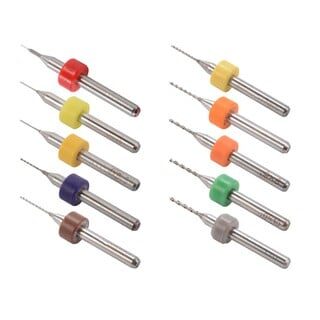
0.1–1.0mm Mixed 3D Printer Nozzle Cleaning Drill Bit Kit – 10 Pcs
10-piece mixed-size nozzle cleaning drill bit kit for MK7, MK8, and RepRap printers. Essential maintenance for clearing partial clogs on any FDM printer.
View on ZboticBambu Lab Resin Printer
Bambu Lab entered the resin printer market in 2025 with the Bambu Lab Photonic series, bringing their signature approach of automation, integrated software, and premium build quality to MSLA printing.
Bambu Lab Photonic M1: Bambu’s debut resin printer features a 10.1-inch 14K monochrome LCD screen, 198×126×180mm build volume, and the same Bambu ecosystem integration that makes their FDM printers so compelling. The M1 connects to Bambu Cloud for print management, supports automatic resin level sensing, and uses Bambu Studio’s resin profiles — which are exceptionally well-calibrated out of the box.
What differentiates the Bambu approach to resin printing:
- Automated exposure calibration: The M1 can auto-calibrate exposure for a new resin using a calibration print, eliminating the manual test matrix that plagues beginners
- Bambu Studio resin slicer: Deep integration with the same slicer used for FDM printing. Consistent UI, cloud slicing, and a growing library of resin profiles
- Build quality: Metal construction and premium components that feel meaningfully better than plastic-bodied competitors
- Closed ecosystem trade-off: The Bambu approach locks you more firmly into Bambu’s resin ecosystem for optimal results — third-party resins work but may require profile development
Bambu weaknesses for resin:
- Higher price than Elegoo Saturn 4 Ultra for comparable build volume
- Smaller build volume on the M1 vs large-format competitors
- New entrant — community knowledge base is smaller than Anycubic/Elegoo
- Resin ecosystem still maturing — fewer Bambu-native resin profiles vs ChituBox’s library
Print Quality Compared
All three brands produce excellent print quality at their respective price points. Differentiation comes from specific scenarios:
Fine detail (miniatures, jewellery): The Bambu Photonic M1 with its 14K screen edges ahead in raw pixel resolution per mm². The Elegoo Mars 5 Ultra (7K at 8.9-inch) is the strongest value competitor for miniature-grade detail. Anycubic’s 12K screens at larger formats are excellent but the larger pixel pitch means slightly less detail than the Bambu’s smaller, higher-density screen.
Large flat surfaces (dental, industrial): UV uniformity is critical here. Uneven UV exposure creates visible brightness variation on large flat parts. Elegoo Saturn 4 Ultra and Anycubic Photon M7 Pro have both improved UV uniformity significantly in 2026. Bambu’s M1 is strong here due to their engineered light source, but the smaller build plate limits large-format use.
Vertical surface quality: The tilt-release mechanisms on Elegoo Saturn 4 Ultra and Anycubic’s ACF-equipped models produce dramatically smoother vertical surfaces than older FEP-peel designs. Stair-stepping (layer lines visible on diagonal surfaces) is present on all MSLA printers but minimised with very thin layers (25–35 microns) which all three brands support.
Print Speed Compared
Resin print speed is measured in seconds-per-layer, which translates to build height printed per hour.
- Anycubic Photon M7 Pro: ~1.5–2s per layer, approximately 80–100mm/hour vertical build speed with standard resin
- Elegoo Saturn 4 Ultra: ~1.5–2s per layer, similar 80–100mm/hour with ultra-fast resins pushing to 120mm/hour
- Bambu Photonic M1: ~1.5–2.5s per layer — slightly slower on first-generation firmware but improvement expected via updates
In practice, all three brands’ flagship models are fast enough that most users will never feel speed-constrained during normal printing. Build volume becomes more relevant than raw speed — you can print many parts simultaneously (stacked or distributed across the build plate) to maximise throughput.
Slicer Software Compared
Anycubic Photon Workshop: Improved significantly in 2025–2026. Decent auto-support generation and hollowing tools. Available free. Less polished than ChituBox but functional for most workflows.
Elegoo + ChituBox/CHITUBOX Pro: The most mature ecosystem. ChituBox has the largest resin profile library, best-in-class auto-support generation, and a Pro version with advanced features including layout automation. The Chitu platform supports the widest range of third-party printers. Best choice if you want maximum flexibility in resin selection and print workflow.
Bambu Studio (Resin): The most polished UI but the youngest resin feature set. Auto-support generation is good but the profile library is still growing. The main advantage is native AMS-equivalent integration for future multi-material resin printing and seamless cloud connectivity. If you are already in the Bambu ecosystem for FDM, using the same app for resin is genuinely convenient.
Lychee Slicer (third-party): Worth mentioning — Lychee Slicer supports all three brands’ printers and is preferred by many professional users for its advanced nesting, hollowing, and support optimisation tools. A paid subscription unlocks premium features.
Safety and Resin Handling in India
Resin safety is a serious topic for Indian users printing in shared homes, apartments, and small workshops:
Uncured resin is toxic: All photopolymer resins are skin and mucous membrane irritants when uncured. Always wear nitrile gloves (not latex) when handling liquid resin or uncured prints. Eye protection is mandatory when handling resin without enclosures.
Ventilation: Resin printers emit VOCs during printing. In India’s warm climate, enclosed spaces accumulate fumes rapidly. Print in a ventilated area or with the enclosure’s activated carbon filter in good condition. The Elegoo Saturn 4 Ultra’s integrated purifier helps significantly. Never print resin in a bedroom.
Washing: Use isopropyl alcohol (IPA) or dedicated wash solutions (like Elegoo Wash & Cure or Anycubic Wash & Cure stations) to clean uncured resin off prints. IPA is widely available in India from chemical and electronics suppliers. Do NOT pour waste IPA+resin down drains — cure the waste resin under UV sunlight or a UV lamp, then dispose as solid waste.
Warm temperatures: India’s ambient temperatures can affect resin properties. Resin that is too warm (above 30°C ambient) becomes less viscous and can flow more freely, potentially affecting print quality. Store resin in a cool, dark location — an AC room or away from direct sunlight. This is particularly relevant in summer months in cities like Delhi, Rajasthan, and coastal regions.
Cost and Availability in India
Import costs and availability are significant factors for Indian buyers:
Hardware import: All three brands’ printers are imported into India. Expect customs duty and GST to add 20–40% to the international price. Bambu Lab has an official Indian distributor which simplifies purchase and warranty; Anycubic and Elegoo are primarily available through third-party importers and platforms like Amazon India with varying warranty support.
Resin availability: Standard 405nm photopolymer resins from Anycubic, Elegoo, and Bambu are available in India through authorised dealers and Amazon India, but at a significant premium over international prices. Budget ₹1,800–3,500 per litre for quality resin. Local brands (Monocure, Siraya Tech) are also available and work with all three platforms.
Price positioning (approximate 2026, India):
- Entry-level (Mars 4, Photon Mono 2): ₹18,000–25,000
- Mid-range (Saturn 4 Ultra, Photon M7 Pro): ₹35,000–55,000
- Bambu Photonic M1: ₹55,000–70,000
- Large format (Jupiter 2, M3 Max): ₹65,000–95,000
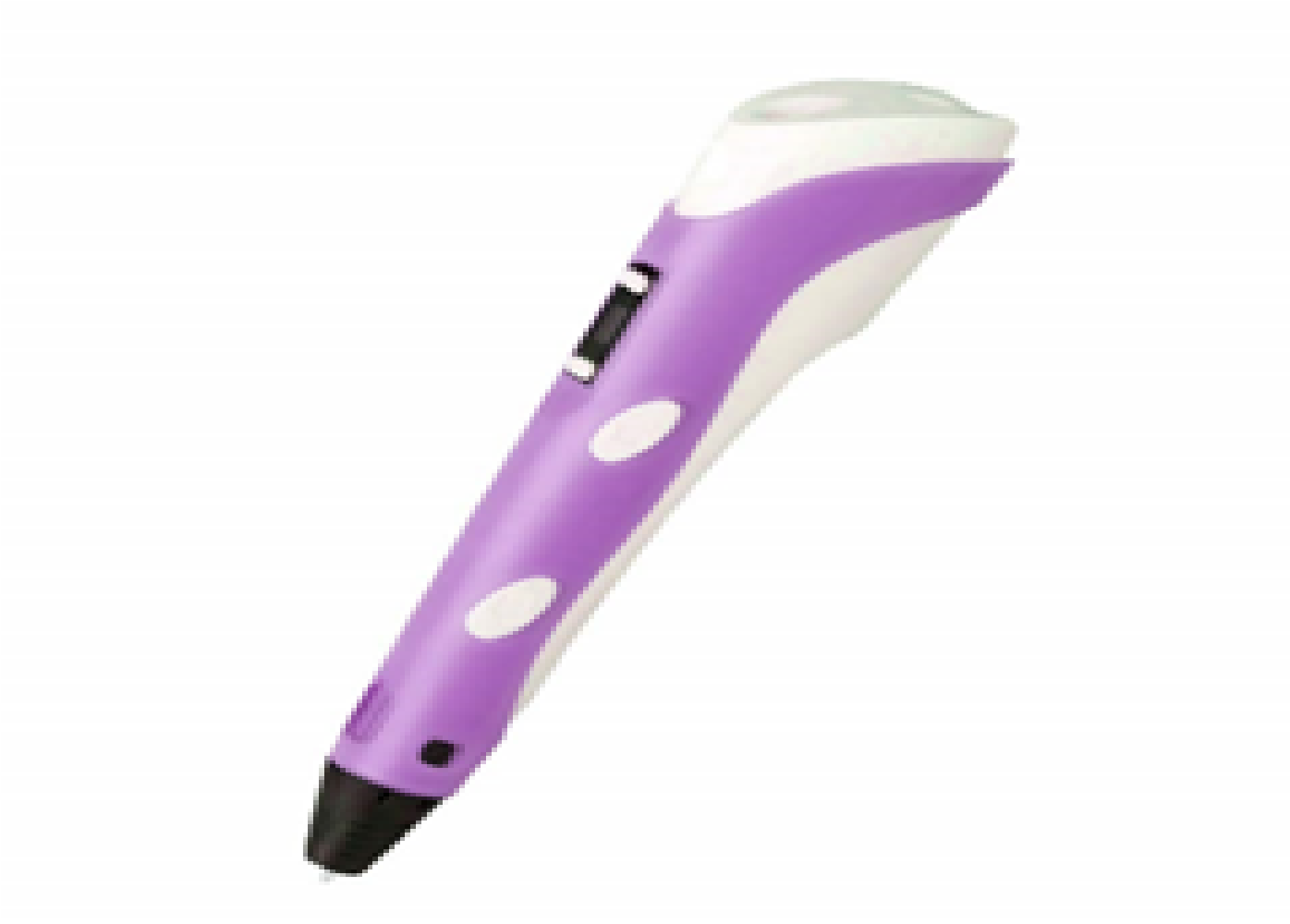
3D Printer Pen with Filament and USB Cable
A beginner-friendly 3D printing pen for artistic and educational use. Great complement to a resin or FDM printer for quick manual 3D drawing and repairs.
View on ZboticWhich Brand for Which Use Case?
Miniature painting and tabletop gaming: Elegoo Mars 5 Ultra or Anycubic Photon Mono M5S. Best resolution per rupee for the small models that dominate this use case. The Bambu M1 is also excellent but at a higher price.
Jewellery and dental prototyping: Bambu Photonic M1 or Elegoo Saturn 4 Ultra. Both offer excellent UV uniformity and fine detail. For dental specifically, ensure your resin is biocompatible (Class IIa) — available from specialist suppliers in India.
Cosplay props and large models: Elegoo Jupiter 2 or Anycubic Photon M3 Max. No other consumer printers match their build volume at comparable prices.
First resin printer for a beginner: Elegoo Mars 5 Ultra. Best combination of price, community support (largest resin community on Facebook groups), and ease of use. ChituBox’s mature slicer lowers the learning curve.
Studio or workshop with FDM already: Bambu Photonic M1, especially if you already use a Bambu FDM printer. Single ecosystem, single app, and the automation features genuinely reduce per-print friction.
Industrial prototyping with high throughput: Elegoo Saturn 4 Ultra for the build volume + fast tilt mechanism. Farm multiple units for production-level output.
Verdict
Best overall value: Elegoo Saturn 4 Ultra. For most Indian buyers who want the best combination of build volume, print quality, speed, and mature software at a competitive price, the Saturn 4 Ultra leads the 2026 mid-range segment. The integrated air purifier is a thoughtful feature for Indian apartments.
Best for beginners: Elegoo Mars 5 Ultra. Lower entry price, excellent ChituBox integration, massive community knowledge base, and enough print quality for most hobbyist applications.
Best premium option: Bambu Photonic M1. If you want the most polished out-of-box experience, automation, and are already in the Bambu ecosystem, the M1 is worth the premium. It will improve over its lifetime through firmware and software updates — the Bambu FDM machines have demonstrated this clearly.
Best for large prints: Anycubic Photon M3 Max or Elegoo Jupiter 2. Neither Bambu nor standard-format Elegoo/Anycubic models match the raw build volume of these large-format machines.
Shop 3D Printing Accessories at Zbotic
Filaments, nozzles, hotend assemblies, bed clips, and maintenance tools — everything to keep your FDM or resin printer running perfectly.
Browse 3D Printing SuppliesFrequently Asked Questions
Is resin printing better than FDM for detailed miniatures?
Yes, significantly. Resin printers print at 25–50 micron XY resolution vs FDM’s typical 0.4mm nozzle width. For miniatures, jewellery, and dental models with fine surface detail, resin is in a completely different quality class than FDM.
Which resin printer is best for beginners in India?
The Elegoo Mars 5 Ultra is the most recommended starting point. It has the largest community, the most tutorials in English and Hindi, the most mature slicer support, and an accessible price. Anycubic’s Photon Mono 2 is a close second.
Is Bambu Lab better than Elegoo for resin printing?
Bambu offers a more polished ecosystem and automation features, but Elegoo provides better value and a more mature software ecosystem in 2026. For beginners, Elegoo is the better choice. For experienced users who value ecosystem integration and premium build quality, Bambu is compelling.
Can I use any resin in Anycubic and Elegoo printers?
Generally yes — both use standard 405nm UV-curable resin and support third-party resins. You may need to tune exposure settings for new resins. Bambu is also compatible with third-party resins but optimal profiles are mainly provided for Bambu’s own resin line.
How much does resin cost in India?
Quality standard resin from Anycubic, Elegoo, or Bambu costs approximately ₹1,800–3,500 per litre in India depending on the type (standard, ABS-like, transparent, castable). Budget and generic resins from Indian suppliers can be found for less but quality varies significantly.
Is resin printing safe at home in India?
With proper precautions, yes. Always wear nitrile gloves, ensure ventilation, store resin away from children, and never pour uncured resin waste down drains. The Elegoo Saturn 4 Ultra’s built-in air purifier makes it safer for apartment use than open-frame printers.






Add comment