
After soldering a PCB, the board is often covered in flux residue, fingerprints, solder splatter, and dust. Whether you need to clean for cosmetic reasons, improve conformal coating adhesion, or remove potentially corrosive residues, choosing the right PCB cleaning method makes a significant difference. This guide compares the three most popular approaches — IPA (isopropyl alcohol), ultrasonic cleaning, and brush cleaning — covering when to use each, what equipment you need, and common mistakes to avoid.
Why Clean a PCB? Understanding Flux Residue
Not all PCB cleaning is mandatory. Whether you need to clean depends on:
- Type of flux used: No-clean flux leaves a residue designed to stay safely. Water-soluble flux residue must be removed — it is corrosive when moist. Rosin flux leaves a non-corrosive residue that most hobbyists safely ignore.
- End application: If applying conformal coating, residue must be removed first or the coating will not adhere properly.
- Operating environment: High humidity or outdoor installations increase the importance of cleaning.
- Aesthetics: Professional-looking boards for clients or products need thorough cleaning.
For most Indian hobbyists using standard rosin-core solder on home projects, cleaning is optional but recommended. For commercial products, automotive, or outdoor electronics — clean thoroughly every time.
IPA Cleaning: The Most Common Method
Isopropyl Alcohol (IPA) is the gold standard for PCB cleaning among hobbyists and professionals alike. It dissolves rosin flux residue, evaporates quickly without leaving its own residue, and is safe for most electronic components.
What Concentration to Use
- 99% IPA: Best choice for PCB cleaning. Maximum flux-dissolving power, evaporates in seconds, leaves no water residue. Available from electronics and pharmacy suppliers across India.
- 91% IPA: Acceptable. Slightly slower evaporation due to 9% water content.
- 70% IPA: Avoid for electronics cleaning. The 30% water content takes too long to evaporate and can cause temporary shorts or long-term corrosion.
Application Methods
- Spray bottle: Best for full-board rinse. Saturate the board, let it soak 30 seconds, then scrub and rinse again.
- Squeeze bottle + brush: Good for targeted spot cleaning around specific components or solder joints.
- Soaking: Submerge the board in a container of 99% IPA for 5–15 minutes. Effective for heavily fluxed boards.
Pros of IPA Cleaning
- Inexpensive and widely available in India
- Very effective against rosin and most no-clean flux residues
- Fast drying — board usable within minutes
- Safe for most components including ICs, capacitors, and connectors
- No special equipment needed beyond a brush and IPA
Cons of IPA Cleaning
- Less effective on water-soluble or heavily aged flux residue
- Repeated soaking can affect certain plastics and adhesive labels
- Flammable — no open flames or sparks nearby
- 99% IPA can be harder to source locally; some pharmacies only stock 70%
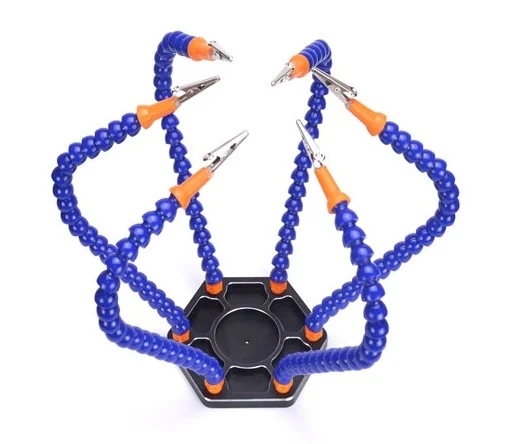
6 Flexible Arms Soldering Station With Swiveling Alligator Clip
Hold your PCB at the perfect angle during cleaning with this 6-arm helping hands station. Keeps both hands free to apply IPA and scrub flux residue.
Brush Cleaning: Manual and Effective
Brush cleaning is typically used in combination with a cleaning solvent (most commonly IPA) rather than on its own. The brush agitates flux residue and works it loose from under components and off pad surfaces.
Best Brushes for PCB Cleaning
- ESD-safe anti-static brush: Ideal for sensitive components. Prevents static discharge while scrubbing.
- Toothbrush (nylon, soft to medium): An inexpensive and effective option. The shape matches PCB geometry well. Use a dedicated toothbrush — never one used for hygiene.
- Acid brush / flux brush: Small, stiff bristles for precision cleaning around tight component leads.
- Cotton swabs (Q-tips): For very targeted spot cleaning on individual pads or connectors.
Brush Cleaning Process
- Wet the brush with 99% IPA or dedicated flux remover spray
- Scrub the PCB using circular motions, working from one end to the other
- Pay extra attention to areas with dense components and under ICs
- Rinse with a fresh IPA spray and allow to fully dry before powering
Pros of Brush Cleaning
- Minimal equipment cost
- Excellent for targeting specific areas
- The physical agitation helps remove residue that soaking alone cannot
Cons
- Can leave brush fibres under components if the brush is worn
- Requires care near delicate components that brush pressure could dislodge
- Less effective for heavily contaminated boards without combined soaking
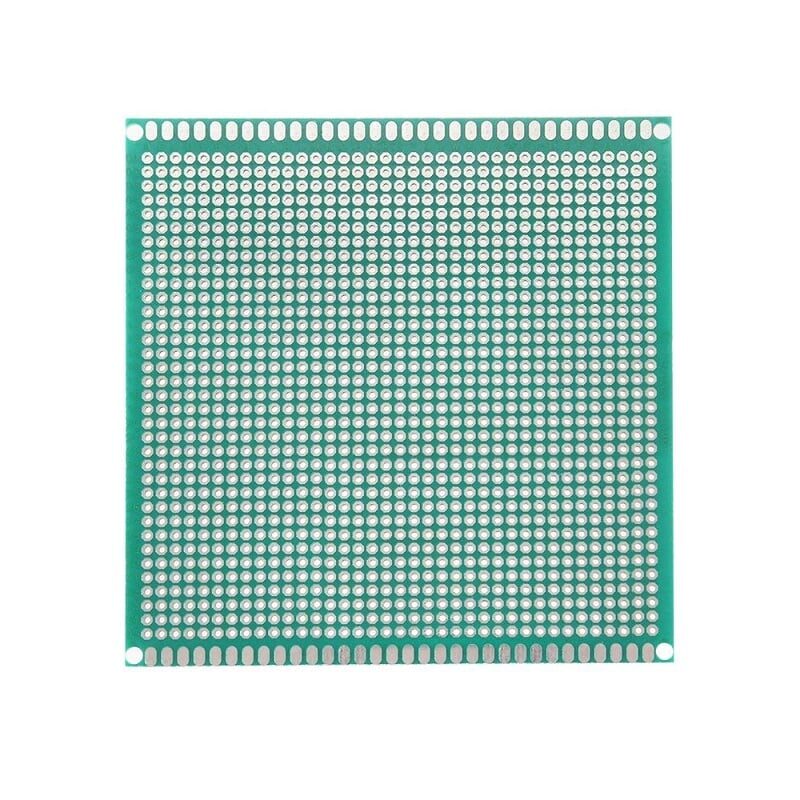
10 x 10 cm Universal PCB Prototype Board Single-Sided 2.54mm
Build and clean your own prototype PCBs. This single-sided board with 2.54mm pitch is ideal for through-hole prototyping and learning PCB cleaning techniques.
Ultrasonic Cleaning: The Professional Approach
Ultrasonic cleaners use high-frequency sound waves (typically 40–80 kHz) to create millions of microscopic bubbles in a liquid bath through a process called cavitation. When these bubbles collapse near surfaces, they create tiny pressure waves that dislodge contaminants — including flux residue from under components and in vias where brushes cannot reach.
How It Works
Place the PCB in the ultrasonic tank filled with an appropriate cleaning solution (IPA, specialised PCB cleaner, or diluted aqueous cleaner). Run the cycle for 5–10 minutes, rinse with clean IPA, and dry with compressed air or in a PCB drying oven.
Cleaning Fluids for Ultrasonic PCB Cleaning
- 99% IPA: Effective and widely used. Caution: IPA is flammable — use only with ultrasonic cleaners rated for flammable fluids or at room temperature.
- Zestosol / PCB Cleaner Pro: Purpose-made aqueous cleaning solutions that are non-flammable and highly effective.
- Water + dish soap: Works for removing water-soluble flux on boards without open connectors or crystals, but requires thorough drying.
Pros of Ultrasonic Cleaning
- Cleans under BGA chips, connectors, and tight component spacing where brushes cannot reach
- Consistent, hands-off process — load and run
- Excellent for batch cleaning multiple boards at once
- Removes multiple contaminant types: flux, oils, dust, solder balls
- Best choice for high-reliability applications (aerospace, medical, industrial)
Cons
- Higher upfront cost — desktop ultrasonic cleaners start from ₹3,000–₹8,000 in India
- Risk of damage to certain components: crystals (oscillators/quartz), MEMS sensors, and some coated inductors can be damaged by cavitation
- Requires proper drying after cleaning — all moisture must be removed before powering the board
- Overkill for simple hobby boards with rosin-core solder residue
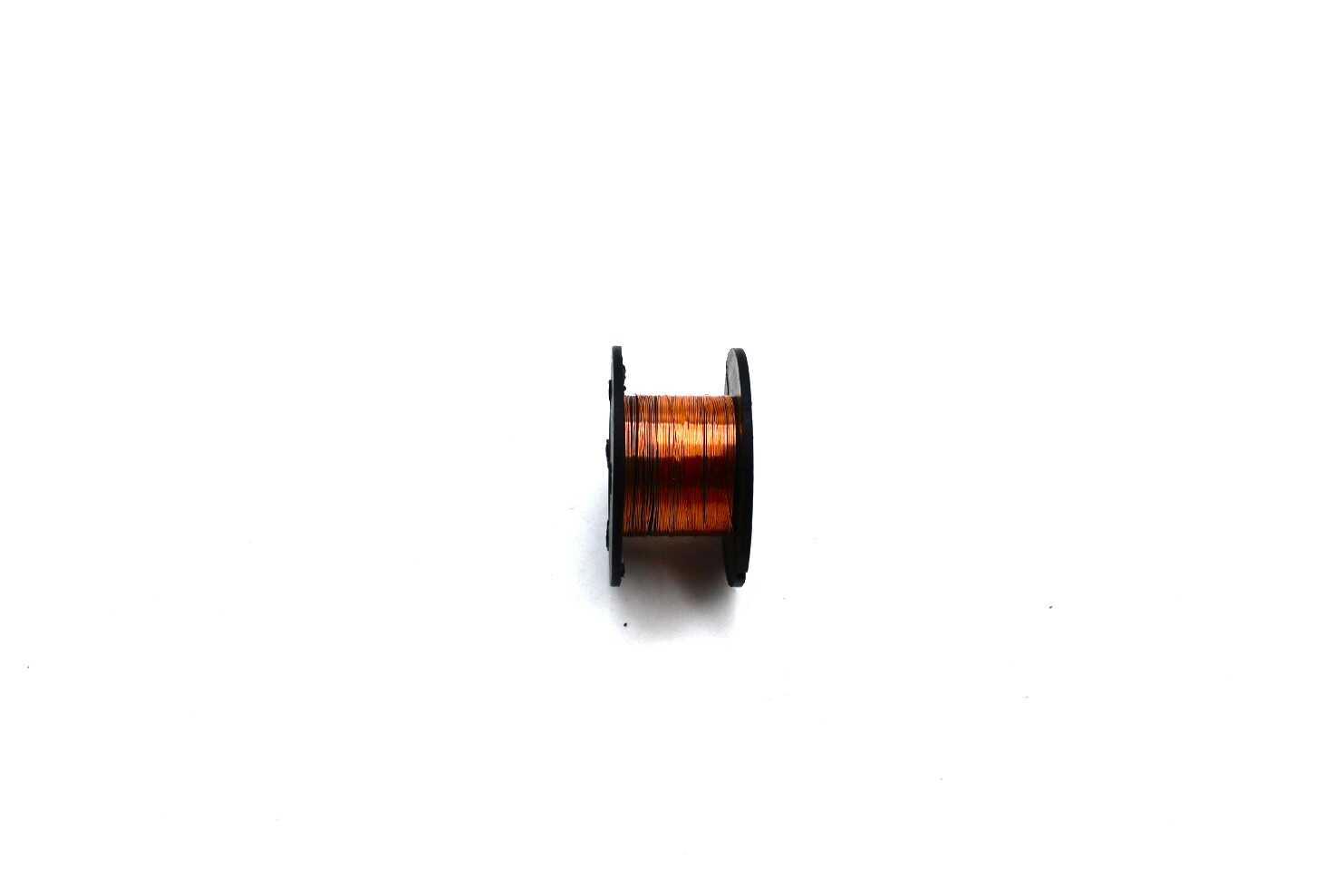
0.1MM Copper Soldering Solder PPA Enamelled Repair Reel Wire
Fine copper enamelled wire for precision PCB repair and touch-up work after cleaning. Ideal for repairing trace damage revealed during PCB inspection.
Method Comparison Table
| Factor | IPA Soak/Spray | Brush + IPA | Ultrasonic |
|---|---|---|---|
| Cost | Very Low | Very Low | Moderate–High |
| Effectiveness | Good | Very Good | Excellent |
| Under-component cleaning | Poor | Poor | Excellent |
| Time per board | 5–15 min | 5–10 min | 10–20 min |
| Component safety | Very Safe | Safe (gentle) | Risk for crystals |
| Best for | Hobby boards | Targeted spots | Production/repair |
Step-by-Step PCB Cleaning Guide (IPA + Brush)
For most Indian hobbyists, the IPA + brush combination provides the best balance of effectiveness and cost. Here is the complete process:
- Preparation: Ensure the board is fully depowered and cool. Remove any batteries or connectors that could trap moisture.
- First application: Spray or apply 99% IPA generously across the board surface. Let it soak for 30–60 seconds to soften flux residue.
- Scrub: Using a soft toothbrush or ESD brush, scrub in circular motions over all soldered areas. Apply more IPA as needed.
- Rinse: Spray fresh IPA over the board to rinse away loosened residue. Tilt the board so the liquid runs off.
- Inspect: Hold the board up to a good light source. Check for remaining white/yellow flux residue, especially under IC bodies and near connectors. Repeat scrubbing if needed.
- Dry: Allow the board to air dry for 15–30 minutes. Use a hairdryer on low heat or compressed air to speed up drying and ensure no moisture remains in vias or under components.
- Final check: Power the board only after it is completely dry. In India’s humid climate, 30 minutes drying time is the minimum.
Common PCB Cleaning Mistakes
- Using 70% IPA: The water content evaporates slowly and can cause temporary shorts or corrosion over time.
- Powering the board while wet: Even a trace of moisture can short a power rail and damage components. Always dry completely first.
- Using acetone: Acetone dissolves many PCB substrates, component coatings, and silkscreen labels. Never use on populated PCBs.
- Skipping drying: In India’s humid summer climate, boards can appear dry on the surface while moisture remains trapped in fine vias.
- Ultrasonic cleaning crystals: Quartz oscillators and ceramic resonators can be destroyed by cavitation energy. Remove them first or shield them.
- Ignoring water-soluble flux: Unlike rosin flux, water-soluble flux residue is corrosive. It must always be cleaned off — even on hobby projects.
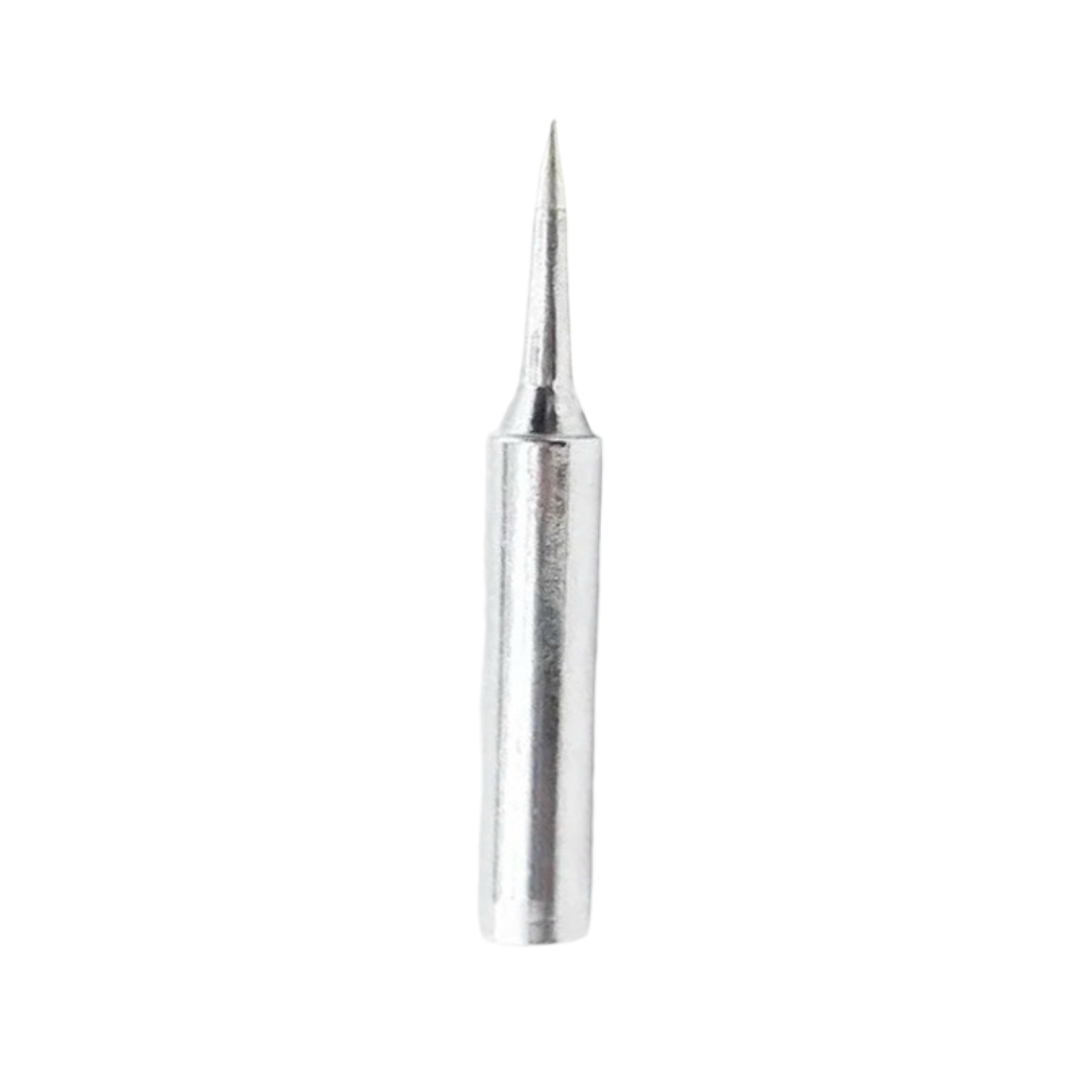
BAKON Soldering Iron Tip 900M-T-I
Keep your iron tip clean with quality replacement tips. A clean iron tip produces better joints and less flux contamination — reducing PCB cleaning needs from the start.
Frequently Asked Questions
Do I need to clean my PCB if I use no-clean flux solder?
Not necessarily. No-clean flux residue is designed to be safe to leave in place. However, in high-humidity environments, residue can absorb moisture and become slightly conductive. For critical applications, clean regardless of flux type.
Can I use regular rubbing alcohol instead of IPA?
Only if it is 91% or higher concentration. Most Indian pharmacy rubbing alcohol is 70% — too dilute for electronics cleaning. Look specifically for 99% IPA from electronics suppliers or solvent suppliers.
How long should I wait after cleaning before powering the board?
At minimum 15–30 minutes with 99% IPA. In India’s humid climate (especially coastal cities), wait at least 30–45 minutes or use compressed air to speed drying. When in doubt, wait longer.
Is it safe to clean PCBs with components attached?
Yes, with IPA. Most passive and active components (resistors, capacitors, ICs, LEDs, transistors) tolerate IPA well. Exceptions: quartz crystals, some electret microphones, and components with water-sensitive adhesives. When in doubt, check the component datasheet.
What removes stubborn brown flux residue that IPA does not dissolve?
Heavily oxidised or high-temperature flux residue may need a dedicated flux remover (like MG Chemicals 4140 or Chemtronics Flux-Off). These are stronger solvents specifically formulated to remove difficult residues. Available from industrial chemical suppliers in major Indian cities.


Add comment