
Hydrogen gas (H₂) is colourless, odourless, and extremely flammable — its lower explosive limit in air is just 4%, and it burns with an invisible flame. For anyone working with lead-acid batteries, lithium-ion battery banks, fuel cells, or electrolysis experiments, detecting hydrogen leaks is not optional; it is a critical safety requirement.
The MQ-8 sensor is a low-cost, easy-to-use electrochemical gas sensor specifically designed to detect hydrogen gas concentrations. Paired with an Arduino, it can form the core of a battery room safety monitor, a BMS (Battery Management System) gas alarm, or a fuel cell test bench data logger. This tutorial walks you through everything — from how the sensor works at a chemical level to a complete working Arduino project.
How the MQ-8 Sensor Works
The MQ-8 is a chemiresistive gas sensor. Inside the sensor is a small heating element (a coil of nichrome wire) that keeps a tin dioxide (SnO₂) sensing layer at an elevated temperature of around 100-150°C. At this temperature, SnO₂ has baseline electrical conductivity due to adsorbed atmospheric oxygen on its surface.
When hydrogen gas contacts the hot SnO₂ surface, it reacts with the adsorbed oxygen: the oxygen is consumed, free electrons return to the SnO₂ conduction band, and the resistance of the sensing layer drops dramatically. The greater the H₂ concentration, the lower the resistance. By measuring this resistance (or the voltage across a load resistor), you can estimate the gas concentration.
This is fundamentally different from catalytic bead sensors (pellistors) or electrochemical sensors — the MQ-8 is simpler, cheaper, and does not consume the gas being measured.
MQ-8 Specifications and Sensitivity
| Parameter | Value |
|---|---|
| Target Gas | Hydrogen (H₂) |
| Detection Range | 100 – 10,000 ppm |
| Supply Voltage (heater) | 5V DC |
| Heater Resistance | 33Ω ± 5% |
| Heater Power Consumption | <900 mW |
| Sensing Resistance in Clean Air | 1 – 5 MΩ |
| Response Time | <10 seconds |
| Recovery Time | <30 seconds |
| Operating Temperature | -10°C to +50°C |
| Operating Humidity | less than 95% RH |
The MQ-8 is most sensitive to hydrogen, but also responds to LPG, methane, and alcohol to a lesser degree. For environments where only H₂ is expected (battery rooms, electrolysis labs), cross-sensitivity is rarely a problem.
Why Battery Monitoring Needs H2 Detection
Lead-Acid Batteries
Lead-acid batteries — including car batteries, UPS batteries, and solar storage banks — produce hydrogen gas during charging, especially during overcharge or when the electrolyte temperature rises. In a sealed room, even a modest 200Ah battery bank at high charge current can produce enough H₂ to reach explosive concentrations within an hour.
The standard safety limit for battery rooms per IEC 62485 is to keep H₂ below 25% of the Lower Explosive Limit (LEL) — that is, below 1% by volume (10,000 ppm). Alarm thresholds are typically set at 10% LEL (1,000 ppm) for early warning.
Lithium-Ion Battery Thermal Runaway
Li-ion cells release hydrogen fluoride (HF), hydrogen, CO₂, and CO during thermal runaway events. While the MQ-8 specifically detects H₂, its presence is an early indicator that a cell is degrading before flames appear. Combined with temperature monitoring, an MQ-8 can give precious extra seconds of warning time.
Fuel Cells and Electrolysis
PEM fuel cells and water electrolysis systems use hydrogen as fuel or produce it as a product. Gas safety monitoring is required in any lab or industrial installation handling pressurised H₂.
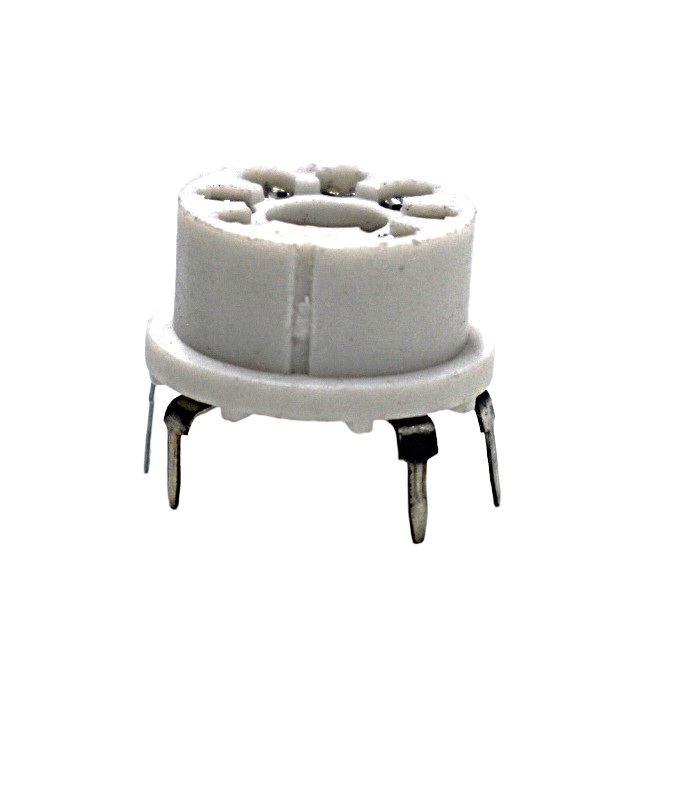
7 Pin Universal Sensor Socket for MQ-2 MQ-3 MQ-4 MQ-5 MQ-6 MQ-9
The ideal breakout socket for your MQ-8 and other MQ-series sensors. Makes wiring and sensor swapping easy on breadboards and PCBs.
Hardware and Wiring
What You Need
- MQ-8 sensor module (breakout board with onboard comparator)
- Arduino Uno or Nano
- Buzzer (active, 5V)
- LED (red, for alarm indication)
- 100Ω resistor (for LED)
- Jumper wires and breadboard
MQ-8 Module Pin Connections
| MQ-8 Module Pin | Arduino Pin | Notes |
|---|---|---|
| VCC | 5V | Heater requires 5V, do NOT use 3.3V |
| GND | GND | |
| AO (Analog Out) | A0 | Continuous 0-5V output |
| DO (Digital Out) | D7 | HIGH when gas exceeds threshold pot |
The onboard potentiometer sets the threshold for the digital output. Rotate it clockwise to raise the trigger threshold (less sensitive), counter-clockwise to lower it (more sensitive). For battery monitoring applications, use the analog output for more nuanced concentration monitoring.
Sensor Calibration and Ro Value
Accurate PPM readings require calibrating the sensor’s baseline resistance in clean air. This value is called Ro. The MQ-8 datasheet provides sensitivity curves (graphs of Rs/Ro vs gas concentration on log-log scales). Here is the calibration procedure:
- Power the sensor and let it preheat for at least 20 minutes in clean, fresh air. (The first 48 hours of operation are called “burn-in” — readings stabilise after this period.)
- Read the analog voltage:
float sensorVoltage = analogRead(A0) * (5.0 / 1023.0); - Calculate sensor resistance:
float Rs = (5.0 - sensorVoltage) / sensorVoltage * RL;where RL is the load resistor (typically 10kΩ on the module). - Set
Ro = Rs / 6.5;— in clean air the MQ-8 datasheet shows Rs/Ro ≈ 6.5 for H₂.
To convert a reading to approximate PPM, use the sensitivity curve equation:
float ratio = Rs / Ro;
float ppm = 2.3 * pow(ratio, -0.95);  // approximate formula from datasheet curve
Note: This formula is an approximation. For industrial accuracy, use a certified H₂ calibration gas.
Arduino Code for H2 Monitoring
#define MQ8_AO_PIN  A0
#define MQ8_DO_PIN  7
#define BUZZER_PIN  8
#define LED_PIN     9

#define RL_VALUE    10.0f    // Load resistor on module (kΩ)
#define RO_CLEAN_AIR 6.5f   // Rs/Ro ratio in clean air (from MQ-8 datasheet)

float Ro = 10.0f;           // Will be calibrated at startup

void setup() {
  Serial.begin(9600);
  pinMode(MQ8_DO_PIN, INPUT);
  pinMode(BUZZER_PIN, OUTPUT);
  pinMode(LED_PIN, OUTPUT);

  Serial.println("MQ-8 Warming up (20 seconds minimum)...");
  // In production: wait at least 20 minutes; for demo, 20s
  for (int i = 20; i > 0; i--) {
    Serial.print(i); Serial.print("s ");
    delay(1000);
  }
  Serial.println();

  // Calibrate Ro in clean air
  Serial.println("Calibrating Ro...");
  float rs_sum = 0;
  for (int i = 0; i < 50; i++) {
    rs_sum += getMQ8Resistance();
    delay(100);
  }
  float rs_avg = rs_sum / 50.0f;
  Ro = rs_avg / RO_CLEAN_AIR;
  Serial.print("Ro = ");
  Serial.print(Ro);
  Serial.println(" kΩ");
  Serial.println("Monitoring started. Threshold: 1000 ppm H2");
}

float getMQ8Resistance() {
  int raw = analogRead(MQ8_AO_PIN);
  float voltage = raw * (5.0f / 1023.0f);
  if (voltage = 10000) {
    Serial.print("  !!! DANGER - Above LEL !!!");
    digitalWrite(LED_PIN, HIGH);
    tone(BUZZER_PIN, 2000);  // continuous alarm
  } else if (ppm >= 1000) {
    Serial.print("  !! WARNING - 10% LEL exceeded !!");
    digitalWrite(LED_PIN, HIGH);
    tone(BUZZER_PIN, 1000, 500);  // intermittent beep
    delay(1000);
    noTone(BUZZER_PIN);
  } else {
    Serial.print("  [OK]");
    digitalWrite(LED_PIN, LOW);
    noTone(BUZZER_PIN);
  }

  Serial.println();
  delay(2000);
}
Building a Battery Room H2 Alarm
For a complete battery room safety installation, extend this project as follows:
Placement Guidelines
- Mount the sensor near the ceiling — hydrogen is lighter than air (density 0.07 vs air 1.0) and accumulates at the top of the room.
- Position at least one sensor for every 50m² of floor area.
- Keep the sensor away from direct air conditioning drafts and moisture-prone areas.
- Install within 1 metre of the battery bank’s ventilation outlet.
Adding SMS or Email Alerts
Replace the Arduino Uno with an Arduino Uno WiFi Rev2, ESP8266, or ESP32. When the H₂ threshold is exceeded, send an HTTP POST to a notification service (IFTTT Webhooks, Pushover, Telegram Bot, or email via SMTP). This ensures the alarm is effective even when nobody is physically present in the battery room.
Adding a Relay for Forced Ventilation
Connect a relay module to a ventilation fan or exhaust blower. Trigger the relay when H₂ exceeds 500 ppm (5% LEL) to automatically dilute the gas before it reaches dangerous levels. This is a standard practice in VRLA battery installations.
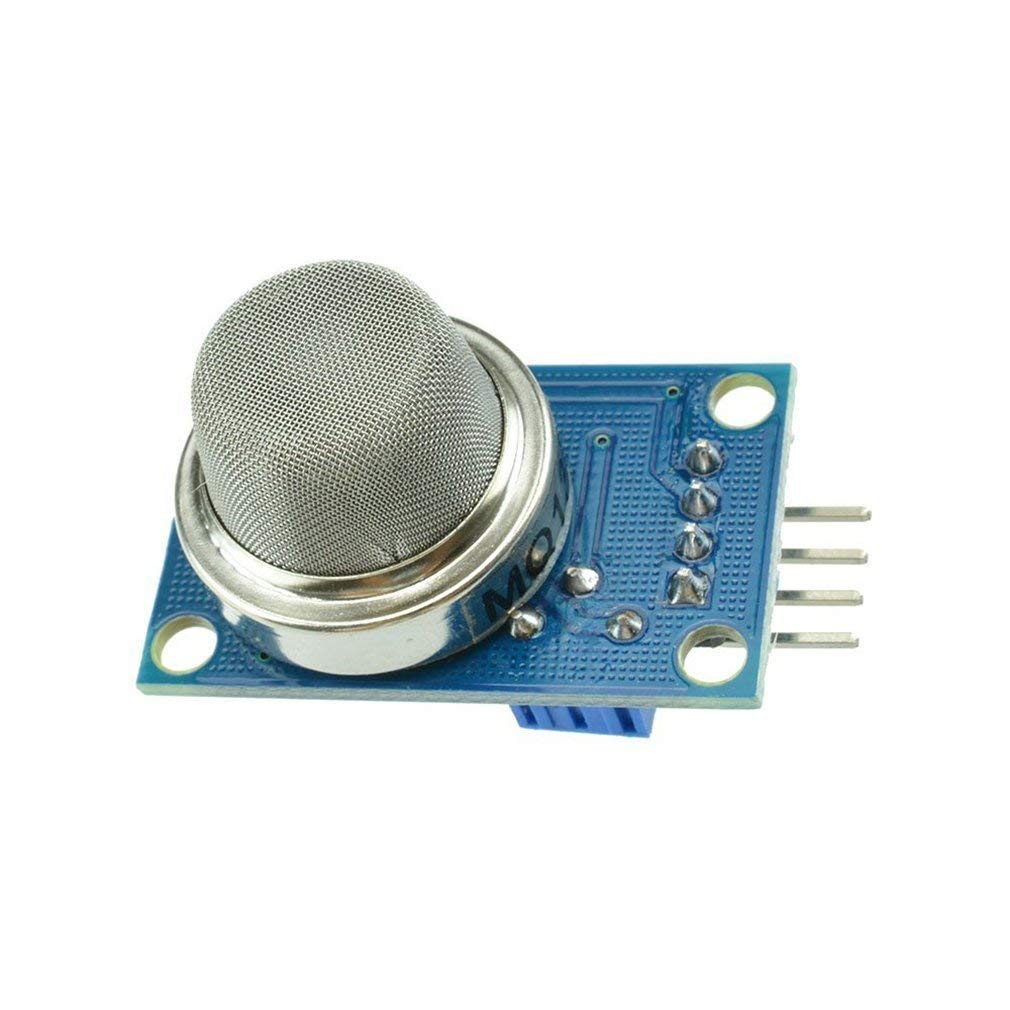
MQ-135 Air Quality / Gas Detector Sensor Module for Arduino
Combine with the MQ-8 for broader gas monitoring — MQ-135 detects CO2, ammonia, benzene, and smoke for comprehensive battery room air quality.
Tips for Reliable Gas Detection
- Always allow full preheat time. The MQ-8 needs at least 20-30 minutes of warm-up for stable readings. For permanent installations, keep it powered continuously.
- Account for temperature and humidity. The sensor’s baseline resistance shifts with ambient temperature and humidity. The datasheet provides correction factors. For simple alarms, this is rarely critical, but for accurate PPM readings it matters.
- Use hardware filtering on the analog pin. Add a 100nF capacitor between A0 and GND to reduce ADC noise.
- Do not expose the sensor to high concentrations for extended periods. Exposure to >10,000 ppm H₂ repeatedly shortens sensor life. If this is likely, mount a secondary physical shutter or flow controller.
- Replace sensors every 2-3 years. MQ-series sensors age — calibrate annually and replace on schedule for safety-critical applications.
- Verify with a known gas source. For production safety systems, verify calibration with certified reference gas before deployment.
Frequently Asked Questions
Q: Can the MQ-8 detect hydrogen from electrolysis water splitting?
Yes. Hydrogen produced by water electrolysis is chemically identical to H₂ from any other source. The MQ-8 will detect it equally well. For electrolysis labs, place the sensor above the cell outlet port.
Q: Is the MQ-8 suitable for Li-ion battery BMS integration?
It can be used as an early-warning supplement to a BMS. However, it is not a replacement for proper cell voltage balancing, current limiting, and temperature monitoring. Use it as an additional safety layer, not as the primary protection.
Q: Does the MQ-8 detect natural gas or LPG?
The MQ-8 has some cross-sensitivity to methane (natural gas) and LPG, but its sensitivity to these is much lower than to H₂. For natural gas or LPG detection, use the MQ-2, MQ-4, or MQ-5 which are optimised for those gases.
Q: How long does the MQ-8 sensor last?
With continuous operation, MQ-series sensors typically last 2-5 years. Sensor performance degrades gradually — periodic calibration checks are important. Silicone contamination (from sealants, cleaning products) can permanently poison the sensor and is the most common cause of premature failure.
Q: Can I power the MQ-8 from a 3.3V Arduino?
No. The heater requires 5V. A 3.3V supply will not heat the sensing element properly, resulting in very poor sensitivity. Use a 5V Arduino or a 5V boost converter if your MCU is 3.3V. The analog output signal (0-5V) should be voltage-divided to 0-3.3V before connecting to a 3.3V ADC input.
Build your hydrogen safety monitor today. Explore MQ-series gas sensors, relay modules, and Arduino development boards at Zbotic — all stocked for quick delivery across India.
Conclusion
The MQ-8 hydrogen sensor offers an affordable, reliable way to add H₂ safety monitoring to battery rooms, fuel cell test setups, and electrolysis experiments. With proper calibration, careful placement near the ceiling, and a graduated alarm scheme that distinguishes warning levels from danger levels, you can build a system that genuinely protects lives and equipment. As with all safety-critical sensors, commit to regular testing and scheduled replacement — a sensor that has drifted out of calibration offers false confidence worse than no sensor at all.






Add comment