
Choosing the wrong connector for your LiPo battery can mean anything from a loose connection that wastes energy to a dangerous arc that damages your ESC or battery. If you are new to RC flying, drones, or high-current maker projects in India, understanding LiPo battery connector types — XT60, T-Plug, and JST — is one of the first practical decisions you will face. This comparison guide explains each connector’s design, strengths, weaknesses, and the exact use cases where each shines.
Why LiPo Connectors Matter More Than You Think
LiPo batteries can deliver enormous amounts of current — a 3S 2200mAh 50C LiPo pack can theoretically deliver up to 110A (2.2Ah × 50C) in burst. At these current levels, connector resistance matters enormously. Even 5 milliohms of connector resistance at 50A generates 0.25V of voltage drop and 12.5W of wasted heat. In a drone or RC car, that means less power, more heat at the connector, and shorter flight/run times.
Beyond electrical performance, connectors affect safety. A poor connection that arcs generates heat that can melt insulation, damage nearby electronics, or — in the worst case — ignite a LiPo battery. Choosing a quality connector and soldering it properly is not optional in high-current applications.
XT60 Connector: The Industry Standard
The XT60 has become the dominant LiPo connector in the drone and RC hobby market worldwide, including India. Designed by Amass (a Chinese manufacturer), the XT60 was engineered specifically for LiPo battery applications with high current demands.
Design Features
- Rated current: 60A continuous, 100A burst (hence the name — XT = eXTreme, 60 = 60A)
- Bullet-style 5.5mm female/male gold-plated contacts with a locking nylon housing
- Anti-spark design: the female socket partially surrounds the male pin, reducing arc exposure
- Colour-coded housing (yellow) with a mechanical key (asymmetric shape) to prevent reverse polarity
- Wire accommodation: up to 12 AWG (4mm²) easily fits into the solder cups
Pros
- Excellent current capacity for medium to large LiPo packs (1300mAh and above)
- Low contact resistance — typically 0.5mΩ or less per connector
- Positive engagement and secure fit — does not pull apart accidentally in vibration
- The most widely stocked connector in India — compatible parts available everywhere
- Clear polarity marking on the housing
Cons
- Bulky for micro/mini applications — not suitable for tiny 250mAh whoop packs
- Needs a decent soldering iron (380°C+) to properly solder large wires to the solder cups
- The large housing can be a nuisance in tight battery compartments
Best For
5-inch FPV drones, RC cars and trucks, large RC fixed-wing aircraft, 1300mAh and above LiPo packs, DIY e-bike battery packs, robotics with high-power motors. The XT60 is the default recommendation for anything pulling over 15A continuous.
T-Plug (Deans): The Old Reliable
The T-Plug, also known as the Deans connector (named after its designer Bill Deans), was the gold standard for RC hobby applications before the XT60 took over. It is still widely used, particularly in legacy equipment and older RC car systems.
Design Features
- Rated current: 30A continuous (some sources say 60A, but 30–40A is realistic for sustained use)
- Flat blade-style contacts with a T-shaped housing that is compact and lightweight
- Male connector has exposed pins on the outside — the housing partially protects them
- Two conductor design only (power + and -); balance lead connector is separate
- Typically red housing for the male (battery side) connector
Pros
- Compact and lightweight — among the smallest connectors for its current rating
- Very low connector resistance when properly soldered
- Long history in the hobby — huge installed base means adapters are easy to find
- Good mechanical retention
Cons
- No anti-spark protection — the exposed male pins are live the moment you connect the first contact, which creates a visible and audible spark when connecting to a capacitor-rich ESC
- Polarity reversibility is a risk — nothing physically prevents wrong-way insertion in the dark
- Harder to solder than XT60 due to the shallow solder pads and heat transfer to the housing
- Current rating is genuinely lower than XT60 in high-current sustained use
- Being phased out in new products — ecosystem is shrinking in India
Best For
Older RC vehicles and aircraft that already use T-Plug, low-to-medium power applications (up to 30A), and situations where connector weight and size are paramount. If your existing charger or ESC has T-Plug, it is easier to match than convert.
JST Connectors: The Small-Scale Champion
JST (Japan Solderless Terminal) is not a single connector but a family of connectors made by the Japanese company of the same name. In the RC and maker world, “JST” typically refers to the JST-XH (balance connector standard) or the JST-PH (2mm pitch, common on small LiPo packs). The most common power connector variant is the JST-RCY (also called JST-SYP or simply “JST plug”) — the red 2-pin connector ubiquitous on tiny 1S LiPo packs.
JST-PH (2.0mm pitch)
- Current rating: 1–2A maximum — for tiny whoop, micro quads, and sensor nodes
- Used on 1S 250–850mAh packs in micro FPV and IoT applications
- Very small and light — but fragile; can break with repeated mating cycles
JST-XH (2.54mm pitch)
- The standard balance connector on virtually all LiPo packs 2S and above
- Used only for balance charging — carries very low current (milliamps)
- Not a power connector — do not use it to power your ESC or motor
JST-RCY (2.5mm pitch)
- Current rating: 3–5A — suitable for small RC aircraft, FPV ground stations, and small drones
- The red connector on most 1S 500–1000mAh packs
- Very commonly used on micro brushed quad frames and small Arduino power supplies
Best For
1S micro LiPo packs, IoT and sensor projects, small FPV micro quads, RC aircraft under 250g. Do not use JST-PH or JST-RCY for anything pulling more than 5A — the contacts will heat up and the housing will melt.
Side-by-Side Comparison Table
| Feature | XT60 | T-Plug (Deans) | JST (PH/RCY) |
|---|---|---|---|
| Continuous Current | 60A | 30–40A | 1–5A |
| Anti-Spark | Yes (partial) | No | No |
| Polarity Protection | Yes (keyed) | Partial (visual only) | Yes (keyed) |
| Size/Weight | Medium | Small | Very Small |
| Contact Resistance | Very Low (~0.5mΩ) | Low (~1mΩ) | Higher (~5–20mΩ) |
| Availability in India | Excellent | Good | Excellent |
| Best Application | Drones, RC cars, high-power projects | Legacy RC, medium power | Micro drones, IoT, sensors |
Other Connectors Worth Knowing: XT30, EC3, EC5, AS150
Beyond the big three, several other connectors are worth knowing:
- XT30: The smaller sibling of the XT60. Same bullet-style design, rated 30A. Perfect for 3-inch micro FPV quads, small RC aircraft, and any application needing XT60 reliability at smaller size. Increasingly popular in India.
- EC3 and EC5: Made by E-flite/Horizon Hobby, popular in their aircraft kits. EC3 = 3mm bullets (60A), EC5 = 5mm bullets (120A). Good connectors but less universal than XT-series in the Indian market.
- AS150: A specialty anti-spark connector for very high-current applications like e-bikes and large UAVs. Rated 150A, includes a built-in slow-connect resistor to prevent the spark that occurs when connecting to a large capacitor bank.
- XT90: The XT60’s bigger brother, rated 90A. Has an anti-spark version (XT90-S) with a built-in inrush resistor. Used on large 6S+ packs for 7-inch and 10-inch drones and large RC vehicles.
How to Choose the Right Connector for Your Project
Follow this simple decision tree:
- What is the maximum continuous current your system draws?
- Under 5A (micro quad, IoT, sensors): JST-PH or JST-RCY
- 5A–30A (small RC aircraft, medium drones): XT30 or T-Plug
- 30A–60A (5-inch FPV quad, RC car, robotics): XT60
- Over 60A (large drone, e-bike, heavy robotics): XT90 or AS150
- Does your existing charger, ESC, or vehicle already use a specific connector? If yes, match it. Converting connectors means extra soldering and potential failure points.
- Is size or weight critical? Go smaller (JST or XT30) even if it means slightly lower current headroom — just ensure you stay within the connector’s rated current.
- Is anti-spark important? If you are connecting to an ESC with large input capacitors (common in larger drones), choose XT60 or XT90-S. The spark on T-Plug connection can damage capacitors over time.
Soldering Tips for LiPo Connectors
Proper soldering makes the difference between a reliable, low-resistance connection and a fire hazard:
- Use a temperature-controlled iron: Set to 380–400°C for XT60 and T-Plug. Lower temperatures mean cold joints; higher temperatures melt the nylon housing.
- Tin both the wire and the connector solder cup first (pre-tinning). Then push them together and apply heat briefly — the solder should flow instantly without needing prolonged heat on the connector.
- Work quickly: XT60 housings tolerate heat for about 3–5 seconds before deforming. Pre-tinning reduces the time needed for the final joint.
- Use quality solder: 60/40 or 63/37 rosin-core solder works well. Lead-free solder requires higher temperatures and is trickier for beginners.
- Heatshrink the joint: Slide heatshrink tubing over the wire before soldering, then slide it over the connector body after soldering and shrink with a heat gun. This protects the joint and prevents accidental shorts.
- Test continuity and polarity with a multimeter before connecting anything to the battery.
Recommended Products from Zbotic
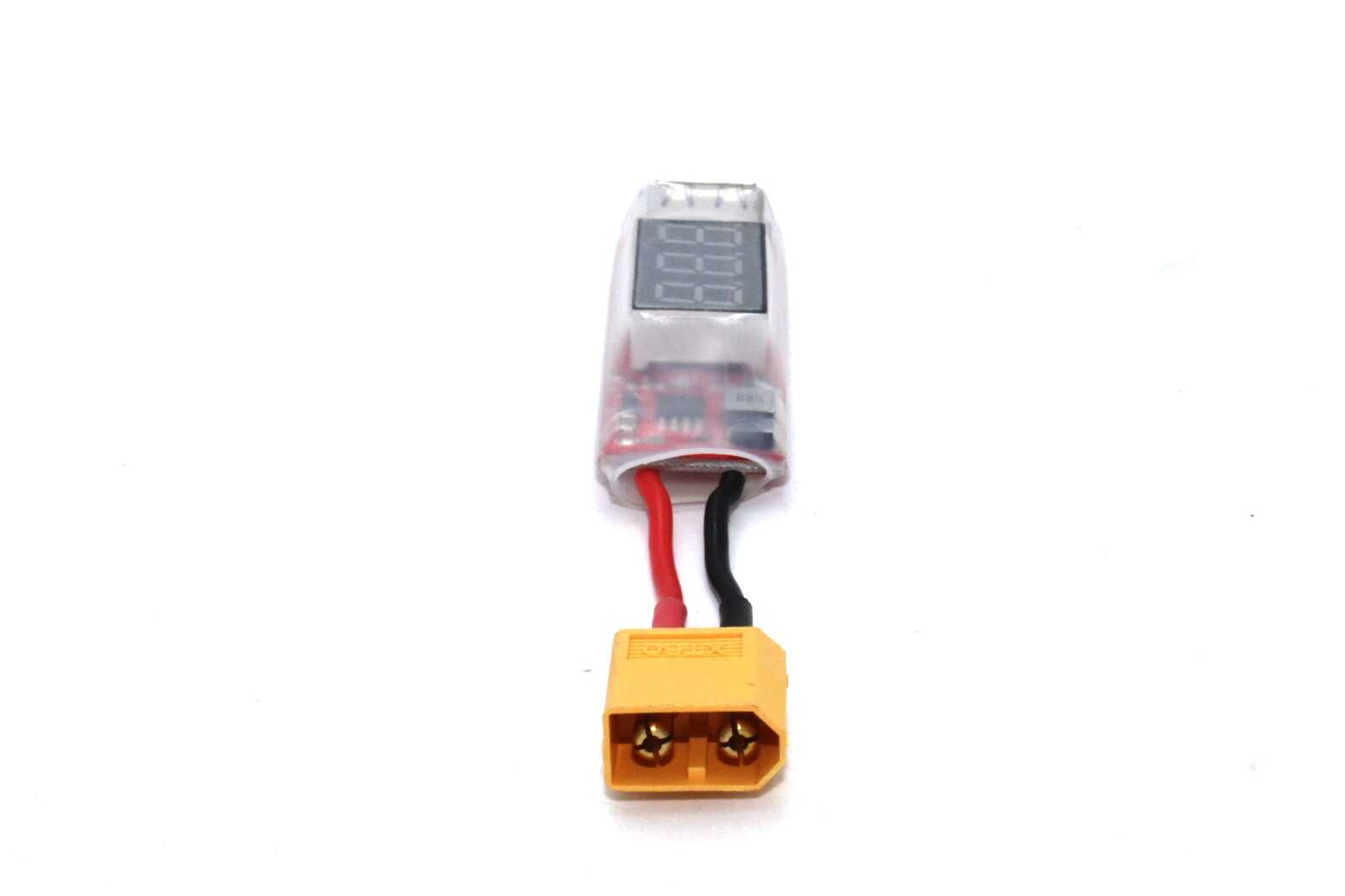
2S–6S LiPo Battery XT60 Plug to USB Adapter with Voltage Display
An XT60-input USB adapter that lets you use your LiPo battery pack as a portable power bank with real-time voltage display — great for field charging and understanding the XT60 standard.
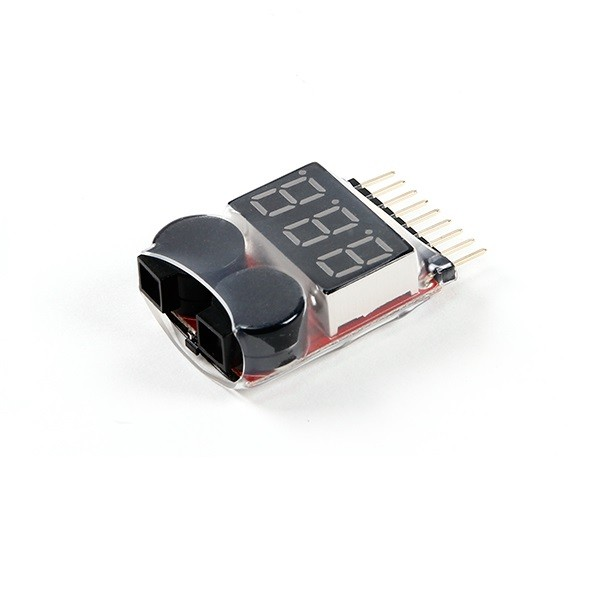
1–8S LiPo Battery Voltage Tester (No Alarm)
Check your LiPo pack voltage via the JST-XH balance connector before and after flights. Works with 1–8S packs and gives per-cell readings to catch imbalances caused by poor connector joints.
25cm LiPo Battery Strap Belt – Reusable Cable Tie Wrap
Secure your LiPo battery firmly to your drone or RC frame — a flying battery can stress or even rip out the connector. These reusable velcro straps protect both battery and connector.
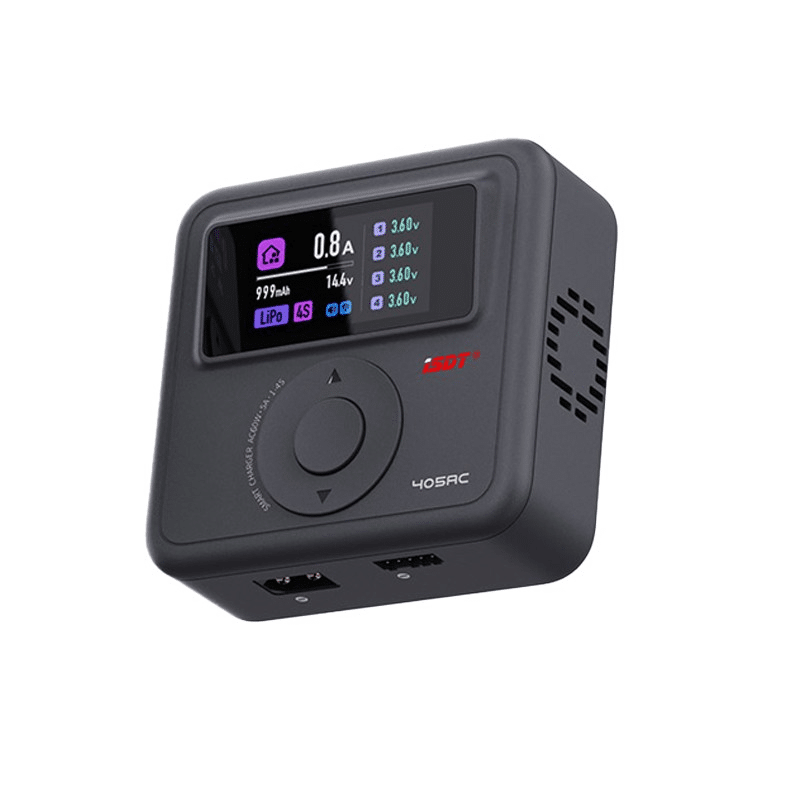
ISDT 405AC 60W AC GaN Smart Charger (XT60 Output)
A GaN-powered smart charger with XT60 output — the perfect companion charger for XT60-equipped LiPo packs. Supports 1–4S LiPo/LiHv/LiFe chemistries with advanced safety monitoring.
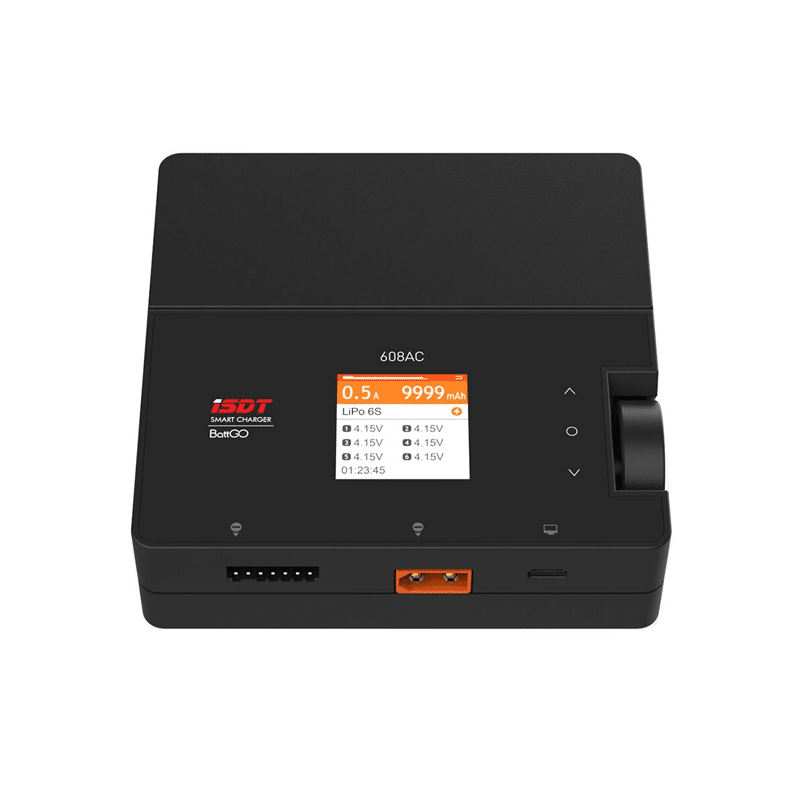
ISDT 608 AC LiPo Charger – 50W AC / 200W DC Dual Mode
A powerful dual-mode charger-discharger compatible with virtually all LiPo connector types via adapter leads. Essential for serious RC and drone pilots managing multiple battery types.
Frequently Asked Questions
Can I use an XT60 adapter to connect a T-Plug battery to an XT60 ESC?
Yes, XT60 to T-Plug adapter cables are widely available in India. However, adapter cables add a small amount of resistance and are potential failure points. If you use an adapter regularly, consider permanently converting the battery to XT60 by resoldering. An adapter is fine as a temporary solution but not ideal for permanent use in high-vibration applications like drones.
Is XT60 better than T-Plug in every situation?
Not necessarily. For very small, lightweight builds where every gram counts, the T-Plug is lighter. For legacy RC equipment designed around T-Plug, staying with T-Plug avoids compatibility headaches. For anything new and high-power, XT60 is the better choice due to superior current rating and anti-spark design.
Which connector does most drone hardware use in India in 2026?
XT60 dominates the Indian drone and FPV market. Most modern ESCs, flight controllers with power inputs, and LiPo batteries above 1300mAh sold in India now come with XT60. The T-Plug is mostly found on older imported RC equipment, and JST variants are standard on sub-250g micro quads and electronics projects.
What happens if I accidentally reverse the connector polarity?
Reversing LiPo polarity is catastrophic. The ESC, flight controller, and other electronics connected to the battery will be instantly destroyed by reverse voltage. Even a brief reversal is often enough to fry MOSFETs and capacitors. This is why keyed connectors (XT60, JST) are strongly preferred over unkeyed ones. Always verify with a multimeter before the first connection.
Can I use JST connectors for a 3S LiPo power supply?
The small JST-PH (2.0mm) and JST-RCY connectors are not suitable for 3S power delivery to any meaningful load. JST-XH (the balance lead standard) is only for balance charging, not power. If you need a connector for a 3S LiPo main power lead, use XT30 (for loads up to 30A) or XT60 (for loads up to 60A).
Gear Up Your LiPo Setup at Zbotic
From LiPo battery straps and voltage testers to smart chargers with XT60 output, Zbotic has everything you need for a safe and efficient LiPo battery system. Shop now with fast delivery across India.






Add comment