
When designing a machine, robot, or automation system that needs to push, pull, lift, or rotate something, you will eventually face a fundamental decision: hydraulic actuator or electric actuator? Both technologies have been used in industry for decades, yet they serve very different use cases. Choosing the wrong type can mean wasted money, poor performance, or even safety hazards.
In this detailed comparison guide, we break down everything you need to know — force output, precision, cost, maintenance, energy efficiency, environmental suitability, and ideal applications — to help you pick the right actuator for your specific build.
What Are Actuators and How Do They Work?
An actuator is a device that converts energy into mechanical motion. That motion can be linear (back and forth along an axis), rotary (spinning), or a combination. Actuators are the “muscles” of any machine — they receive a command signal and physically move something in response.
Hydraulic actuators use pressurised fluid (usually oil) to generate force. A pump builds pressure in a closed circuit, and when a valve opens, that pressure pushes a piston inside a cylinder. The force generated is simply the fluid pressure multiplied by the piston area, which is why hydraulic systems can produce enormous forces in a compact package.
Electric actuators, by contrast, convert electrical energy into mechanical motion using a motor — typically a brushed DC motor, brushless DC motor, or stepper motor — paired with a lead screw, ball screw, or rack-and-pinion mechanism. The motor spins, and the screw converts that rotation into linear travel.
Hydraulic Actuators: Strengths and Weaknesses
Where Hydraulics Excel
- Extreme force output: Hydraulic cylinders routinely produce 10,000 N to over 1,000,000 N from a relatively small cylinder. No electric actuator at similar size can match this.
- High power density: A small cylinder can do the work of a much larger electric motor + gearbox combination.
- Shock load tolerance: The fluid acts as a natural shock absorber, making hydraulics well-suited for excavators, presses, and cranes where sudden impacts are common.
- Continuous duty under load: Hydraulic systems can hold a load indefinitely with the pump off (using load-holding valves) without drawing current or generating heat in the actuator.
Hydraulic Weaknesses
- Complex infrastructure: You need a pump, reservoir, hoses, valves, seals, and a fluid management system. This adds cost, weight, and plumbing complexity.
- Leakage risk: Hydraulic oil leaks are messy, environmentally hazardous, and a fire risk in high-temperature environments.
- Poor positional precision: Standard hydraulic actuators lack fine position control without expensive servo valves and feedback systems.
- Maintenance overhead: Seals degrade over time, fluid requires monitoring and changing, and filters clog.
- Not DIY-friendly: Sourcing hydraulic components in India, especially for hobbyist budgets, is difficult.
Electric Actuators: Strengths and Weaknesses
Where Electric Actuators Excel
- Precise position control: Combine a stepper motor or servo motor with a lead screw and you get sub-millimetre positional accuracy — critical for CNC machines, pick-and-place robots, and medical devices.
- Clean and self-contained: No hydraulic fluid, no risk of leaks, no complex plumbing.
- Easy integration: An electric linear actuator connects directly to your microcontroller or motor driver via PWM or UART. Hydraulic systems need dedicated control hardware.
- Energy efficient at partial loads: Electric actuators only draw current when moving or holding against gravity. Modern brushless variants are especially efficient.
- Compact electronics: An Arduino + A4988 stepper driver + NEMA17 motor + lead screw assembly costs under ₹1,500 and gives you a precise linear stage.
- Widely available in India: Zbotic and similar stores stock a wide range of DC linear actuators, stepper-based stages, and servo-based arms — ready to order and ship.
Electric Actuator Weaknesses
- Lower force ceiling: Most affordable electric linear actuators top out at 1,000–2,000 N. Larger forces require expensive ball-screw actuators or multiple units.
- Heat generation at high duty cycle: Motors and drivers heat up during sustained high-load operation, requiring thermal management.
- Back-driveable risk: Many screw-driven actuators can be back-driven (the load pushes the screw back) if the motor isn’t energised, unless a self-locking lead screw pitch is used.
- Speed vs force trade-off: Gearing down for more force reduces speed significantly.
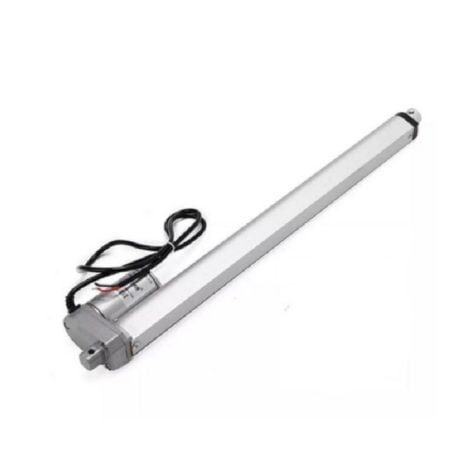
DC12V 500MM 7MM/S 2000N Putter Electric Linear Actuator
High-force 2000N electric linear actuator with 500mm stroke at 12V — ideal for heavy-lift automation and robotics without the mess of hydraulics.
Head-to-Head Comparison Table
| Parameter | Hydraulic Actuator | Electric Actuator |
|---|---|---|
| Maximum Force | Very high (10,000+ N easily) | Moderate (100–5,000 N typical) |
| Positional Precision | Poor (requires servo valves) | Excellent (sub-mm) |
| System Complexity | High (pump, reservoir, valves) | Low (motor + driver + screw) |
| Maintenance | High (seals, fluid, filters) | Low (periodic lubrication) |
| Cleanliness | Poor (oil leaks possible) | Excellent (fully dry) |
| DIY Suitability | Very difficult | Excellent |
| Energy Efficiency | Moderate (pump always runs) | High (on-demand only) |
| Upfront Cost | High | Low to moderate |
| Control Interface | Directional valves (complex) | PWM / UART / I2C (simple) |
| Noise Level | High (pump noise) | Low to moderate |
Force, Torque, and Power Density
The single biggest advantage of hydraulics is raw force. Because fluid pressure acts on the entire piston area, even a 50mm bore cylinder at 200 bar can produce nearly 40,000 N — about 4 tonnes of pushing force. This is why hydraulics dominate excavators, industrial presses, and aircraft landing gear.
Electric linear actuators achieve high forces through mechanical advantage. A self-locking acme screw with a high-torque motor can deliver 2,000–5,000 N, which is more than enough for most robotics, agricultural equipment, and automation projects. The 12V 2000N electric actuator available on Zbotic is a perfect example — it handles demanding tasks without any hydraulic infrastructure.
For hobbyist and mid-scale industrial projects where forces are under 3,000 N, electric actuators match or beat hydraulics once you factor in the simplified system design.
Precision and Control
Electric actuators win decisively on precision. A stepper-motor-driven lead screw can achieve 0.05mm positional repeatability. Servo-controlled electric actuators with encoders can do even better.
Hydraulic actuators are inherently imprecise due to fluid compressibility, temperature-dependent viscosity, and valve hysteresis. Servo-hydraulic systems (used in aerospace and Formula 1) can achieve precision comparable to electric actuators, but at 10–100x the cost and complexity.
For CNC routing, 3D printing, pick-and-place machines, or any position-sensitive robotics, electric actuators are the clear choice.
Cost Analysis: Upfront vs Lifetime
Consider the total cost of ownership, not just the actuator price:
- Hydraulic system: Pump (₹8,000–₹50,000), reservoir, hoses, fittings, valves, seals, oil, filter housing — easily ₹20,000–₹1,00,000 just for the power unit, before a single cylinder is purchased.
- Electric actuator system: Linear actuator (₹800–₹5,000), motor driver (₹150–₹800), power supply (₹500–₹2,000), wiring — total system under ₹8,000 for most applications.
Ongoing costs also favour electric: no oil changes, no seal replacements, no fluid disposal. The only ongoing cost is occasional lubrication of the lead screw.
Best Use Cases for Each Type
Choose Hydraulic When:
- You need forces above 5,000 N in a compact package
- Operating in extreme shock-load environments (rock crushers, demolition equipment)
- You already have hydraulic infrastructure (tractor PTO, existing hydraulic circuit)
- Speed of actuation under heavy load is critical and electric motors would overheat
Choose Electric When:
- Building a robot, drone, CNC machine, or smart automation system
- You need precise position control or programmable motion profiles
- Working with microcontrollers (Arduino, Raspberry Pi, ESP32)
- Budget is limited and system simplicity matters
- Operating in clean environments (food processing, medical, electronics labs)
- Building a DIY project — the entire ecosystem of parts is readily available in India
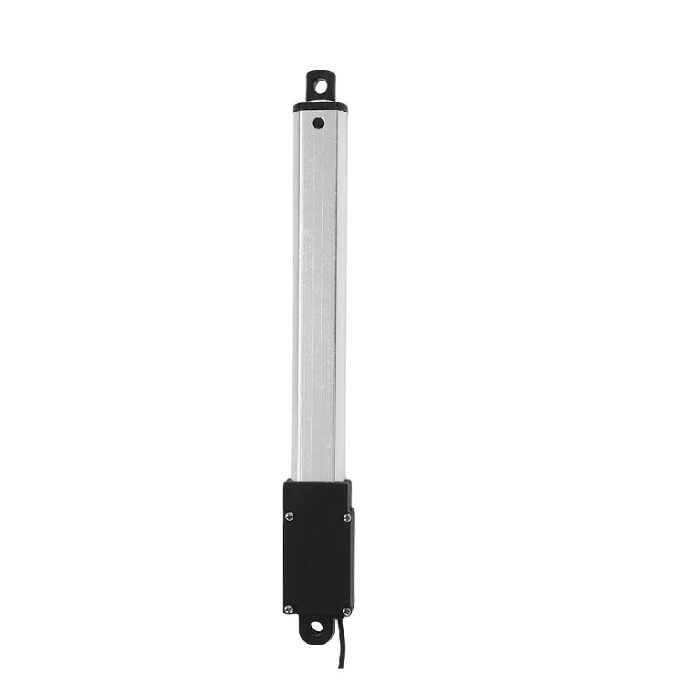
LA-T8-100 Stroke 100MM 150MM/S 6.4N DC6V Electric Linear Actuator
Fast 150mm/s compact electric actuator for doors, windows, and lightweight automation — perfect for smart home and robot builds.
DIY and Hobbyist Robotics Context
For the vast majority of makers, students, and engineers building projects in India, the electric actuator is the obvious choice. Here’s why the DIY ecosystem strongly favours electric:
- Microcontroller compatibility: An L298N driver or A4988 stepper driver costs ₹150–₹300 and interfaces directly with Arduino or Raspberry Pi.
- Parts availability: Zbotic stocks a complete range — from 6.4N miniature actuators for window openers to 2000N heavy-duty units for agricultural machinery.
- Community support: Thousands of Arduino projects, tutorials, and open-source code libraries exist for electric motor control. Hydraulic control code for hobbyists is virtually non-existent.
- Safe to experiment: A misconfigured electric actuator stalls or trips a fuse. A misconfigured hydraulic system can burst hoses, spray hot oil, or cause serious injury.
The only scenario where a maker might need hydraulics is if they are building a large hydraulic robot arm or working with an existing tractor/excavator chassis — in which case hydraulics are already present and electric becomes supplementary.
Recommended Electric Actuators from Zbotic
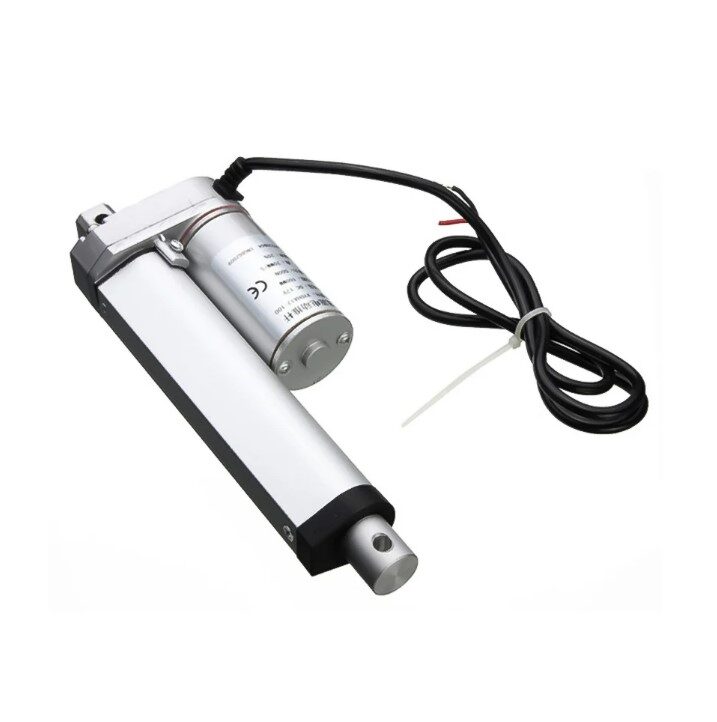
Linear Actuator Stroke Length 100MM, 7mm/S, 1500N, 12V
Compact 100mm stroke with 1500N force — great for robotic arms, solar panel tracking, and automated gate projects.
Frequently Asked Questions
Can an electric actuator replace a hydraulic actuator?
In most applications below 5,000 N force, yes. Modern electric linear actuators with ball screws can match hydraulic force output while offering superior precision, lower maintenance, and simpler integration. For forces above 10,000 N or extreme duty-cycle applications, hydraulics may still be preferred.
What is the maximum force of a typical electric linear actuator?
Budget electric actuators (like the 12V units from Zbotic) typically range from 6 N to 2,000 N. Industrial ball-screw electric actuators from premium brands can reach 50,000 N, but at significantly higher cost.
Are electric actuators slower than hydraulic?
Not necessarily. The LA-T8-100 travels at 150mm/s, which is comparable to many hydraulic cylinders in small-bore configurations. Hydraulics can be faster for large-bore, high-flow systems, but for typical stroke lengths under 500mm, speeds are similar.
Can I control an electric linear actuator with an Arduino?
Yes. Most 12V DC electric linear actuators work with an L298N or L293D motor driver connected to an Arduino. You send PWM or digital direction signals to move the actuator in and out. Adding a limit-switch or potentiometer provides position feedback.
Which is safer for indoor use?
Electric actuators are significantly safer for indoor use. There is no flammable hydraulic oil, no risk of pressurised fluid injection injury, and no pump noise. Hydraulic systems should be avoided in food-grade, cleanroom, or residential environments.
Do electric actuators require lubrication?
Most quality electric linear actuators are pre-lubricated at the factory and require only periodic re-greasing of the lead screw — typically once every 6–12 months under regular use. This is far less maintenance than a hydraulic system.
Conclusion
The hydraulic vs electric actuator debate really comes down to force requirements and system complexity. If you are building heavy industrial machinery that needs tens of thousands of newtons of force and already has a hydraulic power unit, hydraulics make sense. For everything else — robotics, automation, DIY builds, smart devices, agricultural equipment, solar tracking, gate openers, and CNC machines — electric linear actuators are the better choice.
They are cleaner, cheaper, more precise, easier to control, and perfectly matched to the microcontroller-based build ecosystem that most makers and engineers use today. With a range of 6V/12V/24V options available from Zbotic — from 6.4N lightweight units to 2000N heavy-duty actuators — you can find the right electric actuator for virtually any project without ever touching a hydraulic hose.




Add comment