
ExpressLRS vs FrSky vs Other RC Link Systems: Best Choice for Indian Drone Pilots in 2026
Choosing the right RC link system is one of the most important decisions when building a drone. The RC link is the communication backbone between your transmitter (radio controller) and the drone — it determines your control range, latency, reliability, and the features available to you. In India’s diverse drone use landscape — from urban FPV pilots in Bengaluru to agricultural drone operators in Andhra Pradesh — the choice of RC link can make or break the flying experience.
In 2026, the RC link landscape has consolidated significantly. ExpressLRS (ELRS) has become the dominant system for FPV and hobbyist builds, while FrSky, TBS Crossfire, and Flysky still hold loyal user bases. This comprehensive comparison will help you understand exactly which system is right for your use case and budget in India.
1. What Is an RC Link System?
An RC link system consists of two parts: the transmitter module (TX — installed in or connected to your radio controller) and the receiver (RX — installed in the drone). Together they form a two-way radio link that sends your stick movements to the drone and receives telemetry data (battery voltage, GPS coordinates, signal strength) back to your controller.
Key metrics to evaluate any RC link system:
- Latency: Time from stick movement to drone response. Measured in milliseconds. Lower is better for FPV racing (target: <5ms). Less critical for photography drones.
- Range: Maximum reliable control distance. Affected by antenna design, output power, and modulation type.
- Packet rate: How many times per second the link updates (e.g., 500Hz = 500 updates/second). Higher rates = more responsive control feel.
- Failsafe behaviour: What happens when the link drops. Options include Hold (maintain last position), RTH (Return to Home), or Cut (motors stop).
- Telemetry: Data sent back from drone to controller — battery, RSSI, GPS, etc.
2. ExpressLRS (ELRS): The Open-Source Revolution
ExpressLRS emerged from the open-source community around 2020 and has, by 2026, become the de-facto standard for FPV and hobbyist drone building worldwide — including in India. Its combination of exceptional performance, affordability, and an active community makes it the default recommendation for almost anyone building a new drone in 2026.
How ELRS Works
ELRS uses LoRa (Long Range) modulation technology, the same radio technique used in IoT networks. LoRa transmits data in “chirp spread spectrum” format, which is extremely resistant to interference and can recover weak signals that would be lost using conventional AM/FM/FHSS techniques. ELRS is available in two frequency bands:
- 2.4GHz: Shorter range (3–10km typical) but very low latency and high packet rates (up to 500Hz). Ideal for FPV racing and freestyle.
- 900MHz: Longer range (20–50km theoretical) at the cost of slightly higher latency and lower packet rates. Ideal for long-range cruising and agricultural applications.
ELRS Advantages
- Price: ELRS receivers cost ₹700–1,500 in India. Compare to FrSky receivers at ₹2,000–4,000 or TBS Crossfire at ₹4,000–6,000.
- Performance: At 500Hz on 2.4GHz, ELRS delivers latency under 4ms — competitive with or better than any commercial system at any price.
- Range: 2.4GHz ELRS at 250mW will reliably cover 3–5km range — far more than any legal VLOS (Visual Line of Sight) flying distance.
- Community: Massive global and Indian FPV community using ELRS. Firmware updates are frequent and well-documented.
- Compatibility: Works with nearly every modern flight controller and ground station.
ELRS Disadvantages
- Requires both TX module and RX to be flashed with matching firmware — initial setup is more technical than plug-and-play systems
- No native support for traditional Spektrum or FrSky protocols without conversion
- Higher-quality ELRS transmitters (EdgeTX-compatible) require learning EdgeTX firmware
Signal Boosting for ELRS
For long-range ELRS missions (agricultural surveys, BVLOS experiments), directional antenna boosters improve range significantly.
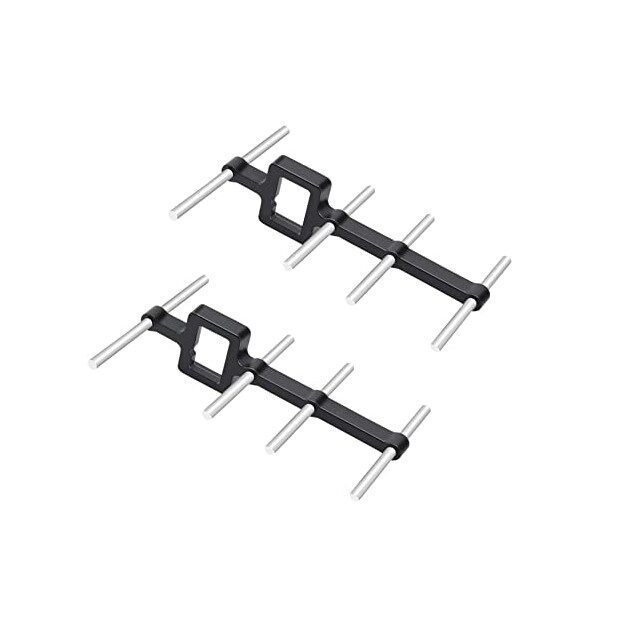
2.4GHz Yagi-UDA Drone Signal Booster
A directional Yagi antenna for 2.4GHz that dramatically improves ELRS range in one direction. Ideal for survey flights where the drone moves away in a straight line. Pairs with ELRS 2.4GHz systems for extended BVLOS range.
View on Zbotic3. FrSky: The Established Standard
FrSky was the dominant RC link for FPV drones from approximately 2015–2021. Millions of drones worldwide were (and still are) running FrSky D16, ACCESS, or ACCST protocols. In India, FrSky Taranis transmitters built a massive user base and the FrSky ecosystem remains relevant, particularly for users who have existing FrSky hardware.
FrSky Protocol Evolution
- ACCST/D16: Older protocol, still widely used. Reliable 1.5km range on 2.4GHz with standard antennas.
- ACCESS: Newer FrSky protocol with improved range and OTA (Over-the-Air) receiver firmware updates. Better interference immunity than D16.
- F.Port / S.Port: Telemetry interfaces that bring sensor data back to the transmitter.
FrSky in 2026: The Honest Assessment
FrSky’s dominance has been eroded by ELRS in the hobbyist market. The primary reasons:
- FrSky receivers cost 2–3x more than ELRS equivalents for similar performance
- FrSky made controversial decisions around 2019 that broke backward compatibility, alienating many users
- ELRS at 500Hz measurably outperforms FrSky D16 in latency benchmarks
That said, FrSky remains a solid choice if you already own FrSky transmitters and receivers. The X9D Plus and X10 transmitters are excellent hardware that run OpenTX and later EdgeTX firmware, and FrSky ACCESS receivers in the X-series are reliable performers.
4. TBS Crossfire: The Long-Range King
Team BlackSheep (TBS) Crossfire operates on 915MHz (in India/South Asia, the permitted ISM band is 865–868MHz — check local regulations) and is the system of choice for serious long-range flying. Crossfire’s LoRa-based 900MHz link is capable of 40km+ range in controlled tests and routinely achieves 15–20km in practical use — far beyond any legal unassisted VLOS operation.
Crossfire Use Cases
- BVLOS experimental flights with DGCA special permissions
- Fixed-wing long-range platforms (ArduPlane) for survey and patrol
- Any mission where the drone will be beyond standard 2.4GHz range
Crossfire vs ELRS 900MHz
In 2026, ELRS 900MHz has largely closed the gap with Crossfire for range. ELRS 900MHz at 500mW achieves comparable range to Crossfire at similar power settings, at a fraction of the cost. The key remaining advantage of Crossfire is its more polished commercial ecosystem, wider FPV community adoption in India for high-end builds, and the TBS-branded transmitter hardware quality.
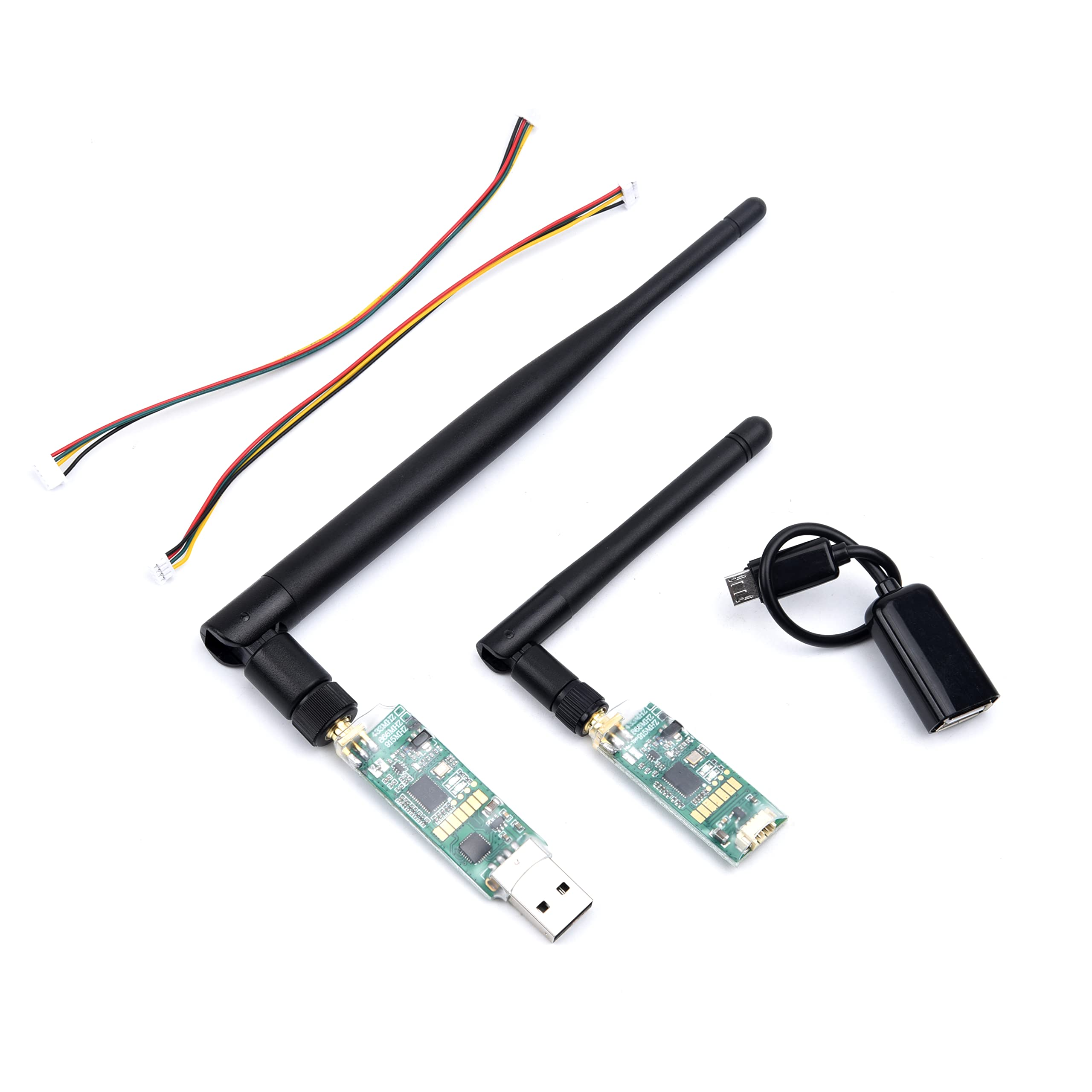
3DR Single TTL MINI Radio Telemetry 433MHz 500mW
A 433MHz telemetry module for ArduPilot systems running MAVLink. For fixed-wing and large multirotor survey builds where Crossfire handles RC control and a separate telemetry link sends mission data to the ground station.
View on Zbotic5. Flysky and AFHDS: The Budget Option
Flysky transmitters (FS-i6, FS-i10) are among the most affordable RC systems available in India, regularly found in the ₹2,500–4,000 range. They use the AFHDS 2A protocol on 2.4GHz.
Flysky Honest Review
Flysky is acceptable for beginners who want to learn drone flying before investing in better equipment. However, the limitations are significant:
- AFHDS 2A latency is 7–9ms — noticeably higher than ELRS 500Hz (<4ms)
- Range is limited to 1–2km with stock antennas
- The Flysky FS-i6 only supports 6 channels on the stock firmware (10 with hacked firmware)
- No native telemetry on basic models
- The transmitter hardware quality is adequate but not great for long sessions
Recommendation: If your budget is very limited, Flysky is fine to learn the basics. Budget for an ELRS-compatible transmitter (RadioMaster Boxer, Pocket, or Zorro) as your next purchase.
6. RC Links for Agricultural Drones in India
Agricultural drone operators in India have specific needs that differ from FPV hobbyists:
- Higher reliability over tall crop canopies (sugarcane, maize can be 3–4m tall)
- Longer range for large field coverage
- Integration with agricultural autopilot systems
- Redundancy — link failures over farmland mid-mission can be costly
For agricultural and survey drones running ArduPilot, a separate RC link (ELRS or Crossfire for stick control) combined with a dedicated MAVLink telemetry link (915MHz or 433MHz) provides the best setup. The RC link handles stick control with low latency; the telemetry link handles mission waypoints, status monitoring, and ground station communication independently.
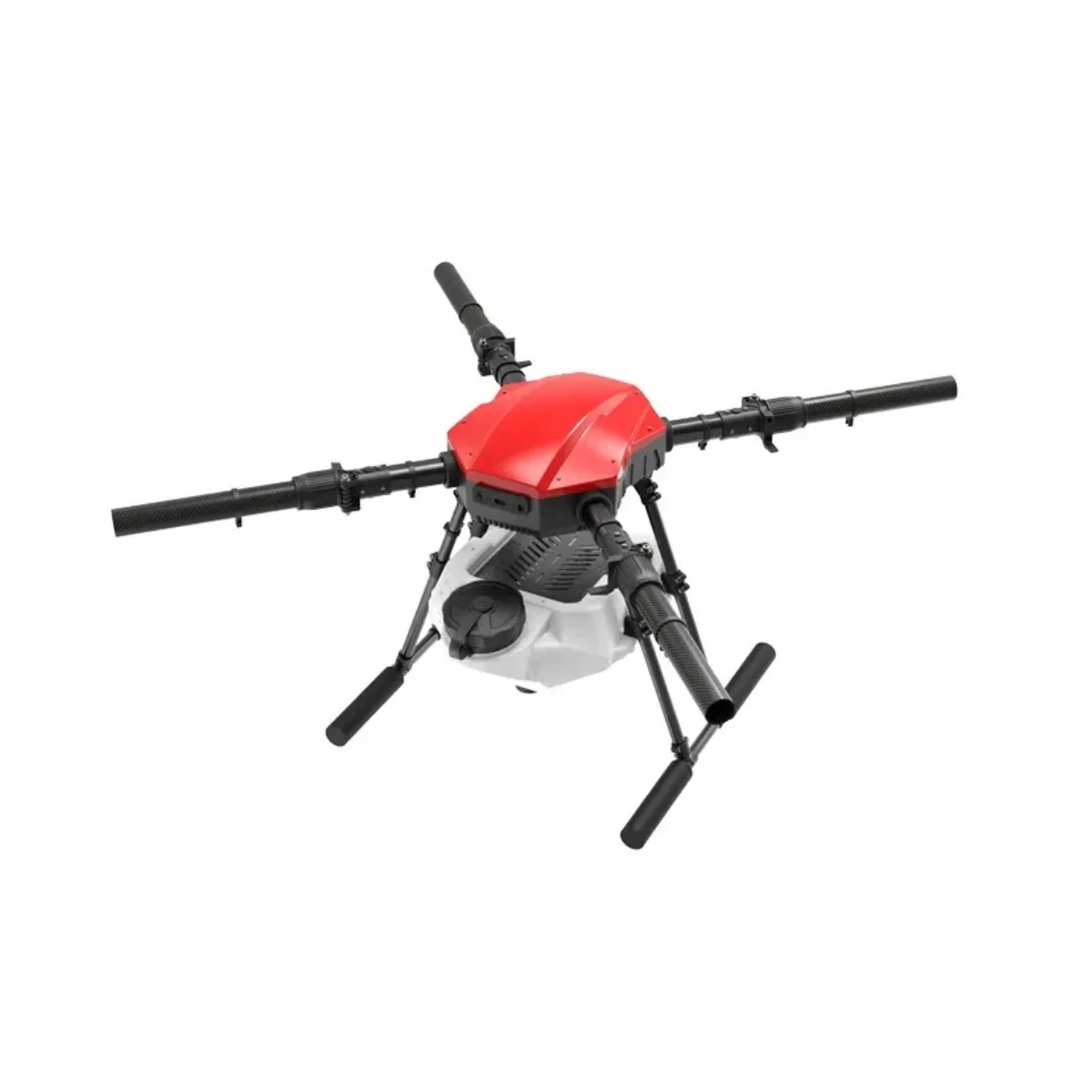
EFT E410P 10L 4-Axis Agricultural Drone Frame
A professional agricultural drone frame designed for 10L tank capacity. Ideal base for building an agricultural spray drone paired with a reliable long-range RC link system for safe operation over Indian farmland.
View on Zbotic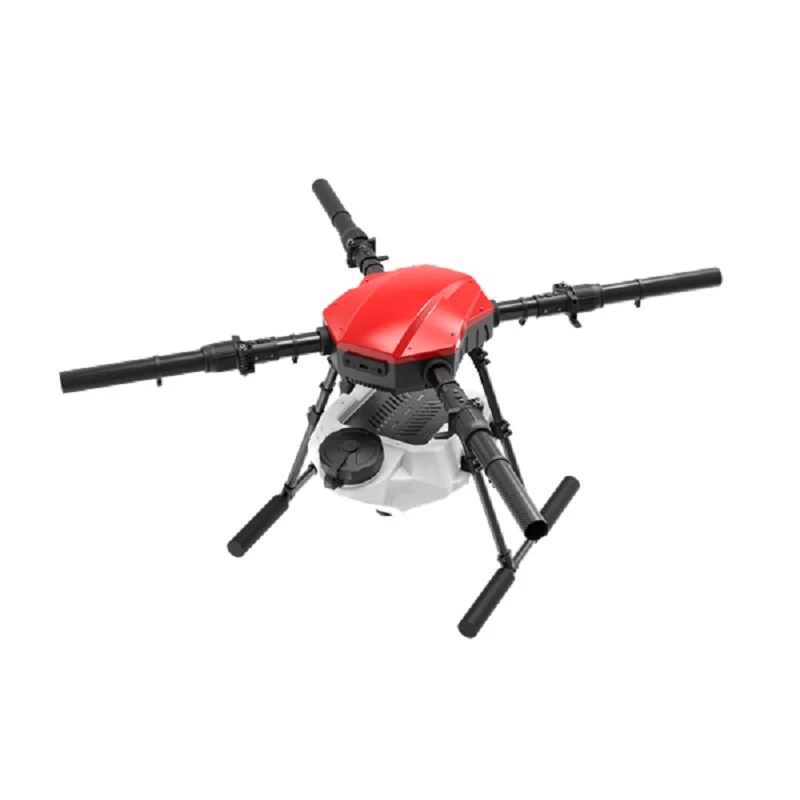
EFT E416P 16L 4-Axis Agricultural Drone Frame
The larger 16L sibling, capable of covering more acreage per tank refill. Paired with ELRS 900MHz or TBS Crossfire, this frame builds into a professional-grade agricultural sprayer suitable for large farms in Maharashtra, Punjab, and Andhra Pradesh.
View on Zbotic7. Frequency Regulations in India
This is a critically important section for Indian drone operators. Not all RC frequencies are legally usable in India without a licence.
| Frequency | Status in India | Systems |
|---|---|---|
| 2.4GHz | License-exempt ISM band — freely usable up to 4W EIRP | ELRS 2.4G, FrSky, Flysky, Spektrum |
| 5.8GHz | License-exempt — used for FPV video transmission (not RC control) | FPV video TX/RX only |
| 433MHz | License-exempt ISM, limited power (10mW ERP max in some interpretations) | 433MHz telemetry modules |
| 868–915MHz | Regulatory grey area — check latest WPC (Wireless Planning & Coordination Wing) notifications. Not clearly licensed-exempt for drone use. | TBS Crossfire, ELRS 900MHz |
Important: The 868–915MHz band that Crossfire and ELRS 900MHz operate on is not clearly licensed in India for drone RC use. Many operators use it, but technically it may require WPC authorization. The 2.4GHz band is the safest choice for legal operation. Consult your local drone association or a spectrum lawyer if deploying commercially.
8. Full Comparison Table
| System | Latency | Max Range | RX Cost (India) | Open Source | Best For |
|---|---|---|---|---|---|
| ELRS 2.4GHz | <4ms (500Hz) | 3–10km | ₹700–1,500 | Yes | FPV, freestyle, all builds |
| ELRS 900MHz | 6–10ms (100Hz) | 20–50km | ₹1,000–2,000 | Yes | Long range, surveys |
| FrSky ACCESS | 5–7ms | 2–4km | ₹2,000–4,000 | Partial (EdgeTX) | Existing FrSky users |
| TBS Crossfire | 6–8ms | 15–40km | ₹4,000–7,000 | No | Long range, commercial |
| Flysky AFHDS2A | 7–9ms | 1–2km | ₹500–1,000 | No | Beginners, budget |
9. Our Recommendations by Use Case
Best RC Link for FPV Racing / Freestyle (India 2026)
Winner: ExpressLRS 2.4GHz — No contest. The combination of 500Hz packet rate, sub-4ms latency, excellent range, ₹700–1,500 receiver cost, and massive Indian community support makes ELRS the obvious choice. Get a RadioMaster TX (Boxer, Pocket, or Zorro) with internal ELRS module or add an external ELRS 2.4GHz module to your existing EdgeTX transmitter.
Best RC Link for Long-Range / Survey Drones
Winner: ExpressLRS 900MHz for budget builds; TBS Crossfire for professional commercial builds where reliability warranty matters. ELRS 900MHz at 500mW will comfortably cover any practical ArduPilot survey mission (VLOS limit is ~500m in India for most categories).
Best RC Link for Agricultural Drones
Winner: ExpressLRS 900MHz + Separate MAVLink telemetry. The agricultural drone operates semi-autonomously on ArduCopter; the RC link is primarily for manual override and emergency control. A 900MHz ELRS link provides the range penetration through tall crops and over long distances that 2.4GHz cannot match.
Best RC Link for Beginners on a Tight Budget
Short term: Flysky FS-i6X (budget entry point). Recommended upgrade path: RadioMaster Zorro or Pocket with ELRS 2.4GHz. These EdgeTX transmitters are available in India for ₹5,000–8,000 and will serve you for years across every build type.
10. Frequently Asked Questions
A: ELRS 2.4GHz is legal to use in India — 2.4GHz is a licensed-exempt ISM band. ELRS 900MHz falls into a regulatory grey area (the 865–867MHz band is ISM in India, but 915MHz is not). Most Indian FPV pilots use ELRS 2.4GHz without any regulatory concern. For commercial operations, consult a WPC-licensed spectrum advisor.
A: Not directly — ELRS and FrSky are completely different protocols and are not compatible. However, RadioMaster TX modules are available in both ELRS and FrSky (ACCESS) variants. Many pilots run two TX modules and switch depending on which drone they are flying. Long-term, replacing FrSky receivers with ELRS during any rebuild is the recommended path.
A: CRSF (Crossfire Serial Protocol) is the serial communication protocol used between the receiver and flight controller — it is what ELRS, TBS Crossfire, and compatible systems use to send channel data over UART. ELRS uses CRSF as its FC interface. So when configuring Betaflight for ELRS, you set the receiver provider to CRSF. They are not the same thing — ELRS is the radio link; CRSF is the wired data protocol.
A: ELRS receivers and TX modules are available from Indian RC hobby stores and online marketplaces. Look for brands like Radiomaster, Happymodel, BetaFPV, and GEPRC — all produce ELRS-compatible hardware. Prices start around ₹700 for a nano receiver. Shipping from Indian suppliers avoids the import duty issues that can arise with international orders.
A: Yes, ELRS works perfectly with ArduPilot. Set the serial port to RCIN or CRSF protocol in Mission Planner. ELRS also supports native MAVLink telemetry passthrough in newer firmware, allowing you to see telemetry on your EdgeTX transmitter display without a separate telemetry radio — though for serious survey work, a dedicated 915MHz or 433MHz telemetry link is still recommended for its independent communication channel.
Build Your Perfect RC Setup
Zbotic stocks telemetry modules, signal boosters, and all the RF components you need for your drone build. Pan-India delivery with expert support.
Shop RC Components






Add comment