
Drone Parachute System: How It Works & When You Need One
As drones grow heavier, fly higher, and operate over urban areas in India, one question becomes increasingly important: what happens when the drone loses power mid-flight? A 5kg drone falling uncontrolled from 120 metres is a serious safety hazard for anyone below. This is where a drone parachute system becomes not just useful, but in some cases legally required.
This guide explains the mechanics of drone parachute systems, how they integrate with your flight controller, when DGCA regulations require them, and how to choose and install the right system for your build.
Why Does a Drone Need a Parachute?
Unlike manned aircraft, drones do not carry human pilots who can make complex recovery decisions in an emergency. When a drone fails catastrophically — motor failure, battery disconnect, ESC burnout, propeller strike — the aircraft stops generating lift and falls. The outcome depends on altitude, weight, and what (or who) is below.
Consider the physics: a 5kg drone falling from 100m with no drag reaches approximately 45 m/s (162 km/h) before impact. The kinetic energy at impact is roughly 5,000 joules — comparable to a large calibre rifle bullet. This is lethally dangerous to any person below.
A parachute slows the descent to 3–7 m/s, reducing impact energy by over 99%. The difference between a drone that kills and a drone that causes minor damage or no injury at all comes down to that parachute.
In India, as drone operations expand into urban areas, over crowds, and BVLOS (Beyond Visual Line of Sight) zones, parachute systems are increasingly a regulatory requirement rather than a recommendation.
How a Drone Parachute System Works
A complete drone parachute system has four main components:
1. Parachute Canopy
The parachute itself is folded and packed into a compact container. For drones, circular canopies are most common due to their drag efficiency. Cruciform and square canopies are used in some commercial systems for better descent rate control and predictable drift in wind.
2. Deployment Container / Ejector
The parachute must be deployed rapidly — ideally within 0.1–0.3 seconds. Deployment containers use one of several methods (spring-ejection, CO2, pyrotechnic) to throw the canopy away from the drone fast enough for it to inflate before the drone falls too far.
3. Trigger Controller
An onboard microcontroller or dedicated circuit monitors drone health data (acceleration, attitude, GPS altitude) and triggers deployment when pre-set thresholds are exceeded. Some systems connect directly to the flight controller via a serial or PWM interface.
4. Attachment System
Parachute shroud lines attach to a central harness point on the drone. This point must be structurally capable of handling the opening shock load — typically 5–15g for a few milliseconds — without tearing off the mounting.
Deployment Methods Compared
| Method | Deployment Speed | Reliability | Reusable | Cost |
|---|---|---|---|---|
| Spring Ejection | 0.2–0.4s | High | Yes | Low–Medium |
| CO2 Cartridge | 0.05–0.1s | Very High | Yes (repack + cartridge) | Medium |
| Pyrotechnic | <0.05s | Very High | No (single use) | High |
| Compressed Air | 0.1–0.2s | High | Yes | Medium |
Spring Ejection
A pre-tensioned spring inside the container pushes the parachute canopy out. Simple, reliable, reusable, and affordable. Slightly slower than CO2 systems, but adequate for most drone applications above 30m AGL (above ground level).
CO2 Cartridge
A small CO2 cartridge (like those used in bicycle tyre inflators) is punctured electrically, releasing high-pressure gas to blast the parachute out at very high speed. Much faster than spring systems, reliable across temperature ranges, and the CO2 cartridge is the only consumable. The preferred method for commercial drone parachute systems.
Pyrotechnic
A small explosive charge ejects the parachute instantly. Used in military-grade systems and certified aviation parachutes. Not recommended for DIY builds due to complexity, safety requirements, and single-use nature.
Trigger Systems and Flight Controller Integration
The trigger system is the brain of the parachute setup. It decides when the parachute needs to deploy. There are two main approaches:
Autonomous Trigger (IMU-Based)
The trigger controller has its own IMU and monitors the drone’s acceleration continuously. It triggers deployment when it detects freefall acceleration (g-force below 0.2g for more than 50–100ms), which indicates an uncontrolled descent. This system works independently of the flight controller — if the FC itself fails, the parachute still deploys.
False deployment is prevented by altitude lock (parachute won’t deploy below a minimum altitude, typically 10–20m AGL) and by requiring both freefall detection AND armed state before triggering.
Flight Controller Integration
ArduCopter and ArduPlane both have built-in parachute support. The FC can trigger the parachute via PWM output when it detects:
- Multiple ESC motor failure (via RPM sensing or current sensing)
- Freewheeling attitude that cannot be corrected (crash detection)
- Low battery altitude-hold failure
- Manual trigger via RC switch
Key ArduCopter parameters for parachute integration:
CHUTE_ENABLED = 1— enables parachute functionCHUTE_TYPE— 0 = relay output, 1 = servo outputCHUTE_SERVO_ON— PWM value to trigger deploymentCHUTE_ALT_MIN— minimum altitude for deployment (default 10m)CHUTE_DELAY_MS— delay after crash detection before deployment
Parachute Sizing for Your Drone
The parachute must be large enough to slow the drone to a safe descent rate. Target descent rate is 5–7 m/s for most applications. Below this, the drone drifts significantly in wind; above this, impact forces can still damage the payload.
Sizing Formula
Required parachute area (in m²) = (2 × m × g) / (ρ × Cd × v²)
- m = drone mass in kg
- g = 9.81 m/s²
- ρ = air density (1.225 kg/m³ at sea level; less at altitude)
- Cd = drag coefficient (~1.5 for cruciform, ~0.75 for round)
- v = target descent velocity (5–7 m/s)
For a 3kg drone targeting 6 m/s descent with a round canopy (Cd=0.75):
Area = (2 × 3 × 9.81) / (1.225 × 0.75 × 36) ≈ 2.23 m²
This corresponds to approximately a 1.7m diameter circular canopy.
Most commercial parachute systems publish their parachute diameter and the maximum drone weight they support at a given descent rate — use these specifications directly rather than calculating from scratch.
DGCA Regulations and Parachute Requirements in India
India’s Drone Rules 2021 (amended 2022) and the associated DGCA regulations establish when parachute systems are required or strongly advised:
UAS Categories Requiring Additional Safety Systems
- Medium category drones (25kg–150kg MTOW): Required to carry safety equipment including parachutes for operations over populated areas
- BVLOS operations: Any BVLOS flight over populated areas requires DGCA-approved containment/recovery systems
- Operations over assembly of people: Strict restrictions; parachutes are among the required safety measures for any exceptions granted
- Large UAS: Must comply with civil aviation standards that include recovery system requirements
Yellow Zone Operations
Flying in controlled airspace (yellow zones around airports) requires ATC permission and typically requires the drone to demonstrate a minimum safety standard. While a parachute is not explicitly mandated in all cases, it significantly strengthens an application for permission by demonstrating a safety-first approach.
DGCA Type Certification
For drones seeking DGCA type certification (required for commercial operations in many categories), a parachute system or demonstrated equivalent recovery capability is typically assessed as part of the safety analysis.
When Do You Need a Parachute System?
Use this framework to decide whether your specific drone operation needs a parachute:
You Definitely Need One If:
- Your drone weighs more than 5kg and you fly over or near populated areas
- You are applying for BVLOS or conditional zone permission from DGCA
- You operate commercially over events, infrastructure, or critical areas
- Insurance for your commercial drone operations requires it
- You carry high-value payloads where parachute cost is justified by payload protection alone
You Should Strongly Consider One If:
- Your drone regularly flies over 100m AGL where freefall distance before crash is substantial
- You fly over or near traffic, roads, or railways
- Your drone frequently operates over water where retrieval is difficult
- You are mapping near hillsides or valleys where a crash would be unrecoverable without parachute-aided soft landing
Lower Priority For:
- Small recreational drones under 2kg flying over open fields far from people
- FPV racing drones (high G forces during aggressive flight would trigger false deployments; not suitable for parachute integration)
- Indoor drones
Installation and Testing
Physical Installation
- Mounting point: Identify the structural centre of your drone frame. The parachute harness attaches here. For a quadcopter, this is typically the top plate of the frame directly over the CG point.
- Container mounting: Mount the parachute container above or behind the drone, not below (where it would interfere with propeller wash during inflation).
- Cable routing: Run the trigger signal cable (PWM or relay) from the parachute controller to the flight controller’s AUX output port. Keep it short and away from power cables.
- Power connection: Connect the parachute controller to a dedicated power supply (either direct from battery via its own XT30 connector, or from a dedicated BEC). Never share power with flight-critical electronics through the same rail.
Testing Procedure
Never test deploy an armed parachute while the drone has props fitted.
- With props off, connect to Mission Planner. Enable parachute function and set minimum altitude to 0 for ground testing.
- Use the relay/servo test function in Mission Planner to verify the trigger signal activates the deployment mechanism (without actually ejecting — use the safety pin if the system has one).
- Do a full dry run (no parachute in container, safety pin in) to verify the electrical trigger chain works end-to-end.
- For your first live deployment, drop the fully-loaded drone from 2m height by hand to verify the IMU trigger activates correctly (use a crash mat below).
- First in-flight deployment test should be from 30m over a field with no observers directly below.
Limitations of Drone Parachute Systems
Parachute systems are not foolproof. Understanding their limitations is as important as knowing their benefits:
- Minimum deployment altitude: Most systems need at least 15–30m AGL to fully inflate before ground impact. A drone that fails at 10m AGL may not benefit from the parachute at all.
- Propeller entanglement: A still-spinning propeller can cut parachute shroud lines. Systems mitigate this by triggering motor cut before deployment, but ESCs can take 100–500ms to stop motors.
- Horizontal velocity: If the drone was moving horizontally at high speed when it failed, the parachute slows vertical descent but does not stop horizontal drift. The drone may still travel 50–100m horizontally during descent.
- Wind drift: In strong winds, a drone on a parachute can drift hundreds of metres. Factor wind direction into your planning — never have the potential drift zone over people or obstacles.
- Weight penalty: A complete parachute system for a 5kg drone adds 200–400g of total weight, reducing flight time.
- False trigger risk: Aggressive manoeuvres (racing, dynamic survey patterns) can trigger false deployments if the sensitivity threshold is set too low.
Recommended Products from Zbotic
Building a safe, DGCA-compliant drone system? Zbotic stocks the key components for your parachute-equipped build:
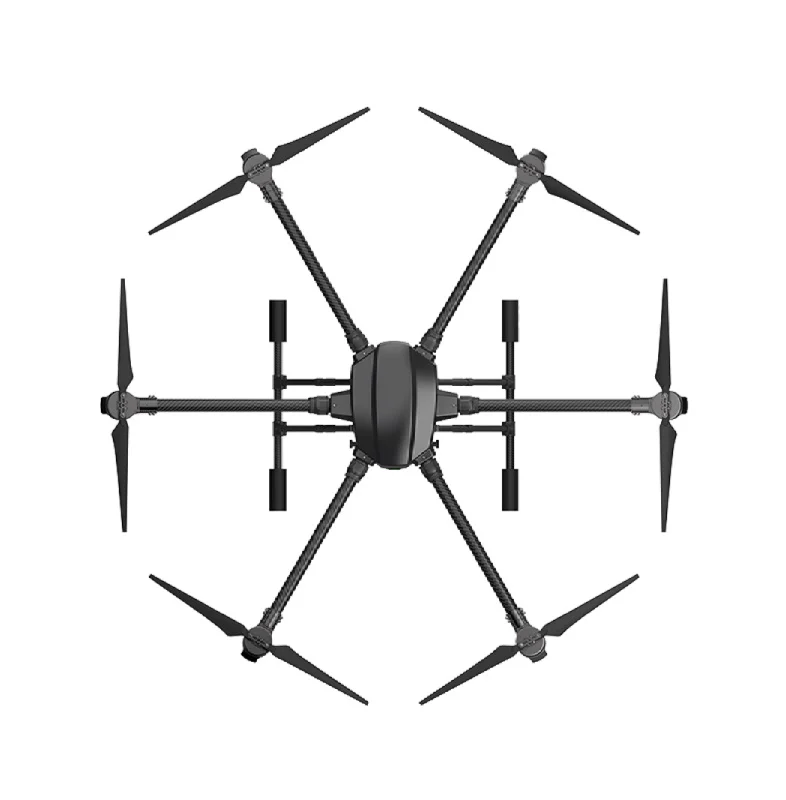
EFT 6120 Multifunction Surveillance Drone Frame
A robust professional drone frame designed for heavy-lift and surveillance applications. Its structural top plate provides a solid anchor point for parachute harness mounting in safety-critical builds.
View on Zbotic
3DR 100mW Radio Telemetry 915MHz for APM/PX4/Pixhawk
Monitor your drone’s status and parachute system health in real time from Mission Planner. Essential for professional operations where parachute deployment status must be verified before each flight.
View on Zbotic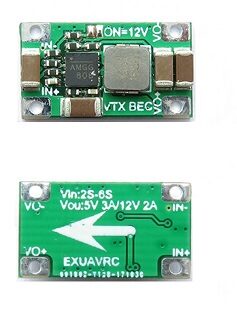
2-6S 5V 5A BEC For Quadcopter Drone
Power your parachute trigger controller independently from a dedicated BEC. This ensures the parachute system remains powered even if main flight electronics fail — which is precisely when you need it most.
View on Zbotic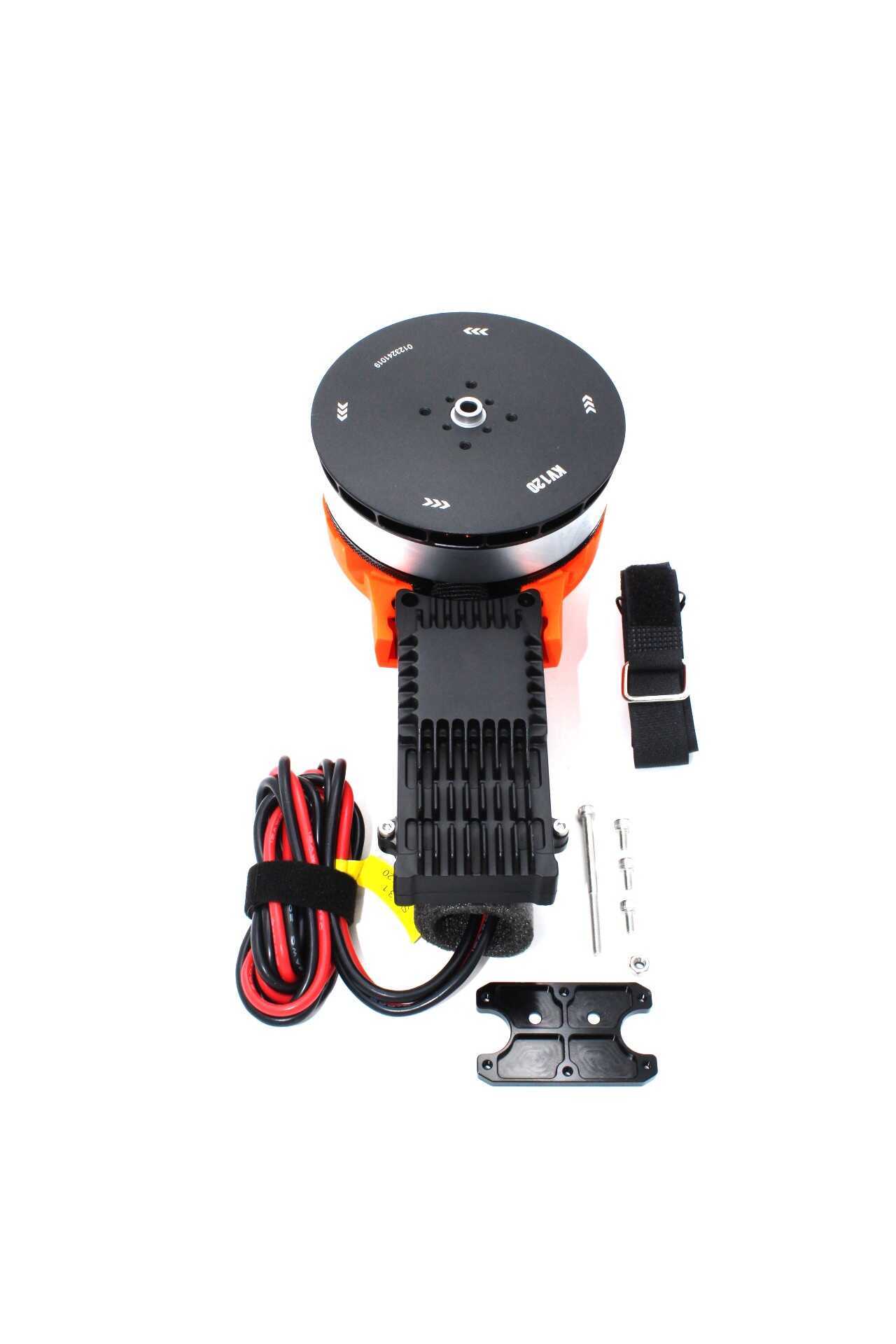
T-Motor A10-KV120-CCW Modular Propulsion System
High-quality T-Motor propulsion for professional drones that carry parachute systems. T-Motor’s reliability and consistent performance reduce the likelihood of motor failure that would require parachute activation.
View on Zbotic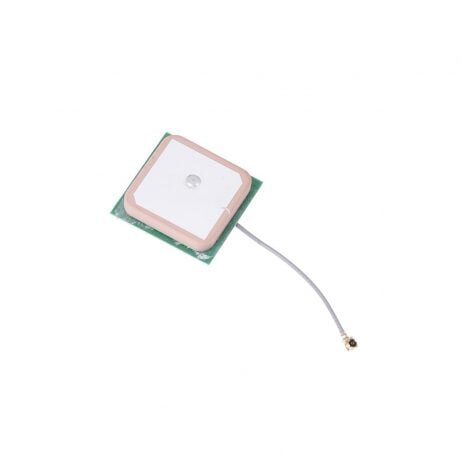
28dB High Gain GPS Antenna for NEO-6M/7M/8M
Precise GPS altitude data is what enables altitude-gated parachute deployment. A strong GPS antenna ensures your minimum altitude threshold is accurately enforced, preventing false deployments at low altitude.
View on ZboticFrequently Asked Questions
Can a drone parachute trigger accidentally during flight?
Modern systems have multiple safeguards against false deployment: arming altitude (won’t trigger below 15–30m AGL), freefall duration threshold (requires sustained low-G, not just a quick dip), and manual arming switches. Properly set up systems have very low false-trigger rates. Aggressive manoeuvres that cause brief low-G conditions (like a fast descent) are handled by requiring sustained freefall for 100ms or more before triggering.
Will my drone be destroyed when the parachute deploys?
The parachute opening shock is a brief but significant force. Most drone airframes (especially carbon fibre) survive the opening shock if the harness is properly attached. The payload (camera, sensors) benefits greatly from the soft landing compared to a freefall crash. Some minor airframe damage is possible if the drone was tumbling when the parachute deployed.
How do I comply with DGCA requirements for parachute systems?
DGCA compliance involves maintaining documentation of your safety systems as part of your UAS Operations Manual. For type certification applications, the parachute system must be tested and the deployment parameters documented. Consult the latest DGCA circulars (CASR Part 61 and UAS rules) and consider engaging a DGCA-accredited Remote Pilot Training Organisation (RPTO) for guidance specific to your operation category.
What is the minimum altitude for parachute deployment?
Most commercial systems require a minimum of 15–25m AGL for successful parachute inflation before ground impact. Below this altitude, the parachute may not have enough time to fully inflate. Some systems claim 8–10m minimum deployment altitude for small drones with lightweight canopies, but verify with your specific system’s data sheets.
Can I use a parachute on an FPV racing drone?
Not practically. Racing drones make aggressive manoeuvres that would trigger constant false deployments. The weight and drag of a parachute system would dramatically alter the aircraft’s performance. Racing drones are also intentionally flown where a crash causes minimal risk (dedicated tracks, open fields), making parachutes unnecessary for this application.
Conclusion
Drone parachute systems are a critical safety tool for any serious commercial or professional drone operator in India. As operations expand into urban airspace, over populated areas, and into BVLOS territory, the regulatory and ethical case for parachute-equipped drones becomes compelling. The technology is proven, increasingly affordable, and integrates cleanly with Pixhawk-based flight controllers through ArduCopter’s native parachute support.
The investment in a quality parachute system is measured not just in rupees, but in the peace of mind that comes from knowing that even in a worst-case failure scenario, your drone will come down safely.
Build Safer Drones with Components from Zbotic
From flight controllers to GPS modules, BECs, and professional drone frames — Zbotic has everything you need for a safe, compliant drone build in India.
Shop Professional Drone Components






Add comment