
Choosing the best microcontroller for robotics in India in 2026 can feel overwhelming with so many options flooding the market — Arduino Uno, ESP32, STM32, Raspberry Pi Pico, Arduino Mega, and more. Each board has different strengths, price points, community support, and availability across Indian electronics stores. Whether you’re a student building your first robot, an engineering graduate working on a competition bot, or a maker automating your home workshop, this definitive buying guide will help you pick the right brain for your robot in 2026.
Table of Contents
- What Matters When Choosing a Robotics Microcontroller
- Best for Beginners: Arduino Uno & Nano
- Best for Wireless Robots: ESP32
- Best for Python Lovers: Raspberry Pi Pico
- Best for Advanced Builders: STM32 & Arduino Mega
- Side-by-Side Comparison Table
- Budget Builds: Getting the Most from ₹500–₹2000
- FAQ
What Matters When Choosing a Robotics Microcontroller
Before jumping to specific boards, understand the key parameters that affect robotics performance:
- PWM channels: Each motor or servo needs a PWM output. A 4WD mecanum robot needs at least 4 PWM pins. A 6-DOF arm needs 6 servo PWM channels.
- I2C/SPI/UART: Sensors (IMU, OLED, ultrasonic, camera) communicate over these buses. More hardware buses = cleaner code and less timing issues.
- RAM: Complex programs, sensor buffers, and PID loop variables all eat RAM. More RAM = room to grow.
- Wireless: Wi-Fi and Bluetooth add RC capability, telemetry, and OTA updates without extra modules.
- Availability in India: Some boards are available only via imports with long lead times. Locally available boards ship in 1–3 days.
- IDE and language: Arduino IDE (C/C++) vs MicroPython vs CircuitPython. Your programming background matters.
- Community and tutorials: An active community means faster troubleshooting and more sample code.
Best for Beginners: Arduino Uno & Nano
The Arduino Uno remains the undisputed choice for robotics beginners in India in 2026, and for good reason. Its 14 digital I/O pins (6 PWM), robust 5V logic, simple IDE, and enormous library ecosystem make it the fastest path from zero to a working robot. The Arduino Nano offers the same core features in a smaller form factor, ideal for compact builds.
Why Arduino is Still Relevant in 2026
- Over 100,000 free Arduino tutorials, projects, and forums indexed on the web.
- India-specific tutorials in Hindi and regional languages are widely available.
- Compatible with virtually every sensor, motor driver, and module sold in India.
- 5V logic natively compatible with most Indian-market sensors (no level shifting needed).
- Extremely tolerant of wiring mistakes — short circuits rarely destroy the board.
Arduino Limitations for Robotics
- Only 2KB RAM (Uno) — limits program complexity significantly.
- No Wi-Fi or Bluetooth — requires separate ESP-01 or HC-05 modules.
- 16MHz single-core — not suited for real-time computer vision or complex path planning.
- Only 6 PWM pins — a 6-DOF arm uses all of them, leaving no room for sensors.
For a first robot — line follower, obstacle avoider, or simple arm — Arduino Uno is the best starting point. Once you’ve mastered it, move to ESP32 or STM32.
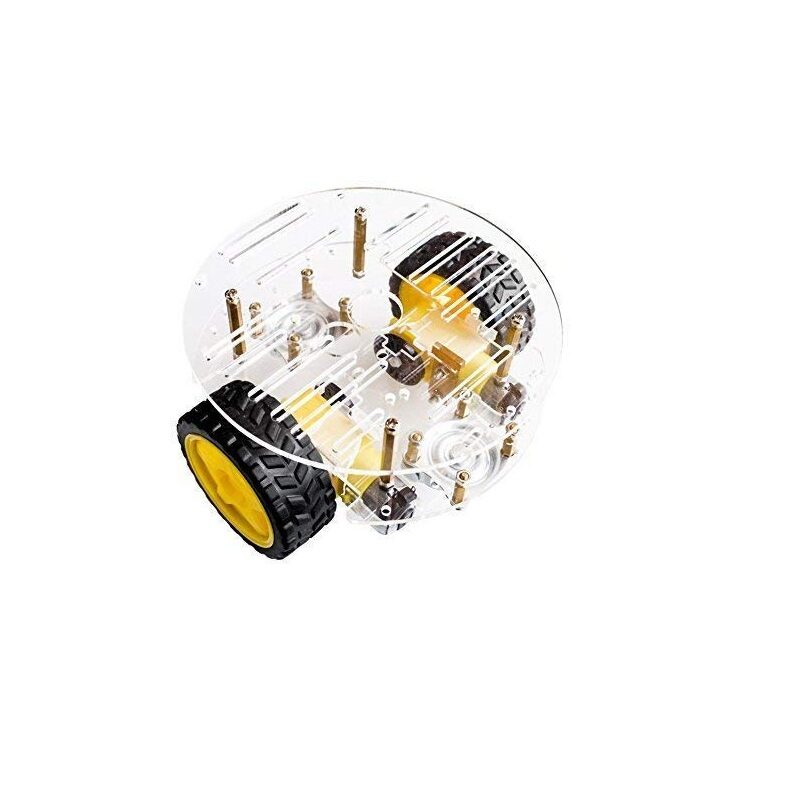
2WD Mini Round Double-Deck Robot Car Chassis DIY Kit
The perfect beginner robot platform — a 2WD chassis that pairs with Arduino Uno or Nano for your first line follower, obstacle avoider, or RC car project.
Best for Wireless Robots: ESP32
The ESP32 is the dominant microcontroller choice for wireless robotics in India in 2026. At roughly ₹350–450, it includes dual-core 240MHz processing, 520KB RAM, Wi-Fi 802.11 b/g/n, Bluetooth 4.2 + BLE, 34 GPIO pins, and 16 PWM channels — outperforming Arduino Uno on every specification while costing a similar price. For any robot that needs to be controlled wirelessly, communicate sensor data to the cloud, or be updated over the air, ESP32 is the clear winner.
Top ESP32 Robotics Use Cases
- Wi-Fi RC robot: Host a WebSocket server on ESP32, control from any browser on your phone.
- Bluetooth robot arm: Control 4–6 servos via a BLE app on Android/iOS.
- IoT line follower: Send lap times and sensor data to an MQTT broker for logging.
- Autonomous navigation: Run a simplified path planning algorithm using the dual cores — one core for sensors, one for motor control.
ESP32 Gotchas in Robotics
- 3.3V logic — most Indian-market modules are 5V tolerant but always check.
- ADC is noisy — average 10–20 readings for stable analog sensor values.
- Bootloader pin conflicts — GPIO 0, 2, 12, 15 have special functions during boot. Avoid connecting sensors to these during power-on.
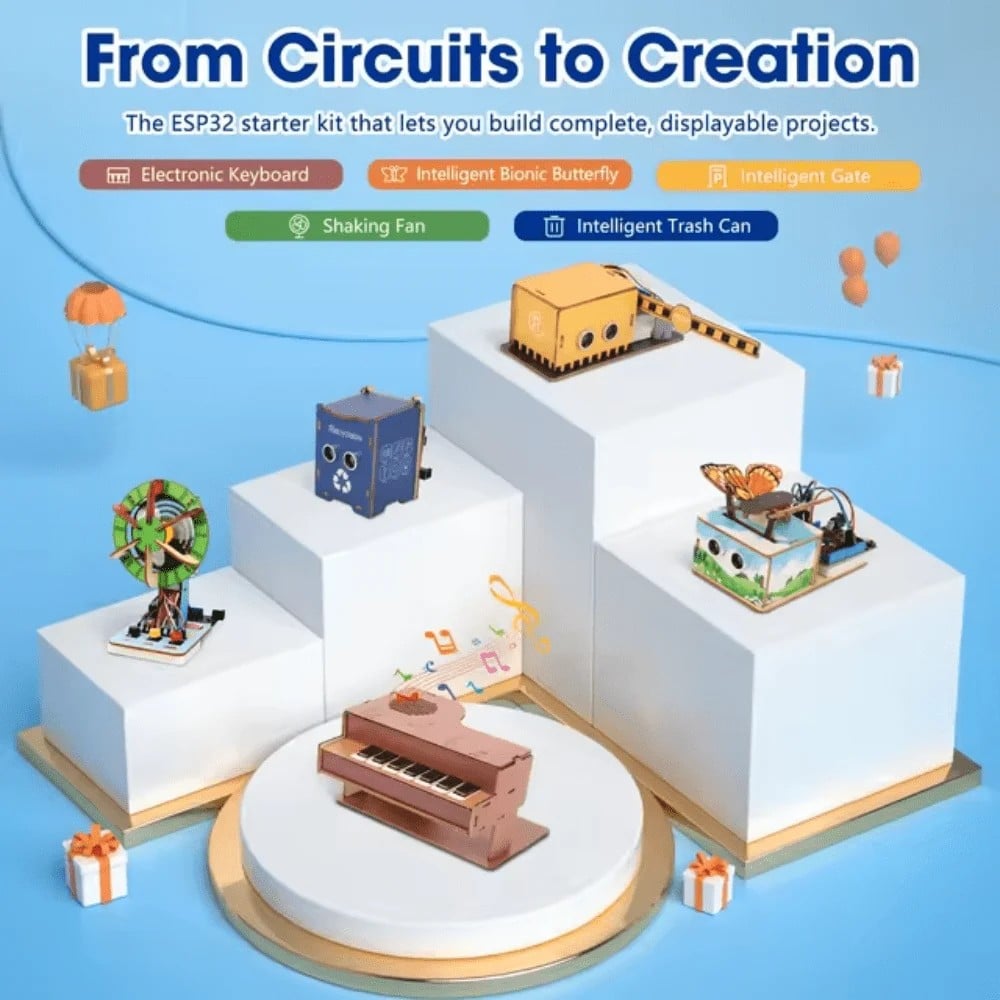
ACEBOTT ESP32 Basic Starter Kit (QE201)
Start your ESP32 robotics journey with this comprehensive kit. Includes ESP32 board, sensors, modules, and guided projects — the fastest way to master wireless robotics in India.
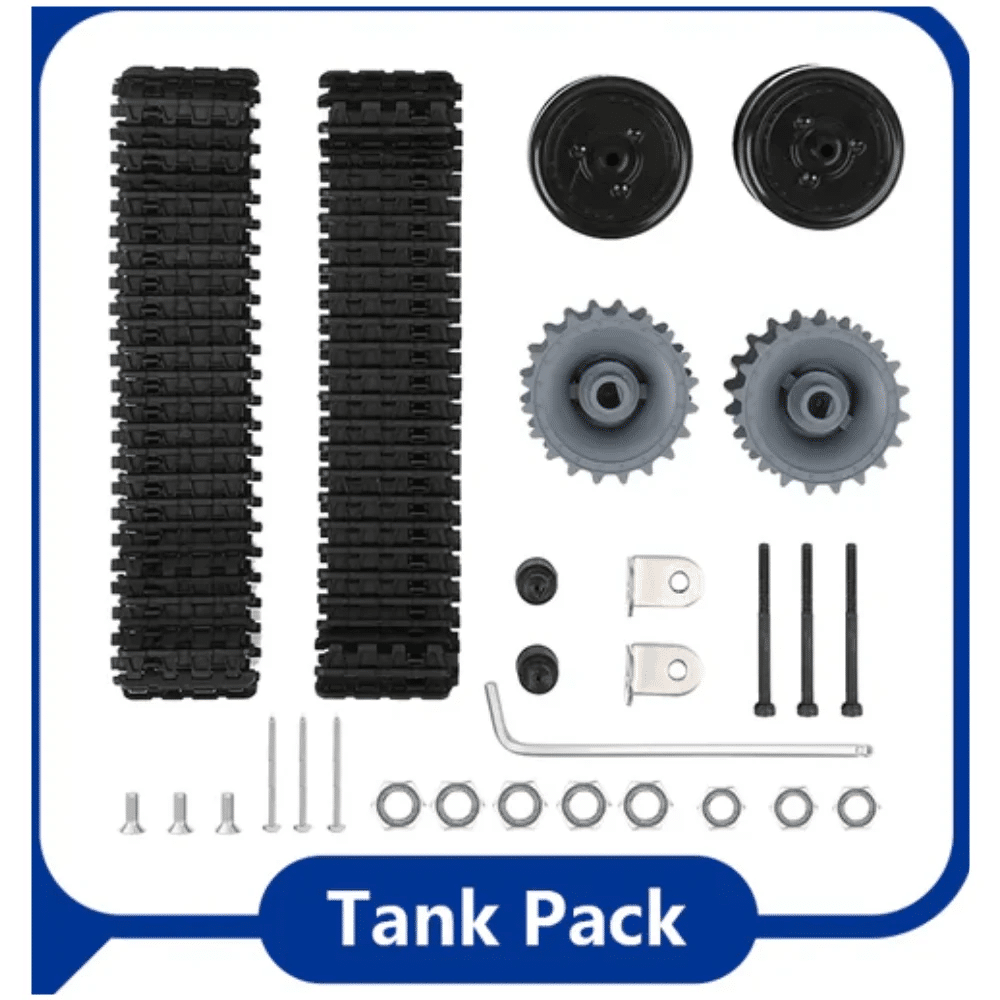
ACEBOTT ESP32 Tank Robot Car Expansion Pack
Transform your basic robot into a Wi-Fi and Bluetooth controlled tank with this ESP32 expansion pack. Ideal for showcasing wireless robotics projects in competitions.
Best for Python Lovers: Raspberry Pi Pico
The Raspberry Pi Pico (RP2040) is ideal for robotics builders who prefer Python over C/C++. MicroPython on the Pico is exceptionally well-documented, and the board’s unique PIO (Programmable I/O) state machines allow precise timing of stepper motors, WS2812 LEDs, and custom protocols without burdening the main CPU. In India, Pico variants are available at ₹350–450 — price-competitive with ESP32.
Key advantage: clean ADC. The RP2040’s 12-bit ADC is noticeably cleaner than ESP32’s, making Pico the better choice for robots that rely on potentiometers, IR sensors, or battery voltage monitoring without heavy averaging.
Get the Pico W if you need wireless — it adds 2.4GHz Wi-Fi and BLE via the CYW43439 chip for around ₹50–100 more than the standard Pico.
Best for Advanced Builders: STM32 & Arduino Mega
Arduino Mega 2560
The Mega provides 54 digital I/O pins (15 PWM), 16 analog inputs, 4 UART ports, and 8KB RAM. It’s the go-to choice for complex multi-servo robots (humanoid arms, hexapods) that need many simultaneously active PWM channels that the Uno or ESP32 can’t provide. The Mega also works with all Arduino libraries — zero code changes from an Uno project. Price in India: ₹450–600 for genuine boards, ₹200–350 for Chinese clones.
STM32 (Blue Pill, Black Pill)
STM32F103 (Blue Pill) and STM32F411 (Black Pill) offer ARM Cortex-M performance (72MHz / 100MHz), more timers, 4× UART, SPI, I2C, CAN bus, and USB HID — all at ₹150–250. They’re the choice for competition robots where real-time performance, CAN communication between boards, or USB HID (robot as a game controller) is needed. Steeper learning curve: requires STM32CubeIDE or PlatformIO, and some boards arrive without a bootloader.
Side-by-Side Comparison Table
| Board | CPU | RAM | PWM | Wireless | Price (India) | Best For |
|---|---|---|---|---|---|---|
| Arduino Uno | AVR 16MHz | 2KB | 6 | None | ₹450–700 | Beginners |
| Arduino Nano | AVR 16MHz | 2KB | 6 | None | ₹250–400 | Compact builds |
| Arduino Mega | AVR 16MHz | 8KB | 15 | None | ₹450–700 | Multi-servo robots |
| ESP32 | 240MHz dual | 520KB | 16 | Wi-Fi + BT | ₹350–450 | Wireless robots |
| Raspberry Pi Pico | 133MHz dual | 264KB | 16 | None (W: Wi-Fi) | ₹350–400 | Python + precision |
| STM32 Black Pill | 100MHz ARM | 128KB | 12+ | None | ₹200–350 | Competition bots |
Budget Builds: Getting the Most from ₹500–₹2000
Under ₹1000: Complete 2WD Obstacle Avoider
Arduino Nano (₹280) + L298N motor driver (₹120) + HC-SR04 sensor (₹80) + 2WD chassis (₹350) = ₹830 total. This is the classic first robot project that teaches PWM, serial communication, and sensor integration.
Under ₹1500: Wi-Fi RC Robot
ESP32 DevKit (₹400) + L298N (₹120) + 2WD chassis (₹350) + 18650 battery + holder (₹300) = ₹1170. Control from your phone browser over Wi-Fi. No app required — pure HTML/JavaScript hosted on ESP32.
Under ₹2000: 4WD Mecanum Robot
ESP32 (₹400) + 4-channel motor driver (₹200) + 4WD chassis (₹600) + mecanum wheels (₹400) + battery (₹300) = ₹1900. An omnidirectional robot that slides sideways — impressive demonstration of motor control and kinematics.
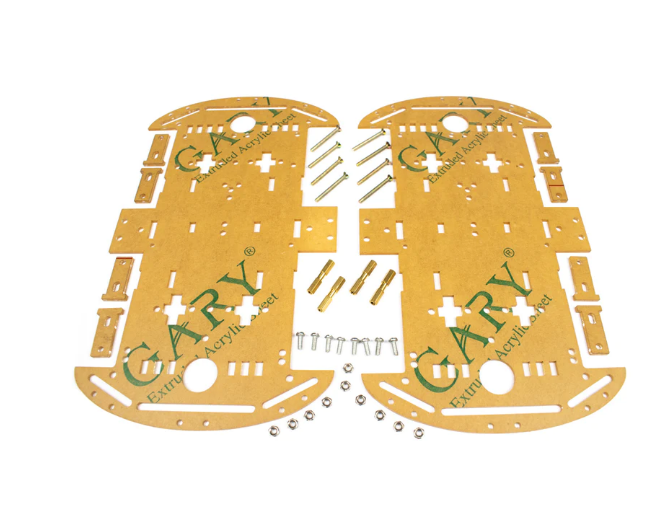
4 Wheels Car Chassis Acrylic Frame
A sturdy 4WD acrylic chassis compatible with any major microcontroller. Build your first 4-wheel robot with ESP32 or Arduino Mega for a well-balanced, expandable platform.
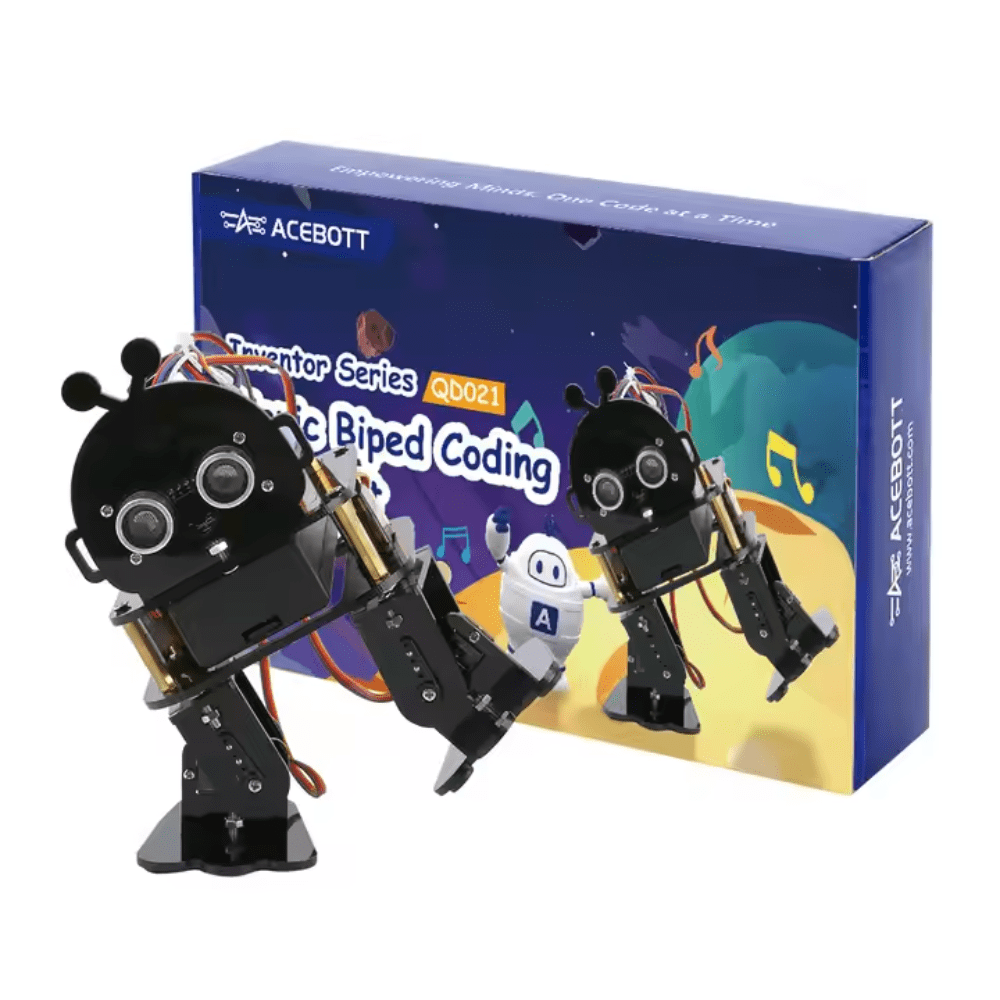
ACEBOTT Biped Robot Kit (QD021)
A walking biped robot kit that demonstrates multi-servo coordination and gait programming. An excellent advanced project for students learning microcontroller-based robotics in India.
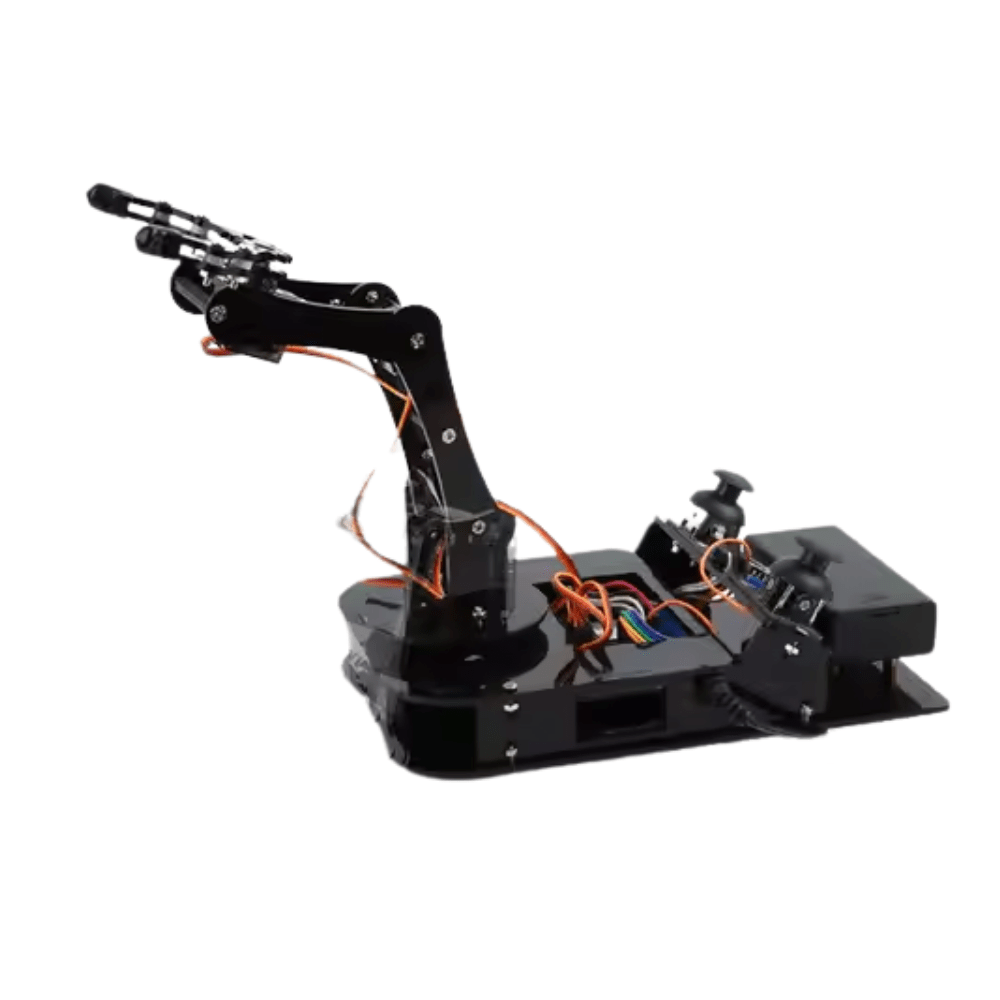
ACEBOTT ESP32 Programmable Robot Arm Kit (QD022)
An ESP32-powered programmable robot arm for beginners and teens — learn microcontroller robotics with guided projects, servo control, and wireless programming in India.
Frequently Asked Questions
- Is Arduino still worth learning in 2026?
- Absolutely. Arduino’s simplicity and community make it the best learning platform for robotics beginners. Once you understand motor control, sensors, and serial communication on Arduino, concepts transfer directly to ESP32, STM32, and Raspberry Pi.
- Which microcontroller is best for a college robotics competition?
- For most college competitions in India, ESP32 is the sweet spot — it offers enough processing power, built-in wireless for remote control, and sufficient GPIO for complex robots, all at an affordable price. For mechanical/CNC-heavy robots, Arduino Mega with a dedicated motor control shield is reliable.
- Can I mix microcontrollers in one robot?
- Yes, and it’s common in advanced builds. Use a Raspberry Pi as the high-level controller (vision, path planning) communicating over UART or I2C with an Arduino or ESP32 handling low-level motor control and sensor reading.
- Where can I buy genuine Arduino boards in India?
- Genuine Arduino boards are available from authorised distributors. Most Indian robotics stores stock Arduino-compatible boards that work identically. The key difference is genuine boards use better ATmega328P chips and have official quality control.
- Which board is best for a robotic arm project?
- For 4–6 DOF arms, ESP32 or Arduino Mega. ESP32 gives you wireless control and 16 PWM channels. Arduino Mega gives you 15 PWM channels with rock-solid 5V compatibility with most servo modules. For a 5-DOF arm like the ACEBOTT QD007, ESP32 is the manufacturer’s choice.
Find Your Perfect Robotics Microcontroller at Zbotic
Whether you’re building your first line follower with Arduino Uno, a Wi-Fi RC robot with ESP32, or an advanced competition bot with STM32, the right components are available at Zbotic — India’s dedicated robotics and electronics store. We stock the robot kits, chassis, motor drivers, sensors, and microcontrollers recommended throughout this guide, with fast delivery across India.






Add comment