
Table of Contents
- What is Battery Internal Resistance?
- Why Internal Resistance Matters for Your Projects
- How to Measure Battery Internal Resistance
- Understanding Your Test Results
- Factors That Affect Internal Resistance
- Recommended Battery Products from Zbotic
- Practical Applications for Indian Makers
- Frequently Asked Questions
Every battery has a hidden specification that directly determines how well it performs under real load conditions: its battery internal resistance testing understanding guide begins with grasping this invisible but critical parameter. Internal resistance (IR) is the resistance to current flow within the battery itself, and it is the primary reason why your freshly charged 18650 cell might only deliver 3.8V instead of 4.2V when your drone motor or high-current circuit demands power. Understanding, testing, and acting on internal resistance measurements will dramatically improve your project outcomes and help you identify failing or substandard cells before they cause problems.
What is Battery Internal Resistance?
When current flows through a battery, it encounters resistance within the battery itself — from the electrodes, the electrolyte, the separator, and the contact points. This total resistance is the battery’s internal resistance (IR), measured in milliohms (mΩ).
The effect of internal resistance is described by Ohm’s law applied to the battery model:
V_terminal = V_OCV – (I_load × R_internal)
Where:
- V_terminal = actual voltage at the battery terminals under load
- V_OCV = open-circuit voltage (the “real” state of charge voltage with no load)
- I_load = current being drawn by the load
- R_internal = battery internal resistance
Example: A 18650 Li-Ion cell with OCV of 4.0V and internal resistance of 100mΩ (0.1Ω) will show only 3.5V at the terminals when drawing 5A: V = 4.0 – (5 × 0.1) = 3.5V. That 0.5V drop is lost as heat inside the battery!
For a fresh, high-quality 18650 cell, internal resistance is typically 20–50mΩ. For a degraded or cheap cell, it might be 150–500mΩ or higher.
Components of Internal Resistance
- Ohmic resistance (R_Ω): Resistance of electrodes, current collectors, and contact points. Measured instantly.
- Charge transfer resistance (R_ct): Resistance of the electrochemical reaction at electrode surfaces. Frequency-dependent.
- Diffusion resistance (Warburg impedance): Resistance due to ion diffusion through the electrolyte and electrode materials. Only significant at very low frequencies.
Most hobbyist-level measurements capture primarily the ohmic component and some charge transfer resistance — which is sufficient for practical battery evaluation purposes.
Why Internal Resistance Matters for Your Projects
Performance Under Load
The higher the internal resistance, the more voltage sag you see under load. For a drone or RC car that needs 11.1V from a 3S LiPo, even a 50mΩ increase per cell becomes significant at 30A+ discharge rates. High-IR cells cause the battery protection circuit to trip prematurely, cutting power mid-flight.
Heat Generation
Power lost as heat inside the battery = I² × R_internal. At 10A through a 100mΩ cell: P = 100 × 0.1 = 10W of heat per cell. This is why high-IR cells get dangerously hot during high-current discharge — a fire hazard for LiPo packs.
Capacity Assessment
Internal resistance is one of the best indicators of battery health and remaining capacity. A cell that started at 25mΩ and has risen to 150mΩ has lost significant capacity and should be retired. This is why good charger-analyzers include IR measurement.
Cell Matching for Packs
When building multi-cell battery packs, cells should be matched by both capacity and internal resistance. Mismatched IR causes unequal current sharing — the low-IR cell takes more current, degrades faster, and can pull the pack out of balance even with a BMS.
Identifying Counterfeit or Substandard Cells
The Indian market is flooded with counterfeit 18650 cells (fake Panasonic, LG, Samsung) with wildly overstated capacity and terrible internal resistance. A genuine Samsung 25R 18650 has IR around 18–22mΩ. A fake “25R” might measure 150mΩ or more. Testing IR is one of the fastest ways to spot counterfeits.
How to Measure Battery Internal Resistance
There are several methods to measure battery IR, ranging from simple DIY techniques to dedicated instruments.
Method 1: DC Load Method (DIY, Basic)
This is the simplest method requiring only a multimeter and a resistive load.
- Measure open-circuit voltage (V1) with no load connected
- Connect a known resistive load (choose R such that load current is meaningful, e.g., 1–5A for a 18650)
- Measure loaded voltage (V2) while load is connected
- Measure actual current with an ammeter (I_load)
- Calculate: R_internal = (V1 – V2) / I_load
Example: V1 = 4.10V, V2 = 3.92V, I_load = 3.0A: R_int = (4.10 – 3.92) / 3.0 = 0.18 / 3.0 = 60mΩ
Limitations: Accuracy is limited by the voltmeter’s response time and the load current stability. The cell also needs time to settle at OCV before measuring. Not suitable for very low IR cells (under 20mΩ) where voltmeter resolution becomes the limiting factor.
Method 2: AC Impedance Method (Dedicated Instrument)
Dedicated battery analyzers and good quality charger-analyzers (like ISDT models) use a small AC signal (typically 1kHz) injected into the battery. By measuring the voltage response at that frequency, they calculate the impedance — which closely approximates DC internal resistance for most practical purposes.
This method is faster, more accurate, and non-disruptive (the AC signal is tiny, under 10mA). Results are typically within 5–10% of true DC IR for lithium cells.
Method 3: Four-Wire (Kelvin) Measurement
Professional battery test equipment uses four-wire sensing to eliminate the resistance of test leads from the measurement. This is important when measuring very low IR cells (under 10mΩ). For most hobbyist applications, a good quality two-wire impedance meter is sufficient.
Method 4: Using Your Battery Charger
Many modern smart chargers display internal resistance during the charge cycle. ISDT and similar chargers inject a small test current and measure the voltage drop to calculate IR. While not laboratory-grade accurate, charger IR readings are consistent and useful for comparative measurements and trend monitoring.
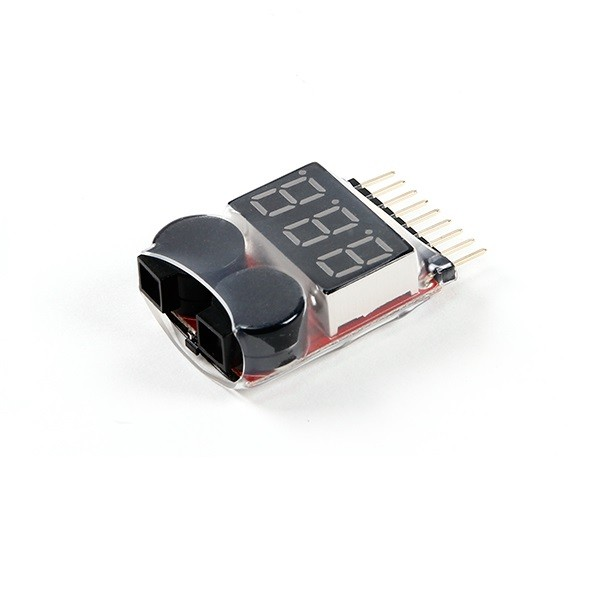
1-8S Lipo Battery Voltage Tester without Alarm
Check per-cell voltages across 1S to 8S LiPo packs instantly. Essential first step in any battery health assessment alongside internal resistance testing.
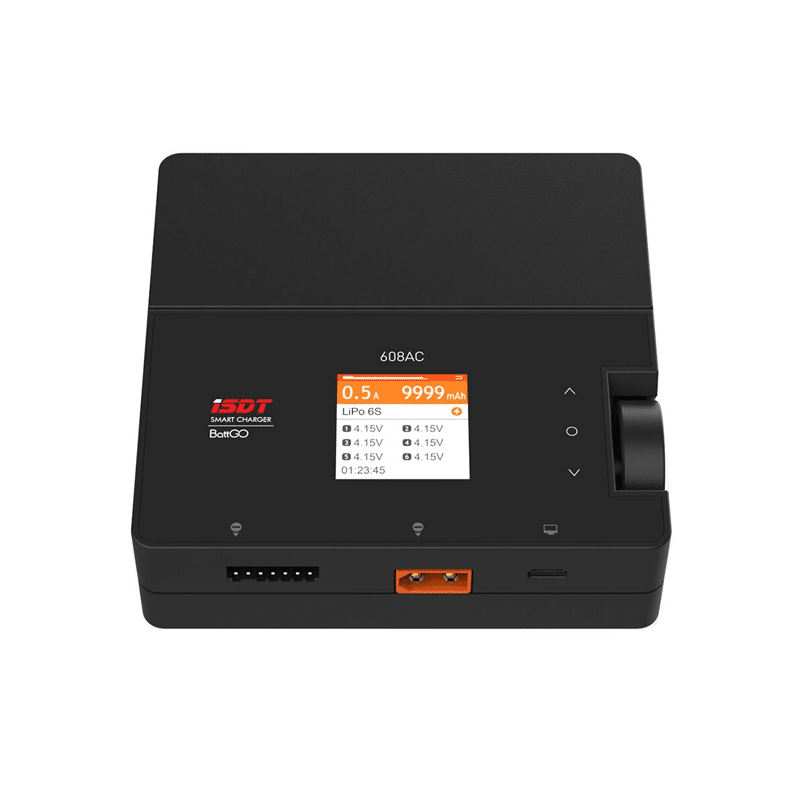
ISDT 608 AC LiPo Battery Charger, AC 50W/DC 200W Dual Mode RC Discharger/Charger
A professional-grade charger-discharger that displays internal resistance for each cell during charging. Excellent for regular battery health monitoring of LiPo packs.
Understanding Your Test Results
Reference Values by Battery Type
| Battery Type | Good IR | Acceptable IR | Replace |
|---|---|---|---|
| 18650 high-drain (Samsung 25R, LG HB6) | 15–30mΩ | 30–80mΩ | above 150mΩ |
| 18650 high-capacity (Panasonic NCR18650B) | 30–60mΩ | 60–150mΩ | above 250mΩ |
| LiPo pack (drone/RC, per cell) | 2–8mΩ | 8–20mΩ | above 30mΩ |
| NiMH AA (Eneloop) | 15–30mΩ | 30–100mΩ | above 200mΩ |
| 12V Lead-acid (car battery, full) | 2–5mΩ | 5–15mΩ | above 25mΩ |
Temperature Effects on Readings
Internal resistance is strongly temperature-dependent. A Li-Ion cell at 0°C can show 2–3x higher IR than at 25°C. Always measure IR at room temperature (20–25°C) for consistent, comparable results. Measurements taken immediately after charging (when the cell is warm) will show slightly lower IR than at ambient temperature.
State of Charge Effects
IR is lowest at mid-state of charge (50–80% SOC) and increases at very low and very high SOC. Standardize your IR measurements at 50% SOC for the most consistent comparisons when evaluating cells over time.
Factors That Affect Internal Resistance
Age and Cycle Count
Every charge-discharge cycle causes micro-structural changes in the electrode materials. The SEI (Solid Electrolyte Interphase) layer grows thicker on the anode. Active material particles crack and lose contact. All of these increase internal resistance progressively over the cell’s lifespan. A cell that has doubled its IR from new has typically lost 20–30% of its original capacity.
High-Rate Discharge Abuse
Repeatedly discharging at rates higher than the cell’s specified C-rating (e.g., pulling 30A from a 10A-rated cell) accelerates internal resistance growth dramatically. Lithium plating on the anode — which can occur during high-rate charge or discharge at low temperatures — creates irreversible IR increase.
Over-Discharge
Taking Li-Ion cells below their minimum voltage (typically 2.5–2.8V per cell) causes copper dissolution from the anode current collector. This copper re-deposits elsewhere, increasing IR and creating safety hazards. A single deep over-discharge event can permanently increase IR by 50–200%.
Storage Conditions
Storing batteries at full charge or very low charge for extended periods increases IR. Optimal storage SOC for Li-Ion is 40–60%. High storage temperatures (above 45°C — very relevant in Indian summers) dramatically accelerate IR growth and capacity loss.
Physical Damage
Mechanical damage, swelling (pouch cells), or electrolyte leakage causes rapid IR increase. Any puffed LiPo should be retired immediately — the IR is unpredictable and the safety risk is high.
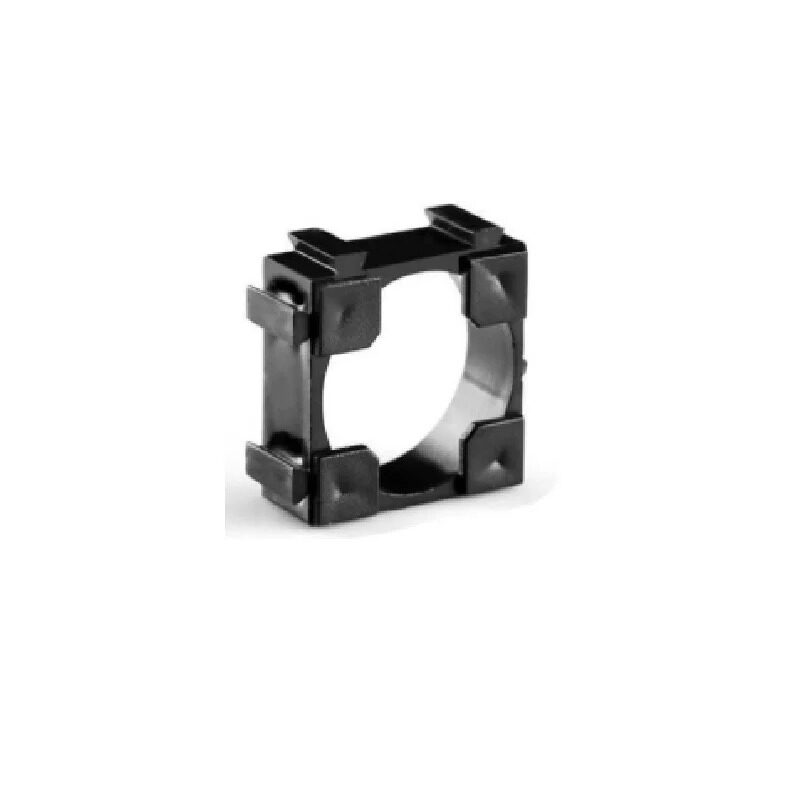
1 x 18650 Battery Holder with 18.4MM Bore Diameter – Pack of 4
Build your own battery test rigs and cell matching setups with these 18650 holders. Ideal for systematic internal resistance testing of individual cells before pack assembly.

ISDT A4 Air Smart Battery Charger for NiMH, NiCd, Li-Ion, LiFePO4 with Bluetooth
A versatile multi-chemistry smart charger with Bluetooth connectivity that displays internal resistance during charging. Perfect for tracking battery health over time across multiple cell types.
Practical Applications for Indian Makers
Building 18650 Power Banks
Sourcing genuine, low-IR 18650 cells in India can be challenging. Before building a power bank with salvaged laptop cells or cells from unverified vendors, measure IR on each cell. Group cells with similar IR values together. Reject cells over 100mΩ for power bank use — they will deliver poor performance and degrade the pack faster.
Matching Cells for Drone LiPo Packs
For drone packs that see 50–100C burst discharge rates, cell IR matching is critical. All cells in a parallel group should be within 2–3mΩ of each other. A significant mismatch causes the low-IR cell to absorb most of the current, leading to accelerated aging and potentially a fire.
Extending Battery Life in Hot Indian Climates
Store batteries in a cool, dry place (air-conditioned room if possible, especially in May–June when temperatures in many Indian cities exceed 45°C). Use insulated pouches for LiPo storage. Measure IR every few months on frequently used packs to catch degradation early.
Evaluating Battery Quality at Purchase
When buying 18650 cells or LiPo packs, especially from new vendors, measure IR immediately on receipt. Genuine quality cells will meet specifications. Counterfeit cells will often show 3–5x higher IR than claimed. This is your protection against substandard products.
Frequently Asked Questions
Q: What is a good internal resistance for an 18650 battery?
A: For a high-drain 18650 (Samsung 25R, LG HB6 type), good internal resistance is 15–30mΩ when new. For high-capacity cells (Panasonic NCR type), 30–60mΩ is typical. Anything above 150mΩ on a high-drain cell or above 300mΩ on a high-capacity cell suggests the cell is degraded or counterfeit.
Q: Can I improve battery internal resistance?
A: Unfortunately, once IR has increased due to electrochemical aging, it cannot be meaningfully reduced. Some chargers have “regeneration” modes for NiMH/NiCd batteries that can help with sulfation or memory effect — but this does not work for Li-Ion chemistry. The only mitigation is proper storage and usage to slow IR growth.
Q: Does temperature affect internal resistance readings?
A: Yes, significantly. IR doubles or even triples at 0°C compared to 25°C for Li-Ion cells. Always measure at room temperature (20–25°C) for meaningful, comparable readings. Do not measure batteries immediately after use (they will be warm and show artificially low IR).
Q: My multimeter shows high resistance on my battery. Is it bad?
A: A standard multimeter cannot accurately measure battery internal resistance using its resistance function — the test voltage/current it uses is incompatible with a battery. You need to use the DC load method (measure voltage change under known load current) or a dedicated impedance meter. Charger-analyzers are the most practical tool for hobbyists.
Q: How often should I measure battery internal resistance?
A: For drone/RC LiPo packs used frequently, check IR every 20–30 charge cycles or monthly, whichever comes first. For 18650 cells in power banks or projects, check every 6 months or if you notice capacity degradation. Always measure before building new battery packs to verify cell quality.
Start Monitoring Your Batteries Today
Battery internal resistance is the most overlooked specification in hobbyist electronics, yet it has the biggest impact on real-world performance. Whether you are flying FPV drones, building IoT projects, or constructing DIY power banks, taking the time to test and understand the internal resistance of your cells will save you from failed projects, wasted money on bad batteries, and potentially dangerous situations with degraded LiPo packs.
Start with a good charger-analyzer that displays IR, build a habit of measuring each cell before use, and log readings over time to spot degradation trends early. Find quality battery testing and management tools at Zbotic’s Batteries and Power section.






Add comment