
If you are a farmer or agri-entrepreneur in India looking to cut electricity costs and boost productivity, solar power for agriculture is one of the smartest investments you can make today. From solar-powered water pumps to field lighting, solar energy is transforming the way Indian farmers work — reducing dependence on unreliable grid power, diesel generators, and rising fuel costs. In this guide, we cover everything about solar power agriculture in India pump systems, lighting setups, government subsidies, and DIY electronics you can source to build your own agri-solar solutions.
Why Solar Power for Agriculture Makes Sense in India
India receives an average of 4–7 kWh of solar irradiance per square metre per day, making it one of the best countries in the world for solar energy utilisation. Agriculture consumes nearly 18% of India’s total electricity, mostly for pumping groundwater. Traditional electric pumps rely on erratic DISCOM supply — sometimes just 6–8 hours per day — while diesel pumps cost farmers ₹80–₹100 per litre of fuel plus maintenance.
Solar power eliminates both problems. A solar pump runs whenever the sun shines, water availability is predictable, and the fuel cost is zero. Over a 25-year panel life, the savings are enormous. The Indian government has actively promoted solar for agriculture through the PM-KUSUM scheme, providing subsidies of up to 90% on solar pump installations for small and marginal farmers.
Beyond pumps, solar can power:
- LED field lighting for night harvesting and security
- Cold storage units (small-scale, off-grid)
- Drip irrigation controllers and sensors
- Electric fencing for wildlife deterrence
- Mobile charging and communication equipment in remote farms
Solar Water Pumps: Types, Capacity and Selection
Solar pumps come in two broad categories: surface pumps (for water sources up to 6m depth) and submersible pumps (for borewells and deep wells up to 200m or more). Each uses a brushless DC motor driven directly by solar panels — no inverter needed in DC systems, though some farmers prefer AC pump-inverter combinations for flexibility.
Key Specifications to Check
- Flow rate (LPH / LPM): Match to your crop and acreage. A 1 HP pump typically delivers 40,000–50,000 LPH for surface water.
- Head (metres): Total Dynamic Head = static water level + friction losses. Size your pump to handle worst-case depth.
- Panel wattage: A 1 HP DC solar pump needs ~800–1000 Wp of solar panels. Scale proportionally for 3 HP, 5 HP, 7.5 HP.
- Controller type: MPPT-based controllers extract maximum power from panels even in partial shade or low-light conditions.
Popular Solar Pump Capacities in India
| Capacity | Panel Required | Suitable For | Approx Cost (₹) |
|---|---|---|---|
| 0.5 HP | 400–500 Wp | Kitchen garden, small plot | 30,000–45,000 |
| 1 HP | 800–1000 Wp | 1–2 acres, drip system | 60,000–90,000 |
| 3 HP | 2400–3000 Wp | 5–8 acres, open channel | 1,50,000–2,20,000 |
| 5 HP | 4000–5000 Wp | 10–15 acres | 2,50,000–3,80,000 |
| 7.5 HP | 6000–7500 Wp | 20+ acres, community use | 4,00,000–6,00,000 |
Solar Lighting for Fields, Greenhouses and Storage
Adequate lighting extends productive hours, deters wildlife, and improves safety for night-shift workers. Solar LED lighting systems for agriculture consist of a solar panel, charge controller, battery bank, and LED fixtures — all interconnected with proper wiring and fusing.
Types of Agricultural Lighting
- Solar street/pole lights: All-in-one units with built-in panel and battery, ideal for farm roads and perimeter security.
- Greenhouse grow lights: LED grow lights (red + blue spectrum) powered by solar + battery bank for off-grid greenhouses.
- Cold storage lighting: 12V LED strips inside walk-in cold rooms powered by solar panels on the roof.
- Animal shed lighting: Low-voltage DC LED systems with PIR motion sensors to reduce predator attacks and improve livestock welfare.
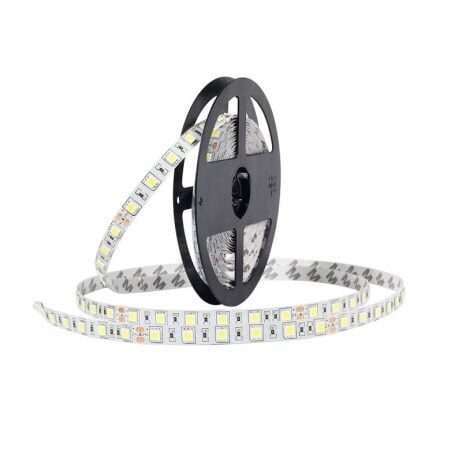
12V Cold White 5050 SMD LED Strip – 5 Metre
Ideal for solar-powered agricultural lighting. Runs directly on 12V DC from your solar battery bank. High-brightness 5050 chips, flexible PCB, easy installation inside sheds, greenhouses, or cold storage rooms.
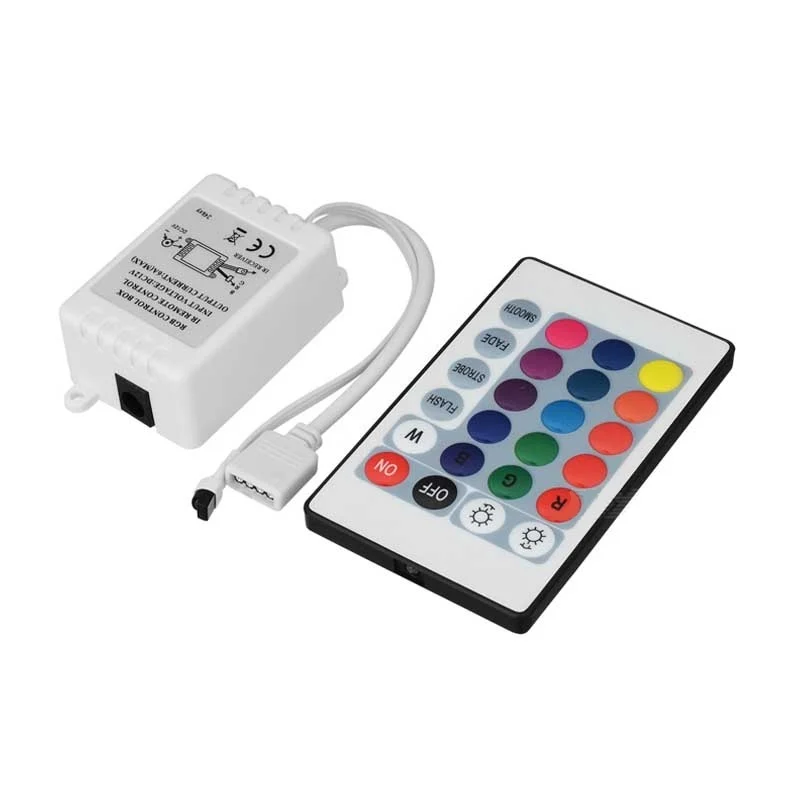
12V 5050 RGB LED Strip Controller with 24-Key IR Remote
Control your solar-powered LED lighting remotely. Works with any 12V LED strip. Useful for greenhouse light scheduling via timer or remote — great for crop photoperiod management.
Government Subsidies for Solar Agriculture in India
The PM-KUSUM (Pradhan Mantri Kisan Urja Suraksha evam Utthaan Mahabhiyan) scheme is India’s flagship solar agriculture programme. It has three components:
- Component A: 10,000 MW of decentralised ground/stilt-mounted solar power plants (up to 2 MW each) by farmers, cooperatives, and panchayats. Farmers sell power to DISCOMs.
- Component B: Installation of 20 lakh standalone solar agriculture pumps. Centre + State subsidy covers up to 90% of cost; farmer pays only 10%.
- Component C: Solarisation of 15 lakh existing grid-connected agriculture pumps. Excess solar power is sold back to the grid — farmers earn additional income.
Other relevant schemes include the NABARD Solar Scheme (subsidised loans for agri-solar), state-specific schemes like Karnataka’s CM Solar Pump Scheme, Rajasthan’s Mukhyamantri Solar Pump Yojana, and Andhra Pradesh’s YSR Jala Kala scheme. Always check your state DISCOM’s official portal for current subsidy availability, as allocations vary by district and season.
Key Electronics Components for DIY Solar Agri Projects
For makers, engineers and progressive farmers who want to build custom solar monitoring, automation, or protection circuits, here are the key components you need:
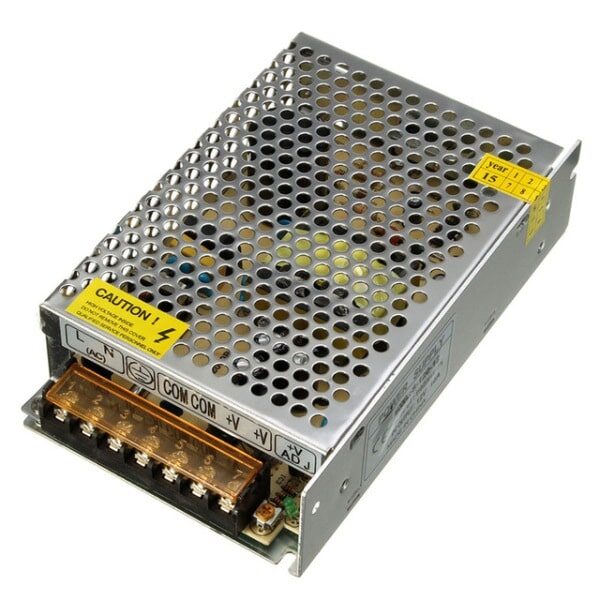
12V 10A SMPS – 120W DC Metal Power Supply
Perfect for powering control panels, relay boards, solenoid valve drivers, and sensor arrays in solar irrigation systems. Robust metal enclosure, 120W capacity, stable 12V DC output.
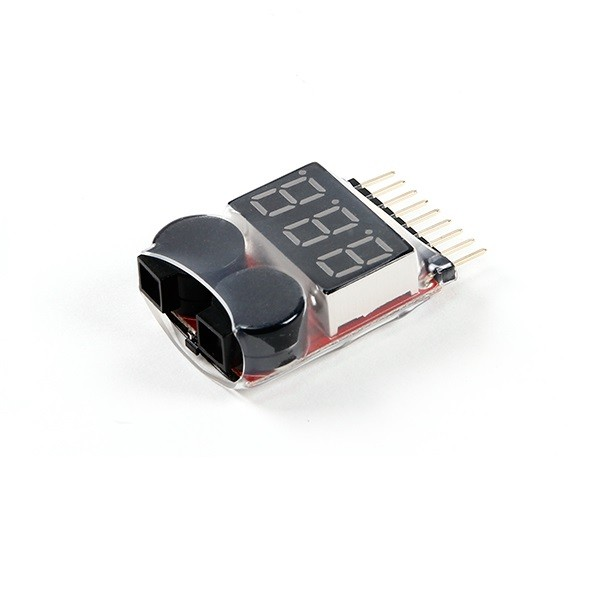
1–8S LiPo Battery Voltage Tester (No Alarm)
Monitor individual cell voltages in your solar battery bank. Works with 1S–8S LiPo, LiFePO4 and Li-Ion packs. Instant voltage readout, no wiring required — plug in and check.
Battery Storage for Off-Grid Agricultural Use
Most solar pump systems are pumpless at night — panels power the pump directly during the day and store any surplus. However, lighting systems, sensors, and control electronics need overnight power. Battery storage is essential for these loads.
Battery Options for Agriculture
- Lead-acid (flooded): Cheapest upfront, but heavy, maintenance-intensive, and only 50% DoD usable. Common in older agri setups.
- VRLA (AGM/Gel): Sealed, maintenance-free, better for farm environments. Good choice for smaller lighting systems.
- Lithium Iron Phosphate (LiFePO4): Best overall for solar storage — 80% DoD, 2000+ cycles, no maintenance, lightweight. Higher upfront cost but best long-term value.
- 18650 Li-Ion DIY packs: Popular for small DIY solar projects like drip system controllers, weather stations, or sensor nodes.
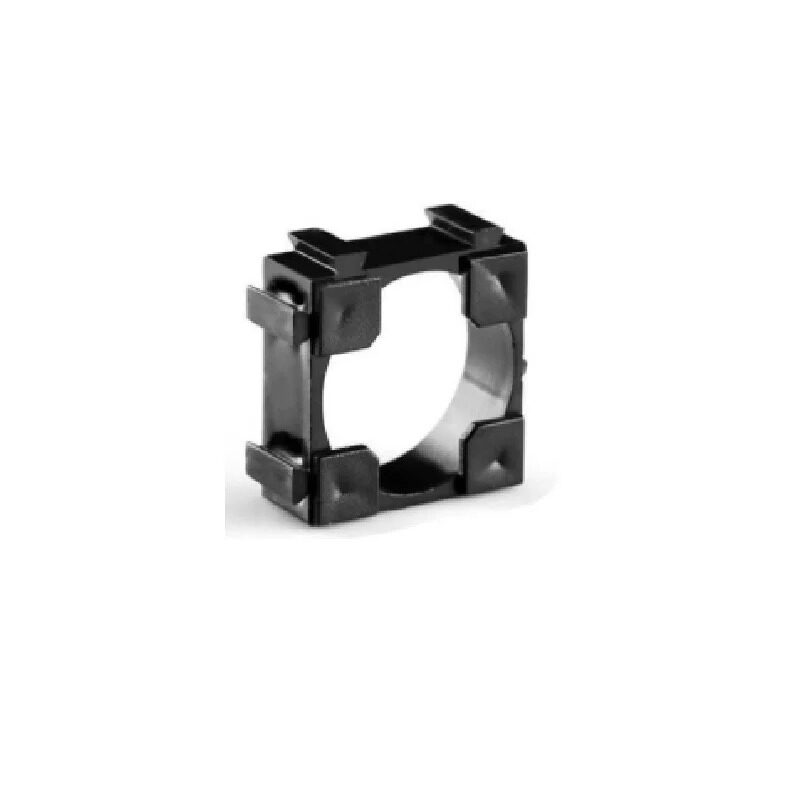
1×18650 Battery Holder with 18.4mm Bore – Pack of 4
Build compact 18650 Li-Ion battery packs for solar sensor nodes, irrigation timers, or portable farm devices. Solid contacts, durable plastic housing, 18.4mm bore for standard 18650 cells.
Installation Tips and Common Mistakes
Even well-designed solar agri systems fail when installed incorrectly. Here are the most common pitfalls and how to avoid them:
Panel Orientation and Shading
In India (Northern Hemisphere), panels should face true south (not magnetic south) at a tilt angle roughly equal to your site’s latitude. Avoid any shading during peak hours (10 AM–3 PM) — even a small shadow on one cell can reduce an entire string’s output by 50%+.
Wire Sizing
Undersized cables cause voltage drop and heat buildup. For a 1 HP solar pump drawing ~8A at 100V, use minimum 4 mm² cable for runs under 50m. For longer runs, step up to 6 mm² or use higher voltage DC to reduce current.
Earthing and Lightning Protection
Farms in open fields are highly exposed to lightning strikes. Always earth your panel frames, mounting structure, and all metallic enclosures to a proper earth pit. Install a surge protection device (SPD) at the array junction box.
Water Quality and Pump Maintenance
Sandy or silty water clogs submersible pump impellers rapidly. Install a strainer/filter at the pump inlet. Flush the pump with clean water before the dry season and check motor insulation resistance annually.
Monitoring
Add a simple voltage and current monitor at the battery terminals to track system health. Many farmers discover battery failures only when the lighting system stops working — early monitoring prevents crop losses from undetected pump failures.
Frequently Asked Questions
How many solar panels do I need for a 1 HP pump?
A standard 1 HP DC solar pump requires approximately 800–1000 Wp of solar panels. Using 400W panels, that means 2–3 panels. Always add a 20% buffer for real-world losses from dust, temperature and wiring resistance.
Can I run a solar pump on a cloudy day?
Yes, but at reduced flow rate. Solar pumps use MPPT controllers that extract maximum available power even in low-light conditions. On a heavily overcast day, expect 20–40% of peak output.
What is the subsidy for a 3 HP solar pump under PM-KUSUM?
Under PM-KUSUM Component B, the central government subsidy is 30%, state government adds another 30% (sometimes up to 60% in some states), meaning farmers pay only 10–40% of the total cost. For a 3 HP pump costing ₹1.5–2.2 lakh, you may pay just ₹15,000–₹22,000.
Which battery is best for solar-powered farm lighting?
LiFePO4 (Lithium Iron Phosphate) batteries are the best long-term choice. They handle partial state of charge well, cycle 2000+ times (vs ~500 for lead-acid), and require zero maintenance. For small DIY projects, 18650 Li-Ion cells are cost-effective.
Is it possible to use solar power for electric fencing on farms?
Absolutely. Solar-powered electric fence energisers are commercially available and work well in India’s high-irradiance conditions. A small 20W panel with a 7 Ah battery can power a fence energiser covering several km of fence for multiple days without sunshine.
Can a solar pump work without a battery?
Yes — most solar pumps are designed to run directly from panels without batteries, pumping water only during daylight hours (which is usually sufficient for agricultural needs). Batteries are recommended only for control electronics and lighting.
Ready to build your solar agricultural setup? Browse Zbotic’s full range of electronics components — from battery holders and charging modules to power supplies and LED lighting — all available with fast shipping across India. Shop Solar & Renewable Energy components at Zbotic and power your farm the smart way.



Add comment