
Gel Battery vs AGM Battery: Sealed Lead Acid Comparison
If you are powering a home inverter, a solar backup system, a UPS unit, or an off-grid installation in India, you have almost certainly encountered the question: gel battery vs AGM sealed lead acid comparison — which one should I choose? Both are sealed lead-acid (SLA) batteries that do not spill acid, can be mounted in any orientation, and require virtually no maintenance. But their internal construction, performance characteristics, and ideal applications differ significantly. This guide provides a thorough, unbiased comparison to help you make the right choice for your specific power project.
How Gel and AGM Batteries Work
Both gel and AGM batteries are variations of the flooded lead-acid battery design, but with the liquid electrolyte immobilized in different ways to make them sealed and maintenance-free.
AGM (Absorbent Glass Mat) Batteries
In an AGM battery, the sulfuric acid electrolyte is absorbed and held in thin fiberglass mat separators that are placed between the lead plates. The mats are saturated with electrolyte but the electrolyte is held in place by capillary action — like water in a sponge. The plates are tightly compressed against the AGM mats, which gives AGM batteries their characteristic low internal resistance.
The key advantages of the AGM construction:
- Very low internal resistance (typically 2-5mO for a 100Ah battery), enabling high surge current delivery
- Excellent charge acceptance at high current rates (can be bulk charged at up to 0.3C)
- Robust vibration resistance due to plate compression
- Wide operating temperature range (-20 to +60 degrees C)
- Fully sealed, no gas venting needed under normal operation (VRLA – valve-regulated lead acid)
Gel Batteries
In a gel battery, the electrolyte is mixed with fumed silica to create a thick, immobile gel. This gel is injected into the battery case during manufacture and solidifies around the plates. The gel essentially suspends the acid in place permanently.
The gel construction characteristics:
- Higher internal resistance than AGM (typically 4-10mO for equivalent capacity)
- More tolerant of deep discharge — gel electrolyte does not stratify even when the battery is fully depleted
- Better performance in sustained, moderate discharge applications
- More sensitive to high charge voltages — gel cracking can occur if charge voltage exceeds specifications
- Better high-temperature endurance in float (standby) applications
Performance Comparison: Discharge, Recharge, and Temperature
High-Rate Discharge Performance
This is where AGM batteries clearly win. Due to the tight plate compression and low internal resistance, AGM batteries can deliver very high peak currents — essential for applications like car engine cranking, UPS systems that must power large loads instantly, and electric vehicles with high acceleration demands.
A typical 100Ah AGM battery can deliver 500-700A for short bursts (5-10 seconds). An equivalent gel battery might deliver only 300-450A before its terminal voltage collapses due to higher internal resistance. For inverter applications where high starting surge is needed to start refrigerator compressors or air conditioner motors, AGM is significantly better.
Deep Discharge Recovery
Gel batteries have a meaningful advantage here. When a gel battery is accidentally deep-discharged to near 0V, the gel electrolyte prevents the severe stratification and plate sulfation that would permanently damage an AGM battery in the same situation. Gel batteries tolerate deep discharge “abuse” more gracefully.
In India, where power outages can be prolonged and batteries are sometimes fully drained, a gel battery’s better deep-discharge tolerance is a practical advantage for home inverter and solar installations.
Temperature Performance
AGM batteries perform better in cold temperatures — relevant for installations in Himalayan regions, cold storage facilities, or hill stations. The lower internal resistance of AGM batteries maintains better capacity at low temperatures.
In high ambient temperatures (common across peninsular India, Rajasthan, and during Indian summers), gel batteries have an edge in float (standby) applications. The gel electrolyte is more stable at elevated temperatures during continuous float charging, leading to better longevity for stationary applications.
Recharge Speed
AGM batteries can be recharged much faster. A discharged AGM battery can accept charge at up to 0.3C (30A for a 100Ah battery) in the bulk phase without damage. Gel batteries are typically limited to 0.1-0.2C maximum charge rate, meaning a 100Ah gel battery should not receive more than 10-20A of charge current. Exceeding this generates gas inside the gel, creating voids that permanently reduce capacity.

ISDT A4 Air Smart Battery Charger for NiMH, NiCd, Li-Ion, LiFePO4 with Bluetooth
A professional multi-chemistry smart charger that supports sealed lead acid batteries alongside lithium chemistries. With Bluetooth logging and precise voltage control, it is ideal for both conditioning and maintaining AGM and gel cells.
Charge Voltage Requirements
This is one of the most critical differences between gel and AGM batteries, and getting it wrong will permanently damage your battery within a few charge cycles.
AGM Charge Voltages (12V battery)
| Charge Stage | Voltage |
|---|---|
| Bulk / Absorption | 14.4V – 14.8V |
| Float (standby) | 13.5V – 13.8V |
| Equalization (occasional) | 14.8V – 15.0V |
Gel Charge Voltages (12V battery)
| Charge Stage | Voltage |
|---|---|
| Bulk / Absorption | 14.1V – 14.4V |
| Float (standby) | 13.5V – 13.8V |
| Equalization | NOT RECOMMENDED |
The critical warning: never use an AGM charger profile on a gel battery. The higher absorption voltage (14.4-14.8V) used for AGM will cause gassing inside the gel, creating voids that permanently destroy capacity. Gel batteries require a lower, narrower absorption voltage window. Many Indian home inverter chargers are set for a generic “SLA” profile that works for AGM but overcharges gel batteries slightly — check your inverter’s charge voltage settings before connecting a gel battery.
Equalization (a high-voltage conditioning charge) should never be performed on gel batteries. It is only occasionally appropriate for AGM batteries (once every 3-6 months for deep-cycle AGM in solar applications).
Lifespan and Cycle Life
Float Service Life (UPS, Standby)
In float applications where the battery is kept at full charge most of the time and only occasionally discharged during power outages:
- AGM: 3-5 years of float service life at 25 degrees C ambient. Reduces to 2-3 years at 35 degrees C.
- Gel: 5-8 years of float service life at 25 degrees C. Reduces to 4-5 years at 35 degrees C.
For Indian home UPS applications where the battery sits on float most of the day (due to good grid supply in cities), gel batteries offer meaningfully longer service life — justifying their higher price over time.
Cycle Life (Solar, Daily Cycling)
In cycling applications where the battery is regularly discharged and recharged:
- AGM (standard): 200-400 cycles to 80% DoD (depth of discharge)
- AGM (deep-cycle grade): 500-800 cycles to 80% DoD
- Gel: 500-1000 cycles to 80% DoD
For solar installations in India where the battery cycles daily (charged during the day, discharged at night), a gel battery’s better cycle life makes it the economically superior choice over a multi-year installation lifetime.
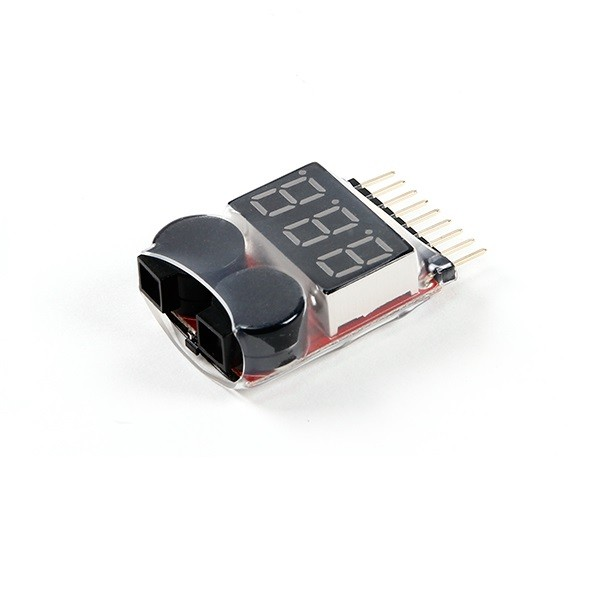
1-8S Lipo Battery Voltage Tester without Alarm
A quick-check voltage tester that can also verify your sealed lead acid battery’s terminal voltage at a glance. Monitor your AGM or gel battery condition regularly to catch early signs of degradation.
Cost Comparison in the Indian Market
Battery prices in India vary significantly between Tier 1 cities (Mumbai, Delhi, Bangalore) and smaller towns due to distribution costs. Here are approximate price ranges as of 2026:
| Capacity | AGM Price (Rs.) | Gel Price (Rs.) |
|---|---|---|
| 7Ah / 12V (UPS) | 700-1,200 | 900-1,500 |
| 26Ah / 12V (UPS) | 2,500-3,500 | 3,500-5,000 |
| 100Ah / 12V (Solar/Inverter) | 8,000-12,000 | 11,000-16,000 |
| 150Ah / 12V (Inverter) | 11,000-16,000 | 15,000-22,000 |
Gel batteries carry a 20-40% price premium over equivalent AGM batteries. Whether this premium is justified depends on the application. For a 5-year solar installation, the gel battery’s longer cycle life may make the total cost per kWh lower than AGM — do the per-cycle math for your specific use case.
Best Applications for Each Type
Choose AGM When You Need:
- High surge current (starting motors, inverters driving large loads)
- Fast recharge capability (generator charging, rapid turnaround)
- Operation in cold climates (hill stations, cold storage)
- Vibration-resistant installation (vehicles, mobile applications)
- Lower upfront cost with acceptable lifespan
- Occasional equalization charging for sulfation recovery
Choose Gel When You Need:
- Solar energy storage with daily deep cycling
- Long-term float applications (telecom towers, bank UPS, hospital backup)
- Installation in high-ambient-temperature environments (outdoor cabinets, rural India)
- Tolerance for occasional deep discharge (areas with unreliable grid)
- Maximum service life with proper charging
- Silent operation critical (no gassing under normal conditions)
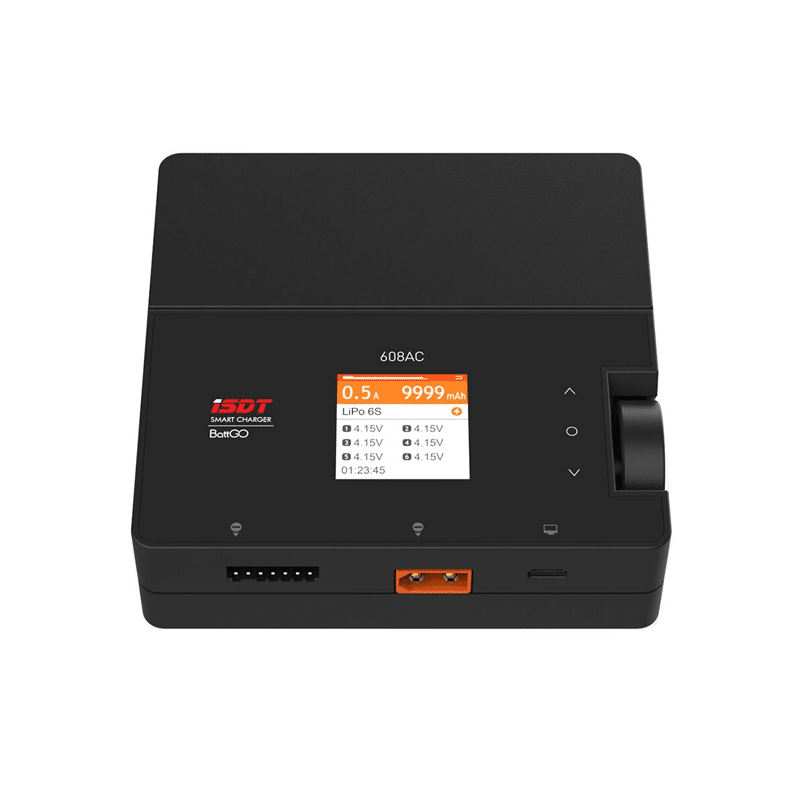
ISDT 608 AC LiPo Battery Charger — AC 50W/DC 200W Dual Mode
A versatile charger that supports multiple battery chemistries including sealed lead acid. Use it to properly condition and test your AGM or gel batteries with the correct charge profile — avoiding the overcharge damage that ruins gel cells.
Maintenance Tips for Sealed Lead-Acid Batteries
Although both AGM and gel batteries are advertised as “maintenance-free,” proper care significantly extends their service life — particularly important given the high cost of replacement batteries in India.
Temperature Management
Every 10 degrees C rise in operating temperature above 25 degrees C halves the battery’s expected service life. In Indian summers, battery cabinet temperatures can reach 45-50 degrees C in outdoor or poorly ventilated installations. Install batteries in shaded, ventilated locations. For critical applications, consider air-conditioned battery rooms — the electricity cost of cooling is far less than premature battery replacement.
Charge Voltage Accuracy
Verify your charger’s output voltage with a calibrated multimeter periodically. Float voltage that has drifted 0.5V above specification will significantly shorten battery life. This is especially critical for gel batteries given their narrow charge voltage window. Adjust charger trim pots or replace chargers that have drifted out of specification.
State of Charge Monitoring
Never leave a sealed lead-acid battery in a deeply discharged state for more than 24 hours. Sulfation (lead sulfate crystal growth on the plates) begins within hours of deep discharge and becomes increasingly irreversible over time. If a power outage depletes the battery, recharge it as soon as mains power is restored.
Storage
For long-term storage (more than 30 days without use), charge to full, then top up every 3 months to compensate for self-discharge. Store in a cool, dry location. A fully charged AGM or gel battery self-discharges at approximately 3-5% per month at 25 degrees C, faster at higher temperatures.
Frequently Asked Questions
Can I replace my AGM UPS battery with a gel battery?
In most cases, yes — but you must verify that your UPS charger supports gel battery chemistry and can be set to the correct charge voltage. If your UPS has only a fixed charge voltage above 14.4V per 12V battery, it will damage a gel battery over time. Check the UPS manual or contact the manufacturer before switching chemistries.
Why does my gel battery get warm during charging?
A gel battery that gets warm during charging is likely being charged at too high a voltage or current. This is the most common gel battery failure mode in India, often caused by using a generic SLA charger that is calibrated for AGM. Reduce the charge current to the manufacturer’s recommended rate (typically 0.1-0.15C) and verify the absorption voltage is within the gel specification.
Can I mix AGM and gel batteries in the same bank?
No. Never mix AGM and gel batteries in a series or parallel bank. They have different internal resistances, charge voltage requirements, and discharge characteristics. Mixing them will cause one type to be chronically undercharged or overcharged relative to the other, rapidly degrading both batteries. Always use identical batteries (same brand, model, age, and chemistry) in a bank.
What does “VRLA” mean and does it apply to both types?
VRLA stands for Valve-Regulated Lead-Acid. Both AGM and gel batteries are VRLA designs. The valve is a small pressure-relief vent that opens only if internal gas pressure exceeds a safe threshold (during abuse conditions like overcharge). Under normal operation, both types are fully sealed with no venting required. The VRLA designation simply means they are sealed and maintenance-free, distinguishing them from flooded (open) lead-acid batteries.
Are lithium batteries replacing AGM and gel batteries for Indian applications?
Increasingly, yes — particularly LiFePO4 (lithium iron phosphate) batteries are entering the home inverter and solar storage market. LiFePO4 offers 2000-4000 cycles (vs 500-1000 for the best gel), lighter weight, and better temperature performance. However, the upfront cost remains 2-3x higher than equivalent SLA capacity. For most Indian residential applications where first cost is paramount, AGM and gel remain the practical choice as of 2026, with LiFePO4 gaining ground in larger solar installations where lifecycle economics favor the switch.
Make the Right Battery Choice
The gel vs AGM decision comes down to your application: AGM for high-surge, fast-charge, and cold-climate use; gel for long-duration cycling, high-temperature float, and maximum service life. Zbotic stocks chargers, testing equipment, and battery accessories to help you get the most out of whichever sealed lead-acid battery you choose — shop our full range and get your power project running reliably.







Add comment