
IR Sensor vs Ultrasonic: Communication & Proximity Differences Explained
Choosing between an IR sensor and an ultrasonic proximity sensor is one of the first decisions you will face when building an obstacle-avoidance robot, line follower, automatic door system, or any IoT device that needs to detect objects in its environment. Both sensor types are cheap and widely used by Indian makers, but they work on fundamentally different physical principles and each has situations where it excels or fails. This comprehensive guide breaks down every important difference — range, accuracy, surface type compatibility, ambient light sensitivity, communication protocol, cost, and power consumption — so you can confidently pick the right sensor for your next project.
How IR Proximity Sensors Work
An infrared (IR) proximity sensor works by emitting a beam of infrared light (typically at 850–940nm wavelength, invisible to the human eye) from an IR LED and measuring how much of that light reflects back to a photodetector. When an object enters the sensor’s field of view, it reflects the IR beam. The closer the object, the stronger the reflected signal. The sensor’s comparator circuit converts this into a digital HIGH/LOW signal (for digital IR modules) or a variable voltage (for analog modules like the TCRT5000 or Sharp GP2Y0A series).
Common IR proximity modules used in India:
- TCRT5000: Reflective IR sensor with analog output. Detects objects at 0–25mm. Widely used for line-following robots.
- FC-51 IR obstacle module: Digital output, adjustable detection distance via potentiometer (2cm–30cm). Plug-and-play with Arduino.
- Sharp GP2Y0A21YK0F: Analog IR distance sensor, 10cm–80cm range with nonlinear output curve. More accurate but requires calibration.
- VS1838B / TSOP38238: IR receiver modules for remote control signals (modulated at 38kHz), not proximity sensing.
How Ultrasonic Sensors Work
Ultrasonic sensors use sound waves at frequencies above human hearing (typically 40kHz) rather than light. The sensor emits a short ultrasonic pulse from its transmitter, then measures how long it takes for the echo to return from an object. Since the speed of sound in air at 25°C is approximately 346 m/s, the distance is calculated as: Distance = (Echo pulse duration × 346) / 2.
The HC-SR04 is the overwhelmingly dominant ultrasonic module in the Indian hobbyist market. Its specifications:
- Operating voltage: 5V (or 3.3V with level shifter for ESP32/Arduino 3.3V boards)
- Detection range: 2cm to 400cm (practical reliable range: 2cm–200cm)
- Accuracy: ±3mm
- Beam angle: 15° cone
- Interface: Trigger pulse in, Echo pulse width out (timing based)
- Minimum measurement cycle: 60ms (to allow echo to die out before next measurement)
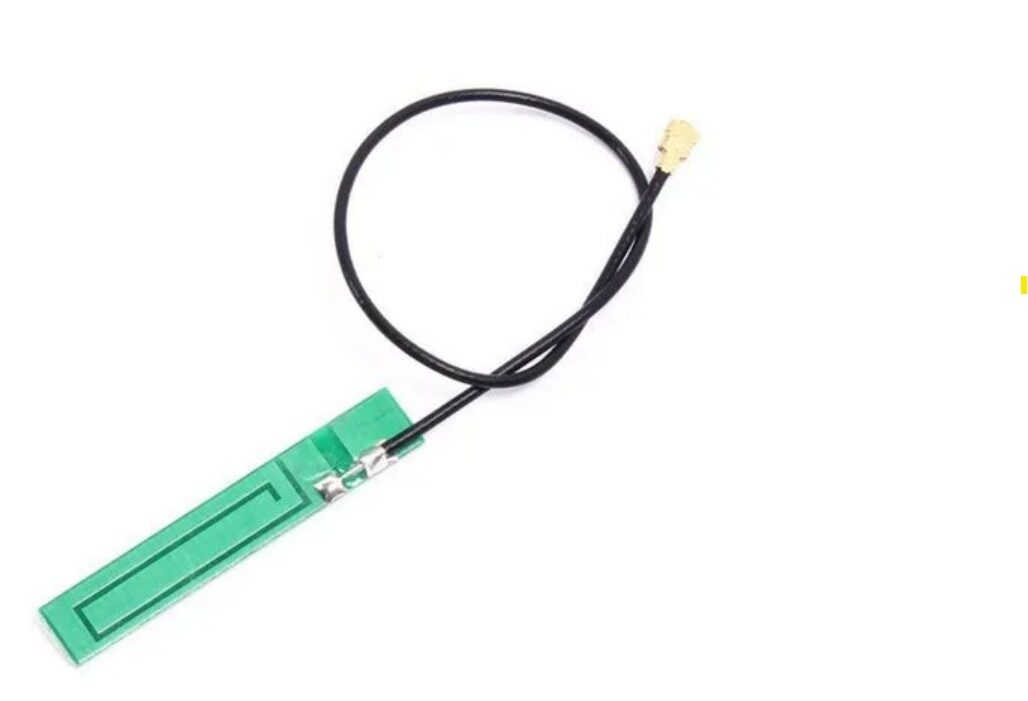
15cm 3DBI GSM/GPRS/3G PCB Antenna with IPEX Connector
Useful for projects that combine proximity sensing with wireless communication — for example, an ultrasonic parking sensor that sends alerts via GSM. Compatible with SIM800 and A7670 GSM modules.
Head-to-Head Comparison Table
| Parameter | IR Sensor (FC-51 / TCRT5000) | Ultrasonic (HC-SR04) |
|---|---|---|
| Working principle | Infrared light reflection | Sound wave echo timing |
| Range | 2cm–80cm (varies by module) | 2cm–400cm |
| Accuracy | Low for distance; high for presence | ±3mm distance accuracy |
| Sunlight interference | High (IR is in sunlight spectrum) | None (sound unaffected by light) |
| Dark/black surfaces | Fails (absorbs IR light) | Works fine |
| Transparent surfaces | Fails on glass/clear plastic | Detects reliably |
| Response speed | Very fast (<1ms) | 60ms minimum cycle |
| Interface | Digital OUT or Analog | Trigger + Echo pulse width |
| Power consumption | ~25–35mA | ~15mA (idle) / 40mA (active) |
| Price in India | ₹25–₹60 per module | ₹35–₹80 per module |
| Affected by sound noise | No | Yes (40kHz fan motors, machinery) |
Range and Accuracy: Which Is Better?
For measuring actual distance with millimetre precision, ultrasonic sensors win decisively. The HC-SR04 can reliably measure from 2cm to 200cm with ±3mm accuracy. This makes it the right choice for projects like automated parking systems, liquid level measurement in tanks, and robotic arm positioning.
IR sensors are poor distance measurement tools because the reflected signal strength depends heavily on the target’s surface colour, texture, and angle of reflection — not just distance. A white paper at 20cm might return the same signal strength as black cardboard at 5cm. However, for simple presence/absence detection at a fixed short range, the IR sensor’s near-instantaneous response (sub-millisecond) gives it an advantage over the ultrasonic HC-SR04’s mandatory 60ms cycle time.
A practical implication for Indian makers: if you are building a coin sorter, ticket counter, or conveyor belt item counter that needs to detect objects passing at high speed, IR sensors are the right choice. If you are building a sonar-style obstacle avoidance system for a rover, go ultrasonic.
Interference Issues: Sunlight, Glass, Foam, and Dark Surfaces
Understanding interference is critical for outdoor or industrial projects in India. Indian summers bring intense direct sunlight that floods the infrared spectrum — the same wavelengths used by IR sensors. An FC-51 module operating in direct sunlight will produce false detections or completely lose sensitivity because the photodetector is saturated by ambient IR from the sun. This is a major limitation for outdoor applications like solar-powered garden robots or outdoor parking sensors.
Ultrasonic sensors are completely immune to ambient light. They work equally well in full sunlight, complete darkness, dusty environments, and through transparent plastic covers (the sensor can be mounted behind a plastic panel). However, ultrasonic sensors have their own interference issues:
- Soft, foam, or fibrous surfaces: These absorb sound waves rather than reflecting them, causing missed detections or underreported distances.
- Narrow objects and wires: Objects narrower than the 15° beam angle may not return a strong enough echo. A thin pole at 1 metre may not be detected at all.
- Very steep angles: Sound reflects away rather than back to the receiver when it hits a surface at more than about 30° from perpendicular.
- 40kHz industrial noise: Some motors and inverters emit ultrasonic noise at similar frequencies and can interfere with the HC-SR04. This is rare but worth knowing for workshop automation projects.
Communication Protocols and Wiring
Both sensor types are simple to interface with Arduino and ESP32, but they use different protocols.
IR sensor (FC-51 digital module) wiring:
- VCC → 5V (or 3.3V for some modules)
- GND → GND
- OUT → Any digital GPIO pin
// FC-51 IR obstacle sensor
int irPin = 7;
void setup() { pinMode(irPin, INPUT); }
void loop() {
  if (digitalRead(irPin) == LOW) { // LOW = object detected
    Serial.println("Object detected!");
  }
  delay(100);
}
HC-SR04 ultrasonic sensor wiring:
- VCC → 5V; GND → GND
- TRIG → Digital output GPIO (send 10µs HIGH pulse to start measurement)
- ECHO → Digital input GPIO (measures pulse duration, proportional to distance)
// HC-SR04 ultrasonic sensor
const int trigPin = 9, echoPin = 10;
void setup() { pinMode(trigPin, OUTPUT); pinMode(echoPin, INPUT); Serial.begin(9600); }
void loop() {
  digitalWrite(trigPin, LOW); delayMicroseconds(2);
  digitalWrite(trigPin, HIGH); delayMicroseconds(10);
  digitalWrite(trigPin, LOW);
  long duration = pulseIn(echoPin, HIGH);
  float distance = duration * 0.0343 / 2; // cm
  Serial.print("Distance: "); Serial.print(distance); Serial.println(" cm");
  delay(100);
}
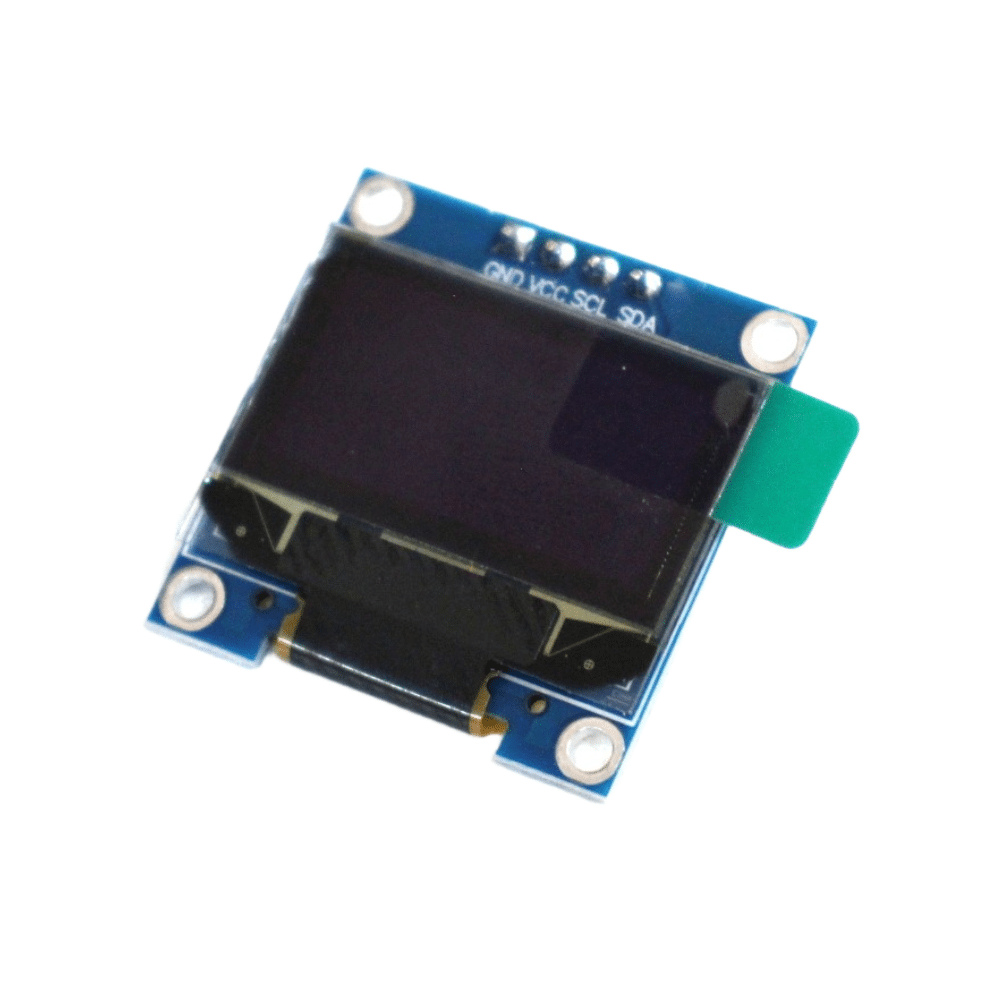
0.96 Inch I2C OLED Display (SSD1306)
Add a live distance readout to your proximity sensor project with this compact OLED display. Pair it with an HC-SR04 or Sharp IR sensor to build a handheld distance meter — a classic and practical beginner project.
Best Use Cases for Each Sensor Type
Choose IR sensors when you need:
- Line following robots (TCRT5000 array for track sensing)
- Coin/token counting on a conveyor at very high speeds
- Close-range object detection (under 20cm) in a controlled indoor environment
- Remote control decoding (VS1838B / TSOP series for IR remote receivers)
- Gesture detection systems (multiple IR pair arrays)
- Encoders and tachometers (slotted IR sensor for RPM measurement)
Choose ultrasonic sensors when you need:
- Distance measurement from 2cm to 400cm
- Obstacle avoidance robots in varied lighting conditions
- Liquid level sensing in tanks (water, oil, chemicals)
- Parking assistance systems (measure car distance from wall)
- People counting at doorways (wide beam angle detects any person)
- Automatic taps and hand sanitiser dispensers
Use both together when building: sophisticated robots that need both the speed of IR for close-range floor/line detection and the range + light-immunity of ultrasonic for obstacle avoidance at distance. This combination is used in virtually every competitive robotics project at Indian college fests.
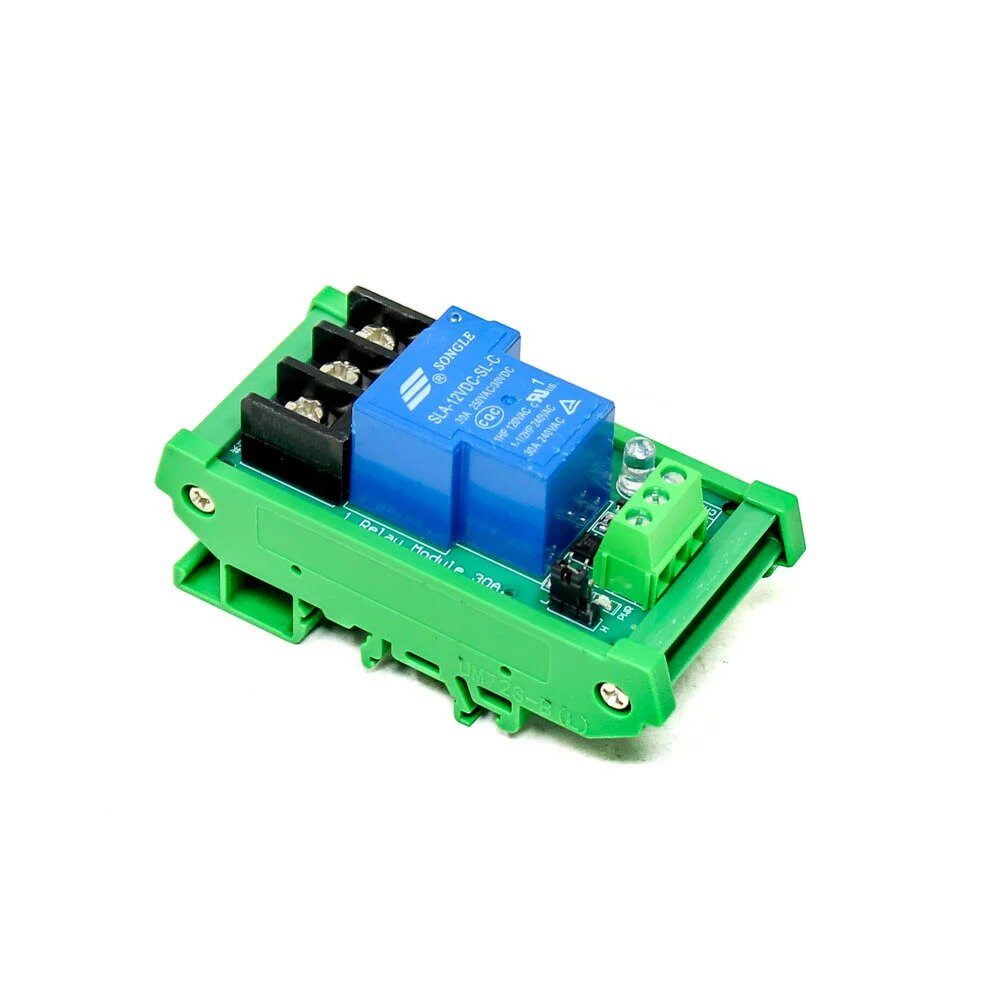
1 Channel 12V 30A Relay Module with Optocoupler
Combine your proximity sensor with this heavy-duty relay module to control high-current loads — automatic lights that trigger when someone enters a room (ultrasonic detects entry), or machinery that stops when an IR sensor detects a hand near a blade.
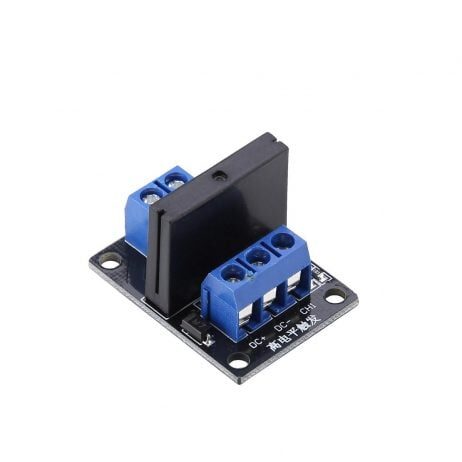
1 Channel 12V Solid State Relay (SSR) Module
For sensor-triggered AC load control (automatic hand-wash taps, automated lighting), a solid-state relay eliminates mechanical wear and can switch much faster than an electromechanical relay — important when your IR sensor triggers at 1ms response time.
Frequently Asked Questions
Can I use an IR sensor outdoors in Indian summer sunlight?
It is very difficult. Strong sunlight contains a massive amount of IR radiation that overwhelms most IR proximity sensor photodetectors. If you must use IR outdoors, choose a modulated IR system (like the Sharp GP2Y series) which uses 38kHz modulation to reject DC ambient IR. For most outdoor projects, an HC-SR04 ultrasonic sensor is a more reliable and cost-effective choice in Indian conditions.
Which sensor is better for an obstacle-avoiding Arduino robot?
The HC-SR04 ultrasonic sensor is the standard choice for obstacle avoidance because it works in any lighting condition, handles black and dark-coloured objects correctly, and provides actual distance data for decision-making (not just presence). The IR sensor is better suited for line following where the robot reads a black tape track on a white floor.
Does the HC-SR04 work at 3.3V for ESP32?
The HC-SR04 officially requires 5V for its transducer. However, many modules work with 3.3V trigger signals when the VCC is still connected to 5V — the echo signal (which is 5V logic) needs a level shifter before connecting to the ESP32’s 3.3V GPIO pin to avoid damaging the ESP32. Alternatively, use the HC-SR04P (P for power-compatible) or JSN-SR04T which natively supports 3.3V operation.
How do I measure the distance to water with a sensor?
Ultrasonic sensors are the standard choice for non-contact liquid level measurement. Mount the HC-SR04 above the tank facing down. The sensor emits a pulse, it reflects off the water surface, and the echo travel time tells you the distance from sensor to water surface. Subtract from the total tank height to get water level. IR sensors fail for this application because water is partially transparent and absorbs IR light differently depending on turbidity.
Which sensor is best for a touchless hand sanitiser dispenser?
Either works, but IR proximity sensors are most commonly used in commercial automatic dispensers because they are cheaper, faster-responding, and compact. The IR sensor’s inability to detect dark or transparent surfaces is not an issue since human hands are good IR reflectors. Set the detection range to 5–10cm so the pump fires only when a hand is directly under the nozzle.
Shop Sensors and Modules for Your Project
Whether you choose IR or ultrasonic, Zbotic has the sensors, relay modules, and display modules you need for your proximity detection project, with fast delivery across India.


Add comment