
DGCA Drone Weight Categories in India: Green, Yellow and Red Category Explained (2026)
India’s drone regulations have undergone a complete transformation since the Drone Rules 2021 replaced the old UAS Rules. The Ministry of Civil Aviation, through the Directorate General of Civil Aviation (DGCA), has created a comprehensive regulatory framework that categorizes drones by weight and assigns operating permissions based on those categories. Understanding which category your drone falls into — and what that means for where and how you can fly — is not just helpful knowledge; it is a legal necessity for every drone pilot in India.
Whether you are a hobbyist who just bought a consumer DJI drone, an FPV enthusiast who built a custom racing quad, a farmer operating an agricultural spraying drone, or a professional cinematographer flying a heavy camera platform, the DGCA weight categories determine what permissions you need, what equipment is required, and where you can legally fly.
This comprehensive guide covers the complete weight classification system, the airspace colour-coding (Green, Yellow, Red), registration and certification requirements, and practical advice for Indian drone pilots in 2026.
1. DGCA Drone Weight Categories Explained
The Drone Rules 2021 classify unmanned aircraft systems (UAS) into five categories based on Maximum All-Up Weight (AUW). AUW is the total weight of the drone including its payload and battery at the time of flight — not the bare drone weight without battery.
| Category | Max AUW | Typical Use Cases | Registration Required? |
|---|---|---|---|
| Nano | Under 250g | Toy drones, Tiny Whoops, micro FPV | No (with conditions) |
| Micro | 250g – 2kg | Consumer drones, FPV quads, small camera drones | Yes — UIN required |
| Small | 2kg – 25kg | Professional cinematography, survey, inspection | Yes — UIN + UAOP |
| Medium | 25kg – 150kg | Agricultural spraying, heavy cargo | Yes — Full approvals |
| Large | Above 150kg | Cargo delivery, large surveillance | Yes — Full approvals + airworthiness |
2. Nano Category (Under 250g)
The Nano category covers all drones weighing less than 250g all-up, including battery and payload. This is the most relaxed category under Indian regulations.
What is permitted for Nano drones:
- No UIN (Unique Identification Number) registration required
- No Remote Pilot Certificate (RPC) required
- No UAS Operator Permit required
- Can fly up to 50 feet (15 metres) AGL (Above Ground Level) in uncontrolled, Green zone airspace without specific permission
- Indoor flying on private premises is essentially unregulated
Restrictions for Nano drones:
- Cannot fly in Yellow or Red zones without prior permission
- Cannot fly over populated areas, gatherings, or critical infrastructure
- Cannot fly at night
- Must maintain visual line of sight (VLOS) at all times
- Cannot carry any payload including cameras without appropriate permissions in controlled zones
Tiny Whoops (65mm–85mm FPV drones) and most toy drones fall comfortably in the Nano category. This is why Tiny Whoops are so popular for practice flying in India — they require no registration, no certification, and can be flown indoors year-round.
3. Micro Category (250g – 2kg)
This is the most important category for Indian hobbyists and prosumers. Most consumer drones (DJI Mini 3 Pro without payload, DJI Avata, custom 5-inch FPV quads) fall in the Micro category.
Requirements for Micro drones:
- UIN registration: Mandatory. Register on Digital Sky portal (digitalsky.dgca.gov.in). The UIN number must be displayed on the drone.
- Remote Pilot License (RPL) / Remote Pilot Certificate: Required for commercial operations. For recreational flying in Green zones, an RPL is generally not needed but check the latest DGCA circulars.
- NPNT compliance: No Permission, No Takeoff — the drone should be connected to the Digital Sky system before flight in controlled zones.
- Permitted altitude: Up to 120 metres (400 feet) AGL in Green zones.
Custom FPV builds in Micro category:
A typical 5-inch FPV freestyle quad with a 4S battery weighs 550–750g all-up — squarely in the Micro category. You must register it on Digital Sky as a custom-built UAS. The registration process for custom-built drones has been simplified and can be completed online.

35A V2.1 4-in-1 Brushless ESC for RC Drone FPV Racing
Compact and powerful 35A 4-in-1 ESC for FPV builds. Supports 2–5S batteries, DSHOT protocol, and BLHeli_S firmware for smooth motor control on Micro category quads.
4. Small Category (2kg – 25kg)
The Small category covers professional drones used for cinematography, surveying, mapping, inspection, and light payload delivery. Many professional cinema drones (DJI Matrice 30, modified 10-inch quads with DSLR payload) fall here.
Requirements for Small drones:
- UIN registration mandatory
- Remote Pilot Certificate (Class 2 or above) mandatory for all operations
- UAS Operator Permit (UAOP) required for operations beyond owner’s premises
- Insurance mandatory
- NPNT compliance mandatory
- Real-time tracking and flight logging mandatory
- Altitude limit: 120 metres in Green zones, with permissions for higher in Yellow zones
5. Medium Category (25kg – 150kg)
Medium drones are used primarily for agricultural spraying, heavy cargo, and large-scale surveying. India’s agricultural drone ecosystem has exploded in this category, driven by government subsidies for crop-spraying drones.
Agricultural Spraying Drones:
Most agricultural spraying drones in India fall in the 20–35kg AUW range (loaded with pesticide). They require DGCA Type Certificate, Operator Permit, and farmer/operator training certification. The government has created specific pathways and subsidy schemes under PM Kisan Drone Yojana for agricultural drone adoption.

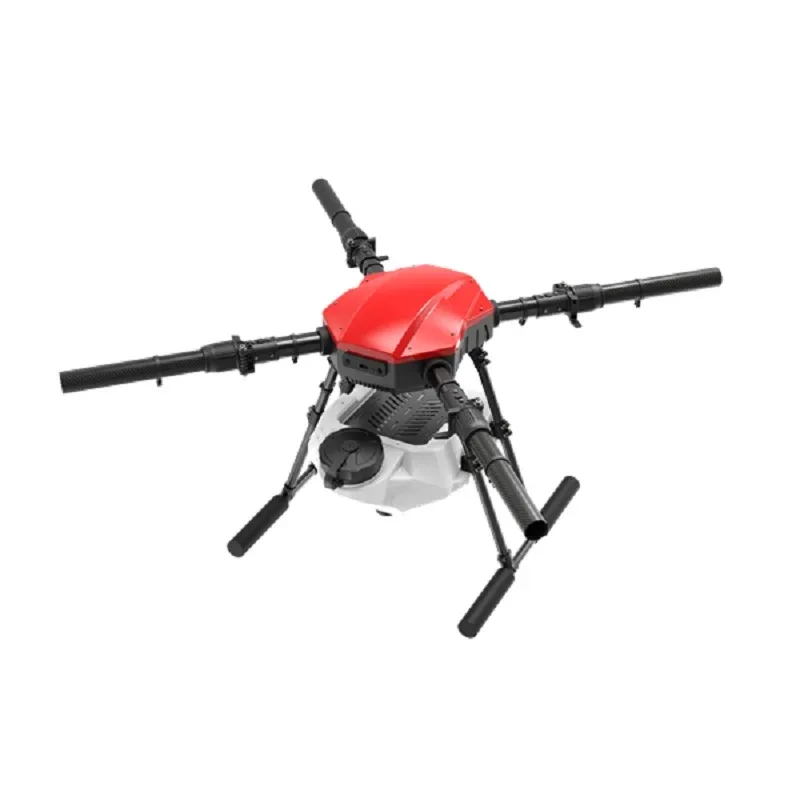
EFT E410P 10L 4 Axis Agricultural Drone Frame
Professional agricultural spray drone frame with 10L tank capacity. Four-axis quadcopter configuration designed for Indian farming conditions — rice paddies, sugarcane fields, orchards.
EFT E416P 16L 4 Axis Agricultural Drone Frame
Larger 16L capacity agricultural spray frame for high-throughput operations. Suitable for large farms covering 100+ acres per day with proper motor and pump configuration.
6. Large Category (Above 150kg)
The Large category covers the heaviest unmanned aircraft — cargo delivery drones, heavy-lift platforms, and military-adjacent systems. This category is subject to the most stringent regulation, including airworthiness certification equivalent to manned aircraft, and is beyond the scope of most Indian hobbyists and commercial operators.
7. Airspace Colour Zones: Green, Yellow, Red
DGCA has divided Indian airspace into three colour zones that dictate where and under what conditions drones can fly. These zones are visible on the Digital Sky map and the AirSewa app.
Green Zone
Green zones are the “free fly” areas where:
- Nano drones can fly up to 50 feet (15m) AGL without any permission
- Micro and above drones can fly up to 400 feet (120m) AGL with a valid UIN, without separate permission for each flight
- No real-time flight plan approval is required (just log flights on Digital Sky)
- Green zones typically cover rural and semi-urban areas away from airports, military zones, and sensitive locations
Yellow Zone
Yellow zones require advance permission before flying. This includes:
- Areas within 8–12 km of airport boundaries (controlled airspace / CTR)
- Areas over 400 feet AGL in Green zones (you need permission to fly higher)
- Some urban areas and semi-controlled zones as designated by DGCA
- Permission is obtained through the Digital Sky portal; for most civilian operations it is granted quickly (usually within 1 working day)
Red Zone
Red zones are no-fly areas. Flying a drone here without specific government authorization is illegal and can result in severe penalties. Red zones include:
- Within 5 km of airport boundaries (inner CTR)
- International borders
- Military installations and defence areas
- Strategic government locations (Rashtrapati Bhavan area, Parliament, etc.)
- Nuclear power plants and major power infrastructure
- Eco-sensitive zones as notified by the Ministry of Environment
Always check the Digital Sky map or AirSewa app before every outdoor flight. Airspace zone classifications can change — a previously Green area near a newly notified security event may be temporarily Red.
8. Registration on Digital Sky
The Digital Sky platform (digitalsky.dgca.gov.in) is India’s centralized UAS management system. Here is the registration process for Micro category drones:
- Create an account on Digital Sky with your Aadhaar or mobile number OTP verification.
- Register as a UAS Operator. Provide your personal details, PAN card, and contact information.
- Add your drone. Enter the drone’s specifications: category, manufacturer, model, serial number, maximum AUW, and upload photos.
- Pay the registration fee. Currently ₹100 for Micro category (fee structure subject to change per DGCA notifications).
- Receive your UIN. Once approved (typically 2–5 business days), you receive a Unique Identification Number.
- Display the UIN on your drone in a clearly visible location using an engraved plate or permanent marker.
9. Remote Pilot Certificate (RPC)
The Remote Pilot Certificate (previously called Remote Pilot License or RPL) is the official qualification for drone pilots in India. It is issued by DGCA-authorized training organizations.
Classes of RPC:
- Class 1: For Nano drones — not currently required but may be introduced
- Class 2: For Micro drones (250g–2kg) — required for commercial operations
- Class 3: For Small drones (2kg–25kg) — required for all operations
- Class 4: For Medium and Large drones — required with additional type ratings
How to get an RPC:
- Complete ground school theory at a DGCA-authorized Remote Pilot Training Organization (RPTO)
- Pass the DGCA theory examination on the Digital Sky portal
- Complete the required flight hours at the RPTO
- Pass the practical skill test
- Receive your RPC, valid for 10 years (renewable)
10. Agricultural Drones: Special Rules
India has created a simplified regulatory pathway for agricultural drones to accelerate adoption under the Drone Rules 2021 and subsequent amendments:
- Kisan Drone Category: A simplified certification track for drones used exclusively for agricultural spraying. Reduced documentation and faster approval timelines.
- PM Kisan Drone Yojana: Government subsidy of up to 50% (up to ₹5 lakh) for FPO-owned agricultural drones. Individual farmers may also qualify for financing schemes.
- Type Certification: Agricultural spray drones must have DGCA Type Certificate. A growing number of Indian manufacturers (Garuda Aerospace, IdeaForge, TechEagle, etc.) have type-certified models available.
- Operator training: Spray drone operators need certification from an RPTO. Some agricultural state governments have their own approved training programs.
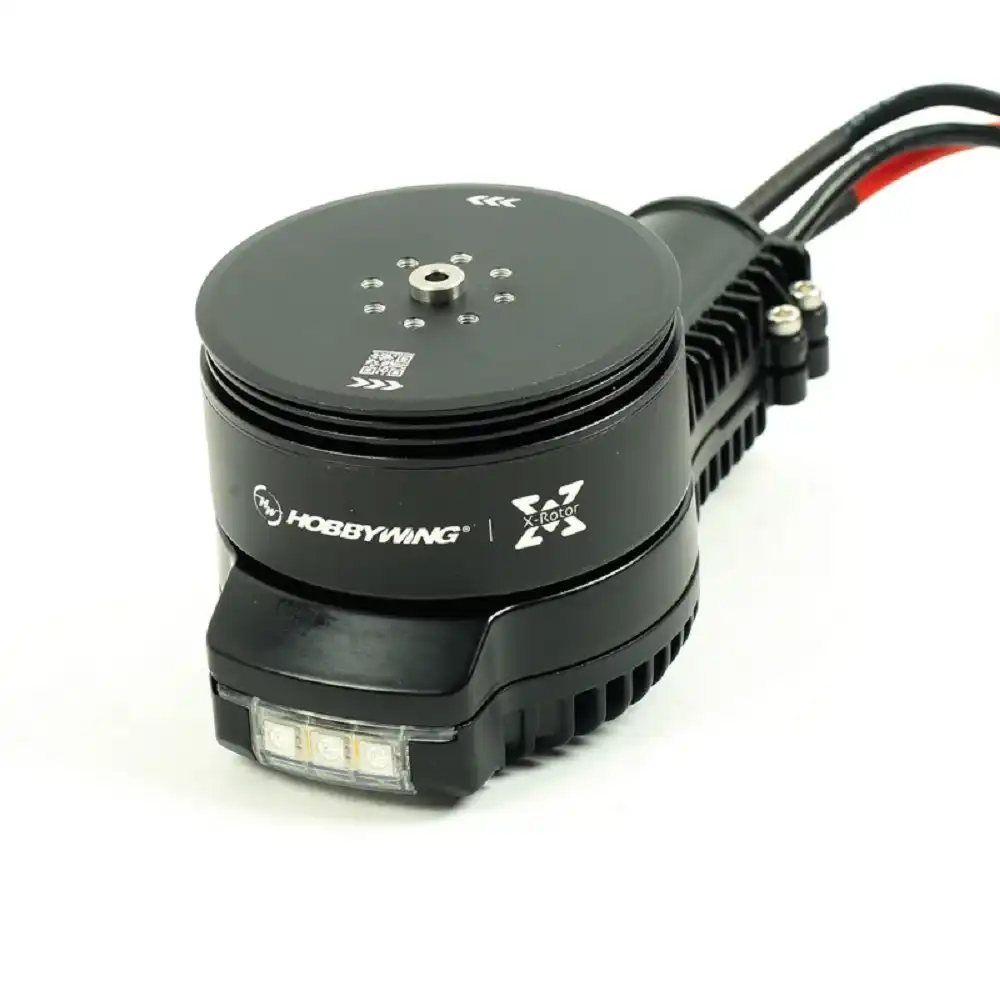
Hobbywing X6 Plus Motor CCW
High-efficiency brushless motor from Hobbywing designed for heavy-lift multirotor and agricultural drone applications. Outstanding torque-to-weight ratio for lifting spray payloads.

Hobbywing X9 Plus Motor CW
Premium X9 Plus motor in CW direction, ideal for octocopter and large quadcopter agricultural platforms. Designed for continuous high-current operation in heavy spray missions.
11. Commercial Operations
Any drone operation for commercial purposes — payment for photography/videography, survey data collection, inspection services, or any operation where money changes hands — requires:
- UIN for the drone
- Remote Pilot Certificate for the pilot
- UAS Operator Permit (UAOP) from DGCA for Small and above
- Third-party liability insurance
- Compliance with NPNT for each flight
For Micro category commercial operations (such as wedding photography with a custom FPV drone), the UIN is mandatory but UAOP requirements may depend on specific DGCA notifications. Check the latest version of the Drone Rules and DGCA circulars for current requirements.

110cm Diameter Fast-fold Landing Pad / Helipad for RC Drone
Professional landing pad for multi-rotor drones. Bright colours improve visibility and provide a clean landing surface for all drone categories. Folds compactly for transport.
12. Penalties for Non-compliance
The Drone Rules 2021 carry significant penalties for violations:
| Violation | Penalty |
|---|---|
| Flying without UIN (Micro and above) | Up to ₹1 lakh fine + drone seizure |
| Flying in Red zone without authorization | Up to ₹10 lakh fine + criminal charges under Aircraft Act |
| Flying without RPC (where required) | Fine as prescribed by DGCA |
| Flying at night without permission | Violation of operating conditions |
| Flying beyond VLOS without approval | Violation of operating conditions |
| Endangering aircraft or persons | Criminal prosecution under IPC and Aircraft Act |
Enforcement has increased significantly with police departments in major Indian cities actively patrolling for illegal drone flying, especially near airports, political events, and religious gatherings. Do not take regulatory compliance lightly.
Frequently Asked Questions
The DJI Mini 3 weighs 248g without payload and falls in the Nano category (under 250g). It does not require UIN registration for recreational use. However, if you attach accessories that bring the AUW over 250g, it moves into the Micro category and requires registration.
Use the Digital Sky interactive map at digitalsky.dgca.gov.in or the AirSewa app (available on Android and iOS). Enter your planned location and the map will show the zone classification with altitude limits.
No. A typical 5-inch FPV quad weighs 500–800g with battery, placing it in the Micro category (250g–2kg). You must obtain a UIN from the Digital Sky portal before flying outdoors. Indoor flying on private property is not regulated by DGCA airspace rules.
NPNT stands for “No Permission, No Takeoff.” It is a technical feature where the drone cannot arm without receiving a digital flight plan approval from the Digital Sky system. NPNT is currently mandatory for drones with a Type Certificate. Custom-built drones and older consumer models may not have hardware NPNT but pilots are still responsible for getting the appropriate zone permission.
FPV flying is legal in India, but DGCA rules require that a visual observer (separate from the FPV pilot wearing goggles) maintains unaided VLOS of the drone at all times during outdoor flying. Indoor FPV flying in private enclosed spaces is unregulated. Many FPV pilots fly with a spotter for regulatory compliance.
In uncontrolled Green zone airspace, drones (Micro and above) can fly up to 120 metres (400 feet) AGL without special permission. Nano drones are limited to 50 feet (15 metres). Flying above 120 metres requires permission through the Digital Sky portal, which places the flight in the Yellow zone permitting process.
Imported drones must comply with all Indian drone regulations and the Import Guidelines issued by the government. Some drone models may require a Type Certificate from DGCA if they are to be used commercially. For personal recreational imports, the drone must be registered on Digital Sky if it is in the Micro category or above. Check the Ministry of Civil Aviation’s latest import guidelines.
Build Your Compliant Drone with Zbotic
Zbotic stocks professional drone frames, motors, ESCs, flight controllers, and accessories for hobbyist, commercial, and agricultural drone builds across all DGCA weight categories. All products are sourced from trusted manufacturers and ship across India.



Add comment