
Table of Contents
- What is KV Rating in a Drone Motor?
- How KV Affects RPM and Performance
- Low KV vs High KV: What’s the Difference?
- The KV-Propeller Relationship
- How Battery Voltage Changes the Equation
- Choosing KV by Frame Size
- Other Motor Specs That Matter
- KV for Agricultural and Heavy-Lift Drones
- KV for FPV Racing and Freestyle
- Premium Motor Options at Zbotic
- Common Motor Selection Mistakes in India
- Recommended Motors from Zbotic
- FAQ
What is KV Rating in a Drone Motor?
If you’ve spent any time researching drone motors, you’ve inevitably encountered the term “KV rating.” It’s one of the most misunderstood specifications in the hobby, partly because the name is unintuitive and partly because its effects interact with several other variables in non-obvious ways.
The KV rating of a brushless motor tells you how many RPM (revolutions per minute) the motor produces per volt of input voltage when running without any load. That’s it. KV is simply a constant that relates voltage to speed.
For example, a 2300KV motor running on a 3.7V single cell (1S LiPo) would spin at approximately 2300 × 3.7 = 8,510 RPM unloaded. The same motor on a 4S LiPo (14.8V) would spin at 2300 × 14.8 = 34,040 RPM unloaded. This is why battery voltage is inseparable from the KV discussion.
The “K” stands for the constant in the motor’s back-EMF formula, and “V” stands for Volt. So KV = RPM/Volt. It’s a motor constant derived from the motor’s winding design — specifically the number of turns of wire on each stator tooth and the thickness of that wire.
How KV Affects RPM and Performance
The fundamental relationship is:
No-load RPM = KV × Battery Voltage
Under actual load (with a propeller attached and generating thrust), the motor runs slower than this theoretical maximum — the difference is due to the load torque of spinning the propeller through the air. The more efficient the motor and the closer the propeller match, the less the speed drops under load.
Here’s what changes the effective RPM in practice:
- Higher KV + lower voltage: Moderate RPM, usually paired with larger props.
- Lower KV + higher voltage: Similar RPM range, but with more torque, paired with larger props.
- Higher KV + higher voltage: Very high RPM — suited to small, light props for maximum speed.
The key insight: KV alone doesn’t tell you whether a motor is powerful. Power comes from the combination of RPM (determined by KV × voltage) and torque (determined by motor design and current). Two motors with the same KV can have very different power outputs if one is physically larger with more copper in its windings.
Low KV vs High KV: What’s the Difference?
Understanding the practical difference between low-KV and high-KV motors is essential for making the right selection for your build.
High KV Motors (2000 KV and above)
Characteristics:
- Spin very fast — high RPM output per volt
- Lower torque — fewer wire turns in the windings
- Work best with small, lightweight propellers
- Generate thrust through high rotational speed
- More responsive to rapid throttle changes (great for racing)
- Generate more heat at high RPM under load
- Better for 2S–4S battery systems
Typical applications: FPV micro quads (1-3 inch), FPV racing on small frames, acrobatic indoor drones, fast whoops.
Low KV Motors (below 1000 KV)
Characteristics:
- Spin slower — low RPM output per volt
- High torque — more wire turns, thicker windings
- Work with large, heavy propellers and generate massive thrust
- More efficient at converting electrical power to mechanical thrust on large props
- Better for 6S–12S+ battery systems
- Used in heavy-lift and agricultural applications
Typical applications: Agricultural sprayers, heavy-lift hexacopters/octocopters, cinema drones, inspection platforms, large commercial drones.
Mid KV Motors (1000–2000 KV)
This is the sweet spot for most popular FPV and hobby builds — particularly 4-inch, 5-inch, and 6-inch quadcopters on 4S and 6S batteries. Most of the FPV community’s favourite motors fall in the 1700–2200 KV range for 4S builds, or 1400–1800 KV for 6S builds.
The KV-Propeller Relationship
This is where most beginners get confused. Motor KV selection cannot be divorced from propeller selection — they work together as a system. The rule of thumb is:
- Higher KV = smaller propellers
- Lower KV = larger propellers
Here’s why: a high-KV motor spinning at 30,000 RPM trying to drive a 10-inch propeller would draw massive current, overheat, and likely destroy itself or the ESC. The propeller is simply too much load for those RPMs. Conversely, a 120 KV motor spinning at 3,000 RPM with a 5-inch prop would generate almost no thrust — the prop needs to spin faster to generate meaningful airflow.
The correct propeller size for a motor is ultimately determined by the combination of KV, battery voltage, and the frame size. There are online motor/prop matching calculators (like ecalc.ch) that can help you verify your combination before purchasing.
For 5-inch FPV builds on 4S, the sweet spot is roughly 2300–2500 KV with 5050 or 5148 props. For the same frame on 6S, drop to 1700–2000 KV with similar props. For 7-inch long-range builds, 1700–2000 KV on 4S with 7-inch props works well.
How Battery Voltage Changes the Equation
Indian hobbyists often overlook the voltage factor when selecting motors. The same motor on different battery voltages behaves very differently:
| Battery | Nominal Voltage | 2300KV Motor RPM | Best Prop Range |
|---|---|---|---|
| 2S LiPo | 7.4V | ~17,020 | 3-4 inch |
| 3S LiPo | 11.1V | ~25,530 | 4-5 inch |
| 4S LiPo | 14.8V | ~34,040 | 5 inch |
| 6S LiPo | 22.2V | ~50,460 | Too fast — need lower KV for 6S |
The 6S row illustrates a critical point: you can’t just run any motor on 6S. A 2300KV motor on 6S would over-rev standard 5-inch props and likely cause motor or ESC failure. For 6S with 5-inch props, you want a motor in the 1600–1900 KV range.
In India, 4S builds are the most common for FPV because 4S LiPo batteries are widely available and affordable. 6S is growing in popularity for the FPV community seeking better efficiency and more power, but requires motors and ESCs rated for 6S.
Choosing KV by Frame Size
This quick reference guide covers the most common frame sizes used in India’s drone building community:
| Frame Size | 4S KV Range | 6S KV Range | Use Case |
|---|---|---|---|
| 2.5–3 inch | 3000–4000 KV | 2500–3000 KV | Micro racing, indoor flying |
| 4 inch | 2500–2700 KV | 1800–2200 KV | Lightweight freestyle |
| 5 inch | 2200–2600 KV | 1700–2100 KV | FPV racing, freestyle |
| 6–7 inch | 1600–2200 KV | 1300–1800 KV | Long-range, cinematic |
| 10 inch+ | 500–900 KV | 400–700 KV | Heavy lift, commercial |
| 15–30 inch | 100–400 KV | 80–250 KV | Agricultural, heavy lift |
Other Motor Specs That Matter
KV is important, but it’s just one of several motor specifications you need to understand when making a purchase decision:
Stator Size (Diameter × Height)
Motor sizes are typically written as a 4-digit number like 2207, 2306, 2208. The first two digits are the stator diameter in mm, the last two are the stator height in mm. A larger stator = more copper = more torque and power potential.
- 1806: Common in 3-inch micro builds
- 2204–2205: Lightweight 5-inch performance builds
- 2207: Industry standard for 5-inch racing/freestyle
- 2306–2308: Powerful 5-inch builds, also 6-inch
- 3115–3120: Large 7-inch and heavy builds
Max Continuous Current (Amps)
Every motor has a maximum current rating. Your ESC must be rated at or above this value, ideally with 20–30% headroom. A 2207 motor might have a max continuous rating of 28A and a burst rating of 36A. Always match your ESC rating to the motor’s requirements.
Efficiency (g/W)
Efficiency tells you how much thrust (in grams) the motor produces per watt of electrical power consumed. Higher efficiency means longer flight times on the same battery. For long-range or agricultural builds, prioritise efficient motors even if they’re not the most powerful.
Motor Weight
For FPV builds, motor weight matters significantly. A heavier motor means a heavier quad, which affects agility, flight time, and how it handles crashes. For agricultural drones, weight is less critical as the payload dominates the total weight.
KV for Agricultural and Heavy-Lift Drones
Agricultural drones in India are one of the most exciting applications in the hobby/professional space. A 10-litre agricultural sprayer typically weighs 20–25 kg fully loaded. These machines need motors with very low KV — typically 100–200 KV — paired with massive 28–34 inch propellers on high-voltage battery systems (12S or higher).
The physics are simple: to lift 25 kg, you need massive thrust. Thrust comes from moving a large volume of air. Large propellers move more air per rotation. Slow, large props are dramatically more efficient than fast, small props for heavy-lift applications — hence the need for ultra-low KV motors on high-voltage systems.
T-Motor, Hobbywing, and Tiger Motor (now part of T-Motor group) are the dominant motor brands for agricultural drones globally and in India. Their agricultural motor systems are engineered specifically for this use case — waterproof, dust-resistant, matched with optimised propellers and ESCs.
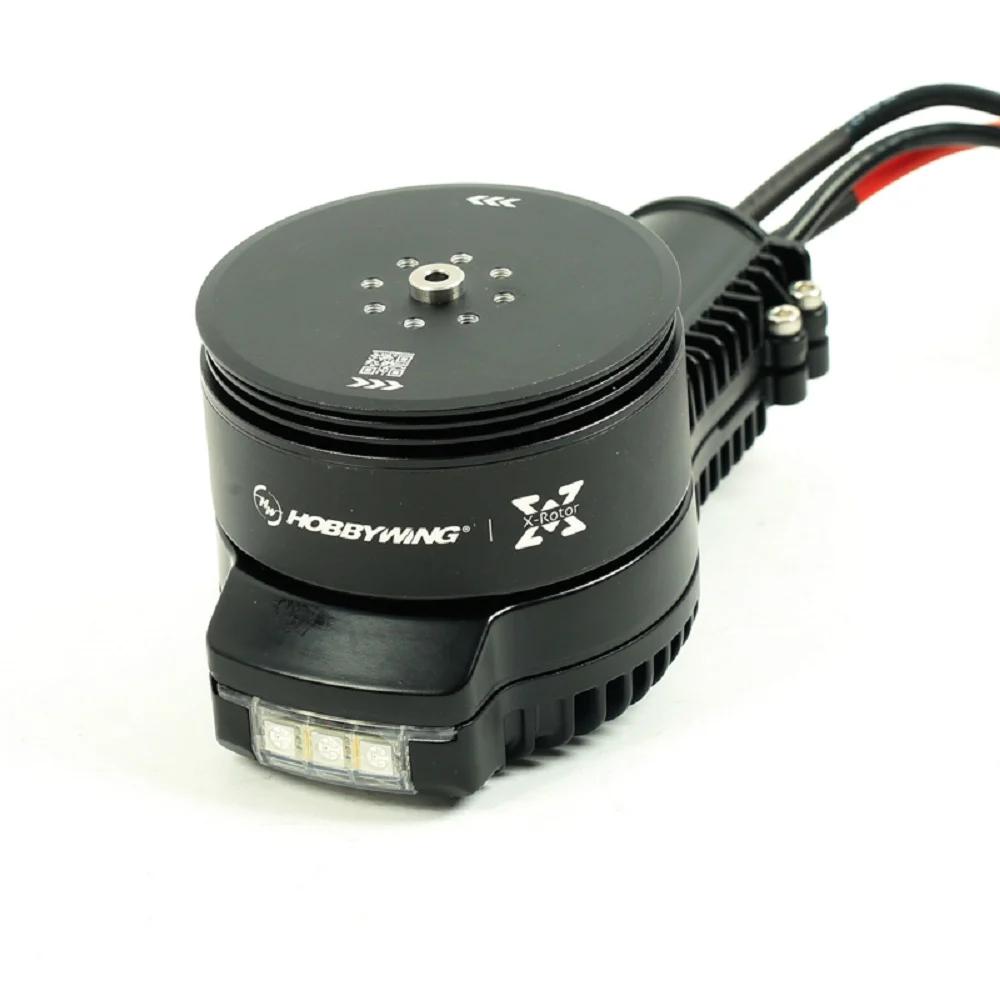
Hobbywing X6 Plus Motor CCW
Professional-grade motor from Hobbywing designed for agricultural and heavy-lift applications. Ultra-low KV, high torque, and built for the demanding conditions of Indian farm environments.
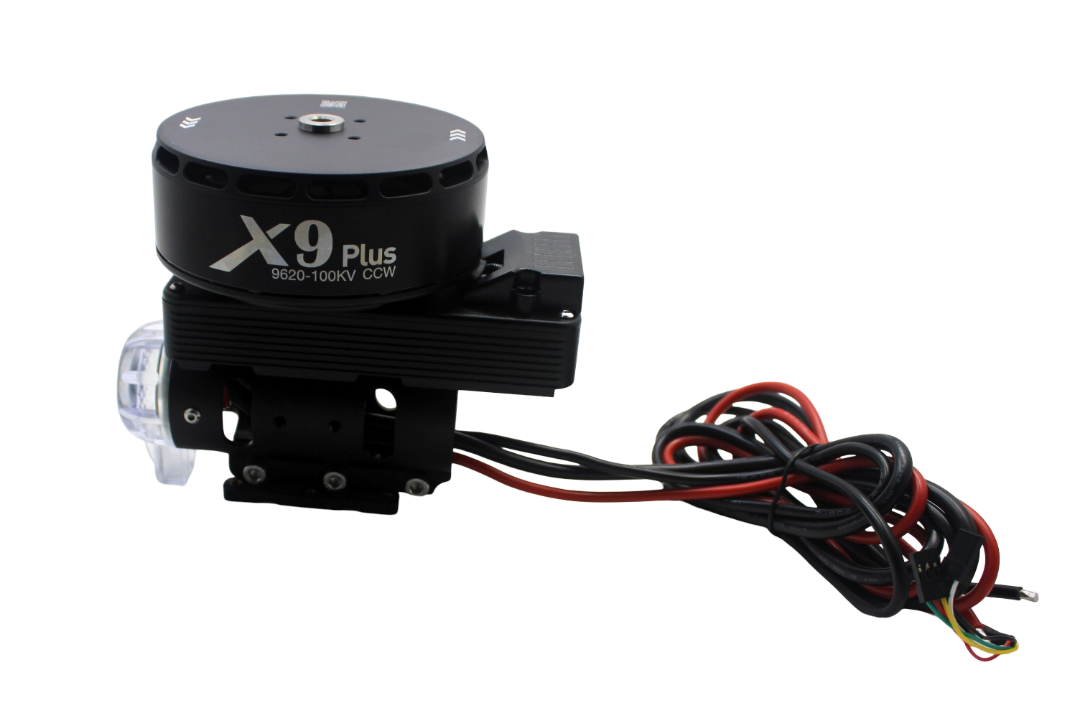
Hobbywing X9 Plus Motor CCW
Heavy-lift performance motor from Hobbywing for larger agricultural drones and hexacopters. High efficiency and exceptional durability for continuous professional operations.
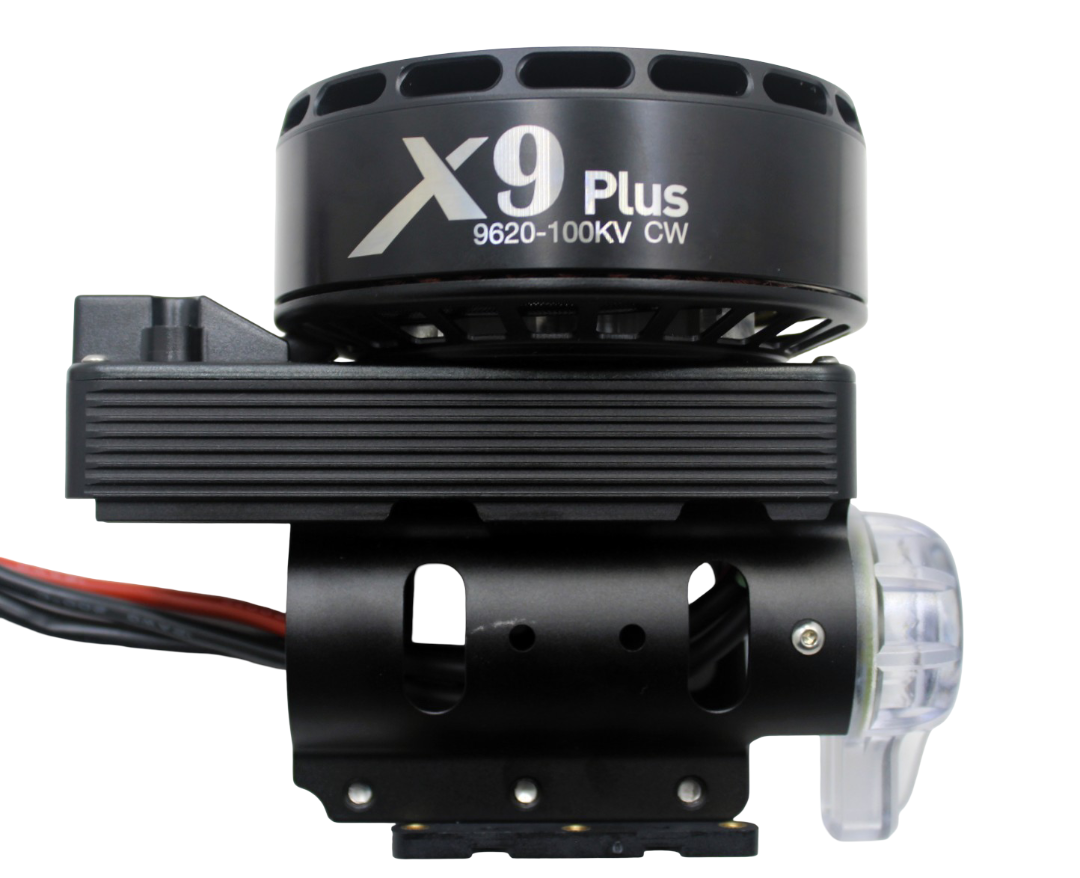
Hobbywing X9 Plus Motor CW
CW variant of the Hobbywing X9 Plus for quadcopter and hexacopter builds. Pair with the CCW variant for a complete motor set on your agricultural or heavy-lift platform.
KV for FPV Racing and Freestyle
For FPV racing and freestyle flying — the most common hobby use case in India — motor selection has been refined over years of community experimentation. Here are the most proven setups:
- 5-inch 4S freestyle: 2207–2208 size, 2300–2500 KV. The classic setup. Excellent thrust-to-weight, durable, easy to tune.
- 5-inch 6S freestyle: 2207–2208 size, 1700–1900 KV. Higher efficiency, better throttle resolution, more punch. Growing in popularity.
- 5-inch 4S racing: 2205–2207 size, 2300–2600 KV. Lighter motors prioritised for agility in tight gates.
- 7-inch long-range: 2806 or 3115 size, 1700–2200 KV on 4S. Larger motors for 7-inch props, optimised for efficiency over raw speed.
T-Motor has long been the benchmark brand for FPV motors, with their F-series, Velox, and Pacer series being popular choices globally and available in India.
Premium Motor Options at Zbotic
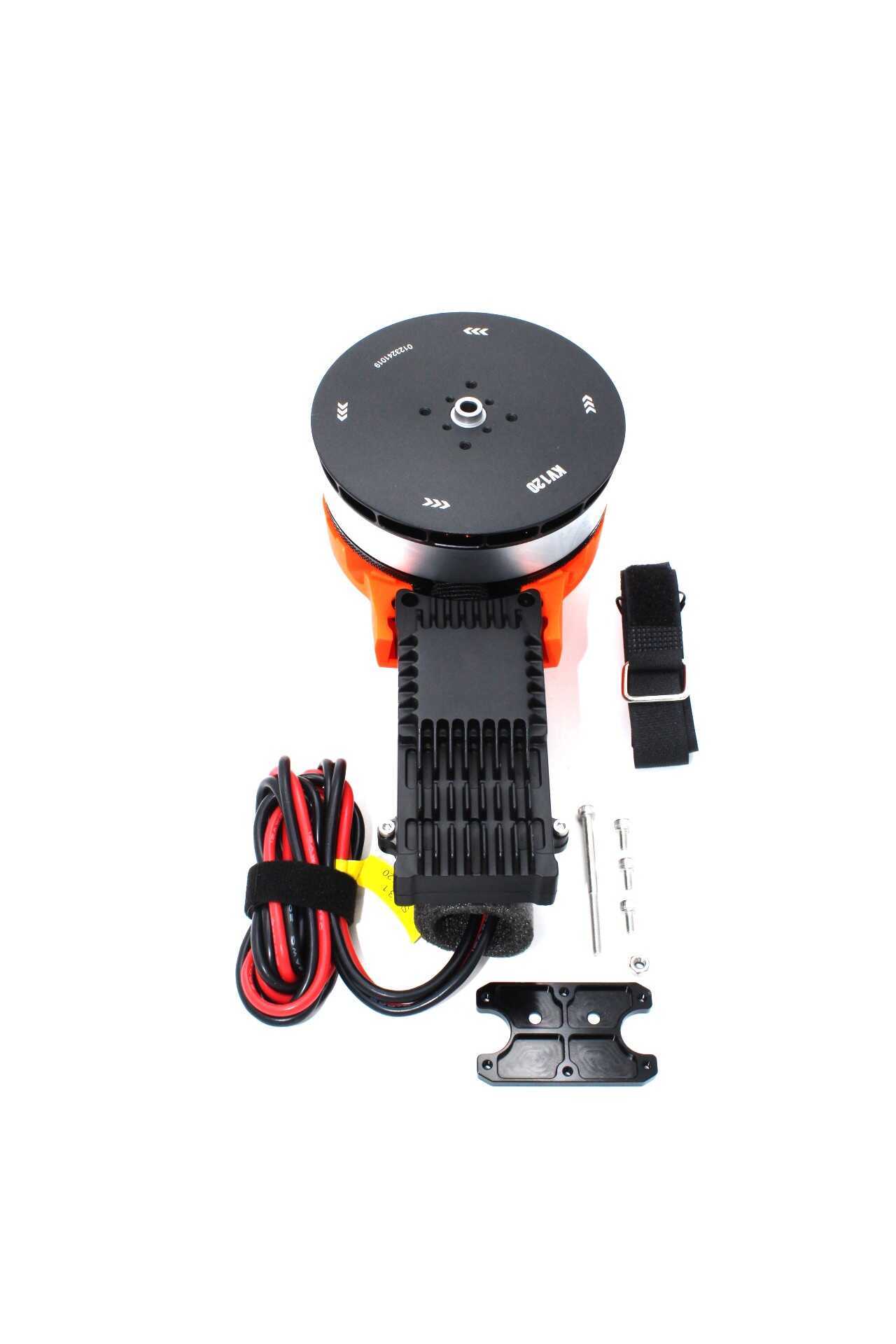
T-Motor A10-KV120-CCW Modular Propulsion System
120 KV ultra-low KV motor from T-Motor — designed for large agricultural and heavy-lift drones. Part of T-Motor’s modular propulsion ecosystem for professional drone builds.
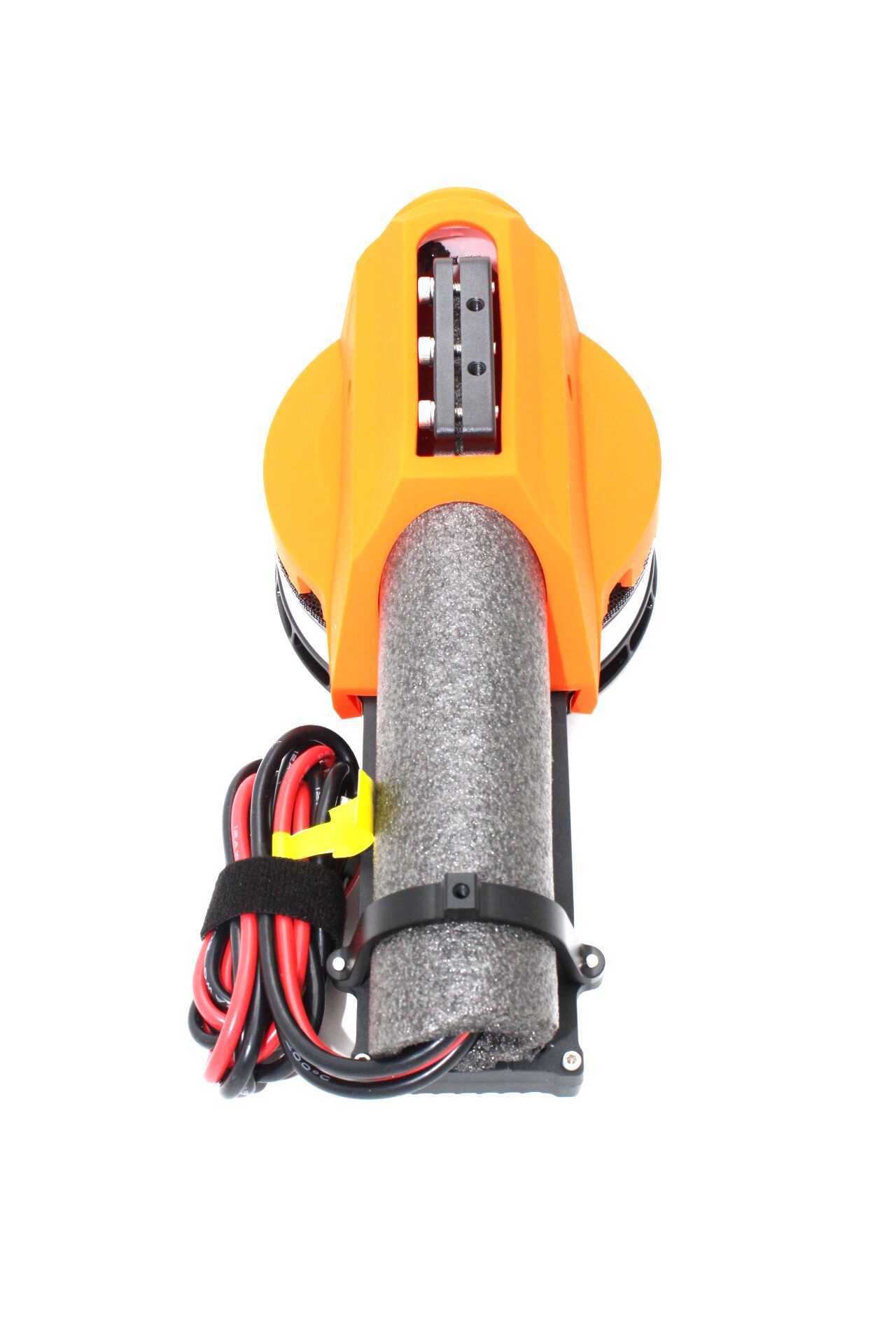
T-Motor A10-KV120-CW Modular Propulsion System
CW variant of the T-Motor A10 system. Pair with the CCW version for a complete quadcopter propulsion setup on large commercial or agricultural platforms.
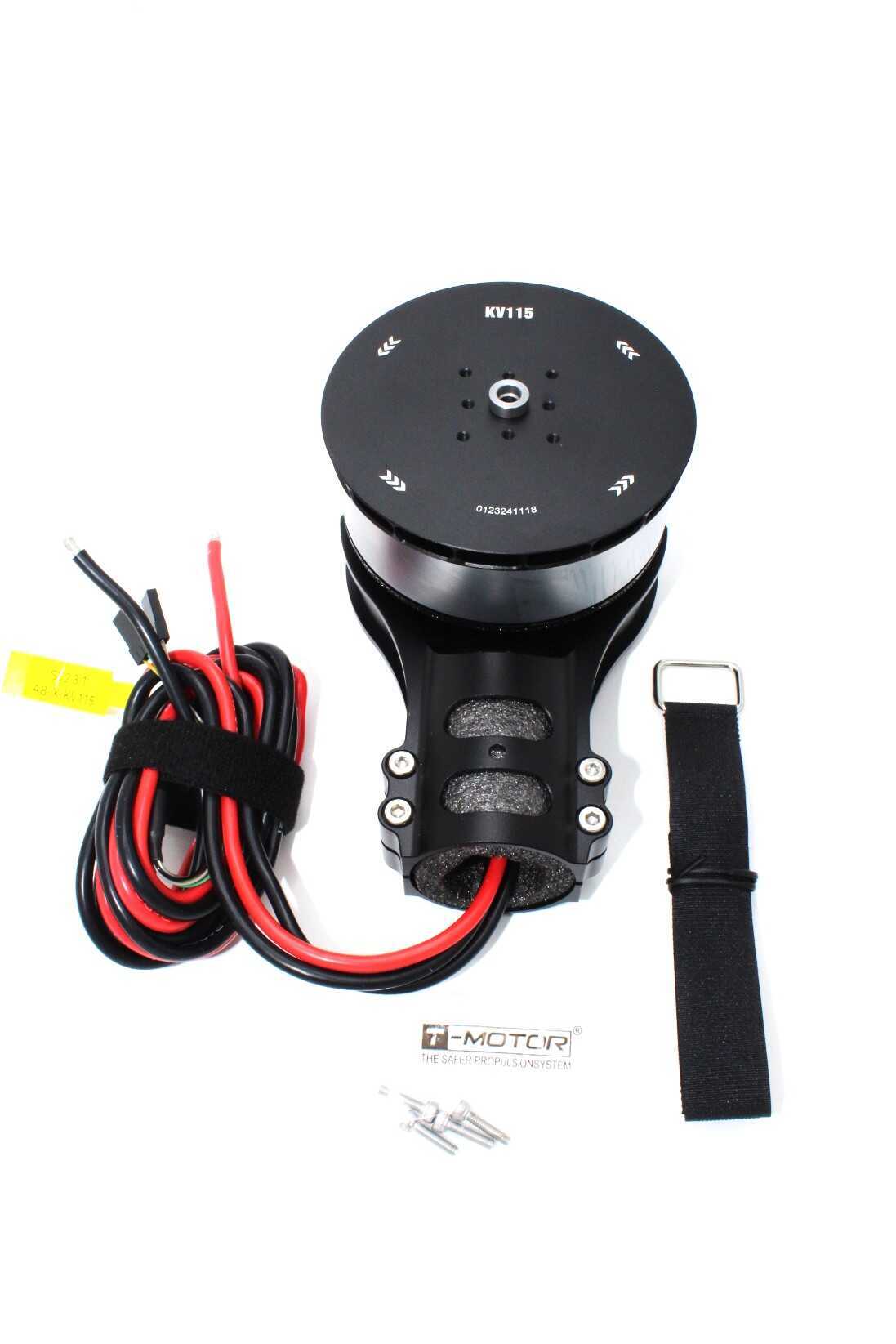
T-Motor A8-X-KV115-CCW Modular Propulsion System
115 KV modular motor from T-Motor’s A8-X series. High torque, built for reliability in professional agricultural and inspection drone applications across India.
Common Motor Selection Mistakes in India
After helping hundreds of builders through the component selection process, here are the most frequent motor mistakes we see:
- Ignoring voltage compatibility: Buying a 2300 KV motor and trying to run it on 6S because someone else had a “2300 KV 6S build.” Always verify the specific motor’s voltage rating, not just the KV number.
- Buying mismatched CW/CCW pairs: Standard multirotors require 2 CW (clockwise) and 2 CCW (counter-clockwise) motors. Buying 4 of the same rotation direction is a common beginner mistake. Always order 2 of each.
- Selecting by KV alone without checking ESC compatibility: A motor that draws 35A at peak needs at least a 35A ESC — preferably a 40A–45A rated ESC for safety margin.
- Buying fake or clone motors: The Indian market has many counterfeit copies of popular motor brands. Buy from verified retailers. Fake motors use inferior magnets and windings that fail quickly and can cause crashes.
- Ignoring motor weight on ultralight builds: For sub-250g Nano builds, every gram matters. Heavy motors can push you over the weight threshold and require DGCA registration.
- Not considering heat in Indian summers: Indian summers can reach 45°C+ in Rajasthan, Gujarat, and UP. Motors operating at their thermal limit in 20°C weather will overheat in summer. Add 20–30% thermal margin when selecting motors for year-round outdoor use.
Frequently Asked Questions
Q: Does higher KV always mean faster drone?
A: Not necessarily. Higher KV means higher RPM per volt, but top speed depends on the whole system — motor, propeller, battery voltage, and airframe drag. A properly matched lower-KV motor on 6S will typically be faster than a high-KV motor on 4S with the same propeller size.
Q: Can I change the KV of a motor?
A: No. KV is determined by the motor’s winding design — the number of turns and wire gauge on the stator. It cannot be changed without rewinding the motor, which is impractical. If you need a different KV, you need a different motor.
Q: What KV motor should a complete beginner in India start with?
A: For a beginner’s first 5-inch FPV build on 4S, we recommend a 2207 stator size motor in the 2300–2450 KV range. This is the most common FPV build configuration, has the most online resources, and is forgiving of beginner tuning and flying mistakes.
Q: Why do some motors list KV as a range (e.g., 1500–2000 KV)?
A: Some motor manufacturers offer the same physical motor in multiple KV variants by changing the winding. The physical dimensions and mounting are identical, but the internal windings differ. This is common in modular propulsion systems designed for different payload weights.
Q: Is a 120 KV motor suitable for a 5-inch FPV quad?
A: Absolutely not. A 120 KV motor on a 4S battery would barely spin a 5-inch prop — it would produce negligible thrust and the quad wouldn’t fly. 120 KV motors are designed for 25–40 inch propellers on 12S+ systems for heavy-lift platforms.
Q: How do I know if my motor and ESC are compatible?
A: Check the motor’s maximum continuous current draw (from the manufacturer’s thrust data at 100% throttle with your intended propeller) and ensure your ESC is rated at least 20% above that current. Also verify battery voltage compatibility — most modern ESCs support 2S–6S, but check the datasheet for your specific ESC.
Find the Right Motor for Your Build
Zbotic stocks motors from T-Motor, Hobbywing, and other trusted brands — from ultra-low KV agricultural motors to high-KV FPV racing motors. Browse our drone motor collection and find the perfect match for your build — with fast shipping anywhere in India.







Add comment