
Picking the right battery cell can feel overwhelming when you are staring at a catalogue full of 18650 vs LiPo vs Li-Ion options. Each chemistry and form factor has its own strengths, and choosing wrong means a project that either runs for minutes instead of hours, bursts into flame on your workbench, or simply fails to deliver enough current for your motors. This comparison guide is written specifically for Indian makers, drone builders, robotics enthusiasts, and IoT experimenters who want a clear, practical answer — not marketing fluff.
Understanding the Chemistry: Li-Ion as the Parent
Here is the first thing to clarify: LiPo and 18650 are both Li-Ion (Lithium Ion) batteries — they just use different form factors, electrolytes, and cell construction methods. The term “Li-Ion” in common usage usually refers to cylindrical cells (like 18650), while “LiPo” (Lithium Polymer) refers to soft-pouch cells with a gel polymer electrolyte. All three share the same fundamental electrochemistry and nominal voltage (3.6–3.7 V per cell).
The real differences come down to:
- Form factor: Rigid cylinder vs. flexible pouch
- Electrolyte: Liquid (Li-Ion) vs. gel polymer (LiPo)
- Max discharge rate: LiPo wins by a wide margin
- Energy density: Modern Li-Ion 21700 cells now rival LiPo
- Safety: Cylindrical Li-Ion is more robust to physical damage
- Cost per Wh: 18650 Li-Ion is significantly cheaper
18650 Cells: The Workhorse of Consumer Electronics
The 18650 is named after its dimensions: 18 mm diameter × 65 mm length. It is the same type of cell that powers Tesla EVs, laptop batteries, power tools, and power banks. This ubiquity means quality cells are widely available and well-priced.
Key Specifications
- Nominal voltage: 3.6–3.7 V
- Typical capacity: 1800–3600 mAh per cell
- Max continuous discharge: 5–35 A depending on cell grade
- Cycle life: 300–1000+ cycles
- Energy density: 200–270 Wh/kg (modern cells)
Best 18650 Brands
Genuine cells from Samsung (25R, 30Q), LG (HG2, MJ1), Sony/Murata (VTC6), and Panasonic (NCR18650B) are the gold standard. In India, beware of fakes — buy only from reputable suppliers. A genuine Samsung 25R costs ₹400–₹600 per cell; anything at ₹150 is almost certainly a rewrapped lower-grade cell.
18650 Advantages for Makers
- Rigid metal casing — physically robust, hard to puncture
- Standard form factor — fits 18650 holders and off-the-shelf cases easily
- BMS boards (Battery Management System) widely available for DIY packs
- Excellent long-term storage characteristics
- No puffing or swelling under normal use
18650 Limitations
- Cylindrical shape wastes space in flat packs
- C-rating typically 5–10C continuous (high-drain cells up to 20C)
- Heavier than an equivalent LiPo pack for the same energy
- Not suitable for applications requiring very high burst currents (>30A per cell)
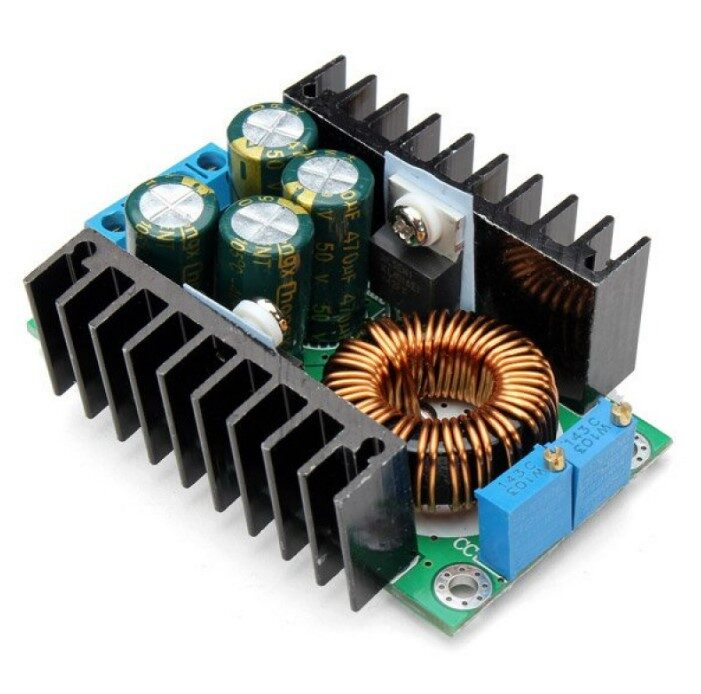
300W 10A DC-DC Buck Converter — Step Down Module
Step down 18650 pack voltage (7.4V, 11.1V) to 5V or 3.3V for your microcontroller circuits. Adjustable output, handles up to 10A continuous.
LiPo Packs: Power for Performance Applications
LiPo (Lithium Polymer) batteries dominate any application that needs extreme current delivery in a lightweight, thin package. FPV drones, RC planes, racing cars, and modern smartphones all use LiPo pouches for good reason.
Key Specifications
- Nominal voltage: 3.7 V per cell
- Typical capacity: 200–22,000 mAh (hobbyist range)
- Max continuous discharge: 20C–150C (application-specific)
- Cycle life: 150–500 cycles
- Energy density: 150–260 Wh/kg
LiPo Advantages
- Very high C-ratings — the killer advantage for drones, RC, and high-current robotics
- Flexible shape — can be made ultra-thin and in any form factor for custom enclosures
- Lightweight — the pouch packaging is lighter than a metal cylinder
- High discharge efficiency at high current (low Peukert effect)
LiPo Disadvantages
- Fire risk — punctured or overcharged LiPos can experience thermal runaway. The gel electrolyte is flammable.
- Puffing — aging LiPos swell with gas, which is both a sign of degradation and a safety hazard
- Shorter cycle life — typically 200–400 cycles vs. 500–1000 for 18650
- Storage voltage requirement — must be stored at 3.8 V/cell or they degrade rapidly
- Requires a LiPo-specific charger with cell balancing
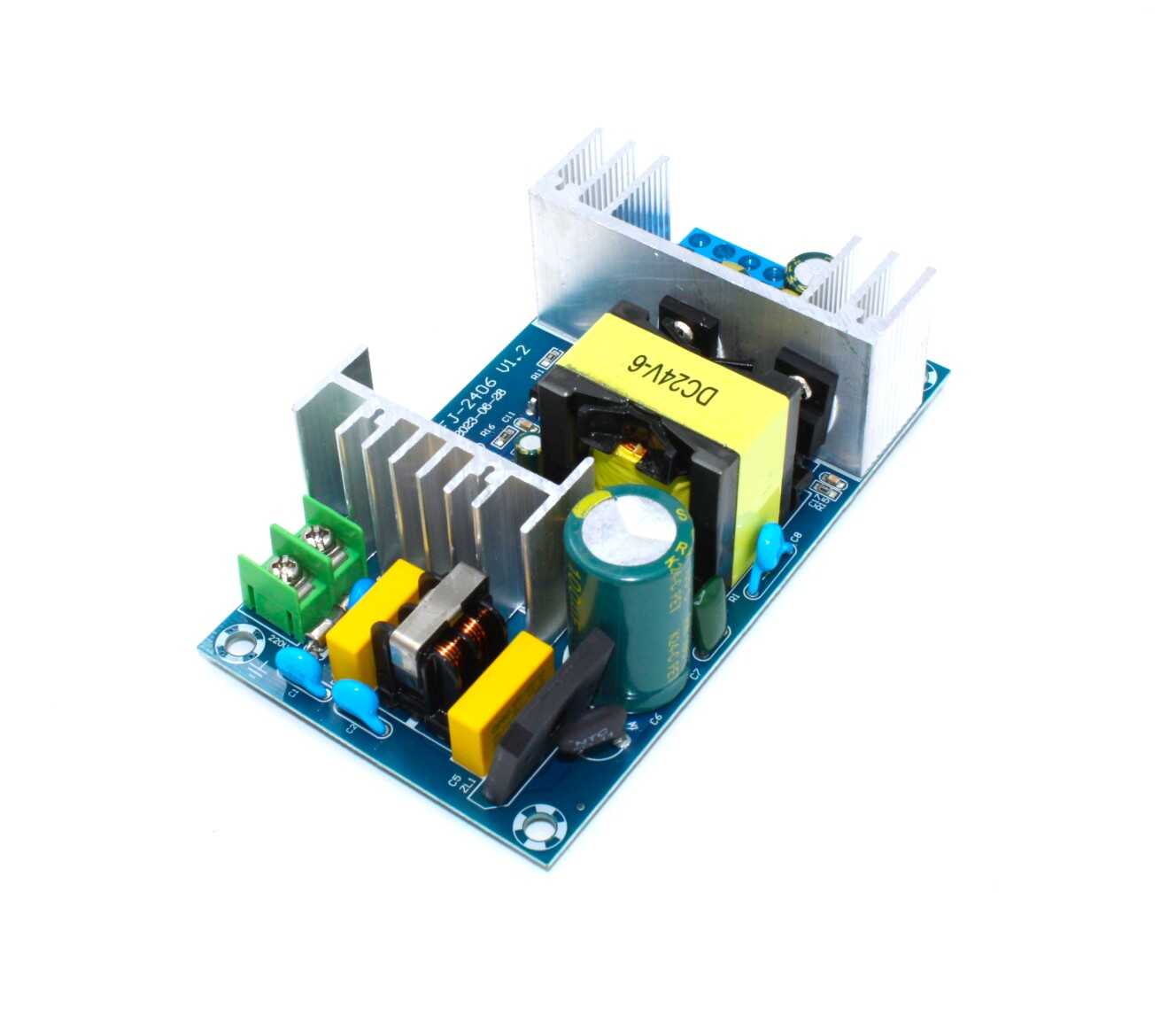
150W AC-DC Buck Converter — 100-240V to 24V
Need mains power for your LiPo charger or bench setup? This isolated AC-DC module converts 230V Indian mains to stable 24V DC at up to 9A.
Li-Ion Pouch and Soft-Pack Cells
There is a third category that often causes confusion: Li-Ion pouch cells — sometimes called soft-pack Li-Ion. These look exactly like LiPo cells (flat, flexible, pouch packaging) but use liquid electrolyte instead of gel polymer. You find these in tablet batteries, phone batteries, and some power bank replacement cells.
For makers, the distinction matters little in practice. Both LiPo and Li-Ion pouch cells require the same charger type (4.2 V/cell max), have similar voltage curves, and share similar handling precautions. The gel polymer electrolyte in true LiPo provides slightly better high-current performance and flexibility, while liquid electrolyte Li-Ion pouch cells tend to have better cycle life and lower self-discharge.
Side-by-Side Comparison Table
| Feature | 18650 Li-Ion | LiPo Pouch | Li-Ion Pouch |
|---|---|---|---|
| Nominal Voltage | 3.6–3.7V | 3.7V | 3.6–3.7V |
| Max C-Rate | 5–20C | 30–150C | 5–15C |
| Cycle Life | 300–1000 | 150–500 | 400–800 |
| Safety | High (metal case) | Medium (puff risk) | Medium |
| Cost (India) | Low (₹400–600/cell) | Medium–High | Medium |
| Best For | Power banks, IoT, robots | Drones, RC cars | Tablets, phones |
Which Should You Choose? Use-Case Guide
Choose 18650 Li-Ion if:
- You are building a power bank or portable charger
- Your project draws less than 5–10A continuous
- You want long cycle life (IoT sensors, outdoor projects)
- Physical robustness matters (the cell will be exposed to vibration or impact)
- Budget is tight — 18650 gives the best Wh per rupee
Choose LiPo if:
- You are building an FPV drone, RC plane, or racing robot
- You need peak currents exceeding 15–20A
- Weight is critical — every gram matters for your flight time
- The battery must fit a custom flat enclosure
Choose Li-Ion Pouch (soft-pack) if:
- You are repairing or replacing a phone/tablet battery
- You need a very thin form factor with moderate current demands
- Long cycle life is more important than peak discharge rate
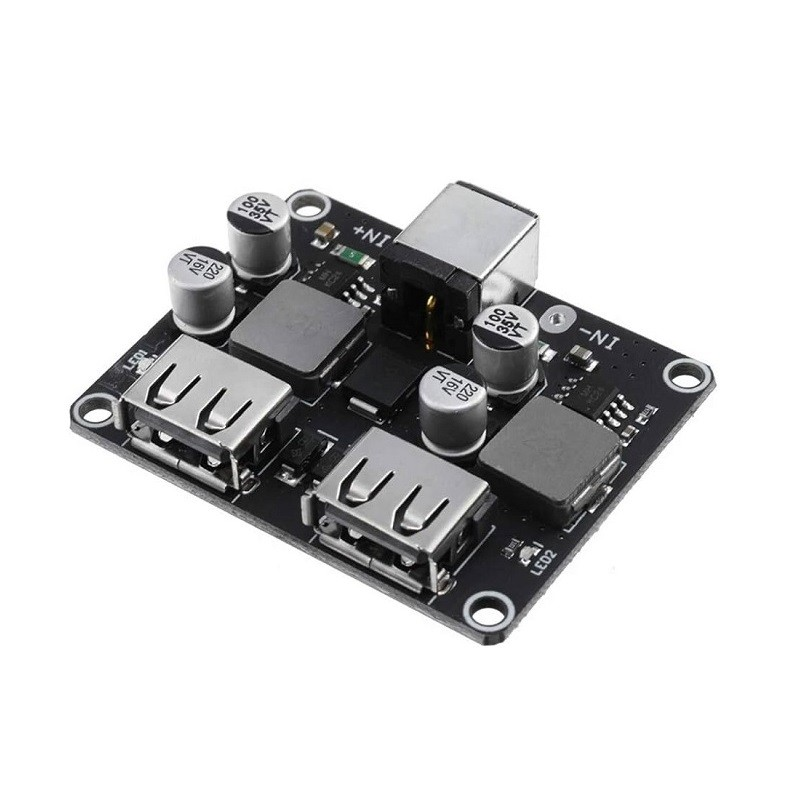
2-Channel USB QC3.0/QC2.0 DC-DC Charging Buck Converter
Build a USB fast-charging power bank with your 18650 cells — this module supports QC3.0 quick charging from 6–32V input.
Buying Batteries in India: What to Watch Out For
The Indian market for lithium batteries is unfortunately flooded with counterfeits and relabelled cells. Here are practical tips to protect yourself:
- Weight test: A genuine Samsung 25R 18650 weighs 45 g. Anything more than 5 g lighter is suspicious.
- Capacity test: Use a battery capacity tester or a charger with discharge testing. A cell claiming 3000 mAh that only delivers 1200 mAh is fake.
- Avoid eBay/cheap marketplaces for batteries — buy from established electronics stores or authorised distributors.
- Check for QR codes and holograms on branded LiPo packs (Tattu, Gens Ace, etc.) — most have authentication labels.
- For LiPo, buy known brands — Tattu, Gens Ace, CNHL, and Turnigy are reliable. Generic white-label packs from unknown Chinese sellers frequently underperform or fail dangerously.
- GST compliance: Lithium batteries attract 18% GST in India. A seller offering no bill or very low prices is a red flag.
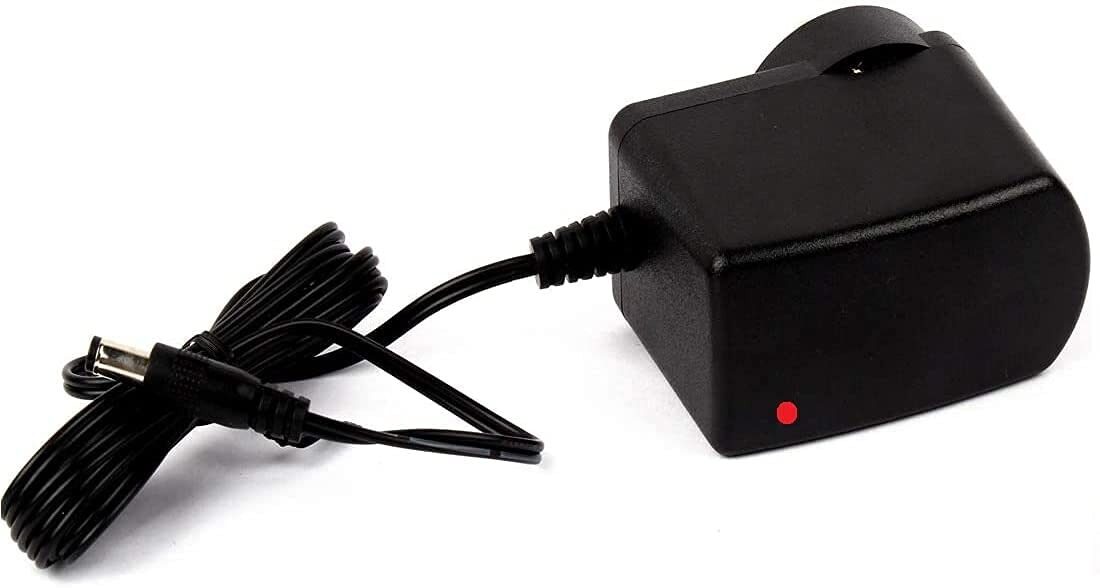
12V 2A Power Supply with 5.5mm DC Plug Adapter
A clean, regulated 12V 2A supply for powering your bench charger or directly running circuits that need a stable 12V rail.
Frequently Asked Questions
Q1: Can I use a LiPo charger to charge 18650 cells?
Yes, if the charger supports the correct cell chemistry and voltage. Both use the same 4.2 V/cell CC/CV charging protocol. However, a charger marketed as “LiPo only” may lack the individual cell holders for cylindrical 18650s — you may need adapters. Always verify the charger explicitly supports Li-Ion 18650 format.
Q2: Is it safe to mix different 18650 cells in a battery pack?
No. Never mix cells of different brands, capacities, or ages in a parallel or series pack. Mismatched cells cause unequal charging and discharging, which accelerates degradation and can cause overcharge of weaker cells. Always use identical cells from the same batch.
Q3: What is the difference between high-drain and high-capacity 18650 cells?
High-drain cells (e.g., Samsung 25R, Sony VTC5) sacrifice some capacity (2500 mAh) for lower internal resistance and higher safe continuous discharge (20–25A). High-capacity cells (e.g., Panasonic NCR18650B, Samsung 35E) prioritise energy density (3500 mAh) but have lower max discharge (5–10A). Choose based on whether your project needs runtime or burst power.
Q4: How many 18650 cells does a drone need?
Most drones require far more current than 18650 cells can provide reliably — a 5-inch quad needs 80–120A peak. Even at 20A per 18650 cell, you would need 6 cells in parallel just for current capacity. This is why LiPo packs (with 80C+ ratings) dominate drones — a single 1300 mAh 4S 80C pack delivers 104A peak from a single small package.
Q5: Which battery is best for an Arduino IoT sensor?
For an ESP32/Arduino sensor drawing 50–200 mA average, a single 18650 cell (3000–3500 mAh) is ideal — cheap, safe, long cycle life, and easy to source and replace anywhere in India. Add a TP4056 charging module and a 3.3V LDO or boost converter to complete the power system for under ₹150 total.
Shop Zbotic for DC-DC converters, power supplies, and all the electronics you need to build reliable battery-powered projects — shipped fast across India.






Add comment