
If you are building a power bank, an e-bike battery pack, or any DIY energy storage project, choosing the right 18650 battery comparison India guide is your first step. The 18650 lithium-ion cell is the workhorse of modern electronics — trusted by Tesla, power tool manufacturers, and hobbyists alike. In India, three brands dominate the premium 18650 market: Panasonic, Samsung, and LG. Each has its own strengths, chemistry quirks, and ideal use cases.
This guide breaks down everything you need to know — from raw capacity and discharge ratings to safety certifications and where to buy genuine cells in India — so you can make the best choice for your next project.
Table of Contents
- What Is an 18650 Battery Cell?
- Panasonic 18650 Cells: Specifications & Use Cases
- Samsung 18650 Cells: Specifications & Use Cases
- LG 18650 Cells: Specifications & Use Cases
- Head-to-Head Comparison Table
- How to Choose the Right Cell for Your Project
- Spotting Fake 18650 Cells in India
- Essential Accessories for 18650 Builds
- FAQ
What Is an 18650 Battery Cell?
The “18650” name comes from the cell’s dimensions: 18 mm in diameter and 65 mm in length. These cylindrical lithium-ion cells operate at a nominal voltage of 3.6–3.7 V, with a full charge voltage of 4.2 V and a minimum discharge cutoff of 2.5–3.0 V. A single cell typically stores between 1,500 mAh and 3,600 mAh depending on the chemistry and manufacturer.
18650 cells are used in:
- DIY power banks and UPS systems
- Electric bicycle battery packs (36 V, 48 V)
- Solar energy storage (paired with BMS)
- Drones and RC models (where weight is less critical than runtime)
- Portable LED lighting, camping lanterns
- Laptop replacement battery packs
Unlike LiPo pouches, 18650 cells are rigid, robust, and can be parallel/series-connected into large packs using nickel strips and a Battery Management System (BMS).
Panasonic 18650 Cells: Specifications & Use Cases
Panasonic (through its subsidiary Sanyo, now integrated) manufactures some of the most capacity-dense 18650 cells in the world. The most famous is the NCR18650B, which was used in early Tesla Model S battery packs.
Panasonic NCR18650B
- Capacity: 3,400 mAh (one of the highest in standard 18650 format)
- Nominal voltage: 3.6 V
- Maximum continuous discharge: 6.8 A (2C)
- Internal resistance: ~45 mΩ
- Weight: ~48.5 g
- Chemistry: NCA (Nickel Cobalt Aluminium)
- Cycle life: ~300–500 cycles to 80% capacity
Best for: High-capacity power banks, portable solar storage, LED lighting rigs, applications where maximum runtime per cell matters and discharge current is moderate (under 1C continuous).
Limitation: Low discharge rate. The NCR18650B is not suitable for high-drain applications like power tools or high-current motor drives. It will overheat and degrade rapidly if drawn beyond 2C continuously.
Panasonic NCR18650GA
- Capacity: 3,500 mAh
- Maximum continuous discharge: 10 A (around 2.8C)
- Best for: A better balance of capacity and discharge than the B variant. Good for e-bike packs where occasional bursts of 5–8 A are needed.
Panasonic cells are generally more expensive in India due to import costs, but their quality control is legendary — cell-to-cell capacity variance is extremely tight, making them ideal for large packs where imbalance causes problems.
Samsung 18650 Cells: Specifications & Use Cases
Samsung SDI produces a wide range of 18650 cells targeting different use cases, from ultra-high capacity to extreme high-drain.
Samsung INR18650-25R (25R)
- Capacity: 2,500 mAh
- Nominal voltage: 3.6 V
- Maximum continuous discharge: 20 A (8C)
- Pulse discharge: 100 A (briefly)
- Internal resistance: ~18 mΩ
- Chemistry: INR (Nickel Manganese Cobalt)
- Cycle life: 500+ cycles at 20 A discharge
Best for: Vaping mods, electric power tools, high-current drone motor drivers, and anywhere you need 20+ amps from a single cell. This is the go-to high-drain 18650.
Samsung INR18650-30Q (30Q)
- Capacity: 3,000 mAh
- Maximum continuous discharge: 15 A
- Internal resistance: ~23 mΩ
- Best for: The “balanced” Samsung cell. A popular choice for e-bike packs (13S4P and similar configs), flashlight builds, and any project needing both decent capacity and moderate high drain.
Samsung INR18650-35E (35E)
- Capacity: 3,500 mAh
- Maximum continuous discharge: 8 A
- Best for: High-capacity applications where the 30Q’s capacity isn’t enough but discharge is moderate.
Samsung cells are well-documented, widely counterfeited (more on that below), and generally available at slightly lower prices than Panasonic equivalents in Indian markets. The 25R and 30Q are the two most commonly used in the Indian hobbyist community.
LG 18650 Cells: Specifications & Use Cases
LG Chem (now LG Energy Solution) has a diverse 18650 lineup identified by two-letter codes after “INR18650-“.
LG INR18650 MJ1
- Capacity: 3,500 mAh
- Nominal voltage: 3.635 V
- Maximum continuous discharge: 10 A
- Internal resistance: ~40 mΩ
- Chemistry: NMC
- Cycle life: ~500 cycles at 10 A
Best for: High-capacity power bank builds, portable power stations, solar storage. Competes directly with the Panasonic GA at a slightly lower price point. Very popular in the Indian hobbyist community for 18650 power walls.
LG INR18650 HG2
- Capacity: 3,000 mAh
- Maximum continuous discharge: 20 A
- Internal resistance: ~21 mΩ
- Best for: High-drain with solid capacity. Competes with the Samsung 30Q and is often slightly cheaper. Popular for e-bike motor controllers requiring 15–20 A bursts.
LG INR18650 HB6
- Capacity: 1,500 mAh
- Maximum continuous discharge: 30 A
- Best for: Ultra-high drain applications. Low capacity makes it less popular for energy storage, but useful in parallel packs for maximum current output.
Head-to-Head Comparison Table
| Cell | Capacity | Max Discharge | Int. Resistance | Best Use |
|---|---|---|---|---|
| Panasonic NCR18650B | 3,400 mAh | 6.8 A | ~45 mΩ | Power banks, solar |
| Panasonic NCR18650GA | 3,500 mAh | 10 A | ~40 mΩ | E-bike low drain |
| Samsung 25R | 2,500 mAh | 20 A | ~18 mΩ | Power tools, high drain |
| Samsung 30Q | 3,000 mAh | 15 A | ~23 mΩ | E-bikes, balanced builds |
| LG MJ1 | 3,500 mAh | 10 A | ~40 mΩ | Power wall, capacity builds |
| LG HG2 | 3,000 mAh | 20 A | ~21 mΩ | High drain + capacity |
How to Choose the Right Cell for Your Project
Step 1: Determine Your Peak Current Draw
Calculate the maximum current your load draws. A 500 W e-bike motor at 36 V draws ~14 A peak. If your pack is 4P (four cells in parallel), each cell sees ~3.5 A — well within 1C for most cells. If your pack is 2P, each cell sees 7 A, which eliminates low-drain cells like the NCR18650B.
Step 2: Calculate Required Capacity
For a 36 V, 10 Ah pack: 36 V ÷ 3.6 V = 10S configuration. 10 Ah ÷ 3.0 Ah (per cell) = ~4P. So you need a 10S4P pack = 40 cells. LG HG2 or Samsung 30Q at 3,000 mAh each gives you exactly that.
Step 3: Match Chemistry to Application
- NCA (Panasonic): Highest energy density, but more sensitive to over-discharge. Requires precise BMS.
- NMC (LG, Samsung): Good balance of energy density and discharge. More thermally stable than NCA.
- NMC high-drain (Samsung 25R, LG HB6): Low internal resistance, ideal for high-current bursts. Sacrifice capacity for power.
Step 4: Budget Considerations in India
As of 2026, approximate prices for genuine cells in India (per cell, buying in quantities of 10+):
- Panasonic NCR18650B: ₹350–450 per cell
- Samsung 30Q: ₹280–380 per cell
- LG MJ1: ₹260–350 per cell
- Samsung 25R: ₹220–300 per cell
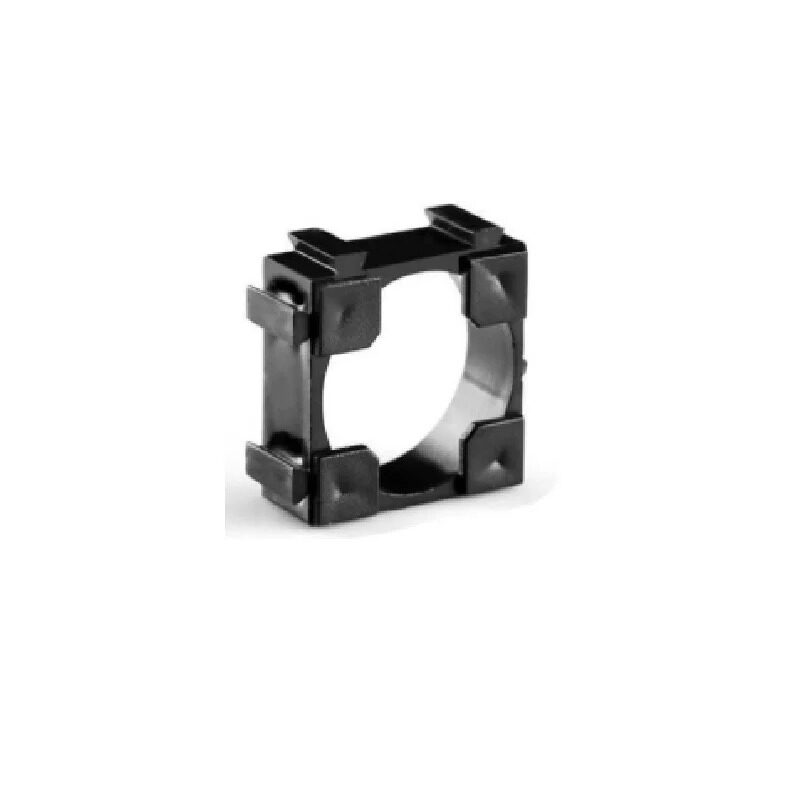
1 x 18650 Battery Holder with 18.4MM Bore Diameter – Pack of 4
Sturdy single-cell holders perfect for prototyping 18650 packs before spot-welding. 18.4 mm bore fits all standard 18650 cells including Panasonic, Samsung, and LG. Pack of 4.
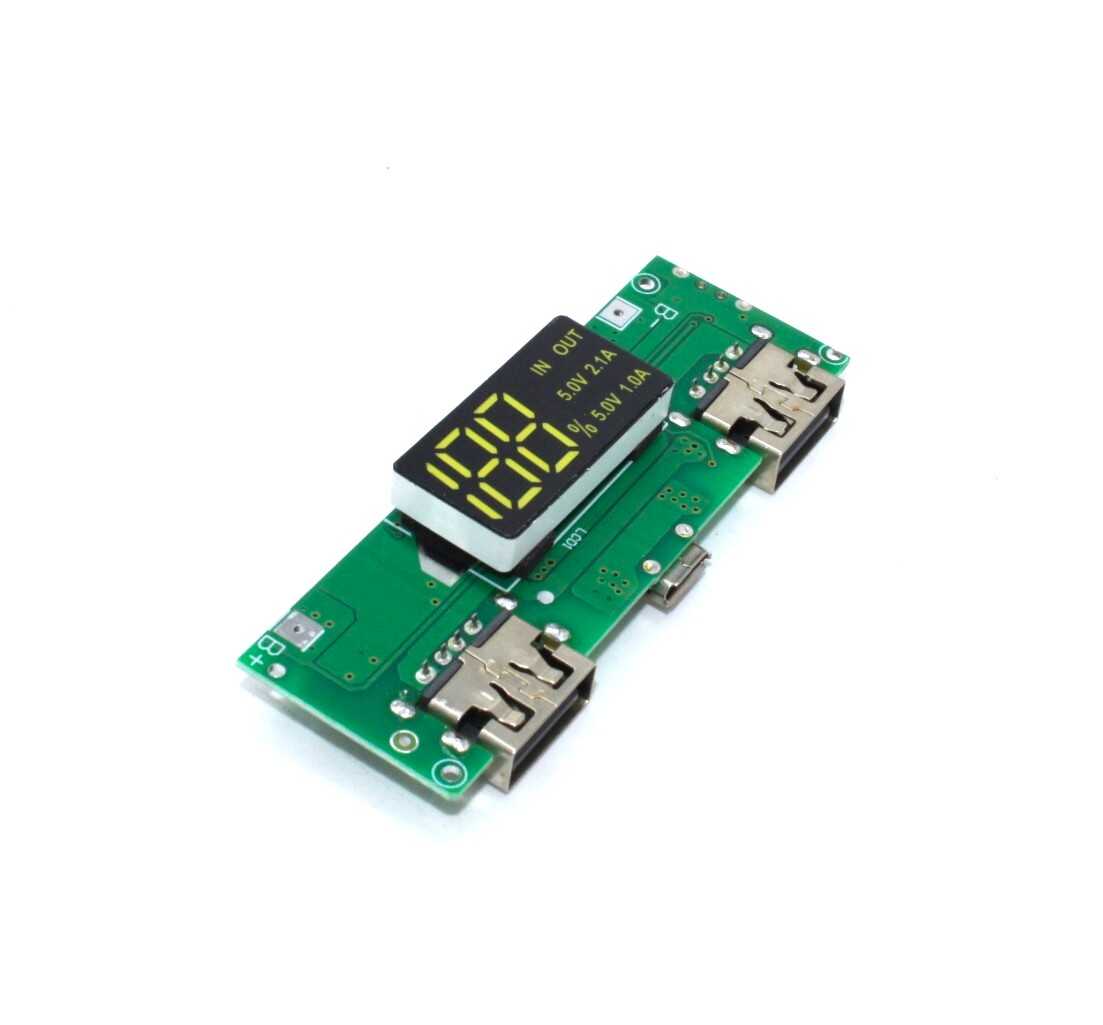
18650 5V 1A/2A Lithium Battery Digital Display Charging Module
All-in-one charging + boost module for single 18650 cells. Features dual USB output, digital charge level display, and built-in protection circuit. Great for DIY power bank projects.
Spotting Fake 18650 Cells in India
India’s market is flooded with counterfeit 18650 cells, especially on horizontal marketplaces. These fakes often claim 9,800 mAh or more — physically impossible for an 18650 cell. Here is how to protect yourself:
- Capacity test before trusting: Use a proper charger like the ISDT A4 with discharge test to measure actual capacity. A “3,400 mAh” fake typically delivers 800–1,200 mAh.
- Weight check: A genuine 3,000–3,500 mAh 18650 weighs 45–50 g. Fakes are often 28–35 g because they contain a smaller rechargeable cell inside a re-wrapped shell.
- Source matters: Buy from established electronics component stores with verifiable supply chains. Avoid random social media sellers or unverified listings offering cells at ₹50–80 each.
- Wrap printing: Genuine cells have sharp, high-quality printing. Fakes often have smudged text, incorrect font weights, or slight colour shifts.
- Voltage check: A fresh genuine cell reads 3.5–3.7 V. A fake or dead cell reads under 3.0 V straight out of “storage.”

ISDT A4 Air Smart Battery Charger with Bluetooth
Multi-chemistry smart charger that can test actual capacity via discharge cycles. Supports Li-Ion, LiFePO4, NiMH, NiCd. Bluetooth monitoring via the ISDT app. Essential for verifying genuine cell capacity.
Essential Accessories for 18650 Builds
Once you have selected your cells, you will need the right accessories to build a safe and functional pack:
- BMS (Battery Management System): Mandatory for any multi-cell pack. Provides over-charge, over-discharge, and short-circuit protection.
- Nickel strips: For spot-welding cells in series/parallel. Use 0.15–0.2 mm pure nickel for good conductivity.
- Cell holders: For prototyping without spot welding. Allow easy cell swapping during testing.
- Voltage tester: Always verify individual cell voltages before assembling a pack. Mismatched voltages cause the BMS to immediately trip.
- Quality charger: Never charge 18650 cells with cheap, unbranded chargers. Over-charging to 4.3–4.4 V causes rapid capacity degradation and can lead to thermal runaway.
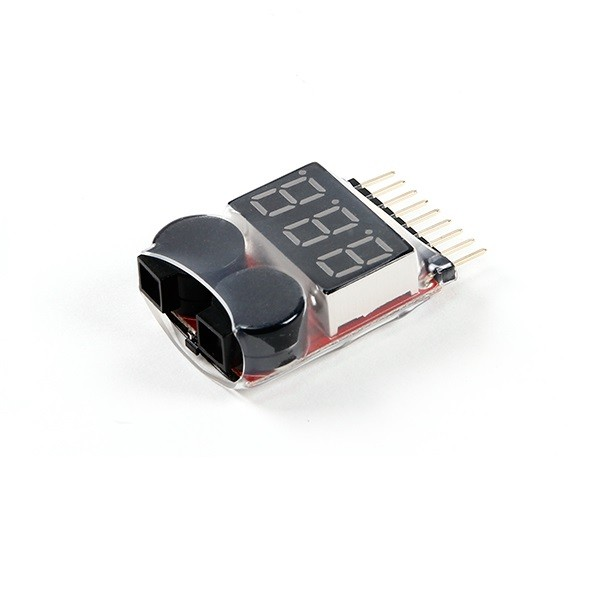
1–8S LiPo Battery Voltage Tester (Without Alarm)
Quick cell-level voltage checker for LiPo and Li-Ion packs up to 8S. Plug into the balance connector to instantly see per-cell voltage. Essential quality control tool for any battery builder.
Frequently Asked Questions
Which 18650 cell has the highest capacity available in India?
The Panasonic NCR18650GA and LG MJ1 both offer 3,500 mAh, making them the highest capacity standard 18650 cells available. Anything claiming higher capacity (e.g., 9,800 mAh) is a counterfeit.
Can I mix Panasonic and Samsung cells in the same pack?
It is strongly recommended to never mix different cell models in the same pack. Different internal resistances cause unequal current sharing, leading to cell imbalance, premature aging, and potential BMS trips. Always use identical cells from the same batch.
What is the best 18650 for an e-bike battery in India?
For most 36 V or 48 V e-bike builds in India, the Samsung 30Q or LG HG2 offer the best balance of capacity (3,000 mAh) and discharge rate (15–20 A). They are also more readily available at reasonable prices from reputable suppliers.
How many charge cycles do genuine 18650 cells last?
Quality cells from Panasonic, Samsung, and LG typically deliver 300–500 full charge cycles before capacity drops to 80% at rated discharge. Shallow cycling (20–80% state of charge) can extend this to 800–1,200 cycles significantly.
Is it safe to charge 18650 cells at 1A vs 2A?
Most 18650 cells are rated for 0.5C–1C charging (1,500–3,500 mA depending on the cell). Charging at 1 A is gentler and extends cycle life. Charging at 2 A is within spec for most cells and finishes faster. Always use a charger with CC/CV (constant current/constant voltage) regulation and automatic cutoff at 4.2 V.
Ready to Start Building?
Zbotic stocks a wide range of battery accessories, charging modules, BMS boards, and cell holders to support your 18650 battery projects. From single-cell power bank builds to multi-cell e-bike packs, we have everything you need.


Add comment