
The BO motor (Battery Operated motor, also written as B.O. motor) is one of the most widely used compact DC gear motors in Indian robotics and hobbyist electronics. Originally designed for battery-powered toys, the BO motor has found a permanent home in school and college robotics projects, line-following robots, obstacle-avoidance bots, and small automated vehicles. The 12V variant is particularly useful when you need higher speed and more torque than the standard 3V–6V versions can deliver.
This guide provides a detailed breakdown of 12V BO motor specifications, compares common gear ratios and their performance characteristics, explains how to read the spec sheet data, and helps you choose the right BO motor for your project.
What Is a BO Motor?
A BO motor is a small permanent-magnet DC motor with an integrated plastic gearbox. The gearbox reduces the high rotational speed of the DC motor to a more useful lower speed while multiplying the output torque. The classic BO motor runs on 3V to 6V and is found in virtually every beginner robotics kit sold in India.
The term “BO motor” is used almost exclusively in India and South Asia. In other countries, these are simply called “DC gear motors” or “toy motors.” They are characterised by their distinctive yellow or white plastic casing and the D-shaped output shaft that slots into matching wheels.
The 12V BO motor uses the same basic housing and shaft design but with a stronger internal DC motor rated for 12V operation. This makes it compatible with 12V lithium battery packs, 12V lead-acid batteries, and common 12V regulated power supplies — making it a practical choice for projects that need more power than a small 4xAA battery pack can deliver.
12V BO Motor Key Specifications
Specifications for 12V BO motors vary between manufacturers, but here are the typical values you will find from the most common Chinese and Indian-assembled variants sold in India:
| Parameter | Typical Value | Notes |
|---|---|---|
| Operating Voltage | 9V – 12V DC | Rated at 12V; 9V reduces current and heat |
| No-Load Speed | 100 – 500 RPM | Depends on gear ratio variant |
| No-Load Current | 80 – 150 mA | At rated voltage with no mechanical load |
| Stall Current | 400 – 800 mA | Current when shaft is fully locked |
| Stall Torque | 0.8 – 1.5 kg-cm | Maximum torque at zero RPM |
| Gear Type | Plastic spur gears | Nylon/POM gears in most variants |
| Shaft Diameter | 3mm D-type | Compatible with standard BO motor wheels |
| Shaft Length | ~10mm exposed | Varies slightly between manufacturers |
| Body Dimensions | ~70mm x 22mm x 18mm | Standard BO motor footprint |
| Weight | 25 – 35g per motor | Lightweight for robot chassis use |
| Efficiency | 55 – 70% | Plastic gears have higher losses than metal |
Important note for Indian buyers: BO motors sold in India rarely come with a printed datasheet. The specifications above are typical values collected from multiple suppliers and verified with bench measurements. Always measure no-load current with your own meter before building your motor driver circuit.
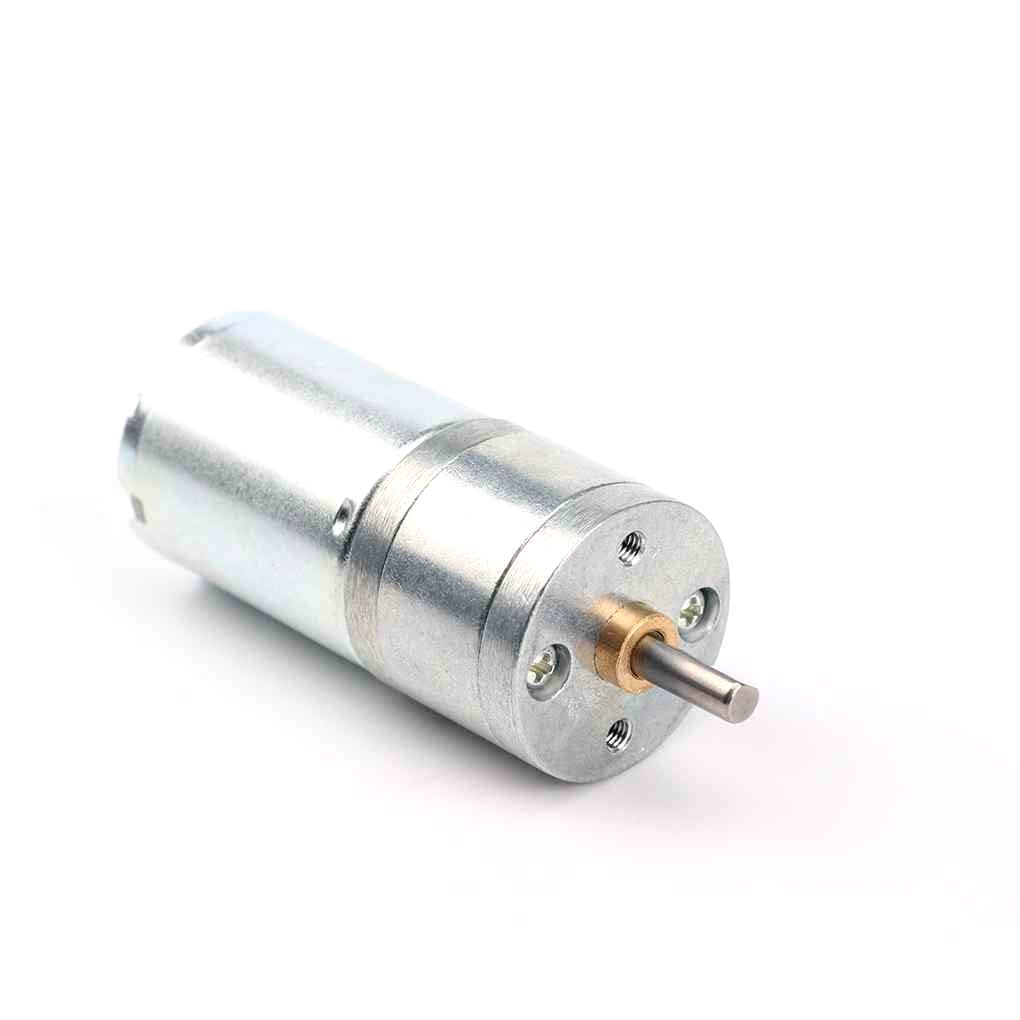
25GA-370 12V 12RPM DC Reducer Gear Motor
Compact 12V DC gear motor with metal gearbox — ideal upgrade from plastic BO motors for projects needing higher torque and reliability.
Understanding Gear Ratios in BO Motors
The gear ratio is the most important specification when selecting a BO motor. It determines the trade-off between speed and torque. A higher gear ratio = lower output speed + higher output torque. A lower gear ratio = higher speed + lower torque.
The internal DC motor in a 12V BO motor typically spins at 5,000–12,000 RPM without a gearbox. The plastic gearbox reduces this to a practical output speed. Here are the most common gear ratios available in the Indian market:
| Gear Ratio | No-Load Speed (12V) | Approx Torque | Best For |
|---|---|---|---|
| 1:18 | ~500 RPM | 0.5 kg-cm | Fast lightweight robots |
| 1:48 | ~200 RPM | 0.9 kg-cm | General purpose |
| 1:78 | ~120 RPM | 1.2 kg-cm | Heavier robots, ramps |
| 1:120 | ~80 RPM | 1.5 kg-cm | High torque, slow platforms |
For a typical two-wheel drive robot using 65mm diameter wheels, 200–300 RPM gives a forward speed of approximately 0.7–1.0 m/s, which is comfortable for indoor robotics competitions. If speed is more important (for sumo robotics or racing bots), choose the 1:18 ratio. If you are carrying payload or climbing inclines, choose 1:78 or 1:120.
No-Load Current, Stall Current & Torque Explained
Three electrical specifications matter most when integrating a 12V BO motor into your circuit: no-load current, stall current, and stall torque.
No-Load Current
This is the current drawn when the motor runs freely with no mechanical load on the shaft. For a 12V BO motor, this is typically 80–150 mA. Use this value to estimate battery life during light operation. A two-motor robot drawing 150 mA per motor runs for approximately 3.3 hours on a 1000 mAh battery pack (under no-load conditions).
Stall Current
Stall current is the current drawn when the shaft is held completely stationary. This is the worst-case current scenario and can be 400–800 mA for a 12V BO motor. Your motor driver IC (L298N, L293D) and power supply must be rated for this peak current. If the driver cannot supply stall current, it will overheat or enter thermal shutdown when the robot is pushed against an obstacle or when it starts moving from a standstill.
Stall Torque
Stall torque is the maximum torque the motor can produce — it occurs at zero speed (stall). For a 12V BO motor, stall torque is typically 0.8–1.5 kg-cm. To size the motor correctly, calculate the torque required to move your robot. A 500g robot using 65mm wheels on a flat surface requires approximately 0.16 kg-cm of torque — well within the stall torque spec, leaving adequate margin for starting friction and inclines.
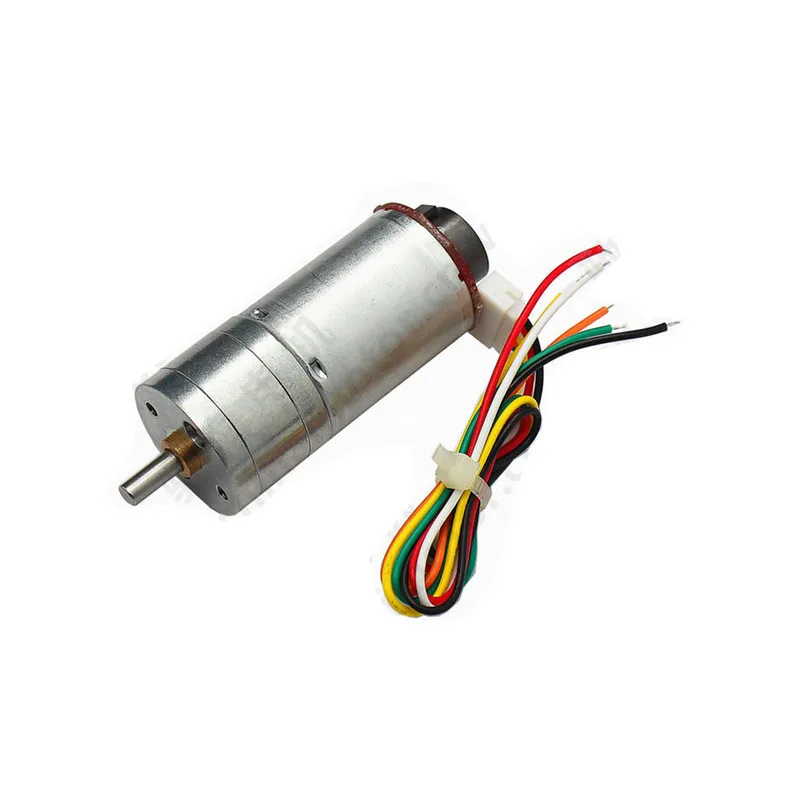
25GA-370 12V DC Reducer Gear Motor with Encoder
Upgrade to closed-loop motor control with this gear motor featuring a built-in encoder — ideal for precise robotics positioning.
BO Motor vs Other DC Gear Motors
When does the BO motor make sense, and when should you upgrade to something better? Here is a comparison with other motor types commonly available in India:
| Motor Type | Torque | Cost | Durability | Precision |
|---|---|---|---|---|
| BO Motor (plastic gears) | Low–Medium | Very Low (₹30–80) | Low | None |
| 25GA-370 Metal Gear Motor | Medium–High | Medium (₹300–600) | High | None |
| Metal Gear Motor + Encoder | Medium–High | High (₹600–1200) | High | High |
| Servo Motor | Low–High | Medium | Medium | Position only |
| NEMA 17 Stepper | High | High | Very High | Step-level |
The BO motor wins on cost and size. It is the right choice for school robotics competitions, prototyping, and any application where low cost and light weight matter more than longevity or precision. For production robots or competition machines that need to survive sustained operation, a metal gear motor is a better investment.
Common Applications in Indian Robotics Projects
The 12V BO motor is used in a surprisingly wide range of applications within the Indian maker ecosystem:
- Line-following robots: The most common school project in India. Two 12V BO motors drive the rear wheels while IR sensors detect the line. Speed control via PWM on an L298N allows smooth turning.
- Obstacle-avoidance robots: Similar two-motor chassis but with ultrasonic sensors. The 12V supply makes it compatible with HC-SR04 sensors and the Arduino through a simple voltage regulator.
- Sumo robots: Lightweight sumo robots in the mini category (500g limit) often use 12V BO motors for their small size and adequate torque.
- Automated guided vehicles (AGV): Simple conveyor or shelf-riding AGVs in college projects use 12V BO motors as they are cheap enough to use four or six at a time.
- Camera pan-tilt rigs: Low-speed 12V BO motors (1:120 ratio) with PWM control create smooth pan movements for DIY motorised camera rigs.
- Automated window blinds: The same motor that powers robot wheels can drive a spool to raise and lower lightweight fabric blinds in home automation projects.
How to Drive a 12V BO Motor with L298N or L293D
The two most commonly used motor driver ICs in India for BO motors are the L298N and L293D. Here is how each compares for 12V BO motor use:
L298N (Recommended for 12V BO Motors)
The L298N dual H-bridge can supply up to 2A per channel at up to 35V. Since a 12V BO motor draws 400–800 mA stall current, the L298N is well within its rating. The module version (red PCB with screw terminals) available from Indian electronics shops includes onboard 5V regulation, making it easy to power both the motor and an Arduino from the same 12V battery.
Wiring: Connect IN1 and IN2 to two Arduino digital pins to control direction. Connect ENA to a PWM-capable pin (e.g., pin 9 or 10 on Uno) for speed control. Connect the 12V input to your battery pack and the motor wires to OUT1 and OUT2.
L293D (Budget Alternative)
The L293D is an older driver IC rated for 600 mA continuous per channel. This is marginal for a 12V BO motor — the driver will run warm and may enter thermal protection under stall conditions. Use the L293D only if the L298N is unavailable, and add a heatsink if possible.
Sample Arduino Code for Speed and Direction Control
// L298N dual motor control
const int ENA = 9;  // PWM pin for motor A speed
const int IN1 = 7;
const int IN2 = 8;

void setup() {
  pinMode(ENA, OUTPUT);
  pinMode(IN1, OUTPUT);
  pinMode(IN2, OUTPUT);
}

void motorForward(int speed) { // speed: 0-255
  digitalWrite(IN1, HIGH);
  digitalWrite(IN2, LOW);
  analogWrite(ENA, speed);
}

void motorBackward(int speed) {
  digitalWrite(IN1, LOW);
  digitalWrite(IN2, HIGH);
  analogWrite(ENA, speed);
}

void motorStop() {
  analogWrite(ENA, 0);
}

void loop() {
  motorForward(200);   // ~78% speed
  delay(2000);
  motorStop();
  delay(500);
  motorBackward(150);  // ~59% speed
  delay(2000);
  motorStop();
  delay(500);
}
Buying Guide: What to Look for in India
When shopping for 12V BO motors in India, here are the key points to check before placing an order:
- Verify the voltage rating: Many listings on Indian e-commerce sites advertise “12V BO motor” but ship a 3V–6V motor. Check that the product explicitly states 12V rated DC motor internally, not just a 12V compatible claim.
- Check gear ratio availability: Not all sellers stock all gear ratios. If you need a specific speed range, confirm the gear ratio before ordering.
- Shaft compatibility: Standard BO motor wheels have a D-hole sized for a 3mm D-shaft. Verify the shaft diameter matches the wheels you plan to use.
- Buy in pairs or sets: For two-wheel drive robots, always buy motors from the same batch to ensure matched speed characteristics. Mismatched motors cause the robot to drift.
- Metal gear vs plastic gear: If your application involves sustained operation (over 30 minutes continuously), consider a 25GA-370 style metal gear motor instead of a plastic-geared BO motor.
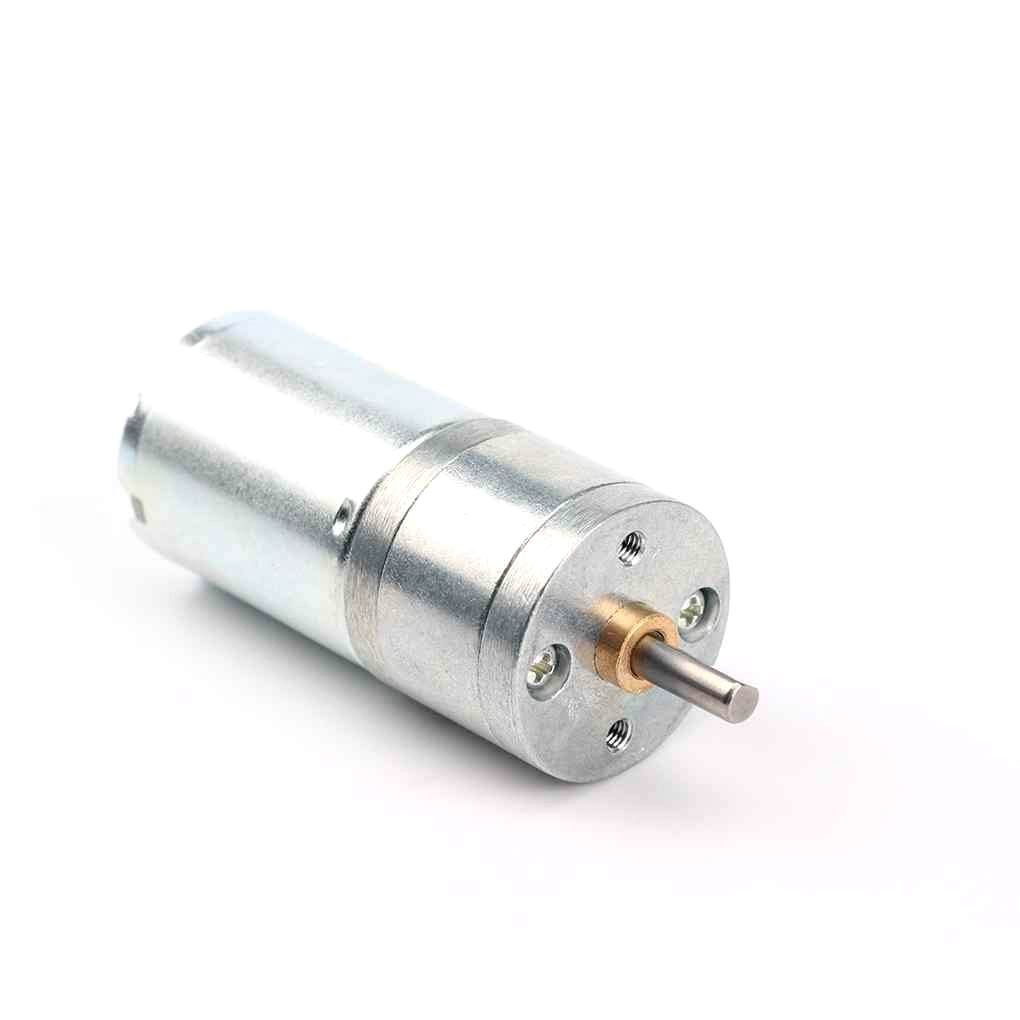
25GA-370 12V 1360RPM DC Reducer Gear Motor
High-speed 12V gear motor with metal gearbox — perfect for fast robotics where BO motor durability is a concern.
Frequently Asked Questions
Q: What is the speed of a 12V BO motor?
Speed depends on the gear ratio variant. Common 12V BO motors in India are available at approximately 100 RPM, 200 RPM, and 300–500 RPM at the output shaft under no-load conditions. Under load, speed drops by 30–50%. Always purchase the variant that matches your required speed after accounting for load-induced speed reduction.
Q: Can I run a 12V BO motor at 9V?
Yes. Running at 9V reduces the no-load speed by about 25% and reduces current draw proportionally. This can be useful if your battery pack is a 3S LiPo (11.1V nominal) and you want to reduce heat. The motor will still operate normally, just with reduced speed and torque.
Q: How long do BO motors last?
The plastic gears are the weak point. Under normal use (30–60 minute sessions with light loads), a BO motor may last 50–200 hours. Under continuous or heavy load, the plastic gear teeth can strip within a few hours. For longer life, use a metal gear motor. The carbon brushes in the DC motor core also wear over time — a grinding noise from the motor usually indicates brush wear.
Q: What is the stall current of a 12V BO motor?
Stall current is typically 400–800 mA at 12V. Always size your motor driver and power supply to handle this. Using a 500 mA limited driver will result in thermal shutdown if the motor stalls — which can damage the driver IC.
Q: Why does my robot drift to one side even with matched BO motors?
BO motors have ±20–30% manufacturing tolerances. Two motors from the same batch may still have different no-load speeds. Use encoder feedback or a software PID loop to correct drift. For simpler projects, use a PWM trim adjustment on one motor channel to balance the speeds empirically.
Q: Is the 12V BO motor waterproof?
No. Standard BO motors have no IP rating and are not water resistant. The plastic gearbox housing has gaps that allow water and dust ingress. For outdoor or water-splash applications, use a motor with at least IP44 rating.
Looking for motors for your next robotics project? Zbotic stocks a wide range of DC gear motors, stepper motors, and servo motors suitable for all skill levels and budgets. Browse our motors collection and get fast delivery anywhere in India.







Add comment