
Choosing between a digital servo and an analog servo is one of the most common dilemmas faced by RC hobbyists, robotics engineers, and electronics makers in India. Both types look almost identical from the outside — same plastic housing, same three-wire connector, same spline output shaft — yet they behave completely differently under the hood. The internal control electronics are what separate them, and those differences translate into real-world performance gaps that matter enormously depending on your project.
In this comprehensive guide, we break down every major difference between digital and analog servos: how they process signals, their update rates, speed, accuracy, power consumption, price, and which one belongs in your next build. Whether you are flying a fixed-wing RC plane, building a wheeled robot, or operating a pan-tilt camera gimbal, this article will help you make the right choice.
How Servo Motors Work
Before diving into the digital vs analog comparison, it helps to understand what all hobby servos have in common. A servo motor is a closed-loop actuator: it reads a PWM (Pulse Width Modulation) signal from your receiver or microcontroller, compares the commanded position to actual shaft position via a potentiometer, and drives a small DC motor through gears until the error reaches zero.
The control signal is a PWM pulse that repeats at a fixed frequency. Pulse width typically ranges from 1000 µs (full left / minimum) to 2000 µs (full right / maximum), with 1500 µs being the neutral or centre position. The frequency of that pulse — how many times per second the servo is told where to go — is where analog and digital servos fundamentally differ.
Analog Servo Explained
An analog servo processes its control signal using traditional analog circuitry. It reads the incoming PWM pulse, generates a corresponding voltage, and passes it through a comparator circuit to drive the motor. The key limitation is that an analog servo only updates its motor drive signal at the same rate as the incoming PWM signal — typically 50 Hz, meaning it issues 50 correction pulses per second.
At 50 Hz, the servo motor is only actively correcting its position once every 20 milliseconds. Between those correction moments, the motor receives no drive signal and can drift slightly under external force. This leads to a phenomenon called deadband — a small range of positions around the setpoint where the servo does nothing, saving power but reducing precision. Analog servos typically have a deadband of around 5–10 µs.
Analog servos are simpler, cheaper to manufacture, and consume less average current because the motor is only actively driven in short pulses. They are entirely adequate for low-speed, low-precision applications where budget matters most.
Common examples: Tower Pro SG90, SG92R, MG90S, MG996R. These are the staples of Arduino and robotics starter kits across India.
Digital Servo Explained
A digital servo adds a microprocessor (typically a small 8-bit or 32-bit MCU) between the PWM input and the motor driver. This processor reads the incoming PWM command just like an analog servo, but instead of driving the motor at 50 Hz, it issues motor correction pulses at 300–400 Hz — six to eight times faster.
The result is dramatically tighter position control. The servo motor is corrected every 2.5–3.3 milliseconds rather than every 20 ms. Dead time between corrections is almost eliminated. The digital processor can also implement programmable parameters: custom deadband width, speed limits, torque limits, and different response curves depending on your application — features completely unavailable in analog servos.
Digital servos also have a much narrower deadband, typically 1–3 µs, which means they respond to much smaller command changes. This translates to finer control resolution and far superior holding ability when the servo is commanded to hold a position against an external load.
Common examples: Hitec D645MW, Savox SC-0251MG, JX PDI-6221MG, and various high-torque coreless digital servos used in competition RC cars and precision robotics.
Speed and Accuracy Comparison
Let us look at the key performance metrics head to head:
| Parameter | Analog Servo | Digital Servo |
|---|---|---|
| Update Rate | 50 Hz (20 ms) | 300–400 Hz (2.5–3.3 ms) |
| Deadband | 5–10 µs | 1–3 µs |
| Response Time | Slower (lag noticeable) | Very fast, snappy feel |
| Position Accuracy | Moderate | High |
| Speed (transit) | Lower peak acceleration | Higher peak acceleration |
| Programmability | None | Yes (via programmer) |
The higher update rate of a digital servo does not just improve steadiness — it also makes the servo feel faster when moving from one position to another. Because corrections are applied more frequently, the motor can be driven harder and more aggressively at the start of a move, producing snappier acceleration. In RC car racing, this translates to quicker steering response that can genuinely affect lap times.
Power Consumption: Who Wins?
This is the one area where analog servos have a clear advantage: idle current draw. Because an analog servo only issues motor corrections 50 times per second, and because it uses a wider deadband, it spends more time doing nothing and consuming minimal current. A typical analog servo at rest draws 5–10 mA.
A digital servo, with its processor running at 300–400 Hz and its narrow deadband causing micro-corrections almost continuously, draws significantly more current even at rest — often 50–100 mA or more. This matters enormously in battery-powered systems. An RC aircraft with 8 digital servos can drain its receiver battery pack considerably faster than the same aircraft fitted with analog servos.
Power summary:
- Analog servo idle current: ~5–10 mA
- Digital servo idle current: ~50–100 mA
- Both types peak current under load: 500 mA – 2 A depending on torque
- For long-duration battery-powered robots: analog is more efficient
- For mains-powered or short-run projects: digital’s precision advantage outweighs the cost
In fixed-wing RC aircraft specifically, servos hold positions for long periods during cruise flight. Using digital servos on all control surfaces can noticeably reduce flight time on a 3S LiPo compared to analog equivalents. Many experienced RC pilots use digital servos only on the most critical control surfaces (ailerons, rudder) and analog on less demanding ones (flaps, retracts).
Holding Torque and Deadband
One of the most underappreciated differences between digital and analog servos is resistance to external force. When you push on the horn of an analog servo, the wide deadband means the servo does not respond until you have deflected it by 5–10 µs worth of position — that might be a few tenths of a degree of mechanical movement. During that time, the external force moves the output freely.
A digital servo, with its 1–3 µs deadband and 300 Hz correction loop, detects the disturbance almost instantly and fires corrective motor pulses to resist it. This is why digital servos feel rock-solid when you grab the horn — they actively fight back against your hand, whereas an analog servo will flex noticeably before correcting.
For applications like:
- Pan-tilt camera gimbals — digital is essential for smooth, precise control
- Robot arm joints — digital holds position under gravity load far better
- RC aircraft in turbulence — digital controls surfaces stay put against aerodynamic loads
- Classroom servo experiments — analog is perfectly fine and lower cost
Price in India
In the Indian market, analog servos are dramatically more affordable. The ubiquitous SG90 analog servo costs around ₹60–120 depending on quality tier (China chip vs branded TowerPro). The MG996R analog servo with metal gears runs ₹150–300. These are the servos you find in every hobbyist starter kit.
Digital servos start around ₹400–600 for entry-level models and can reach ₹2,000–8,000 for high-end competition or industrial units. The price premium reflects the added MCU, more precise manufacturing tolerances, and often higher-quality gear trains (metal vs plastic).
For budget-constrained projects — school robotics competitions, beginner Arduino builds, simple pan-tilt rigs — analog servos remain the obvious choice. For anything where precision, speed, or reliability under load matters, the cost of going digital is usually worth it.
Which Servo Should You Choose?
Use this quick decision guide:
Choose Analog if:
- You are on a tight budget (student project, prototype)
- The application is low-speed and low-load (simple arm, pointing mechanism)
- Battery life is a primary concern (long-duration aerial or ground vehicle)
- You need many servos and cost multiplies quickly
Choose Digital if:
- You need fast, snappy response (competition RC car, aerobatic aircraft)
- Position holding under external load is critical (robot arm, gimbal, exoskeleton joint)
- You want programmable parameters for fine-tuning behaviour
- Your power supply can handle the higher idle current
- Precision and repeatability matter more than cost
Recommended Servo Products from Zbotic

TowerPro SG90 180 Degree Rotation Servo Motor
The classic analog servo for beginners — lightweight, low cost, and ideal for Arduino projects, robotic arms, and RC planes where budget is the priority.

Servo MG996 13KG 180 Degree — High Quality
Metal gear analog servo with 13 kg·cm torque — the go-to choice for heavier robotic arms and RC truck steering where you need more grunt than the SG90.
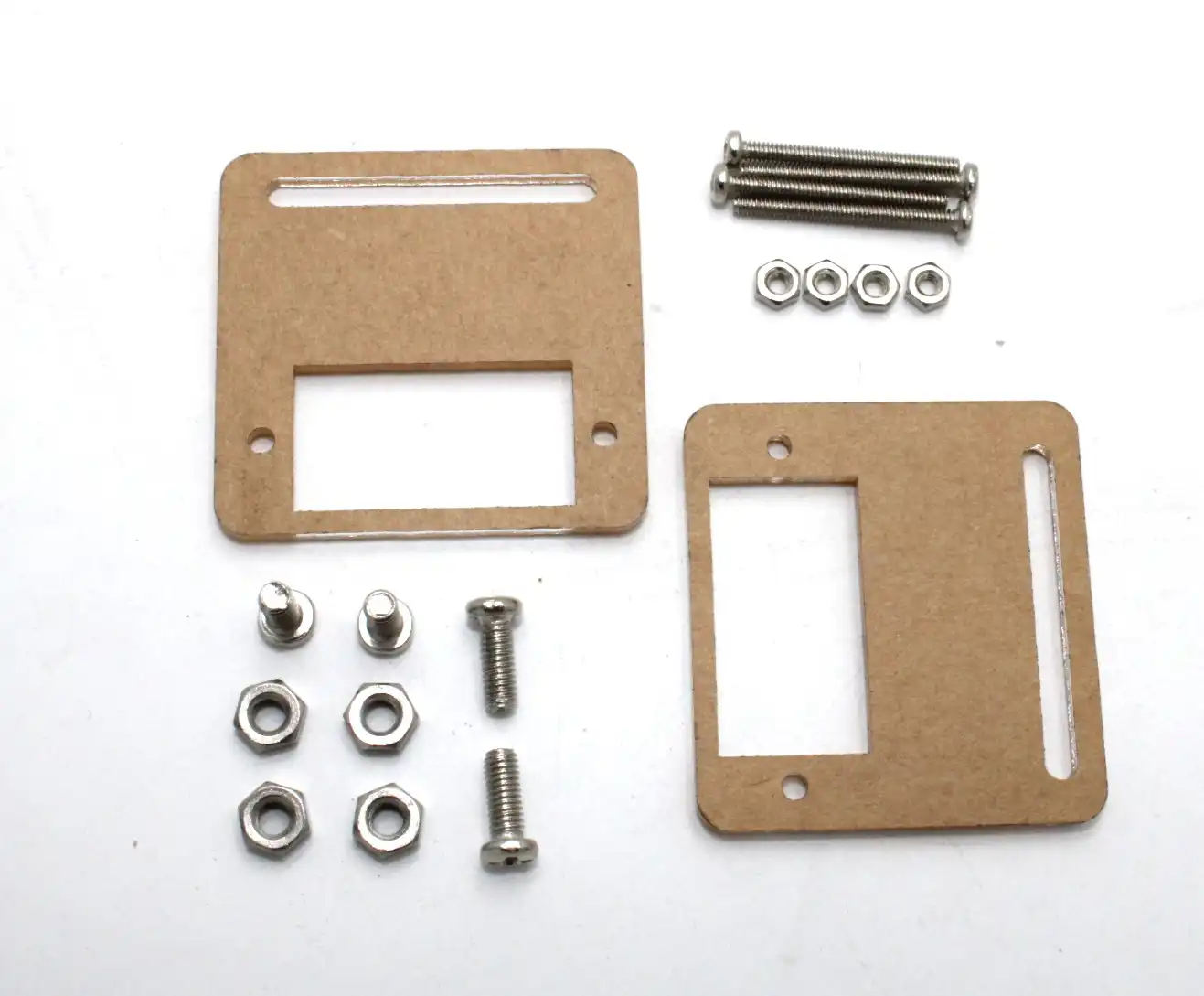
Servo Mount Holder Bracket For SG90/MG90 (Pack of 2)
Clean aluminium mounting brackets for SG90 and MG90 servos — essential for building neat, rigid pan-tilt systems or robotic joints on your build.
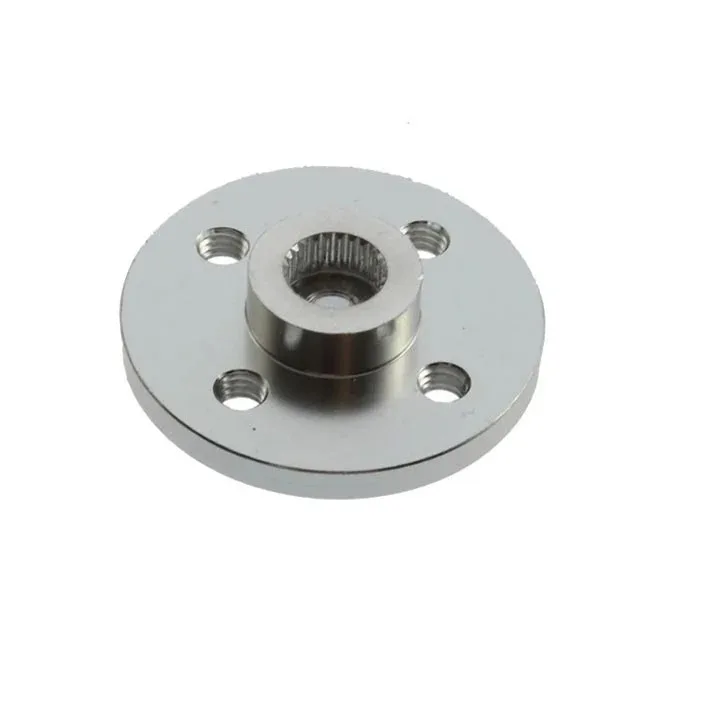
Aluminum Servo Horn / Arm 25T Round Disc (MG995 / MG996)
Upgrade your plastic servo horn to this rigid aluminium disc — significantly reduces flex and backlash on high-torque digital or analog servo builds.
Frequently Asked Questions
Can I replace an analog servo with a digital servo directly?
Yes. Digital servos use the same three-wire connector (signal, power, ground) and respond to the same 1000–2000 µs PWM signal as analog servos. You can swap them without any changes to your wiring or code in most cases. The only thing to watch is the higher idle current of digital servos — make sure your BEC or power supply can handle it.
Do I need a special receiver for digital servos?
No. Any standard RC receiver or microcontroller (Arduino, STM32, Raspberry Pi) that outputs standard PWM will work with both types. Some digital servos can also accept higher-resolution protocols like S.Bus or CAN bus, but this is a bonus feature — standard PWM always works.
Are digital servos faster than analog servos?
Not necessarily in terms of rated transit speed (e.g., 0.1 sec / 60°) — the specifications sheet speed is about the motor and gear ratio. But digital servos feel faster because they accelerate more aggressively at the start of a move and hold position more crisply at the end, thanks to the 300 Hz control loop.
Why does my digital servo buzz or vibrate at rest?
The high-frequency correction pulses (300–400 Hz) in a digital servo can sometimes cause audible buzzing, especially if the deadband is set very narrow. This is normal. Many digital servos let you widen the deadband via a programmer to reduce buzzing at the cost of a tiny bit of position resolution.
Which servo is better for an Arduino robot arm?
For a beginner robot arm: analog SG90 or MG996R will work perfectly and keep costs down. If you are building a precision arm for pick-and-place or collaborative robotics work, invest in digital servos with metal gears — the improved position holding under gravity load alone justifies the cost.
Do digital servos work with Arduino?
Absolutely. The standard Arduino Servo.h library works identically for both types. You call servo.write(angle) or servo.writeMicroseconds(us) exactly the same way. The higher performance of the digital servo is internal — your Arduino code does not need to change at all.
Browse Zbotic’s full range of servo motors, mounts, horns, and extension wires — all in stock and shipped across India.


Add comment