
Every electronics maker eventually faces a soldering mistake — a misplaced component, a bridged pad, or a part that simply needs to be replaced. When that happens, you need to desolder cleanly and quickly. The two most common tools for the job are the desoldering pump (also called a solder sucker) and copper braid wick. This guide compares desoldering pump vs copper wick, explaining when to use each one and how to get the best results from both.
Understanding Desoldering: Why It Matters
Desoldering is the process of removing solder from a joint to release a component or fix a solder bridge. Done poorly, it can:
- Lift PCB pads (destroying the trace permanently)
- Overheat and kill components with repeated heat application
- Leave residual solder that prevents clean re-assembly
The right tool and technique depend entirely on the type of joint — through-hole or SMD, large pad or fine-pitch, single joint or bulk rework. Let us look at both main tools in detail.
Desoldering Pump: How It Works and When to Use It
A desoldering pump (solder sucker) is a spring-loaded vacuum device. You compress the plunger, heat the solder joint until fully liquid, press the tip of the pump against the molten solder, and release — the spring fires the plunger back, creating a sudden vacuum that sucks the liquid solder into a chamber.
Types of Desoldering Pumps
- Spring-loaded manual pump — the most common and affordable. Fits in one hand. You need two hands total: one for the iron, one for the pump.
- Bulb-type syringe — squeeze and release. Less powerful than spring type but cheaper.
- Electric desoldering station — integrated iron+vacuum; the professional choice for bulk rework. Expensive but highly effective.
Advantages of a Desoldering Pump
- Fast at removing large blobs of solder from through-hole joints
- Reusable indefinitely — just empty the chamber
- Effective when pads are heavily loaded with solder
- Leaves a cleaner hole in through-hole pads
- Inexpensive (good quality pumps under ₹300–500 in India)
Disadvantages
- Requires both hands — you must coordinate iron and pump simultaneously
- Nozzle tip degrades over time; the silicone can melt if you touch it to the iron
- Ineffective for fine-pitch SMD or solder bridges on IC pins
- Can damage pads with aggressive suction on fragile PCBs
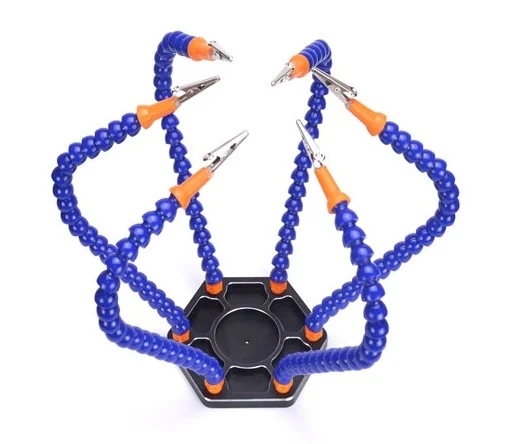
6 Flexible Arms Soldering Station With Swiveling Alligator Clip
Hold your PCB steady during desoldering with this 6-arm helping hands station. Alligator clips grip your board so you can focus on getting the joint right.
Copper Braid Wick: How It Works and When to Use It
Copper braid wick (also called solder wick or desoldering braid) is a woven strip of fine copper strands, usually pre-fluxed with rosin. It works by capillary action — when you press the braid against a hot solder joint, the molten solder wicks into the braid through surface tension. You then cut off and discard the used portion.
Braid Width Selection
- 1.0–1.5mm — fine-pitch SMD, 0402/0603 components, IC pin bridges
- 2.0–2.5mm — general SMD, small through-hole pads
- 3.0mm+ — large pads, connector pins, power leads
Advantages of Copper Braid Wick
- Excellent for SMD rework and solder bridge removal
- Leaves pads very clean — almost no residual solder
- Works great for fine-pitch IC pins where suction is impractical
- One-handed operation (wick + iron in sequence)
- Low risk of pad lift when used correctly with proper temperature
Disadvantages
- Consumable — you discard used sections, adding ongoing cost
- Slower on heavy through-hole joints with lots of solder
- Cheap, dry braid without flux is nearly useless; always buy pre-fluxed or apply flux first
- Iron tip gets solder residue quickly — needs frequent cleaning
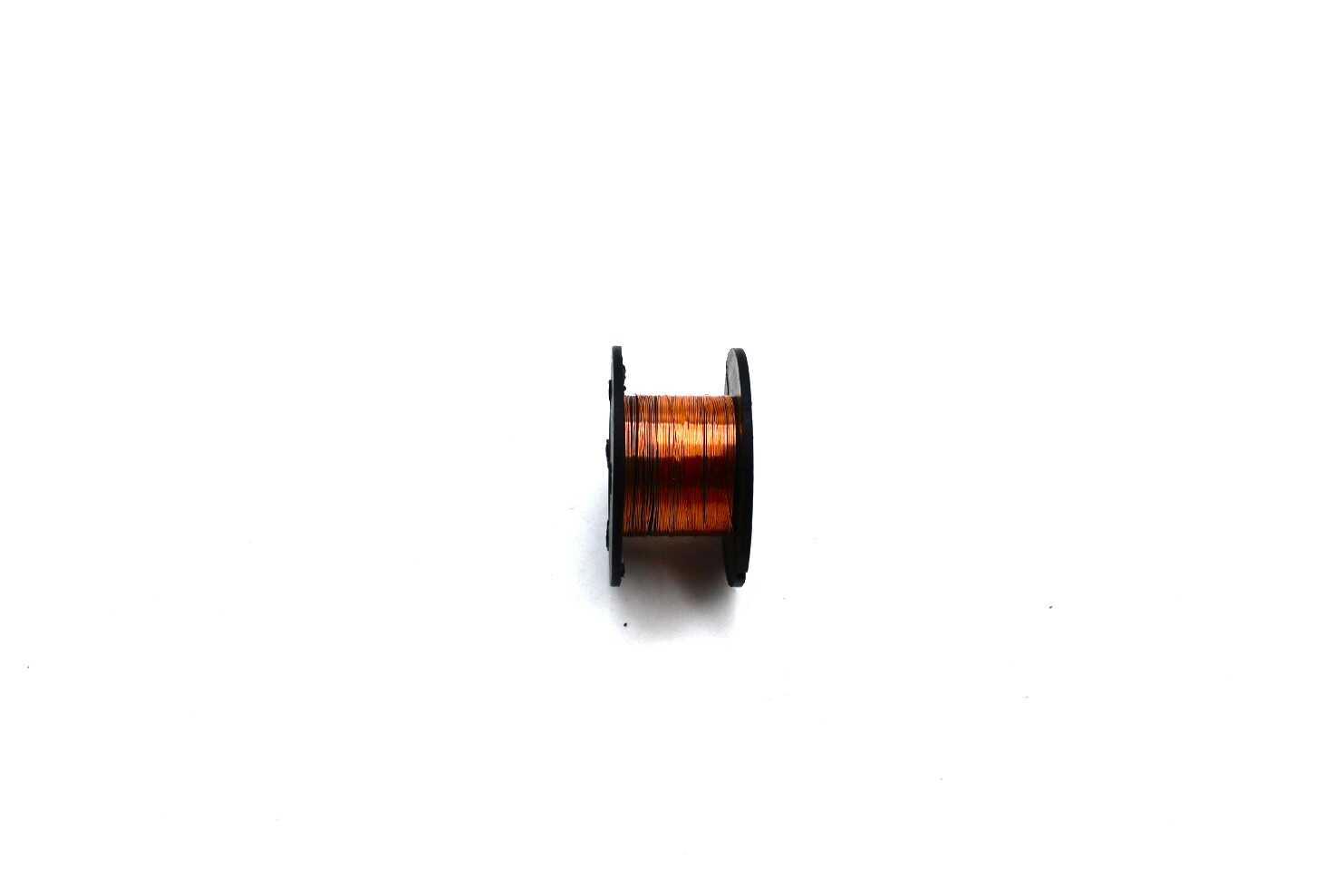
0.1MM Copper Soldering Solder PPA Enamelled Repair Reel Wire
Fine copper wire for precision soldering and repair work. Perfect for touch-ups after desoldering, refilling via points, or repairing lifted pads.
Head-to-Head Comparison
| Feature | Desoldering Pump | Copper Braid Wick |
|---|---|---|
| Through-hole components | Excellent | Good |
| SMD / fine-pitch IC pins | Poor | Excellent |
| Solder bridge removal | Poor | Excellent |
| Speed (heavy joints) | Fast | Slow |
| Pad cleanliness | Good | Excellent |
| Cost type | One-time | Consumable |
| Skill required | Moderate | Low-Moderate |
Best Method for Through-Hole Components
For standard through-hole components — resistors, capacitors, transistors, IC sockets — the desoldering pump wins. Here is why:
- Through-hole joints contain a significant amount of solder that fills the via hole
- A good pump can remove most of the solder in one pull
- After one pump action the lead usually wiggles free; grab it with tweezers while reheating briefly
Recommended technique:
- Set iron to 320–350°C (leaded solder) or 360–380°C (lead-free)
- Heat the joint from the solder side for 2–3 seconds until fully liquid
- Press the primed pump tip directly over the joint
- Click the plunger — the solder is sucked in
- Repeat if necessary; add a tiny amount of fresh 60/40 solder to aged joints to lower melting point
Pro tip: Adding a tiny dab of fresh 60/40 solder to an old oxidised joint before pumping is one of the best tricks. Fresh solder contains new flux and lowers the melting point, making the whole joint easier to remove in one pass.
Best Method for SMD and Fine-Pitch Work
For SMD components and IC pins, copper braid wick is superior. The narrow braid width lets you precisely target individual pins without disturbing neighbours, and the capillary wicking action is perfectly suited to thin, flat solder deposits.
Recommended technique for solder bridges:
- Apply a drop of liquid flux to the bridged pins
- Place 1.5mm wick across the bridge area
- Press flat with the iron (use a chisel or knife tip for good contact)
- Hold 2–3 seconds; solder wicks into braid — do not drag while hot or you risk lifting pads
- Lift iron and wick simultaneously
- Cut off the used (silver) portion of braid
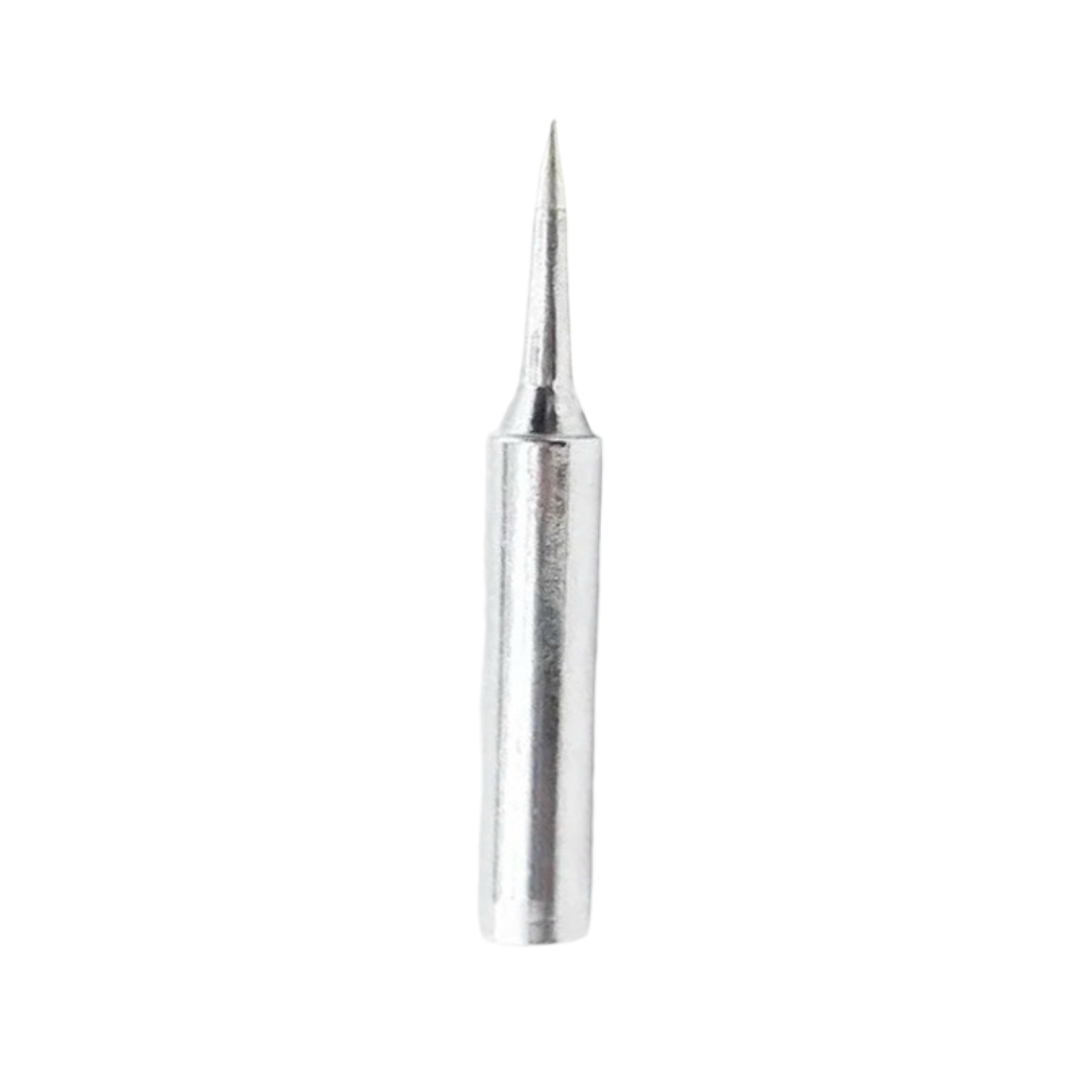
BAKON Soldering Iron Tip 900M-T-I
Quality 900M replacement tip for soldering stations. A flat chisel tip is ideal for pressing copper braid wick efficiently across multiple SMD pins.
Pro Technique Tips for Each Tool
Desoldering Pump Tips
- Replace the tip seal regularly: The silicone/rubber nozzle tip hardens over time. A damaged tip leaks vacuum and ruins suction. Replacement tips are cheap.
- Clean the chamber: Empty accumulated solder from the chamber after every session. Old solder clogs the mechanism.
- Use with two hands but prep fast: Pre-position both iron and pump before heating. You have 1–2 seconds of fully liquid solder — do not fumble.
- Angle matters: Insert the pump tip at a slight angle so it seals around the through-hole while the iron heats from the opposite side.
Copper Braid Wick Tips
- Always use flux: Dry braid barely works. Apply fresh liquid flux from a flux pen before placing the braid, even if the braid is pre-fluxed.
- Do not drag the braid: Lift straight up when removing. Dragging can peel pads off the PCB.
- Fresh braid only: Cut off and discard every used (grey/silver) inch of braid. Trying to re-use it extends heat time and risks pad damage.
- Temperature matching: Lead-free solder needs more heat — increase iron temperature by 20–30°C and allow an extra second of dwell time.
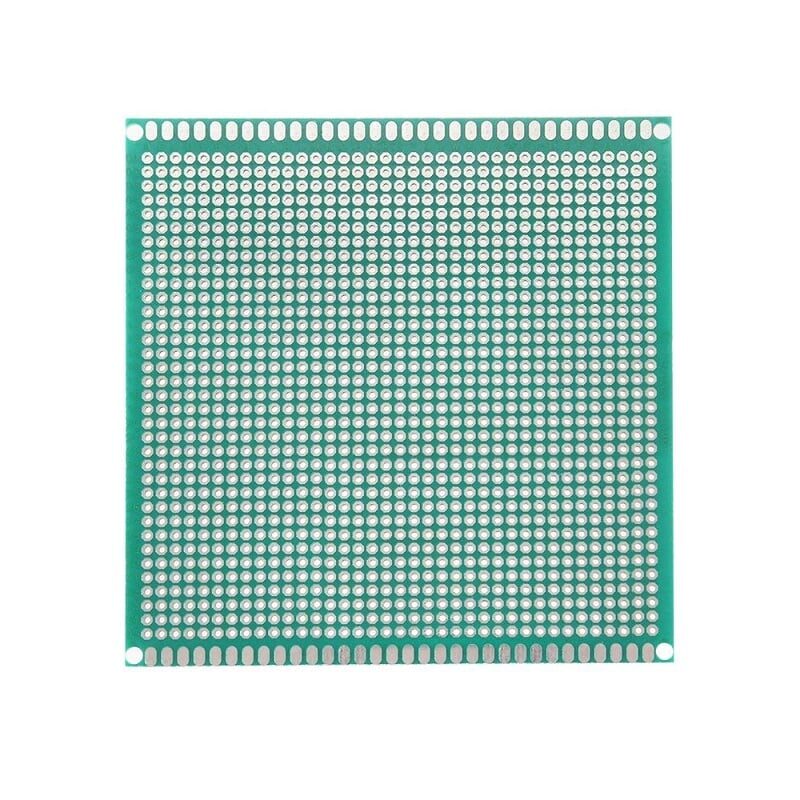
10 x 10 cm Universal PCB Prototype Board Single-Sided 2.54mm
Practice desoldering on scrap prototype boards before attempting repairs on valuable PCBs. Single-sided boards are great for through-hole desoldering practice.
Frequently Asked Questions
Which should I buy first — a pump or wick?
If you primarily work with through-hole components (Arduino, breadboard projects), buy the pump first. If you work with SMD or repair consumer electronics, wick is more useful. Ideally, own both — they cost under ₹500 total and cover completely different scenarios.
Can I desolder without either tool?
Technically yes — you can use a technique called drag soldering (adding flux and dragging across pins) for SMD bridges, or use toothpicks to flick molten solder off through-hole joints. But both dedicated tools produce cleaner results with far less risk of pad damage.
My pump is not sucking well — what is wrong?
Three common causes: the nozzle tip seal is worn and leaking, the chamber is full of old solder and needs cleaning, or you are not pressing the tip close enough to the joint. Also make sure the solder is fully liquid before firing the pump.
Does copper wick leave residue?
Yes — a thin flux residue remains after wicking. This is non-corrosive rosin residue and is harmless for most applications. Clean it with 99% isopropyl alcohol and a brush if you want a pristine finish or are applying conformal coating.
What is the best desoldering method for ICs with many pins?
For through-hole ICs (DIP packages), use an electric desoldering station or vacuum iron if available. For manual removal, use a pump on each pin alternately, working quickly so all pins are free before the PCB cools. Copper wick works for small ICs (8-14 pins) but is slow on 40-pin packages.







Add comment