
Table of Contents
- What is Carbon Fiber Filament?
- PETG-CF vs PLA-CF: Which Should You Use?
- Printer and Hardware Requirements
- Nozzle Selection: The Most Critical Choice
- Slicer Settings for Carbon Fiber Filaments
- Print Quality Tips
- Post-Processing Carbon Fiber Prints
- Real-World Applications
- Buying Guide for India
- Frequently Asked Questions
Carbon fiber composite filaments have transformed what desktop 3D printers can produce. While full carbon fiber composites require expensive industrial processes, PETG-CF and PLA-CF filaments blend chopped carbon fiber strands into standard thermoplastic matrices — delivering dramatically improved stiffness, strength, and dimensional stability compared to their base materials. For Indian engineers, robotics teams, drone builders, and product designers, these materials are becoming increasingly accessible and valuable.
This comprehensive guide covers everything you need to know about printing carbon fiber composite filaments successfully — from understanding the fundamental differences between PETG-CF and PLA-CF, to hardware requirements, dialling in slicer settings, and real-world use cases that matter to the Indian maker community.
What is Carbon Fiber Filament?
Carbon fiber 3D printing filaments are composite materials where chopped carbon fiber strands (typically 50–150 microns in length) are blended into a thermoplastic base material. The most common base materials are PLA, PETG, ABS, Nylon, and Polycarbonate. The carbon fiber content typically ranges from 10% to 30% by weight.
It is important to understand what these filaments are and what they are not. Unlike continuous fibre reinforcement (used in industrial systems like Markforged), chopped CF filaments do not have fibres spanning the entire length of a part. Instead, they provide:
- Increased Stiffness (Rigidity): Parts flex significantly less under load — typically 30–50% stiffer than the base material
- Reduced Weight: The carbon fiber particles are less dense than the polymer, resulting in lighter parts
- Better Dimensional Stability: Lower warping and shrinkage during printing
- Improved Surface Texture: A distinctive matte, slightly textured finish that many designers prefer
- Higher Stiffness-to-Weight Ratio: Makes it ideal for aerospace and drone applications
What carbon fiber filaments do NOT provide (common misconceptions):
- They are NOT necessarily stronger in tension than the base material — carbon fibers are chopped and randomly oriented
- They do NOT make parts impact-resistant — in fact, CF composites can be more brittle under impact
- They are NOT electrically conductive enough for ESD protection (unlike dedicated conductive filaments)
PETG-CF vs PLA-CF: Which Should You Use?
PLA-CF (Carbon Fiber PLA)
PLA-CF combines the easy printability of PLA with the stiffness benefits of carbon fiber. It is the most beginner-friendly carbon fiber filament and works on virtually any FDM printer equipped with the right nozzle.
Properties of PLA-CF:
- Print temperature: 200–220°C
- Bed temperature: 50–60°C (or no heated bed required)
- Excellent surface finish — very clean matte appearance
- Low warping — excellent dimensional accuracy
- Brittle under impact (more so than standard PLA)
- Low heat resistance — HDT (Heat Deflection Temperature) around 50–60°C
- Biodegradable base material
Best for: Display models, architectural prototypes, lightweight structural parts not exposed to heat, RC car chassis parts, drone frames used in cool/indoor environments.
PETG-CF (Carbon Fiber PETG)
PETG-CF is more challenging to print than PLA-CF but delivers significantly better mechanical and thermal performance. The PETG base provides better impact resistance and higher heat tolerance, while the carbon fiber dramatically reduces PETG’s typical flexibility and warp.
Properties of PETG-CF:
- Print temperature: 240–260°C
- Bed temperature: 70–85°C
- Better layer adhesion than PLA-CF
- Higher heat resistance — HDT around 70–80°C
- More impact resistant than PLA-CF
- Slightly more difficult to print — requires fine-tuning
- Chemical resistance similar to standard PETG
Best for: Functional mechanical parts exposed to moderate heat, outdoor drone components, structural brackets, tooling jigs, motor mounts.
Comparison Table
| Property | PLA-CF | PETG-CF |
|---|---|---|
| Print Temperature | 200–220°C | 240–260°C |
| Bed Temperature | 50–60°C | 70–85°C |
| Stiffness | Very High | High |
| Heat Resistance | Low (~55°C) | Medium (~75°C) |
| Impact Resistance | Low | Medium |
| Warp Risk | Very Low | Low |
| Print Difficulty | Easy | Moderate |
| Nozzle Wear | High | High |
Printer and Hardware Requirements
Hotend Requirements
Carbon fiber particles are extremely abrasive. A standard brass nozzle will wear out after just a few hundred grams of CF filament — the bore becomes oversized, leading to inconsistent extrusion and poor print quality. This is the most important hardware consideration for CF printing.
You need a hardened or wear-resistant nozzle. Your options are:
- Hardened Steel Nozzle: Most common and affordable. Handles CF, glass fiber, glow-in-the-dark, and other abrasive filaments well. Slightly lower thermal conductivity than brass, so increase temperature by 5–10°C.
- Tungsten Carbide Nozzle: Maximum wear resistance — suitable for the most abrasive materials. Very expensive but lasts almost indefinitely.
- Ruby-Tipped Nozzle: Excellent wear resistance with near-brass thermal conductivity. Popular for high-speed printing with abrasive materials.
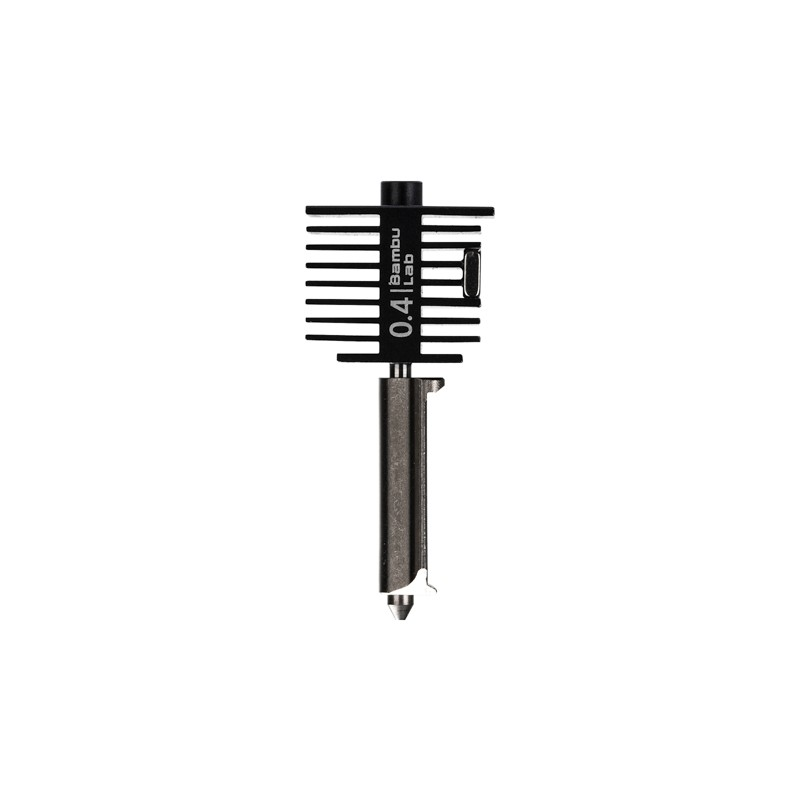
Bambu Lab Hotend with Hardened Steel Nozzle – 0.4mm
Purpose-built hotend assembly for Bambu Lab printers with a hardened steel nozzle — the exact upgrade needed for printing CF, GF, and other abrasive composite filaments without rapid nozzle wear.
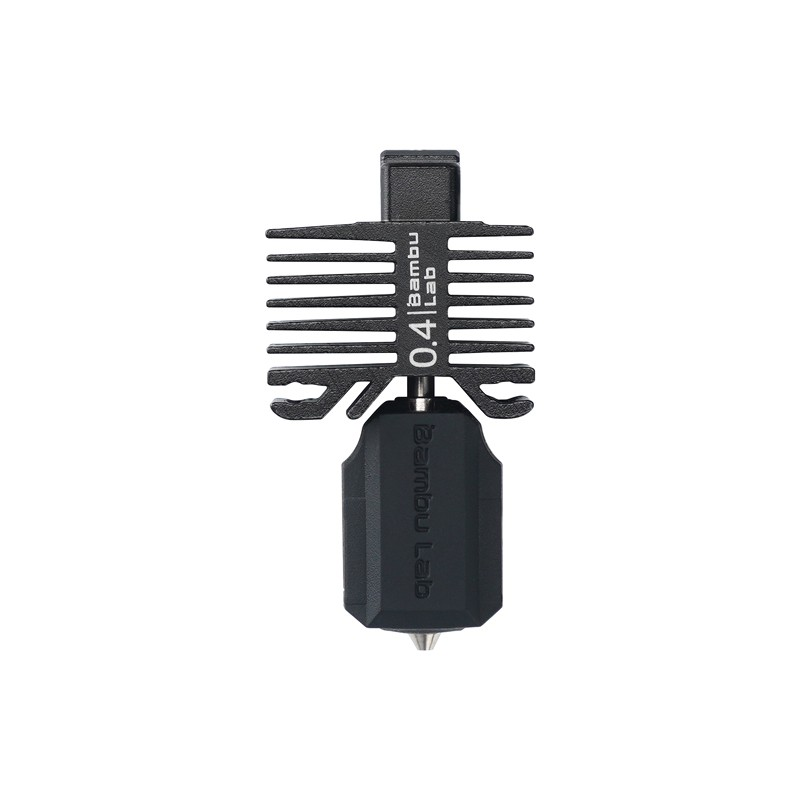
Bambu Lab Hotend with Hardened Steel Nozzle – 0.4mm for P1P, P1S, X1C
Model-specific hardened steel hotend for Bambu Lab P1P, P1S, and X1C. Required for printing CF, PA-CF, PETG-CF, and other engineering composites at high speeds without nozzle degradation.
PTFE Tube Considerations
Standard PTFE (Teflon) tubes in the hotend can be damaged over time by abrasive filaments at high temperatures. For regular CF printing, consider upgrading to a Capricorn XS tube (tighter bore, more heat-resistant) or switching to an all-metal hotend if you print PETG-CF at 250°C+.
Extruder
CF filaments are stiffer and less flexible than standard filaments — they do not suffer from the same flexibility issues as TPU. Both Bowden and direct drive setups work well. However, ensure your extruder gear has sufficient grip — a dual-drive extruder (like the BMG or Orbiter) provides much more consistent feeding with composite filaments.
Nozzle Selection: The Most Critical Choice
Using the wrong nozzle for carbon fiber filament is the single most common mistake beginners make. Here is a practical guide to nozzle selection for CF printing:
Nozzle Diameter
- 0.4mm: Standard choice — works for most CF applications. May occasionally clog with large CF particle batches.
- 0.5mm or 0.6mm: Better flow, less clog risk, and handles CF particles more reliably. Slightly lower resolution but excellent for functional parts where surface detail is not critical.
- 0.8mm+: Excellent for fast, structural prints. Best for large parts where speed matters more than fine detail.
Cleaning Your Nozzle
Even with a hardened nozzle, occasional maintenance is needed. The atomic pull (cold pull) method is effective for clearing partial CF blockages. For stubborn clogs, use a nozzle cleaning needle.
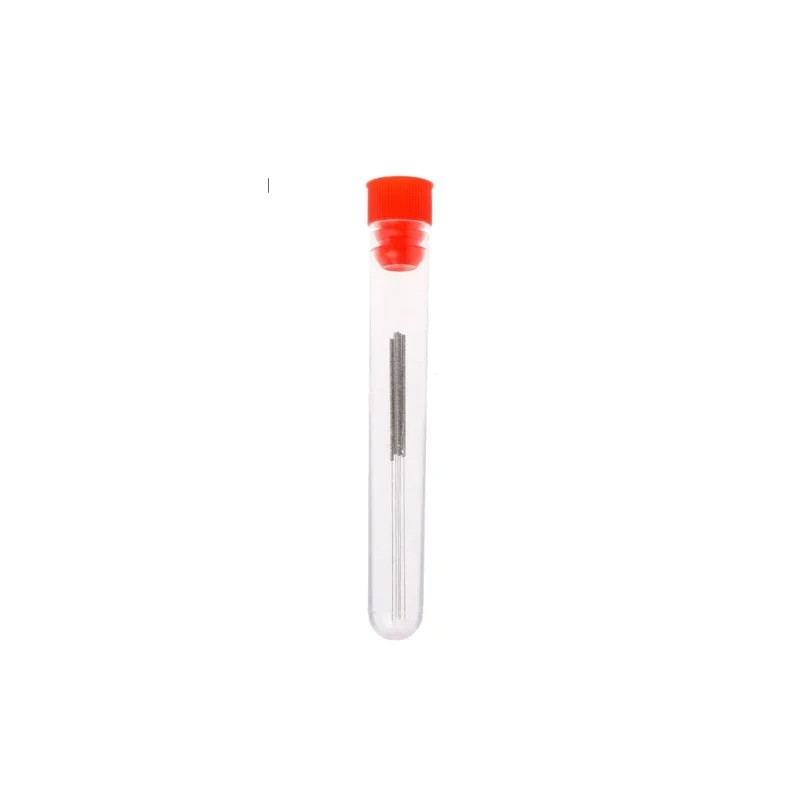
0.4mm Stainless Steel Nozzle Cleaning Needle (Pack of 10)
Pack of 10 stainless steel cleaning needles for 0.4mm nozzles. Essential for clearing carbon fiber and composite filament residue from nozzles without causing damage.
Slicer Settings for Carbon Fiber Filaments
PLA-CF Slicer Settings
| Parameter | Recommended Value |
|---|---|
| Nozzle Temp | 205–220°C |
| Bed Temp | 55–65°C |
| Print Speed | 40–60 mm/s |
| Layer Height | 0.15–0.25mm |
| Wall Count | 3–4 walls |
| Infill | 20–40% (gyroid or grid) |
| Retraction | 0.5–1mm (direct drive) |
| Cooling Fan | 60–80% (from layer 2) |
PETG-CF Slicer Settings
| Parameter | Recommended Value |
|---|---|
| Nozzle Temp | 245–260°C |
| Bed Temp | 75–85°C |
| Print Speed | 35–55 mm/s |
| Layer Height | 0.15–0.25mm |
| Wall Count | 3–4 walls |
| Infill | 25–40% |
| Retraction | 1–1.5mm (direct drive) |
| Cooling Fan | 30–50% (PETG needs less cooling) |
Wall Orientation for Maximum Strength
One of the most important design considerations with CF filaments is part orientation. CF strands align predominantly along the printing direction (X-Y plane). This means:
- Highest stiffness: In the X-Y plane (horizontal layers)
- Lowest strength: In the Z direction (between layers) — CF strands do not bridge across layers
- Design your parts so critical loads are borne by the X-Y plane
- For brackets and flanges, orient so that stress runs parallel to print layers
Print Quality Tips
1. Dry Your Filament
Both PLA-CF and PETG-CF are sensitive to moisture. Wet CF filament produces rough, bubbly surfaces and drastically weakened parts. Always dry CF filaments before use:
- PLA-CF: 50–55°C for 4–6 hours
- PETG-CF: 60–65°C for 6–8 hours
2. Avoid Over-Retraction
Over-retraction with CF filaments can cause grinding at the extruder because the abrasive particles wear against the drive gear repeatedly. Keep retraction distance conservative (0.5–1.5mm for direct drive).
3. First Layer Calibration
CF filaments are less forgiving of poor first layer calibration than standard PLA. Too far from the bed and the first layer will not adhere; too close and the rough particles can scratch glass beds. Aim for a slight squeeze on the first layer.
4. Increase Extrusion Multiplier Slightly
Due to the hardened nozzle’s slightly lower thermal conductivity compared to brass, CF filaments sometimes need a 2–5% higher extrusion multiplier (flow rate) to prevent under-extrusion. Start at 100% and increase to 103–105% if you see gaps in the surface.
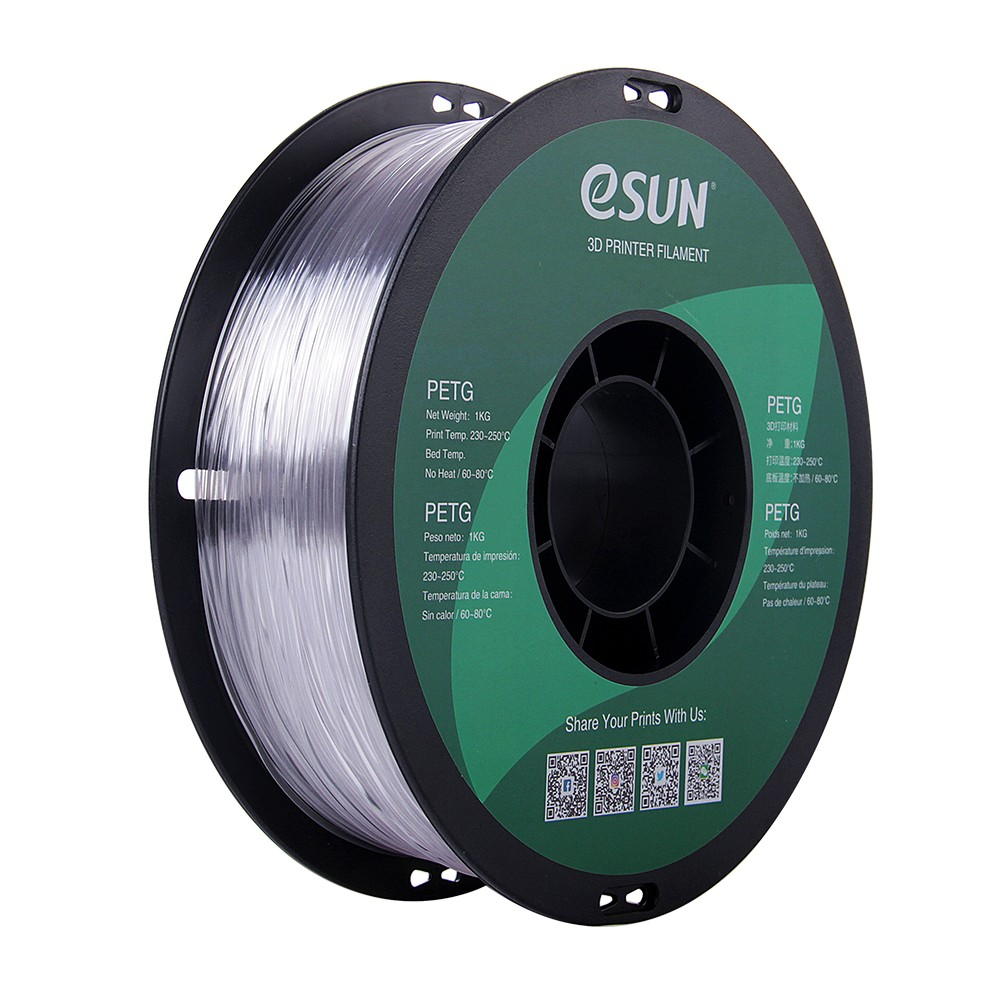
eSun PETG 1.75mm 3D Printing Filament 1kg – Clear
High-quality eSun PETG filament — the base material that PETG-CF composites are built on. Excellent for understanding PETG print settings before moving to CF variants. Ideal for functional, food-contact, and transparent parts.
Post-Processing Carbon Fiber Prints
Sanding
CF filament prints sand differently from standard PLA or PETG. The carbon fibers create a distinctive scratch pattern. Use wet sanding (start with 120 grit, progress to 400) for best results. Always wear a dust mask when sanding CF prints — carbon fiber dust is an irritant and should not be inhaled.
Painting
CF prints can be painted with standard model paints or spray paints. The matte, textured surface of CF actually helps paint adhere well without requiring a primer. For the best finish, apply a thin coat of filler primer first to fill any layer lines, then apply colour coats.
Hardware Inserts
CF filaments work excellently with heat-set brass inserts for creating strong threaded connections. Use a soldering iron or dedicated insert installation tool. The stiffness of CF parts means the inserts hold extremely well without cracking the surrounding material (unlike pure PLA, which can be brittle).
Real-World Applications
Drone Components
PETG-CF is perhaps the ideal material for FPV drone and multirotor parts. Arms, motor mounts, and frame plates printed in PETG-CF are significantly stiffer than PETG alone, providing better motor vibration isolation and more predictable flight dynamics. The material’s heat resistance handles the warmth generated by brushless motors during flight.
Automotive and Racing
Indian RC car enthusiasts and kart builders use PLA-CF for brackets, body mounts, and aerodynamic add-ons. The low weight and high stiffness make these parts perform far better than standard PLA equivalents.
Industrial Jigs and Fixtures
Manufacturing SMEs across India are increasingly using PETG-CF for production-line jigs, drill guides, and assembly fixtures. The material’s dimensional stability (minimal creep under sustained load) and temperature resistance make it suitable for light industrial use.
Robotics and Automation
Structural components in robot arms, gripper mounts, and servo brackets benefit enormously from CF composites. The improved stiffness-to-weight ratio directly translates to better robot positioning accuracy and faster movement without oscillation.
Buying Guide for India
When choosing CF filament in India, consider these factors:
- CF Content: Higher CF content (15–20%) gives better mechanical properties but is harder to print and wears nozzles faster. 10–12% CF is easier to print and still noticeably stiffer than the base material.
- Brand Consistency: Diameter variation causes extrusion inconsistency — stick to well-known brands with tight tolerances (±0.02mm).
- Spool Design: Reusable or lightweight cardboard spools are preferred for reducing waste — look for eco-conscious options.
- Price: CF filaments cost 2–4× more than standard PLA or PETG — factor this into project budgets.
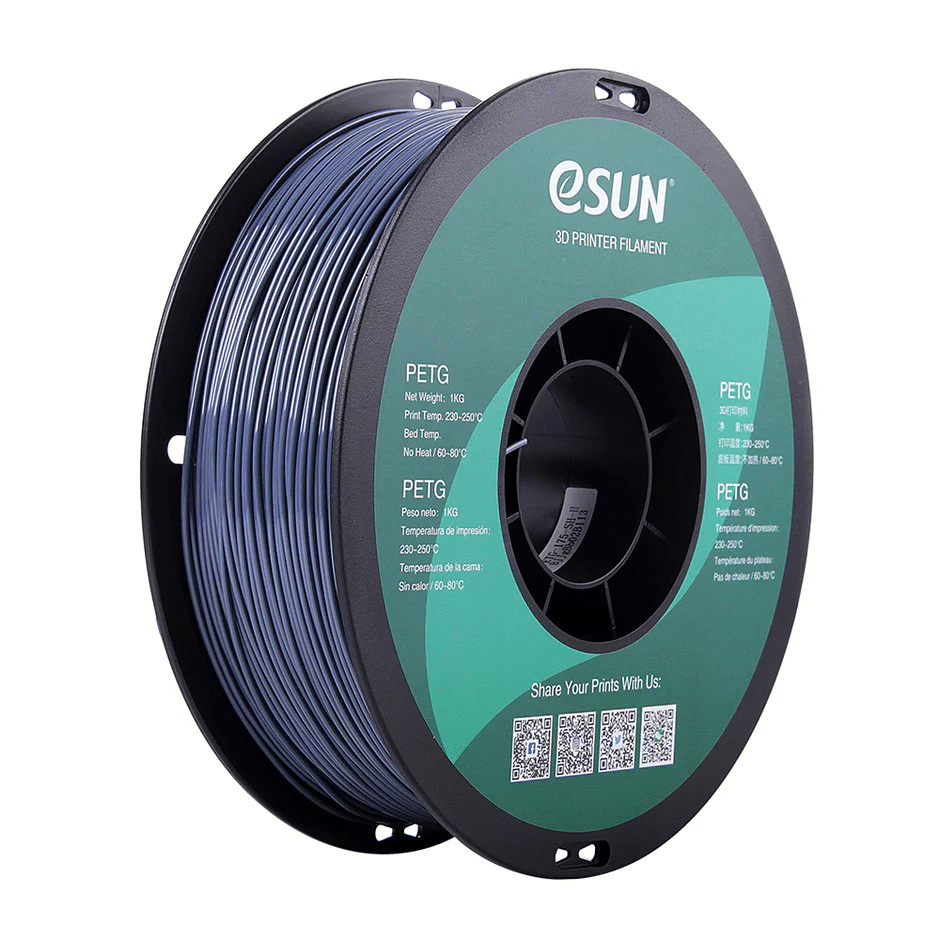
eSUN PETG 1.75mm 3D Printing Filament 1kg – Grey
eSUN PETG in grey — perfect for functional and mechanical parts where colour matters. The base material knowledge from printing standard PETG transfers directly to PETG-CF composite printing.
Frequently Asked Questions
Can I print CF filament with a standard brass nozzle?
Technically yes, but it is strongly not recommended. A brass nozzle will wear out significantly within 200–500 grams of CF filament, becoming oversized and causing inconsistent extrusion. Always use a hardened steel, tungsten carbide, or ruby-tipped nozzle for CF printing.
Is PETG-CF stronger than standard PETG?
PETG-CF is significantly stiffer (higher Young’s modulus) than standard PETG. However, it can be more brittle under impact loads. For applications requiring high impact resistance, standard PETG or PETG-GF (glass fiber) may be preferable. For stiffness and dimensional stability, PETG-CF wins clearly.
How do I know if my CF filament is causing nozzle wear?
Signs of nozzle wear include: gradual increase in extrusion width (prints look overextruded at the same flow settings), inconsistent extrusion, and rougher surface finish over time. Replace your hardened nozzle every 5–10 kg of abrasive material, or inspect it visually under magnification.
Can CF filament be used outdoors in India?
PLA-CF is not suitable for outdoor use in hot Indian summers — the HDT (~55°C) means parts can deform inside a car or in direct sun. PETG-CF handles moderate outdoor temperatures well (up to ~75°C) and has decent UV resistance. For extreme outdoor exposure, consider ASA-CF or PA-CF filaments.
What infill pattern works best for CF parts?
Gyroid infill is recommended for most CF applications — it provides isotropic strength (equal in all directions) which compensates for CF’s anisotropy. For parts loaded primarily in one direction, rectilinear infill aligned with the load direction can be more efficient.
Start Your Carbon Fiber Printing Journey
Carbon fiber composite filaments represent a genuine leap in what desktop 3D printing can achieve for functional parts. Whether you are building drone frames, industrial fixtures, or structural prototypes, PETG-CF and PLA-CF deliver real-world stiffness and performance improvements that justify their higher cost and additional setup complexity.
The key to success: invest in a hardened steel nozzle, dry your filament thoroughly, use appropriate print temperatures, and orient your parts to align the strongest axis with your primary loads.
Shop Carbon Fiber Printing Hardware at Zbotic: Find hardened steel nozzles, hotend assemblies, PETG filament, and other essential 3D printing components. Browse our 3D Printing range to equip your printer for composite filament printing.




Add comment