
Table of Contents
- Overview: Two Different Philosophies
- Specifications Comparison
- Print Speed and Quality
- Material Compatibility
- Automation and Ease of Use
- Software Ecosystem
- Reliability and Maintenance
- India-Specific Considerations
- Price and Value in India
- Final Verdict: Which Should You Buy?
- Frequently Asked Questions
Two printers have dominated the high-end consumer 3D printing conversation over the past two years: the Bambu Lab X1 Carbon (X1C) and the Prusa MK4. Both are excellent machines, but they represent fundamentally different approaches to desktop 3D printing — and for Indian buyers in 2026, understanding those differences is critical to making the right purchase decision.
The Bambu Lab X1C is a fully enclosed CoreXY printer packed with sensors, automation features, and multi-material capability. The Prusa MK4 is a refined, open-frame bed-slinger from a company with a decade-long reputation for reliability, repairability, and open-source community support. In this comprehensive comparison, we evaluate both machines across every dimension that matters to Indian makers, engineers, hobbyists, and small businesses.
Overview: Two Different Philosophies
Bambu Lab X1 Carbon
Launched in 2022 and significantly refined through firmware updates since, the X1C is Bambu Lab’s flagship single-colour (or multi-colour with AMS) printer. It uses a CoreXY motion system with a moving hotend and stationary bed — enabling extremely high print speeds. The X1C is built around automation: LIDAR-based first-layer inspection, vibration compensation calibration, AI-powered spaghetti detection, automatic flow calibration, and more. It is designed to minimise the expertise required to get great prints.
Prusa MK4
The MK4 is the latest evolution of the legendary Prusa i3 design. It uses a Nextruder extruder with a planetary gear system for precise, high-force filament feeding. The MK4 introduced input shaping, load cell-based bed leveling (no separate probe needed), and a significant software upgrade with the PrusaSlicer. It is a bed-slinger (moving bed, stationary gantry) — which means lower maximum speeds but excellent dimensional accuracy at moderate print speeds. Prusa’s philosophy prioritises repairability, open-source design, and user control.
Specifications Comparison
| Specification | Bambu Lab X1C | Prusa MK4 |
|---|---|---|
| Motion System | CoreXY | i3 Bed-Slinger |
| Build Volume | 256×256×256 mm | 250×210×220 mm |
| Max Print Speed | 500 mm/s | 200 mm/s |
| Max Acceleration | 20,000 mm/s² | 10,000 mm/s² |
| Enclosure | Yes (fully enclosed) | No (open frame) |
| Max Nozzle Temp | 300°C | 290°C |
| Max Bed Temp | 120°C | 120°C |
| ABL System | LIDAR + Force Sensor | Load Cell (Nextruder) |
| Multi-Material | AMS (4 materials) | MMU3 (5 materials) |
| Camera | Yes (AI spaghetti detect) | No |
| Connectivity | Wi-Fi, LAN, Bambu Cloud | USB, Wi-Fi, Ethernet |
| Open Source | Partially | Fully open source |
| India Price (approx) | ₹1,30,000–1,50,000 | ₹55,000–75,000 (kit) |
Print Speed and Quality
Bambu Lab X1C: Speed Champion
The X1C’s CoreXY architecture physically moves much less mass during printing — only the small printhead moves in XY, while the bed moves only in Z. This low moving mass, combined with input shaping and advanced motion planning, allows sustained printing at 300–500 mm/s without the ringing artefacts that would destroy print quality at such speeds on a traditional bed-slinger.
In practical terms, the X1C can print a standard 3D Benchy in under 15 minutes on default quality settings. A typical functional part that takes 3 hours on an Ender 3 might take under 45 minutes on the X1C at high speed mode.
Print quality at high speed is surprisingly good. Bambu Studio’s profiles are well-tuned, and the automatic vibration calibration (which the X1C runs on every boot or on-demand) ensures that input shaping parameters are always current. Surface quality at 0.2mm layers and 300 mm/s rivals what many printers achieve at 80 mm/s.
Prusa MK4: Quality at Measured Pace
The MK4’s maximum print speeds are around 200 mm/s for perimeters — considerably slower than the X1C. However, at moderate speeds (60–120 mm/s), MK4 print quality is outstanding. The Nextruder’s planetary gear system provides extremely precise filament control, resulting in excellent dimensional accuracy, clean corners, and consistent extrusion.
For makers who prioritise dimensional accuracy over raw speed — engineering prototypes, mechanical parts, precision fitment components — the MK4 is arguably the better choice. At its preferred operating speeds, the MK4’s layer adhesion and consistency are exemplary.
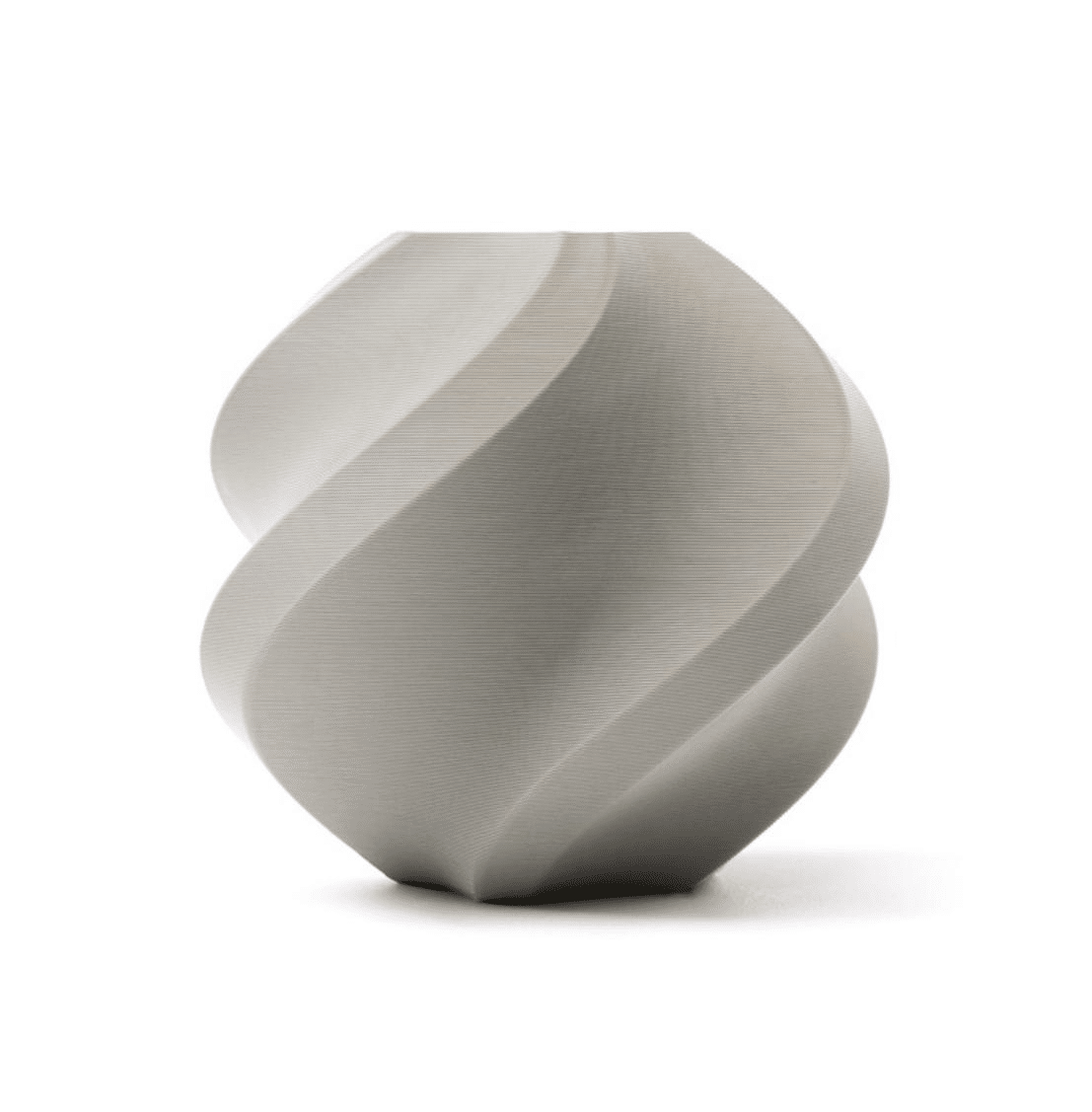
Bambu Lab PLA 3D Printer Filament – Grey, 1.75mm with Reusable Spool
Official Bambu Lab PLA filament in grey with reusable spool. Engineered specifically for Bambu Lab printers with tight diameter tolerance for optimal AMS and single-spool performance at high speeds.
Material Compatibility
X1C: Enclosed for Engineering Materials
The X1C’s full enclosure is a major material advantage. ABS, ASA, PA (Nylon), PC (Polycarbonate), and other engineering materials that warp badly in open-air printers print reliably in the X1C’s controlled chamber temperature (up to ~60°C ambient). The carbon fiber composite nozzle in the standard X1C handles most standard materials; abrasive materials require the optional hardened steel nozzle.
Materials the X1C handles well:
- PLA, PLA+, PLA-CF (excellent)
- PETG, PETG-CF (excellent)
- ABS, ASA (excellent — enclosed chamber helps enormously)
- TPU 95A and stiffer grades (good)
- PA6-CF, PA12-CF (good with AMS or dry box)
- PC, PC-ABS (workable with chamber heating)
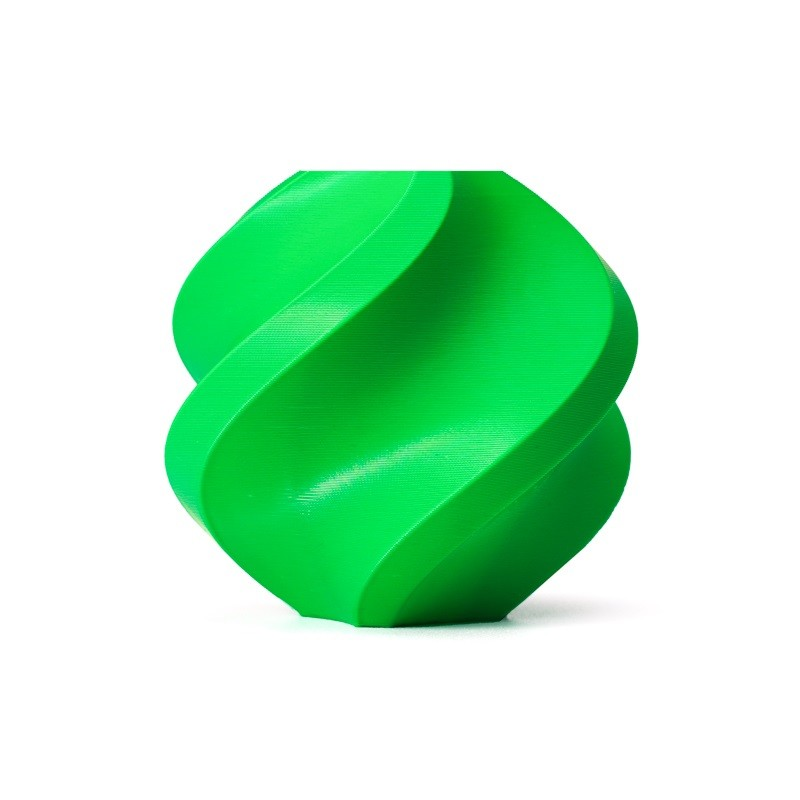
Bambu Lab ABS Filament – Bambu Green, 1.75mm with Reusable Spool
Official Bambu Lab ABS filament with reusable spool. ABS is one of the X1C’s strongest use cases — the enclosed chamber eliminates warping, making ABS printing reliable and consistent for the first time for most users.
Prusa MK4: Open Frame Limitations
The MK4’s open frame design means ABS and ASA printing requires additional enclosure setup. PLA, PETG, and TPU print excellently. For ABS, Prusa sells the Enclosure kit separately, or users can build DIY enclosures — a common solution in the Prusa community.
For PLA and PETG — which account for 80–90% of most makers’ printing — the MK4 is excellent and requires no additional hardware. The Nextruder also handles TPU better than most bed-slingers due to its short filament path.
Bambu Lab PLA 3D Printer Filament – Silver, 1.75mm with Reusable Spool
Official Bambu Lab PLA in silver — the premium filament choice for either the X1C or MK4. High diameter consistency and optimised formulation for high-speed printing.
Automation and Ease of Use
Bambu Lab X1C: Maximum Automation
The X1C is arguably the most automated consumer 3D printer ever made. From the moment you load filament to the completed print, the X1C handles most decisions automatically:
- LIDAR-based first layer inspection detects adhesion failures in the first 5 layers
- AI spaghetti detection (camera-based) pauses the print if a failure is detected mid-print
- Automatic vibration compensation runs a calibration sweep for input shaping
- Automatic flow calibration adjusts extrusion rate based on measured line width
- AMS (Automatic Material System) automatically feeds filament and performs filament changes
- Built-in Wi-Fi and Bambu Handy app for remote monitoring and print management
Prusa MK4: Streamlined but User-Focused
The MK4 is also significantly more automated than earlier Prusa models. The load cell-based first layer calibration (Prusa’s FirstLayerCalibration routine) is extremely reliable. PrusaSlicer profiles are excellent and well-maintained. The MK4 guides new users through setup clearly with its colour screen and detailed prompts.
However, the MK4 puts more control — and therefore more responsibility — in the user’s hands. This is a feature for experienced makers; a potential obstacle for absolute beginners. The MK4 is not as “fire and forget” as the X1C, but experienced users often prefer having explicit control over every parameter.
Software Ecosystem
Bambu Studio vs PrusaSlicer
Bambu Studio is based on the same Prusa/Bambu open-source slicer codebase (OrcaSlicer lineage). It is polished, well-designed, and its default profiles for Bambu materials are exceptional. However, it is optimised for Bambu printers — using it with third-party machines requires more manual configuration. The cloud features (Bambu Cloud printing, remote monitoring) work seamlessly.
PrusaSlicer is the gold standard open-source slicer used by millions of makers worldwide. It has the most mature feature set, excellent support for hundreds of printers, and a powerful modifier mesh system for per-region settings. PrusaSlicer is also compatible with virtually every 3D printer brand — skills transfer completely if you switch printers later.
OrcaSlicer (free, open source) works with both printers and is arguably the best all-around slicer in 2026 — it inherits Bambu Studio’s fast slicing engine while adding many advanced features and multi-printer support.
Reliability and Maintenance
Bambu Lab X1C
The X1C has had an excellent reliability record after the early firmware iterations stabilised. The toolhead (printhead) assembly is user-replaceable and relatively simple to swap. Common maintenance items include the build plate, nozzle changes (the complete hotend assembly swaps easily), and periodic belt tension checks.
However, the X1C’s complexity means more components that can potentially fail. The AMS in particular has moving parts (motorised spool holders, filament hub, cutting blade) that require occasional maintenance. Bambu Lab’s customer support and parts availability in India has improved significantly through authorised distributors.
Prusa MK4
Prusa’s reputation for reliability is unparalleled in the maker world. The MK4 is designed with repairability as a core principle — every component is user-serviceable with standard tools, every part is available for purchase from Prusa’s shop, and the community has developed detailed guides for virtually every repair. The open-source design means third parties also manufacture compatible parts.
Prusa printers are commonly described as “will print for years with minimal intervention.” The MK4’s Nextruder has fewer failure points than typical dual-drive extruders, and the load cell bed leveling has no separate probe to fail or miscalibrate.
Bambu Lab ABS 3D Printer Filament – Black, 1.75mm
Official Bambu Lab ABS filament in black — ideal for printing structural and heat-resistant parts on the X1C’s enclosed chamber. Optimised diameter consistency for AMS compatibility and reliable high-speed ABS printing.
India-Specific Considerations
Import Duties and Final Pricing
Both the Bambu Lab X1C and Prusa MK4 attract customs duties when imported into India. As of 2026, import duties on 3D printers fall under HSN code 8477, with basic customs duty ranging from 7.5% to 10% plus IGST of 18%. This significantly increases the landed cost compared to US/EU prices.
Several Indian distributors now stock Bambu Lab products directly, with pre-paid import duties included in the Indian MRP. Prusa ships directly from Czech Republic — delivery is reliable but customs can add 15–30% to the listed price depending on assessment.
After-Sales Support
This is where the two printers diverge significantly for Indian buyers:
- Bambu Lab: Growing authorised distributor network in India. Bambu Lab India support response times have improved considerably in 2025–2026. Spare parts (hotend, AMS parts, build plates) are increasingly available through Indian electronics distributors including Zbotic.in.
- Prusa: No official India presence. All support is via international email/online. Spare parts ship from Czech Republic with 7–14 day delivery and potential customs complications. However, the open-source design means many Prusa-compatible parts are manufactured and sold by Indian suppliers.
Voltage and Power
Both printers support 100–240V universal input — so India’s 230V, 50Hz supply is perfectly compatible with no adapter required. The X1C draws around 1000W peak (during heating) and the MK4 around 360W — both well within standard Indian home circuit capacity.
Heat and Humidity
India’s climate presents specific challenges for 3D printing. High ambient temperatures in summer (35–40°C in many cities) affect printer cooling and can cause heat creep in open-frame printers like the MK4. The X1C’s enclosed design actually traps heat, which helps ABS printing but can cause PLA issues in very hot rooms — Bambu Studio’s profiles account for this with enhanced cooling settings for PLA in warm climates.
Monsoon humidity is the bigger challenge for filament storage — proper airtight storage with desiccant is essential for both PLA and PETG in Indian conditions. The X1C’s optional RFID-tagged filament system (Bambu spools) auto-sets profiles but does not protect against moisture absorption without proper storage.
Price and Value in India
Bambu Lab X1C Total Cost
- Printer (X1C, combo with AMS): ₹1,30,000–1,60,000 (varies by distributor and import costs)
- Nozzle upgrades (hardened steel for CF/abrasive): ₹3,000–6,000 per set
- Build plates (PEI, textured): ₹2,000–4,000 each
- Filament: ₹1,500–2,500 per kg (Bambu brand); ₹800–1,500 for third-party brands
- Bambu Handy Cloud (optional): Free tier sufficient for most users
Prusa MK4 Total Cost
- Kit version: ₹55,000–75,000 (import + customs)
- Assembled version: ₹80,000–1,00,000 (import + customs)
- MMU3 (multi-material unit): Additional ₹20,000–30,000
- Prusa Enclosure kit (for ABS printing): Additional ₹15,000–20,000
- Filament: ₹1,000–1,800 per kg (Prusament); third-party compatible
Value Proposition
For Indian buyers, the price gap is substantial. The MK4 kit (plus shipping and customs) can land at approximately half the X1C combo price. However, the X1C delivers 2–3× faster print speeds and significantly better material versatility out of the box. If time is money and you print ABS/engineering materials regularly, the X1C’s premium may be justified.
Final Verdict: Which Should You Buy?
Choose the Bambu Lab X1C if:
- Speed is your top priority — you want prints done in a fraction of the time
- You regularly print ABS, ASA, Nylon, or engineering materials that require an enclosure
- You want maximum automation with minimal manual intervention
- You plan to use multi-material printing extensively (AMS)
- You are a professional or small business where printer uptime directly affects revenue
- Budget is not the primary constraint
Choose the Prusa MK4 if:
- You primarily print PLA and PETG
- You value repairability and long-term serviceability above all else
- You want an open-source platform you can modify, hack, and learn from completely
- Budget is a significant consideration (especially for students and hobbyists)
- You enjoy the hands-on aspect of 3D printing setup and maintenance
- You want a printer that will remain fully functional and supported for 5–10 years with readily available parts
Bottom Line for Indian Buyers in 2026
The Bambu Lab X1C is the better printer by objective metrics — it is faster, more capable with engineering materials, and more automated. But it costs significantly more in India after import duties and it locks you into a more closed ecosystem. The Prusa MK4 is a mature, reliable workhorse that excels with standard materials and will serve you reliably for years with a strong support community and easily sourced spare parts.
For most Indian hobbyists, students, and small-scale makers: the Prusa MK4 kit offers outstanding value. For professionals, engineering teams, and businesses where print throughput matters: the Bambu Lab X1C justifies its significant price premium.
Frequently Asked Questions
Can I get the Bambu Lab X1C repaired in India?
Bambu Lab has an increasingly active authorised service and distributor network in India. Major component repairs (toolhead replacement, AMS servicing) can typically be handled through authorised distributors in major cities. Bambu Lab’s online support and community forums are active and helpful for self-service repairs.
Is the Prusa MK4 kit difficult to build?
The Prusa MK4 kit is one of the most beginner-friendly printer kits available. The assembly manual is extraordinarily detailed, with colour photos for every step. Most builders complete it in 8–12 hours. The build process also teaches you how your printer works — invaluable for troubleshooting.
Which printer is better for a college or school lab?
For educational institutions, the Prusa MK4 is generally recommended. Its open-source design, educational resources, comprehensive documentation, and fully repairable nature make it ideal for learning environments. Bambu Lab also offers educational programs, but the X1C’s relative complexity and proprietary aspects make it less ideal for teaching 3D printing fundamentals.
Does the X1C work with third-party filaments?
Yes, the X1C works excellently with third-party filaments. You can manually enter filament parameters or use custom profiles. The RFID auto-detection only works with official Bambu filament, but the printer performs identically with well-calibrated third-party profiles. Many Indian users successfully print with eSUN, Polymaker, 3DJake, and other brands.
Which has better print quality?
At default settings and moderate speeds, both printers produce excellent quality. For the finest detail and dimensional accuracy, the MK4 has a slight edge. For speed-adjusted quality (same time per print), the X1C produces superior results by printing faster without quality loss. For ABS and engineering materials, the X1C’s enclosed environment gives it a clear quality advantage.
Find Bambu Lab Filaments and Accessories at Zbotic: Whether you choose the X1C or MK4, Zbotic.in stocks official Bambu Lab PLA and ABS filaments, hotend assemblies, nozzles, and 3D printer accessories. Shop our 3D Printing range for everything your printer needs.






Add comment