
Every builder who graduates from a basic hobby kit eventually faces the same question: stepper motor or servo motor? For CNC routers, 3D printers, laser cutters, and precision automation systems, this choice has meaningful consequences for accuracy, speed, cost, and complexity. This guide gives you the complete technical picture so you can choose with confidence — not guesswork.
How Stepper Motors Work
A stepper motor divides a full 360° rotation into a fixed number of discrete steps. A standard NEMA17 motor has 200 steps per revolution (1.8° per step). The driver energises each of the motor’s coil windings in sequence, and the rotor — which has many small teeth on its surface — snaps to each new magnetic position like a ratchet.
The great advantage is inherent position knowledge without a sensor. If you send 200 step pulses to a NEMA17, you know the shaft has turned exactly one full revolution — as long as the motor never misses or skips a step. Modern microstepping drivers like the TMC2209 divide each 1.8° step into 256 microsteps, giving 51,200 steps per revolution in theory (though real-world position accuracy tops out at about 1/8 to 1/16 step due to motor non-linearity).
The core limitation: if the motor experiences a load that exceeds its holding torque, it will miss steps. The controller does not know this happened. The position is now wrong, and the error accumulates silently until the print fails or the CNC part is ruined.
How Servo Motors Work
A servo motor system consists of three components: a DC or BLDC motor, an encoder or resolver attached to the shaft, and a servo drive (controller) that reads encoder feedback. The drive commands a target position, continuously reads the actual position from the encoder, and adjusts motor current to eliminate the error. This is a closed-loop system.
Industrial servo motors typically use resolvers or multi-turn absolute encoders with thousands to millions of counts per revolution. Hobby servos (SG90, MG996) use a simpler arrangement: a DC motor, a potentiometer as position sensor, and an internal control circuit that responds to a PWM signal. The PWM pulse width sets the target angle, and the internal circuit drives the motor until the potentiometer matches the target.
The key advantage: the servo always knows where it is. Load disturbances, vibration, and backlash are continuously corrected. The servo will fight to hold its position with full motor current if something tries to push it off target.
Torque-Speed Curves: The Core Difference
This is where the fundamental engineering tradeoff lives. Stepper motors produce maximum torque at low speeds — near zero RPM they can hold tremendous torque — but torque drops sharply as speed increases. Above roughly 600–1000 RPM (depending on motor and driver voltage), a NEMA17 has lost most of its torque and can barely accelerate a load.
Servo motors produce near-constant torque from zero to their rated speed, then drop off above the rated speed. They can also briefly deliver 3–5× their rated torque for acceleration without stalling. This is called the servo’s peak torque capability.
Practically speaking:
- A stepper running at 200 mm/s on a 3D printer has maybe 30–40% of its stall torque available. This is why high-speed steppers need high-voltage drivers (24 V instead of 12 V) to maintain torque at speed.
- A servo running at the same speed has close to 100% rated torque available, plus peak torque reserve.
- For applications that need fast acceleration and high sustained speed, servos win convincingly.
- For slow, precise positioning (Z axis on a CNC router, extruder motor), steppers perform equally well at a fraction of the cost.
Open-Loop vs Closed-Loop Control
The open-loop nature of stepper systems is both their simplicity and their Achilles heel:
Advantages of open-loop stepper control:
- No encoder or feedback electronics needed
- Simpler wiring (just step and direction signals)
- No PID tuning required
- Lower cost per axis
- Inherently deterministic (no overshoot, no oscillation)
Disadvantages of open-loop stepper control:
- Silent stall — the controller never detects a missed step
- Motor runs at full current regardless of load (more heat)
- Position accuracy cannot be verified in real time
- Resonance at certain speeds can cause stalling
Servo closed-loop advantages:
- Position error is detected and corrected in real time
- Motor only draws current proportional to load (cooler, more efficient)
- Can alarm or fault on excessive following error (detects crashes, jams)
- Better dynamic response at high speeds and accelerations
Servo closed-loop disadvantages:
- Encoder adds cost and wiring complexity
- PID gains must be tuned for stability
- Possible instability (oscillation, hunting) if poorly tuned
- Drive electronics are more expensive than simple stepper drivers
Accuracy and Resolution
For a NEMA17 stepper with a TMC2209 at 1/16 microstep: 200 × 16 = 3200 steps/rev. On a 3D printer with 20-tooth GT2 pulley (40 mm/rev belt travel), this gives 3200/40 = 80 steps/mm. The theoretical minimum move is 12.5 microns. In practice, real positional accuracy is limited by belt elasticity, frame flex, and the fact that microsteps are not linearly accurate — the realistic repeatable accuracy is around 0.1–0.05 mm for a well-tuned FDM printer.
A servo with a 1000 line encoder on the same mechanical system gives 4000 counts/rev (quadrature) — similar to 1/20 microstep. However, the closed-loop correction means the servo actually achieves that accuracy reliably under varying loads, whereas the stepper’s accuracy degrades if it is running near its torque limit.
For most 3D printing applications, the stepper’s resolution is more than adequate — the limiting factor is extrusion consistency and belt stretch, not motor resolution. For precision CNC machining of metal or high-speed routing where position under cutting load matters, the servo’s maintained accuracy under load is a genuine advantage.
Speed Performance
The numbers tell the story clearly:
- NEMA17 stepper at 24 V: usable top speed approximately 600–800 RPM under load (roughly 200–250 mm/s on a typical printer axis)
- Servo motor (closed-loop BLDC): rated speeds of 3000 RPM or higher, with full torque maintained
Modern 3D printers pushing for fast printing (Bambu Lab, Voron, high-speed Ender mods) use steppers at 24 V with input shaper (resonance compensation) to reach 200–300 mm/s. They work, but they are at the limits of what steppers can do. A servo-based printer could easily do 500+ mm/s if the mechanical design supported it.
For CNC routing, servo systems enable faster feed rates and more aggressive acceleration, which matters for productivity in a production environment. Hobby CNC routers rarely need this — an X-Carve or Shapeoko running at 1000 mm/min is perfectly served by NEMA23 steppers.
Heat and Efficiency
Stepper motors are inefficient by design. Because they must hold their rotor in a fixed position against any disturbance, they draw nearly full holding current even when stationary. A 2 A NEMA17 stepper sitting still draws up to 2 A per coil continuously, generating heat. Modern drivers reduce this with an idle current reduction feature (typically dropping to 50% after a standstill timeout), but the fundamental behavior remains wasteful.
Servo motors draw current proportional to load. At rest with no load, a servo draws almost zero current. Under load, it draws only what is needed. This makes servo systems significantly more energy-efficient in applications with variable or intermittent loads — robot arms, pick-and-place machines, and machines with long idle periods benefit most.
Cost and System Complexity
This is where steppers win decisively for entry-level and medium projects:
- A NEMA17 stepper + TMC2209 driver: approximately ₹400–700 for the pair
- A closed-loop servo motor + driver (entry level, like the STEPPERONLINE iSV57 or similar): ₹3,000–8,000 per axis
- Industrial servo axis (Mitsubishi, Yaskawa, Delta): ₹15,000–50,000+ per axis
For a 3-axis CNC router, upgrading from steppers to servos can add ₹10,000–20,000 in hardware costs and significantly more in setup and tuning time. For a hobbyist cutting wood or aluminium at low production volumes, this cost is rarely justified by the performance gain.
Which Is Best for 3D Printers?
For the vast majority of 3D printers — from entry-level Ender 3 to mid-range Prusa i3 and even the high-speed Voron — stepper motors are the right choice. Here is why:
- FDM printing speeds are limited by cooling and material flow, not motor speed
- Silent TMC stepper drivers (TMC2208/2209) make steppers nearly inaudible
- Position accuracy from steppers exceeds the practical resolution of FDM printing
- Open-loop is reliable when the system is properly tuned — 3D printers rarely stall their motors
- Cost of a full set of 5 stepper drivers + motors for a Voron 2.4 is far less than 5 servo axes
The exception is large-format industrial FDM printers where print speeds of 500+ mm/s and very large, heavy gantry systems require servo-level torque and speed. These machines cost ₹5,00,000+ and servo drives are a sensible component at that budget.
Which Is Best for CNC Routers?
For hobby CNC routers (X-Carve, Shapeoko, home-built 3-axis wood routers), NEMA23 or NEMA34 steppers are the standard and they work very well. Most hobby CNC work runs at feed rates where steppers have plenty of torque, and the open-loop simplicity means easier setup with grbl or Mach3.
For semi-professional CNC use — aluminium cutting at moderate feed rates, light steel routing, high-duty-cycle production — closed-loop hybrid stepper-servo systems (see below) offer a compelling middle ground. For full industrial CNC mills and lathes, BLDC servos are standard.
Hybrid Closed-Loop Steppers
A relatively modern option that blurs the line: closed-loop stepper systems add an encoder to a standard NEMA stepper motor and use a smart driver that compares commanded position to actual encoder position. If the motor misses a step, the driver corrects it immediately.
Products like the JMC iHSS and Leadshine EtherCAT closed-loop steppers give you:
- Stall detection and correction (no silent lost steps)
- Lower heat (current is reduced based on actual load feedback)
- Faster acceleration than open-loop steppers
- Lower cost than full servo systems
This hybrid approach is increasingly popular for CNC router upgrades and is worth considering if you are between the stepper and servo camps in terms of requirements and budget.
Product Recommendations

42HS48-1204A-20F NEMA17 5.6 kg-cm Stepper Motor with Detachable Cable
The workhorse of desktop 3D printing and small CNC. This NEMA17 at 5.6 kg-cm holding torque handles all standard printer axes. Detachable cable makes it easy to swap in tight enclosures.

A4988 Stepper Motor Driver Controller Board — RED
A reliable entry-level stepper driver supporting up to 1/16 microstepping and 2 A per coil. A great choice for GRBL-based CNC machines, older 3D printers, and learning stepper control fundamentals.
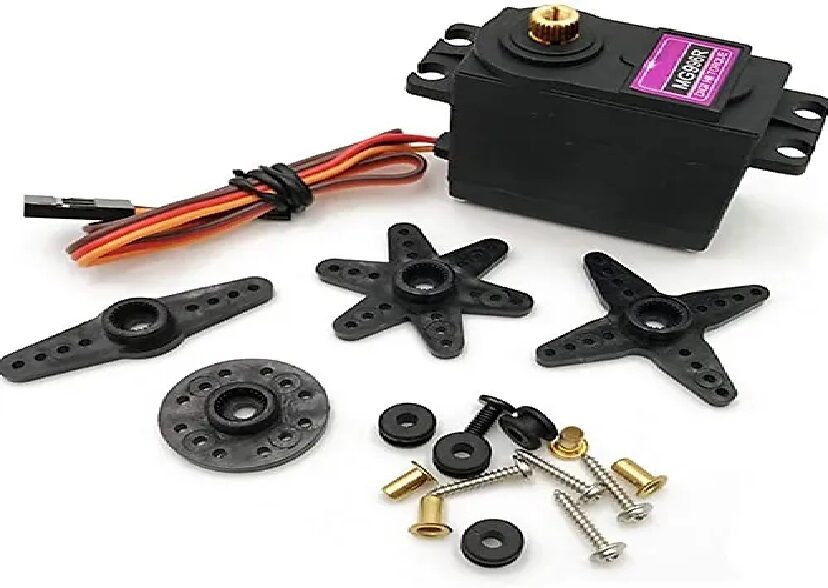
Servo MG996 13KG 180 Degree
A high-torque hobby servo perfect for robot arm joints, pan-tilt mechanisms, and RC vehicles. Metal gears provide durability that plastic-gear servos cannot match under sustained load.
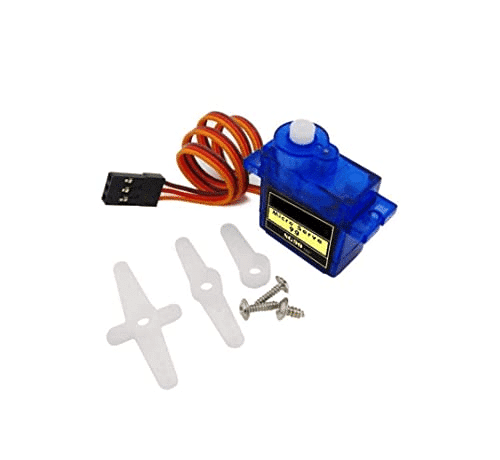
TowerPro SG90 180 Degree Rotation Servo Motor
The classic micro servo for Arduino projects, small robot arms, and camera gimbals. Lightweight, inexpensive, and directly controllable with Arduino’s Servo library.
Frequently Asked Questions
Can I use a servo motor in a 3D printer?
Yes, and some high-end industrial 3D printers do exactly this. However, for desktop FDM printers it is overkill — the mechanical limits (belt stretch, nozzle melt zone, cooling capacity) prevent you from benefiting from servo speed and accuracy advantages. The cost and complexity are not justified for hobby printing.
Do stepper motors lose steps in normal 3D printing?
On a well-calibrated printer running within its design parameters, step losses are very rare. They typically occur when: the motor current is set too low, the acceleration is too aggressive, a mechanical jam occurs, or the motor is running near its resonance frequency. Silent TMC drivers with SpreadCycle mode help avoid resonance-induced stalls.
What is the holding torque of a stepper, and why does it matter?
Holding torque is the maximum torque a stepper can resist without the shaft rotating when current is applied. It determines how well the motor resists external forces trying to move the axis — important for a CNC Z axis that must hold position against gravity without active control. A servo must use active current to hold position; a stepper holds with its magnetic detent even at reduced current.
Is a servo motor the same as a servo drive?
No. The servo motor is the mechanical actuator (the spinning machine). The servo drive (or amplifier) is the electronics that power the motor and close the feedback loop. When people say "servo system," they usually mean the complete combination of motor + encoder + drive. Hobby servos (SG90, MG996) integrate all three into a single package.
What NEMA size stepper should I use for a CNC router?
NEMA17 (42 mm) for small CNC machines with lightweight gantries (work area under 300×300 mm). NEMA23 (57 mm) for medium routers up to 600×600 mm cutting aluminium. NEMA34 (86 mm) for large format machines or heavy gantries cutting steel. Match the motor’s holding torque to your calculated cutting force requirement with at least a 2× safety margin.
Zbotic carries NEMA17 stepper motors, A4988 and TMC drivers, servo motors from SG90 to MG996, and accessories. All stocked in India for fast delivery.





Add comment