
3D Printed IoT Sensor Enclosures: Weather-Proof Outdoor Cases
The Internet of Things revolution is happening in Indian villages, farms, factories, and smart homes — and at its heart are tiny sensors reading temperature, humidity, soil moisture, air quality, water levels, and more. But placing a bare ESP32 or Arduino outdoors in India’s climate — where monsoon rains, dust storms, salt air, scorching sun, and rodents are all real threats — quickly destroys unprotected hardware.
Custom 3D printed enclosures solve this problem beautifully. Unlike commercial off-the-shelf junction boxes, a 3D printed case can be designed to exactly fit your specific sensor and circuit board, with perfectly placed mounting holes, sensor windows, cable entries, and solar panel brackets. This guide is the definitive resource for Indian makers building outdoor IoT deployments with 3D printed housings.
Why Custom 3D Printed Enclosures for IoT?
Walk into any Indian electronics market — Lamington Road in Mumbai, SP Road in Bengaluru, Nehru Place in Delhi — and you’ll find generic plastic junction boxes in standard sizes. So why go to the trouble of designing and printing a custom enclosure?
Perfect fit: A custom enclosure for your specific PCB eliminates wasted space, unnecessary bulk, and the inevitable rattling of circuit boards loosely mounted in oversized commercial boxes. Tight tolerances mean less air space, which means less condensation.
Integrated features: You can print in sensor windows, antenna channels, solar panel mounting flanges, pipe clamps for pole mounting, and exactly positioned cable entries. These would require expensive custom machining in a commercial product.
Rapid iteration: When your sensor deployment changes (new board revision, additional sensor, different power source), a commercial enclosure requires new procurement. Your 3D design can be updated in 30 minutes and a new case printed overnight.
Cost: A well-designed 100g PETG enclosure costs ₹40–60 in filament to print. An equivalent commercial IP65 enclosure with the same form factor would cost ₹300–800. At scale (50-100 sensor nodes for an agricultural deployment), the savings are significant.
Localisation: Indian IoT deployments often require features not in commercial products — BSNL/Airtel SIM card holder orientation, specific government meter interface positioning, Indian electrical conduit thread sizes (IS 732 vs IEC standards), and vernacular label printing directly on the surface.
Environmental Threats in Indian Conditions
Understanding the enemy is the first step. Indian outdoor IoT enclosures face a uniquely challenging combination of threats:
Monsoon rain (June–September): Heavy rain, humidity approaching 100%, and sustained water contact for weeks. In coastal areas (Mumbai, Chennai, Kochi, Vizag), salt content in rain and air accelerates corrosion. Your enclosure must be genuinely IP65+ rated, not just splash-resistant.
Summer heat (March–June): Direct sunlight in India’s plains and Deccan plateau raises enclosure surface temperature to 60–80°C in full sun. PLA enclosures will deform. Electronics inside an unventilated black enclosure can reach 70°C+ even with 40°C ambient — this is beyond the safe operating range of many components and LiPo batteries.
Dust (October–November, February–March): Agricultural dust season in Punjab, Haryana, and Rajasthan, plus industrial dust near manufacturing areas, clogs sensor openings and can physically abrade enclosure surfaces. Even IP54 dust protection (limited ingress permitted) can lead to problems when fine silica dust enters over many months.
UV radiation: India’s tropical UV index (8–11 in summer) is among the highest in the world. Standard PLA degrades visibly within 3–6 months. Unpigmented (transparent) PETG cracks within 1–2 years. Black or UV-stabilised ASA is the only filament that reliably survives 3+ years of direct Indian sunlight.
Rodents and insects: In agricultural and rural deployments, rodents chew cables and nest inside any unsealed enclosure. Termites destroy wooden mounting posts. Wasps and bees build nests in unused enclosure cavities. Design specifically to exclude these threats.
Voltage and lightning: Rural Indian power quality is poor. Lightning strikes near sensor installations can cause surge damage. Proper grounding and transient voltage suppressors (TVS diodes) in the electronics design are essential, with the enclosure providing physical protection that supports proper grounding.
Choosing the Right Filament for Outdoor IoT
For outdoor IoT sensor enclosures in India, the filament decision is straightforward:
First choice: ASA (Acrylonitrile Styrene Acrylate)
ASA has built-in UV stabilisers that allow it to survive years of direct sunlight without significant degradation. It has similar strength and heat resistance to ABS (glass transition ~100°C) but without ABS’s UV vulnerability. ASA is the professional choice for permanent outdoor installations. The main downside is cost (typically 40–60% more than PLA) and the need for a printer enclosure to prevent warping during printing.
Second choice: PETG with UV-resistant coating
PETG prints easily (no enclosure required), has excellent layer adhesion, handles 80°C ambient, and is chemically resistant. Its UV resistance is moderate — with 2–3 coats of UV-protective polyurethane varnish or automotive clear coat, PETG enclosures can last 3+ years outdoors in India. More practical than ASA for hobbyists without enclosures on their printers.
Avoid: PLA
PLA is completely unsuitable for outdoor Indian IoT deployments. At 60°C glass transition temperature, it deforms in direct Indian sunlight. UV degrades it within months. PLA is suitable only for indoor or short-term prototype testing.

eSUN PETG 1.75mm Filament 1kg – Clear
Premium PETG with excellent layer adhesion for weatherproof enclosures. Clear variant allows visible status LEDs through the case wall without opening it. Add UV coat for outdoor longevity.

Bambu Lab ABS Filament Black – 1.75mm
Black ABS from Bambu Lab for high-heat-resistance enclosures. Black pigment improves UV resistance compared to light colours. Ideal for power electronics and solar charge controller housing.
Enclosure Design Guide Step by Step
Here’s how to design a professional outdoor IoT enclosure from scratch:
Step 1: PCB measurement
Measure your PCB with digital callipers: length, width, and component height on both sides. Add 3mm clearance on each side and 5mm overhead clearance above the tallest component. This gives your minimum internal enclosure dimensions.
Step 2: Define access requirements
List everything that needs to exit or enter the enclosure:
- Power input (solar, mains, or battery connector)
- Sensor cable/probe exits
- Antenna (RF, cellular, LoRa, WiFi)
- Programming port (USB — only during setup, can be internal)
- Status LED window
- Reset button access (optional)
Step 3: Orientation design
Orient the enclosure so: (a) the lid opens downward to prevent water pooling on the joint, (b) cable exits point downward for natural drip loop formation, (c) sensor ports face the measurement medium (soil, air, water) appropriately, (d) the enclosure faces away from prevailing monsoon wind direction if possible.
Step 4: PCB mount design
Design 4 raised standoff posts at the PCB’s mounting hole positions. Use M2.5 or M3 heat-set inserts pressed into the posts for screw threads that won’t strip. Raise the PCB 5–8mm off the enclosure floor to allow airflow underneath and prevent condensation from directly touching the board.
Step 5: Sealing strategy
Design a 2mm × 2mm groove running around the entire perimeter of the mating face. This groove accepts an O-ring or a custom-printed TPU gasket. Design 4–6 screw positions around the perimeter to compress the gasket evenly.
Step 6: Label and identification
Emboss or deboss your node ID, installation date, sensor type, and contact information directly into the enclosure surface. In large agricultural deployments, clear labelling prevents confusion between hundreds of identical-looking nodes.
Stevenson Screen Design for Climate Sensors
A Stevenson screen is the traditional louvred wooden box used at weather stations to shelter thermometers from direct radiation while allowing free air circulation. For IoT deployments using temperature and humidity sensors (BME280, SHT31, DHT22), a miniature 3D printed Stevenson screen is essential.
Design principles for a 3D printed Stevenson screen:
- Louvred sides (horizontal slats angled 45° downward) — allow airflow but block direct sun and rain
- White or light-coloured exterior to reflect solar radiation (use white PETG or paint)
- Double-wall construction with an air gap between inner and outer walls — insulates the interior from radiative heating
- The sensor should be in the centre of the interior, not touching any wall
- Mount on a north-facing bracket (in India, north-facing avoids the most direct sun all year)
- Minimum height 1.2m above ground to avoid reflected ground heat and splash-back
A well-designed 3D printed Stevenson screen can keep temperature measurement error below 0.5°C even in full Indian summer sun — a remarkable result from a ~₹30 enclosure.
Solar Power Integration and Battery Housing
Solar-powered IoT nodes are the most common design for Indian agricultural and remote monitoring applications where grid power is unavailable or unreliable. The enclosure design must accommodate:
Solar panel mounting: Design a hinged or adjustable bracket that allows the solar panel to be angled at 15–25° (optimum for Indian latitudes in most states). For year-round deployment, 20° fixed tilt works well for most of India between latitudes 8°N (Kerala) and 30°N (Punjab).
Battery compartment: LiPo batteries (18650 cells or flat LiPo packs) must be housed separately from sensitive electronics. Heat is the primary killer of lithium batteries. Design the battery compartment with maximum ventilation or phase-change thermal mass to limit peak temperature. A separate, lightly ventilated battery housing under the main electronics box is the preferred architecture.
Waterproof connector: Between the solar panel and charge controller, use IP67-rated aviation connectors (GX12 or GX16 type, widely available in Indian electronics markets) rather than bare wire connections. These press-fit circular connectors are inexpensive, widely available, and genuinely weatherproof.
Charge controller housing: The solar charge controller (typically a small PCB) generates heat during charging. Design its enclosure with ventilation channels that exclude water using the labyrinth baffle approach. ABS or ASA rather than PETG is preferred here due to higher operating temperatures.
Antenna and RF Transmission Considerations
This is one of the most overlooked aspects of 3D printed IoT enclosure design, and it can make the difference between a node with 50m range and one with 2km range.
Key principles:
- PETG and PLA are nearly RF-transparent — they have minimal effect on signal attenuation. Your RF signal passes through them with negligible loss.
- ABS and ASA have slightly higher dielectric loss — measurable at high frequencies (5GHz WiFi) but negligible for LoRa (433/868MHz), NB-IoT, or 2G/4G cellular.
- Carbon-filled filaments significantly attenuate RF — avoid carbon fibre or carbon black filled filaments for the antenna side of the enclosure.
- Metal reinforcement or foil lining blocks RF completely — if you add any metal shielding inside the enclosure, ensure the antenna is on the outside of the shield.
External antenna design: For maximum LoRa range (critical for farm and village deployments), use an external SMA-connected antenna mounted on the outside of the enclosure. Design a weatherproof SMA bulkhead fitting into the enclosure wall. The short cable run from the module to the bulkhead connector is acceptable at LoRa frequencies.
PCB antenna orientation: Embedded PCB antennas (the trace antennas on ESP32, ESP8266, and SIM800L modules) should face upward (toward the sky) and not be blocked by battery packs, metal standoffs, or thick enclosure walls on the antenna side. Maintain a clear line-of-sight from the antenna to the edge of the enclosure.
Monsoon-Proofing: Advanced Sealing Techniques
India’s monsoon is unlike the intermittent rain of Europe or North America. It involves sustained, heavy rainfall for 3–4 months with wind-driven water, high humidity, and regular flooding. Standard IP54 “splash-proof” enclosures can fail in monsoon conditions. Here are advanced techniques for reliable monsoon-proof enclosures:
Double-door sealing: Design the enclosure with a primary inner compartment and an outer weather shield. The inner compartment is sealed to IP65. The outer shield is simply a rain deflector. This two-stage approach dramatically reduces the water load on the primary seal.
Positive pressure desiccant: Install a 10g silica gel cartridge in the enclosure and replace annually. The dry air inside the sealed enclosure creates slight positive pressure as temperature rises during the day, further preventing water ingress.
Drain holes with hydrophobic mesh: Rather than a completely sealed enclosure, use a Gore-Tex-style hydrophobic membrane (available as vent plugs from electronics suppliers) in a small bottom hole. This allows pressure equalisation and condensation drainage while blocking liquid water ingress.
Conformal coating on the PCB: Even before the enclosure is sealed, apply conformal coating (spray can or brush-on acrylic coating) to the assembled PCB. This is your last line of defence if the enclosure seal fails. Available at Indian electronics wholesale markets for ₹200–500 per can.
Cable gland orientation: Always route cables so they enter the enclosure from the bottom or side — never from the top. Water flows down cables and enters any top-entry point regardless of how well the gland is tightened. A drip loop (cable going down before going back up to the entry point) is mandatory.
Rodent and Pest Protection
In India’s rural and peri-urban environments, rats, squirrels, and lizards are significant threats to outdoor electronics. Here’s how to design against them:
- No openings larger than 6mm — mice can enter through a 6mm gap. Design all ventilation slots as narrow as possible (2–3mm wide maximum) or use stainless steel mesh as an insert
- Cable armour: Where cables exit the enclosure, run them through metal conduit for the first 500mm. Rodents rarely chew metal.
- Steel wool packing: Around cable entries, pack with fine stainless steel wool (not ordinary steel wool which rusts) before applying silicone sealant. Rodents won’t chew through steel wool.
- Pole mounting height: Mount sensor nodes at 1.5–2m height on smooth metal poles. Rodents can climb rough surfaces and rough poles, but smooth metal is much harder.
- Enclosure colour and texture: Avoid enclosures that look like nuts, seeds, or food to birds. Smooth surfaces without protrusions reduce interest from birds that peck at unusual objects.
Optimal Print Settings for Outdoor Enclosures
These settings are optimised for PETG outdoor IoT enclosures on a standard printer:
- Layer height: 0.15–0.2mm (smaller layers = better inter-layer bonding = better water resistance)
- Wall count: 5 perimeters minimum (= 2.0mm wall with 0.4mm nozzle)
- Top/bottom layers: 6 layers minimum
- Infill: 40% gyroid (gyroid provides isotropic strength and good acoustic damping)
- Print temperature: 245°C for PETG (5°C above standard for better layer fusion)
- Bed temperature: 85°C for PETG
- Fan speed: 30–40% (lower fan speed improves inter-layer bonding for PETG)
- Print speed: 40–60mm/s (slower = better wall quality = better water resistance)
- Ironing: Enable on top surfaces (creates fused, near-smooth top)
- Seam position: Aligned (put the seam in a corner that will be shielded from direct rain)
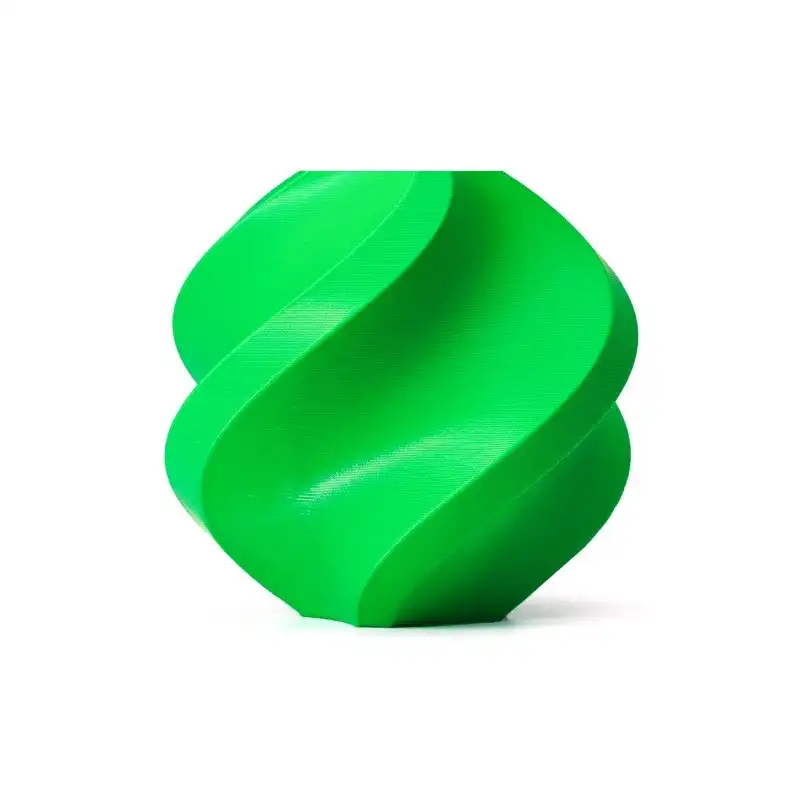
Bambu Lab ABS Filament Bambu Green – 1.75mm with Reusable Spool
Bambu Lab’s premium ABS for high-temperature outdoor enclosures. Green colour assists in camouflage for agricultural field sensors. Excellent layer adhesion and 105°C heat resistance.
Indian IoT Project Examples
Here are real-world IoT sensor deployments that Indian makers are building, with enclosure notes:
Farm soil monitoring node (Punjab/Maharashtra): ESP32 + capacitive soil moisture sensor + DS18B20 soil temperature probe + BME280 air sensor. PETG Stevenson screen housing for air sensors, separate sealed probe housing for buried soil sensors. LoRa communication to a gateway 2km away at the farm office. Solar-powered, 4-year deployment target.
Rooftop weather station (Urban): Raspberry Pi Zero W + Davis rain gauge + DS18B20 + BME280 + UV index sensor. White PETG double-wall Stevenson screen for air sensors. IP65 waterproofed junction box for electronics. Powers the national Weather Underground PWS network from Bengaluru, Hyderabad, and Pune neighbourhoods.
Water tank level monitor (Rural Maharashtra): ESP32 + JSN-SR04T waterproof ultrasonic sensor + Holtek NB-IoT module. PETG enclosure mounted on tank rim with IP67 cable gland for the ultrasonic probe. NB-IoT cellular connectivity. Sends data to Blynk/ThingsBoard platform. Alerts via WhatsApp when tank is low.
Air quality station (Industrial area): ESP32 + PMS5003 particulate sensor + MQ-135 gas sensor + NEO-6M GPS for precise positioning. ABS housing with filtered air intake designed to protect sensors from direct rain while allowing continuous air sampling. Submits data to the AirVisual API for community air quality monitoring.
Flood level sensor (Kerala backwaters): Arduino + waterproof ultrasonic sensor + GSM module + solar panel. IP67 fully sealed PETG housing mounted on bridge pillars at 50+ locations. SMS alerts to local panchayat when water level exceeds safe thresholds. Built by Kerala engineering students after 2018 floods.
Recommended Products from Zbotic

eSUN PETG 1.75mm Filament 1kg – Grey
Grey PETG with eSUN’s premium quality and ±0.02mm diameter tolerance. The ideal filament for outdoor IoT enclosures — weather-resistant, heat-stable to 80°C, and consistent enough for tight-tolerance sealed enclosures.

Bambu Lab PLA Filament Grey – 1.75mm with Reusable Spool
For rapid indoor prototyping of your enclosure design before final printing in PETG. Bambu Lab PLA prints fast with excellent dimensional accuracy for test fitting and fitment verification.
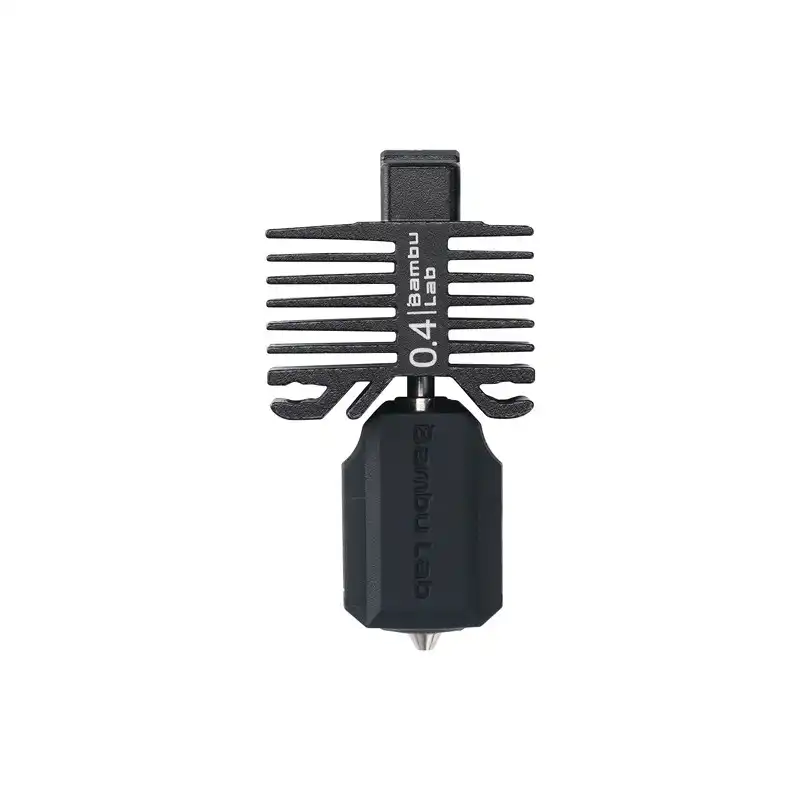
Bambu Lab Hotend with Hardened Steel Nozzle 0.4mm – for P1P, P1S, X1C
Keep your Bambu Lab printer printing flawlessly with a genuine replacement hotend. Hardened steel nozzle handles PETG, ABS, and ASA for all your outdoor IoT enclosure needs.

ABS PLA PETG Filament Filter – Dust Removal for 3D Printers
Keep your filament clean before it reaches the nozzle. Essential in dusty Indian workshops and garages where filament can pick up debris that causes partial clogs during multi-hour enclosure prints.
Frequently Asked Questions
How long will a PETG IoT enclosure last outdoors in India?
Without UV protection, grey or black PETG lasts 2–3 years before becoming brittle. With 3–4 coats of UV-protective polyurethane varnish applied after printing, 4–6 years is achievable. For 5+ year deployments without maintenance, use ASA filament from the start.
Can I achieve true IP67 with a 3D printed enclosure?
Yes. Makers have demonstrated IP67 (30 minutes at 1m submersion) with 5-wall PETG prints, labyrinth seals, O-ring gaskets, and interior epoxy coating. It requires careful design and execution. For most Indian outdoor IoT applications, IP65 (water jet resistant) is sufficient and easier to achieve reliably.
What is the best ESP32 case design for Indian monsoon conditions?
A double-wall design with a separate outer rain shield, O-ring sealed lid, bottom-exit cable glands with drip loops, internal silica gel, and conformal-coated PCB. Print in PETG at 5 walls, 0.2mm layer height. Apply UV varnish before outdoor installation. This combination handles India’s worst monsoon conditions reliably.
How do I keep internal temperatures safe for electronics in Indian summer?
Orient the enclosure so the lid faces north (minimises direct sun). Use white or reflective exterior colour. Add radiant insulation (bubble wrap foil) on interior lid surface. Use Gore-Tex vent plugs for pressure equalisation and heat dissipation. Keep low-power electronics: ESP32 deep sleep with 10s active per 10 minutes keeps average power (and heat) very low.
Where can I find IoT enclosure designs for Indian use cases?
Printables.com and Thingiverse have thousands of enclosure designs. Search for your specific board (“ESP32 DOIT enclosure”, “Wemos D1 mini case”). The Indian Makers Facebook group and local Maker Faire communities also share region-specific designs. Parametric designs in OpenSCAD/Fusion 360 allow you to customise for your exact PCB dimensions.
How do I store filament for IoT enclosure printing between sessions?
In Indian monsoon conditions, PETG and ABS absorb moisture within 24 hours in open air. Store filament in sealed containers (dry boxes, food-grade zip-lock containers) with silica gel packets. Regenerate silica gel by heating in an oven at 120°C for 2 hours. Print with dry filament only — wet filament produces bubbles and poor inter-layer adhesion that ruins enclosure waterproofing.
Build Your Outdoor IoT Network
Get the filaments and printer parts you need to build reliable, weather-proof IoT sensor enclosures. Zbotic ships quality 3D printing supplies to makers across India.




Add comment