
Solar Panel IV Curve: Understanding Open Circuit Voltage
If you have ever picked up a solar panel for a DIY project and wondered what all those numbers on the datasheet actually mean, you are not alone. The solar panel IV curve open circuit voltage explained topic is one of the most searched yet least understood concepts among Indian electronics hobbyists. Whether you are powering a remote weather station, building a solar-charged robot, or simply trying to top up a battery pack on your rooftop, understanding the IV curve will save you from costly mistakes and help you extract the most from your panels.
What Is the IV Curve of a Solar Panel?
The IV curve — short for Current-Voltage curve — is a graph that shows how much current a solar panel delivers at every possible output voltage, from zero volts all the way up to its maximum open circuit voltage. Think of it as the fingerprint of a solar cell: it encodes everything about how the panel responds to light under a given set of conditions.
Under standard test conditions (STC) — 1000 W/m2 irradiance, 25 degrees C cell temperature, AM 1.5 spectrum — a typical small polycrystalline panel might deliver 5 A at 0 V and gradually drop to 0 A at around 21 V. The shape between those two endpoints is never a straight line; it has a characteristic knee that tells you exactly where the panel works most efficiently.
For makers, the IV curve matters because real-world conditions rarely match STC. Rooftop temperatures in Mumbai or Chennai frequently push cell temperatures to 55-65 degrees C, which compresses the curve and shifts it downward. Knowing the curve helps you design charge controllers, battery interfaces, and MPPT circuits that keep your system running efficiently regardless of the weather.
Key Parameters: Voc, Isc, Vmp, Imp
Four numbers dominate every solar panel datasheet, and they all live directly on the IV curve:
- Voc (Open Circuit Voltage): The voltage across the panel terminals when no load is connected — the rightmost point of the IV curve.
- Isc (Short Circuit Current): The current that flows when the panel terminals are directly shorted — the topmost point of the IV curve.
- Vmp (Maximum Power Point Voltage): The voltage at which the panel delivers maximum power. Usually around 75-80% of Voc.
- Imp (Maximum Power Point Current): The current at maximum power. Usually around 90-95% of Isc.
Maximum Power (Pmax) = Vmp x Imp. The ratio Pmax / (Voc x Isc) is called the Fill Factor, and for quality panels it ranges from 0.7 to 0.82. A higher fill factor means the IV curve has a sharper, more rectangular knee — a sign of lower series resistance and better cell quality.
Indian hobbyists often buy 10 W to 100 W panels from local electronics markets or online stores. For a 20 W polycrystalline panel you might see: Voc = 21.6 V, Isc = 1.25 A, Vmp = 17.5 V, Imp = 1.14 A. These numbers slot directly onto the IV curve and tell you what regulator or charge controller to use.
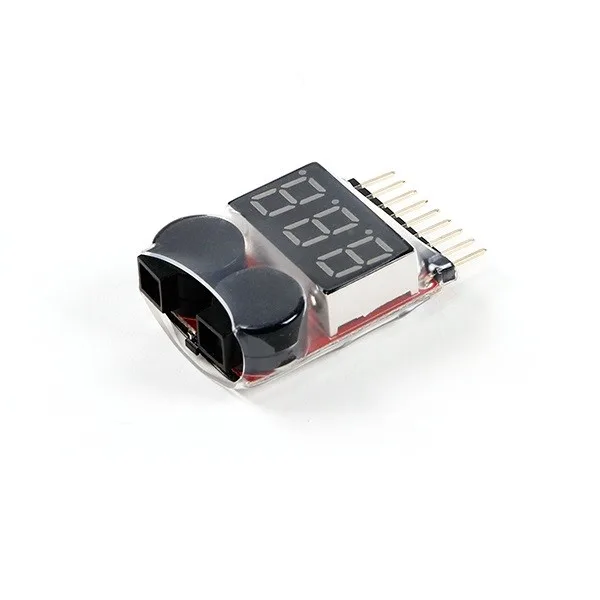
1-8S Lipo Battery Voltage Tester without alarm
Verify individual cell voltages on your LiPo pack — an essential companion when integrating solar charging into multi-cell battery systems.
Open Circuit Voltage Deep Dive
Open circuit voltage (Voc) is the highest voltage a solar panel can ever produce. It appears when the panel is illuminated but no current is being drawn. It is purely a property of the semiconductor material and the number of cells wired in series.
Each silicon solar cell generates a Voc of approximately 0.55-0.65 V under STC. A standard 36-cell panel therefore produces a Voc of roughly 21-23 V. Panels designed for 12 V charging use 36 cells; 24 V panels use 72 cells; modern 60-cell residential panels produce Voc around 37 V.
Why Voc Matters More Than You Think
Many beginners connect a panel directly to their battery and assume the voltage will match. During low-load conditions — especially in the morning before significant current starts flowing — the terminal voltage can briefly spike toward Voc. If your charge controller, boost converter, or voltage regulator has a maximum input rating lower than Voc, you risk permanent damage.
A concrete example: you buy a 100 W panel rated Voc = 22.5 V and wire it to a cheap PWM controller rated for 25 V max input. On a cold winter morning in Shimla, the open circuit voltage might briefly touch 24 V — still within spec. But connect two such panels in series for a 24 V system, and you now have 45 V appearing on a controller rated 25 V — immediate failure.
The takeaway: always design your wiring and controller selection around Voc x 1.25 as a safety factor, especially in cold climates.
How Temperature and Irradiance Affect the IV Curve
Solar panels produce higher voltage when they are cold and lower voltage when they are hot. This surprises most beginners.
Temperature Coefficients
Every panel datasheet includes a temperature coefficient for Voc, typically expressed as mV per degree C or % per degree C. For crystalline silicon panels, this coefficient is typically -0.30% to -0.45% per degree C. So a panel with Voc = 21.6 V at 25 degrees C might produce:
- At 45 degrees C (typical Indian summer roof): 21.6 x (1 – 0.004 x 20) = approximately 19.9 V
- At 10 degrees C (winter morning in north India): 21.6 x (1 + 0.004 x 15) = approximately 22.9 V
On the current side, Isc increases slightly with temperature (about +0.04% per degree C), but this gain is far outweighed by the Voc drop, so total power decreases at high temperatures — typically -0.4 to -0.5% per degree C for the whole panel.
Irradiance Scaling
When cloud cover reduces irradiance from 1000 W/m2 (STC) to 500 W/m2, Isc drops by roughly half while Voc barely changes (it is logarithmically dependent on irradiance). Even on overcast days, your panel still develops nearly full Voc, which means a properly designed system can still trickle-charge batteries through thin clouds.
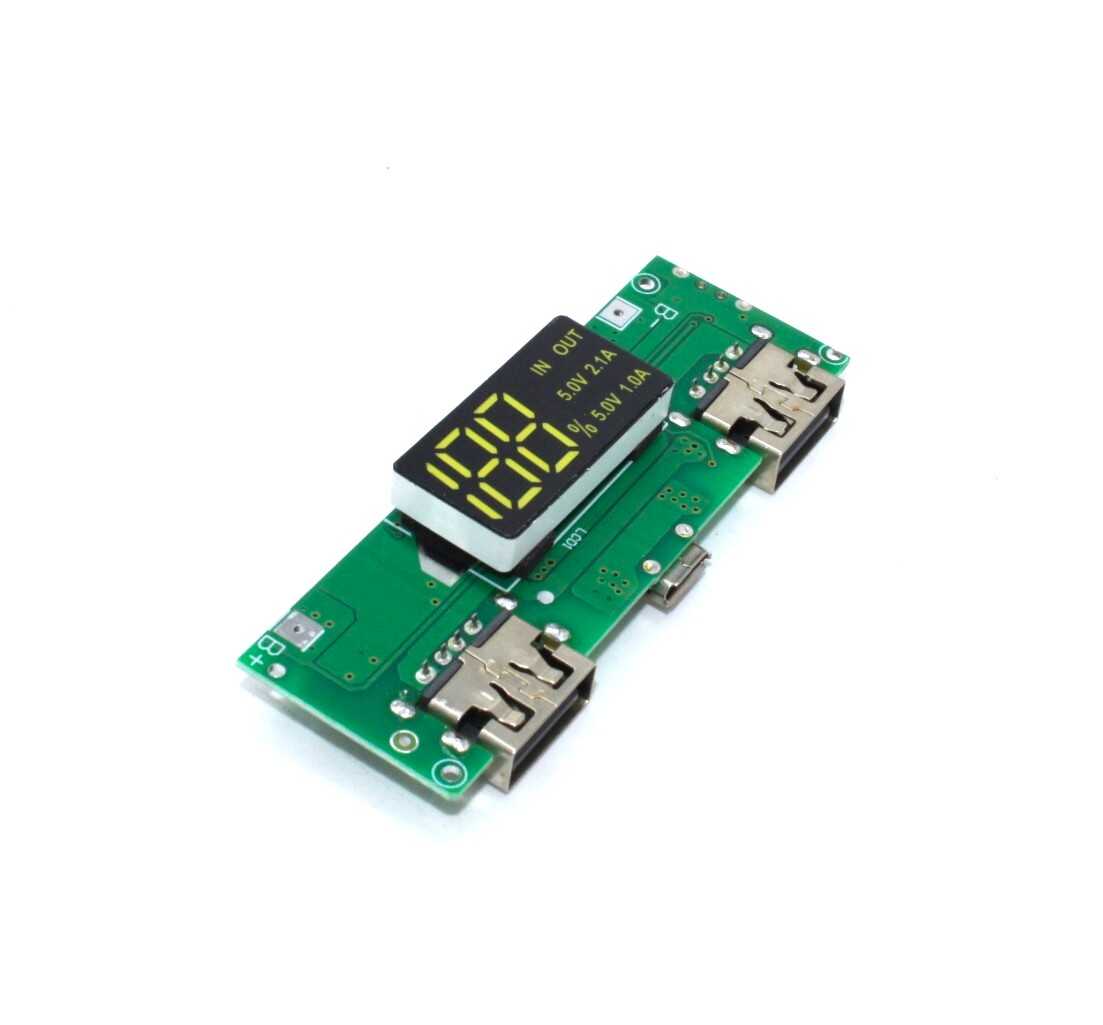
18650 5V 1A/2A Lithium Battery Digital Display and Charging Module
Combines an 18650 charging circuit with a boost converter and dual USB output — perfect for small solar-to-USB power bank projects.
Reading Solar Panel Datasheets Like a Pro
Armed with the theory above, here is a step-by-step approach for evaluating any panel datasheet before you buy:
- Check Voc against your charge controller maximum input voltage. Add a 25% margin for cold-weather spikes.
- Check Vmp against your battery bank voltage. For a 12 V flooded lead-acid bank, you want Vmp at or above 14.4 V. Most 36-cell panels deliver Vmp around 17-18 V, giving comfortable headroom.
- Calculate power at your expected cell temperature. In Indian summer conditions, expect 15-20% less power than the STC rating. A “100 W” panel realistically delivers 80-85 W on a hot afternoon.
- Examine the Fill Factor. Anything below 0.68 suggests mediocre cell quality or high series resistance. Avoid cheap panels with published FF below 0.70.
- Note the short-circuit current. This is the maximum current the panel can ever deliver. Your wiring, fuses, and charge controller input must be rated above this value.
Practical Implications for Makers and Hobbyists
Understanding the IV curve immediately improves the quality of your solar projects in several concrete ways:
Choosing Between PWM and MPPT Controllers
A PWM controller clamps the panel voltage to the battery voltage during charging. If your battery is at 12.5 V and your panel Vmp is 17.5 V, the PWM controller throws away roughly 5 V — about 28% of potential energy. An MPPT controller instead sweeps the IV curve electronically, finds the knee, and operates the panel at Vmp while stepping the current up to deliver more power to the battery. For panels larger than 20 W, MPPT pays for itself quickly, especially in Indian summer heat where Vmp is already reduced.
Series vs Parallel String Design
When combining multiple panels, the IV curve rules determine your configuration. Panels in series add voltages (Voc values add, Isc stays constant). Panels in parallel add currents (Isc values add, Voc stays constant). Never mix panels of different Voc in the same series string — the mismatch causes the weaker panel to become reverse biased, leading to hotspot damage.
Battery Charging Interface
For 18650-based lithium battery packs charged from a small solar panel, you need a charging module that accepts an input voltage above Voc of your panel. A 6 V mini panel (Voc around 8 V) paired with a TP4056 module works cleanly since the TP4056 accepts up to 8 V input. For larger panels, add a buck converter between the panel and charging module.
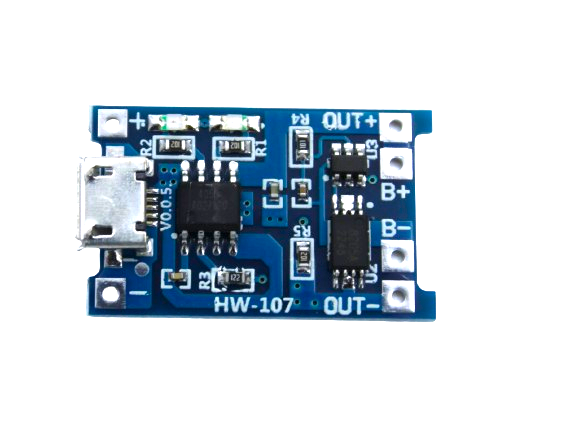
TP4056 1A Li-Ion Battery Charging Board Micro USB with Current Protection
The go-to lithium charging module for small solar projects. Built-in protection prevents overcharge and over-discharge of your 18650 cells.
Measuring Open Circuit Voltage Safely
Measuring your panel Voc is straightforward with a basic multimeter, but there are safety rules to follow, especially for larger panels:
- Use a multimeter rated for at least 1.5x the expected Voc. For a 72-cell residential panel (Voc around 45 V), you need a multimeter rated for at least 67 V DC — most inexpensive multimeters handle this (usually rated 600 V DC), but verify before you measure.
- Measure in shade first. Shade the panel with cardboard, connect your multimeter probes, then move the panel into sunlight. This prevents the initial voltage spike from catching you off guard.
- Measure at different times of day and note how Voc changes. You will observe that Voc at sunrise is nearly identical to Voc at solar noon, confirming the logarithmic irradiance dependence. But if you measure early on a cold morning versus midday in summer, you will see the temperature effect clearly.
- Do not short the terminals for Isc measurement without a proper amp-clamp meter if your panel is larger than 30 W. The current can vaporize thin wire if your test leads are undersized.
- Document your measurements against time and weather conditions. Over a few weeks you will build a personal calibration table for your specific panel at your location — far more useful than STC numbers for your actual application.
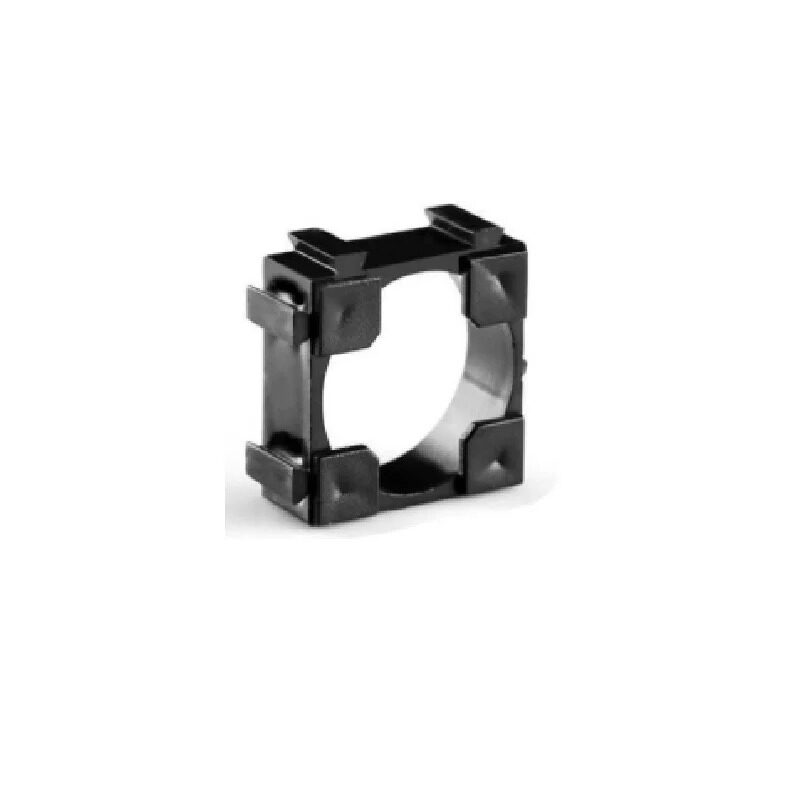
1 x 18650 Battery Holder with 18.4MM Bore Diameter (Pack of 4)
Build a multi-cell battery bank for your solar project. These holders accept standard 18650 cells with solid contact springs for reliable connections.
Frequently Asked Questions
What is the difference between Voc and Vmp?
Voc (open circuit voltage) is the maximum voltage a panel produces when no current flows. Vmp (maximum power point voltage) is the lower voltage at which the panel delivers the highest power output. Vmp is typically 75-80% of Voc. You should design your system around Vmp for efficiency, but protect components against Voc during no-load conditions.
Can I connect a solar panel directly to an 18650 lithium cell?
No. Even a small 6 V panel can push Voc well above 4.2 V — the maximum safe voltage for a lithium cell. Always use a dedicated lithium charging module like the TP4056 between the panel and the cell. For panels above 6 V, add a buck converter to drop the voltage before the charging module.
Why does my panel read lower voltage in the afternoon than in the morning?
Cell temperature is the primary reason. By afternoon your panel may have been baking in the sun for hours, raising cell temperature to 60 degrees C or more. This suppresses Voc via the negative temperature coefficient. The effect is more pronounced in India’s tropical summer. Early morning on cool days gives the highest Voc readings.
How does shading affect the IV curve?
Partial shading has a disproportionately large effect on series-connected panels. A single shaded cell in a string can reduce the entire string current to the level of that cell’s reduced Isc, or even cause it to become reverse-biased and act as a power load generating heat (hotspot effect). Bypass diodes across each panel mitigate this. MPPT controllers can also detect and work around shading better than PWM controllers.
Is it safe to measure Voc on a rainy day?
No. Never work with solar panel wiring in the rain or when components are wet. Even low-voltage panels can cause shocks in wet conditions. Additionally, moisture ingress into junction boxes and connectors causes long-term corrosion. Wait for dry conditions and use insulated probes.
Ready to Build Your Solar Project?
Now that you understand the IV curve and open circuit voltage, you are equipped to design solar charging systems that actually work in real Indian conditions. Browse Zbotic’s collection of battery holders, charging modules, and power electronics to source everything you need in one place — with fast delivery across India.






Add comment