
Not everyone wants to rely on Autodesk’s servers or deal with software that requires an internet connection to work. If you are looking for a powerful, completely free, and fully offline 3D CAD tool for designing 3D printable parts, FreeCAD is your answer.
FreeCAD is a free, open-source parametric CAD application that runs on Windows, macOS, and Linux. It has no subscription, no cloud requirement, no feature limits, and your files belong to you forever. In this comprehensive tutorial, we will walk you through FreeCAD from installation to designing a real 3D-printable part, exporting a clean STL, and understanding the quirks that make FreeCAD different from paid tools.
1. Why FreeCAD for 3D Printing?
FreeCAD has earned a dedicated following among makers, engineers, and students in India and globally. Here is why it deserves serious consideration:
- 100% free, forever — no subscription, no trial, no “free tier” restrictions
- Fully offline — does not require an internet connection to use or save files
- Cross-platform — runs on Windows, macOS, and Linux (even on older machines)
- Open source — you can modify it, and a global community contributes improvements
- Parametric — like Fusion 360, FreeCAD supports parametric modelling where changing one dimension updates the entire model
- Native STL and 3MF export — direct export to formats your slicer understands
- No vendor lock-in — your .FCStd files are open format; you can always open them
FreeCAD vs Fusion 360: The Honest Comparison
Fusion 360 has a more polished UI and a gentler learning curve. FreeCAD has a steeper learning curve and some UI quirks, but it is completely free with no strings attached. For students, hobbyists, and NGOs in India where software costs matter, FreeCAD is often the better long-term choice. Once you invest the learning time, you will find it capable of almost everything Fusion 360 can do.
2. Installing FreeCAD
Download FreeCAD from freecad.org. The current stable release as of 2026 is version 1.0 (a major milestone for the project). Download the installer for your operating system.
Windows Installation
Download the .exe installer and run it. FreeCAD installs to Program Files by default. No admin account tricks needed on most systems. Total installation size is about 1.5 GB.
macOS Installation
Download the .dmg file, open it, and drag FreeCAD to your Applications folder. On Apple Silicon Macs (M1/M2/M3), use the ARM64 build for best performance.
Linux (Ubuntu/Debian)
Install via: sudo apt install freecad for the repository version, or use the AppImage from freecad.org for the latest release. The AppImage is recommended for the newest features.
Setting Units
After first launch: Edit → Preferences → General → Units → Select “Standard (mm/kg/s/°)” and set number of decimals to 3. This gives you millimetre precision, which is correct for 3D printing.
3. Interface Overview
Workbenches
FreeCAD is structured around workbenches — different toolsets for different tasks. You switch workbenches from the dropdown in the toolbar. For 3D printing design, you will primarily use:
- Part Design — the main workbench for solid modelling. This is where you spend most time.
- Sketcher — embedded in Part Design for drawing 2D profiles
- Part — lower-level solid operations (boolean union, cut, intersection)
- Mesh Design — for STL export and mesh operations
- TechDraw — for technical drawings (not needed for basic 3D printing)
The Model Tree (Left Panel)
FreeCAD’s model tree (called the “Combo View”) shows all features and objects in your document. Features are stacked in a list — the model is the result of applying all features in order from top to bottom. You can suppress (temporarily hide) a feature by right-clicking and selecting “Toggle active body”.
3D View (Centre)
Navigation: Middle mouse button rotates (orbits). Scroll wheel zooms. Shift + Middle mouse pans. You can change the navigation style in Preferences → Display → Navigation Style. Many beginners prefer “Blender” or “Gesture” navigation styles.
Property Panel (Bottom Left)
Shows properties of the selected object. Many numerical values are editable here. This is one of FreeCAD’s strengths — almost everything is editable after the fact.
4. The Part Design Workflow
FreeCAD’s Part Design workbench follows the “body-sketch-feature” workflow:
- Create a Body — a Body is a container for all your model features
- Create a Sketch — a 2D profile on a plane
- Apply a Feature — extrude (Pad), revolve, pocket (cut), etc.
- Repeat — add more sketches and features to build the final shape
This is conceptually identical to Fusion 360’s timeline approach, but with some important differences in how FreeCAD handles “topological naming” (a known FreeCAD issue we will address later).
5. Working with the Sketcher Workbench
The Sketcher in FreeCAD is powerful but has a learning curve. Key concepts:
Constraints
Constraints define the geometry precisely. There are two types:
- Geometric constraints — horizontal, vertical, perpendicular, parallel, coincident, equal, symmetric
- Dimensional constraints — fix a length, angle, or radius to a specific number
A fully constrained sketch shows all elements in white or green. Under-constrained elements show in yellow. Over-constrained is red — a problem to fix.
External Geometry
When creating a sketch on an existing face, you can reference edges of other features using the External Geometry tool. These reference lines appear in purple and can be used for alignment, but they do not become part of the new sketch’s profile. This is extremely useful for aligning new holes to existing features.
Sketch Origin
Always anchor your sketch to the origin when possible. Use the Coincident constraint to attach one point of your geometry to the origin point. This prevents the sketch from floating in space and causes fewer issues when features are referenced later.
6. Step-by-Step: Design a Cable Clip for 3D Printing
Let us design a simple cable management clip — a practical item every electronics maker needs. This clip will hold cables of 5 mm diameter to a 2 mm thick panel.
Step 1: Create a New Document and Body
File → New. Switch to Part Design workbench. Click Part Design → Body. A new body appears in the model tree.
Step 2: Create the Base Sketch
Click Part Design → New Sketch. Select the XZ plane. You are now in sketch mode.
Draw the profile of the clip cross-section:
- A 25 mm × 8 mm outer rectangle
- A 5.4 mm diameter semicircle cut into the top edge (for the cable)
- Two 2 mm notches on the sides (for panel attachment)
Apply constraints to fix all dimensions. Close the sketch when fully constrained.
Step 3: Pad (Extrude) the Sketch
With the sketch selected, click Part Design → Pad. Set the distance to 15 mm. This creates the 3D clip body. Click OK.
Step 4: Add the Cable Opening
Select the top face of the clip. Create a new sketch. Draw a 5.4 mm circle centred on the midpoint of the top face. Close sketch. Apply a Pocket (Part Design → Pocket) with a depth of 8 mm. This cuts the cable channel into the top.
Step 5: Add Fillets
Select all sharp external edges. Click Part Design → Fillet, set 1 mm radius. This makes the clip more comfortable to handle and improves print quality at corners.
Step 6: Review Wall Thickness
Use Part Design → Thickness (or visually inspect) to confirm no walls are thinner than 1.2 mm. The critical area is the clip arms that grip the panel — make sure they are at least 1.5 mm thick for printing in PLA.
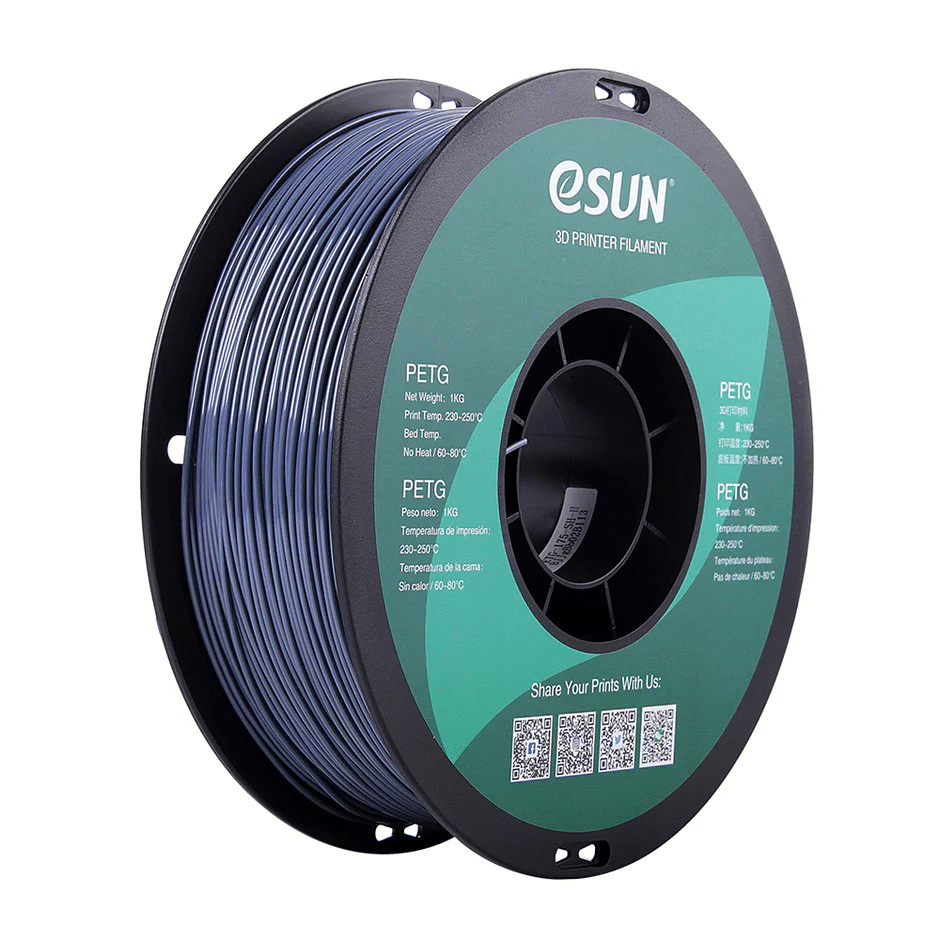
eSUN PETG 1.75mm 3D Printing Filament 1Kg – Grey
PETG is the ideal filament for functional parts designed in FreeCAD like clips, mounts, and brackets. Better flexibility than PLA means less snapping under stress.
View on Zbotic7. Exporting STL for 3D Printing
FreeCAD’s STL export is done through the Mesh Design workbench:
- Select your final solid body in the model tree
- Switch to the Mesh Design workbench
- Click Meshes → Create Mesh from Shape
- Set the Maximum edge length to 0.1 mm for fine curves, or 0.2 mm for flat-faced parts (smaller = smoother mesh but larger file)
- Click OK — a mesh object appears in the tree
- Select the mesh object and go to File → Export
- Choose STL format and save
Alternative: Direct Export
In recent FreeCAD versions, you can select the solid body directly and go to File → Export → STL without going through Mesh Design. This is quicker but gives less control over mesh resolution. For curved parts, use the Mesh Design route for better surface quality.
Checking the Exported STL
Open your STL in a free tool like MeshLab or your slicer (PrusaSlicer, OrcaSlicer, Bambu Studio all have mesh analysis tools). Check for:
- Correct dimensions (measure in the slicer)
- No holes or non-manifold edges (shown as errors in the slicer)
- No inverted normals
If you see mesh errors, fix them in FreeCAD by ensuring your solid body has no geometric issues before meshing. The Part → Check Geometry tool in the Part workbench can identify problems.
8. Common FreeCAD Issues and Fixes
The Topological Naming Problem
This is FreeCAD’s most infamous issue. When you reference a face or edge of an existing feature in a new sketch or operation, FreeCAD identifies it by an internal name (e.g. “Face3”). If you later modify an earlier feature that changes the geometry, the naming can shift — suddenly the sketch is referencing the wrong face and your model breaks.
FreeCAD 1.0 introduced the Topological Naming fix as a major improvement, significantly reducing this problem. However, some workarounds are still good practice:
- Always reference the base sketch’s origin, not arbitrary faces when possible
- Design features sequentially, not by going back and modifying early features after later ones are built
- Name your features descriptively (right-click → Rename) so you can identify which feature is referenced where
“Body Is Not Touching Previous Feature”
This error occurs when you add a feature (like a Pad or Pocket) that does not intersect with the existing solid. Fix: check the sketch plane and ensure the new feature physically overlaps the existing body.
Sketch Refuses to Close / Is Self-Intersecting
A sketch profile must be a single closed loop with no self-intersections for Pad/Pocket to work. Use the Sketcher’s “Validate Sketch” tool (Sketch menu → Validate Sketch) to detect and fix open edges or duplicate vertices.
FreeCAD Crashes on Large Files
FreeCAD can struggle with very complex assemblies on systems with less than 8 GB RAM. Close other applications, increase Windows virtual memory, or simplify the model by suppressing unnecessary detail features during the modelling phase.
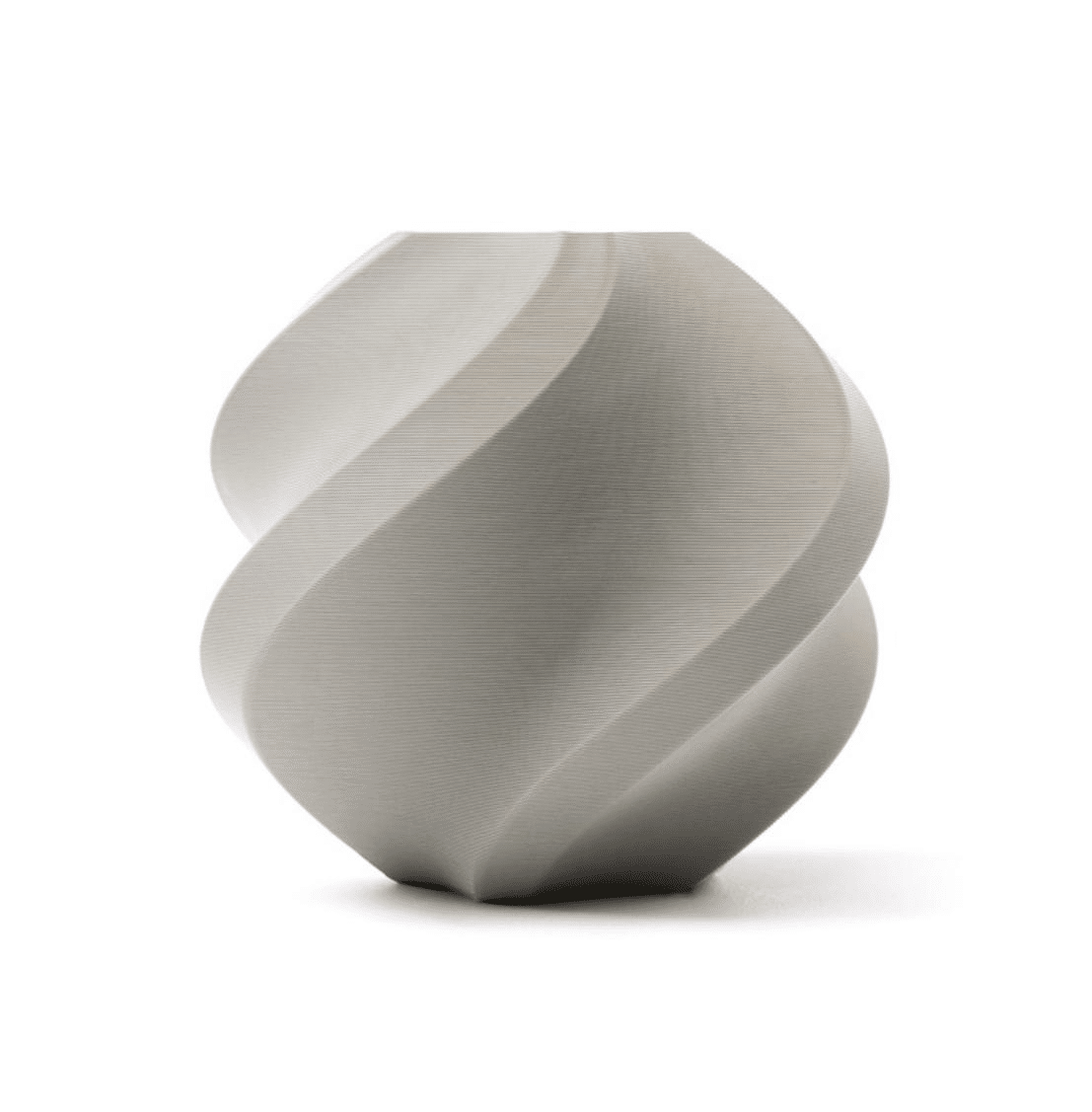
Bambu Lab PLA 3D Printer Filament Grey – 1.75mm
Start printing your first FreeCAD designs in reliable Bambu Lab PLA. Tight diameter tolerances mean your designed dimensions print accurately — critical when testing new CAD designs.
View on Zbotic9. Intermediate Tips for Better Prints
Use Spreadsheets for Parameters
FreeCAD has a built-in Spreadsheet workbench. Create a spreadsheet, define your key dimensions as named cells (e.g. “wall_thickness = 2”), and reference these from your sketches using expressions (e.g. =Spreadsheet.wall_thickness). This is even more powerful than Fusion 360’s parameter manager for complex parametric models.
Draft Workbench for 2D-to-3D
If you have a 2D DXF file (from a laser cutter design or schematic), import it into the Draft workbench, then use Part Design to extrude it. Great for converting existing 2D panel designs into 3D printed parts.
The Assembly Workbench
FreeCAD 1.0 includes a built-in Assembly workbench. You can create multi-part assemblies, apply constraints between parts (coincident, coplanar, concentric), and simulate motion. Export each part as a separate STL for printing.
FreeCAD Macros
FreeCAD supports Python macros for automating repetitive tasks. For 3D printing, popular macros include: automatic lattice infill generators, thread generators (for printable metric threads), and batch STL export scripts. Find them at the FreeCAD Macro Hub on the official forum.
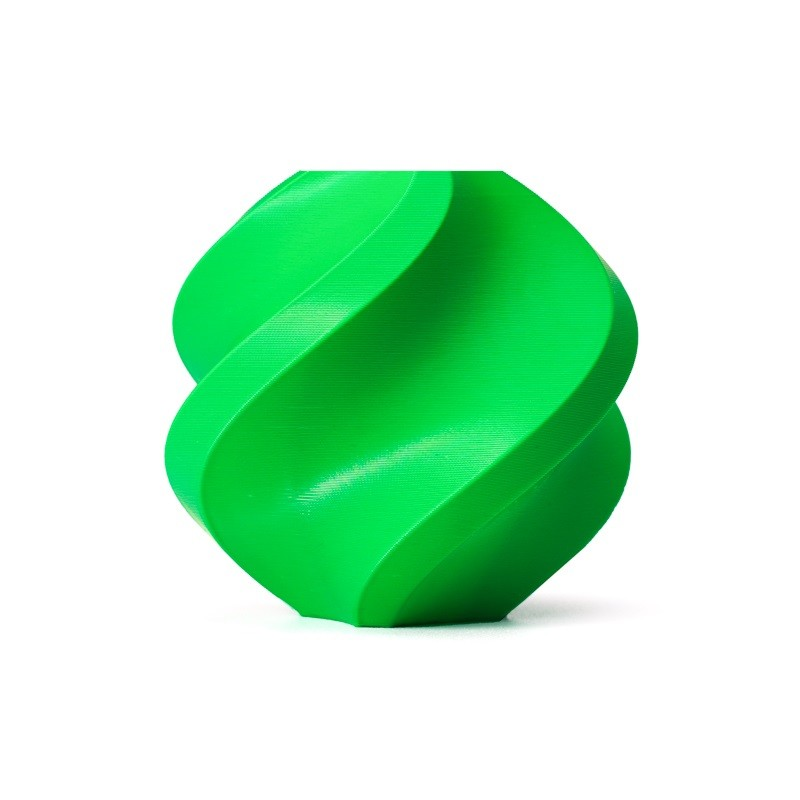
Bambu Lab ABS 3D Printer Filament Bambu Green – 1.75mm
Once your FreeCAD design is proven in PLA, print functional prototypes in ABS for heat resistance — ideal for electronics enclosures and outdoor applications.
View on ZboticFrequently Asked Questions
Q: Is FreeCAD really good enough for professional use?
For 3D printing design, yes — absolutely. Engineers worldwide use FreeCAD for product design and prototyping. It is not yet at the level of CATIA or NX for aerospace-grade engineering, but for functional parts, enclosures, jigs, fixtures, and most maker projects, FreeCAD is more than capable.
Q: Can I import Fusion 360 files into FreeCAD?
Not directly. Fusion 360 uses a proprietary .f3d format. The workaround is to export from Fusion 360 as STEP (.step or .stp) and import that into FreeCAD. STEP files preserve solid geometry faithfully. Note that the parametric history (timeline features) is lost — you get the final solid geometry only.
Q: Is there a mobile version of FreeCAD?
There is no official mobile FreeCAD app. For mobile 3D modelling, SketchUp Free (browser-based) or Shapr3D (iPad, paid) are alternatives. FreeCAD is primarily a desktop application.
Q: Where can I learn FreeCAD in Hindi or regional Indian languages?
YouTube has an increasing number of FreeCAD tutorials in Hindi. Search for “FreeCAD tutorial Hindi” or “FreeCAD 3D printing Hindi”. The FreeCAD documentation at wiki.freecad.org is also comprehensive, and the FreeCAD Forum has an active community willing to help beginners of all levels.
Q: How do I design screw threads in FreeCAD for 3D printing?
Use the Part Design → Thread feature (Part Workbench → Thread) or the Thread Profile macro. For M5 and larger, modelled threads print reliably. For M3 and M4, threads may be too small for reliable printing at 0.4 mm nozzle — consider using heat-set inserts instead.
Start Designing with FreeCAD Today
FreeCAD is one of the best investments of your time as a 3D printing enthusiast — and it costs nothing. Download it, follow this tutorial, and print your first self-designed part. Grab quality filament from Zbotic to ensure your first FreeCAD print turns out exactly as designed.
Shop Filament & 3D Printing Supplies at Zbotic






Add comment