
Hexacopter vs Quadcopter: When More Motors Mean More Value
The drone world is built around the quadcopter. Four motors, four ESCs, elegant differential thrust control — it’s the dominant configuration for everything from racing to cinematography to agriculture. But the hexacopter exists for good reasons, and in certain applications it doesn’t just match the quad — it decisively surpasses it.
This comparison guide answers the central question: when does a hexacopter vs quadcopter decision tip in favour of six motors? We’ll compare both configurations across every key parameter: payload, redundancy, efficiency, noise, cost, and repairability. By the end, you’ll know exactly which configuration suits your needs.
- Quadcopter and Hexacopter: The Fundamentals
- Payload Capacity: Where Hex Wins Clearly
- Motor Redundancy and Crash Survivability
- Flight Efficiency and Battery Life
- Stability, Vibration, and Camera Work
- Cost Comparison: Build and Maintenance
- Noise Levels: Hex is Quieter
- Use Cases: Which Configuration Wins?
- Agriculture Drones: The Hexacopter Advantage in India
- Frequently Asked Questions
- Final Verdict
1. Quadcopter and Hexacopter: The Fundamentals
How a Quadcopter Works
A quadcopter uses four motors arranged in a square or X pattern. Two rotate clockwise (CW) and two counter-clockwise (CCW) to cancel torque. Altitude is controlled by all four motors simultaneously; pitch, roll, and yaw are controlled by differential thrust between pairs of motors. The quad is mechanically simple, which is why it dominates the hobby and commercial markets.
How a Hexacopter Works
A hexacopter uses six motors, typically in a flat hexagonal arrangement. Three rotate CW and three CCW. The additional motors provide more total thrust surface area, redundancy, and smoother output — but add mechanical complexity, weight, and power consumption.
Basic Specifications at a Glance
| Parameter | Quadcopter | Hexacopter |
|---|---|---|
| Motor count | 4 | 6 |
| ESC count | 4 | 6 |
| Relative weight (same frame size) | Lighter | Heavier (+20–30%) |
| Thrust (same motor spec) | Baseline | +50% |
| Redundancy | None (crash on motor failure) | Can fly with 5 of 6 motors |
| Cost premium | Baseline | +40–60% |
2. Payload Capacity: Where Hex Wins Clearly
If you need to carry a heavy camera, a lidar unit, a thermal sensor, or an agricultural spraying payload, the hexacopter wins on payload capacity almost every time.
Thrust-to-Weight Math
A drone needs a thrust-to-weight ratio (TWR) of at least 2:1 to fly well (the extra overhead handles manoeuvring). If you have a payload that must be carried, that payload eats directly into your available TWR margin.
Example: a hexacopter using six 40A brushless motors producing 1.2 kg thrust each delivers 7.2 kg total thrust. With a 1.8 kg airframe and 400g battery, you have ~5 kg net thrust. TWR without payload: 2.5:1. With a 1 kg payload: still achieves a usable 1.67:1 TWR.
An equivalent quad with four of the same motors: 4.8 kg total thrust, 1.5 kg airframe, 400g battery = 2.9 kg net thrust. TWR of 1.54:1 without any payload — already too low for safe flight with that same 1 kg payload.
Real-World Payload Numbers
- Typical consumer quad (DJI Phantom class): 200–400g payload
- Pro filmmaker quad (DJI Inspire class): 500g–1 kg payload
- Small hexacopter (550mm): 500g–1.5 kg payload
- Medium hexacopter (800mm): 1.5–4 kg payload
- Large hexacopter (1000mm+): 4–10 kg payload
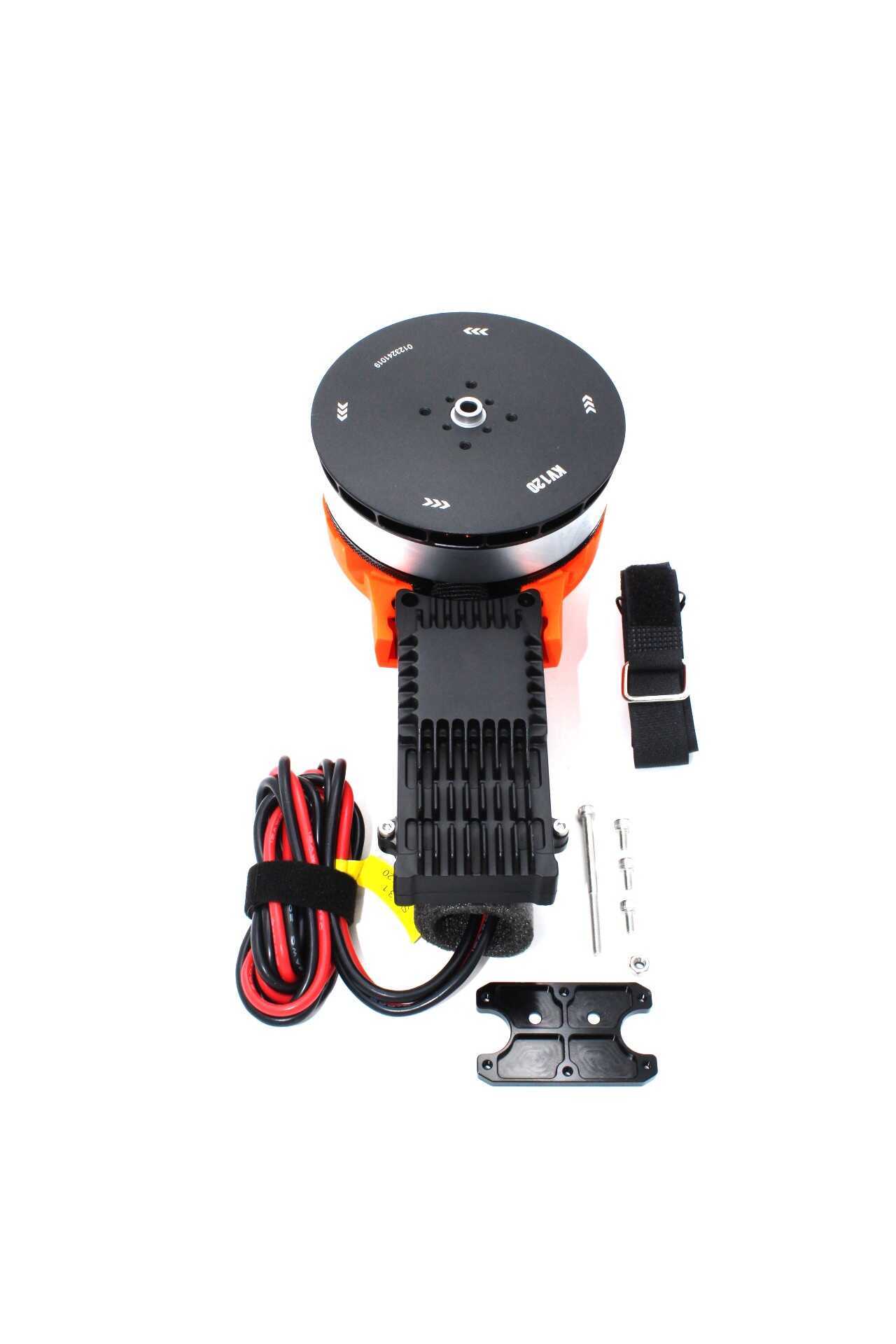
T-Motor A10-KV120-CCW Modular Propulsion System
A premium heavy-lift motor system ideal for hexacopter payload builds. The low 120 KV rating is designed for large props and high thrust efficiency — precisely what a hexacopter carrying 4–6 kg needs.
View on Zbotic3. Motor Redundancy and Crash Survivability
This is one of the most compelling arguments for the hexacopter, especially for professional or commercial operators.
Quadcopter Failure Mode
When any single motor or ESC fails on a quadcopter, the craft immediately loses the ability to control yaw and throttle independently. The quad enters an uncontrolled spin and crashes. There is no recovery. Period.
Hexacopter Failure Mode
When one motor fails on a hexacopter, the flight controller can detect the RPM dropout and compensate by reducing power to the motor diagonally opposite (to re-balance torque) and increasing power to the remaining four motors. The hex can continue flying — stably, if with reduced capability — and execute a controlled landing.
This is not theoretical. Modern flight controllers including ArduPilot explicitly support hexacopter motor failure recovery. The feature is called “Motor Failure” protection and it is enabled by default in ArduCopter for hex and octo configurations.
Why This Matters in India
For commercial drone operations — agricultural spraying, infrastructure inspection, long-range mapping — a motor failure over a crop field, power line, or populated area can be catastrophic. The hexacopter’s redundancy is the difference between a controlled landing and a destroyed drone plus potential liability. For operators in India’s rapidly growing commercial UAV sector, this redundancy justifies the extra cost.
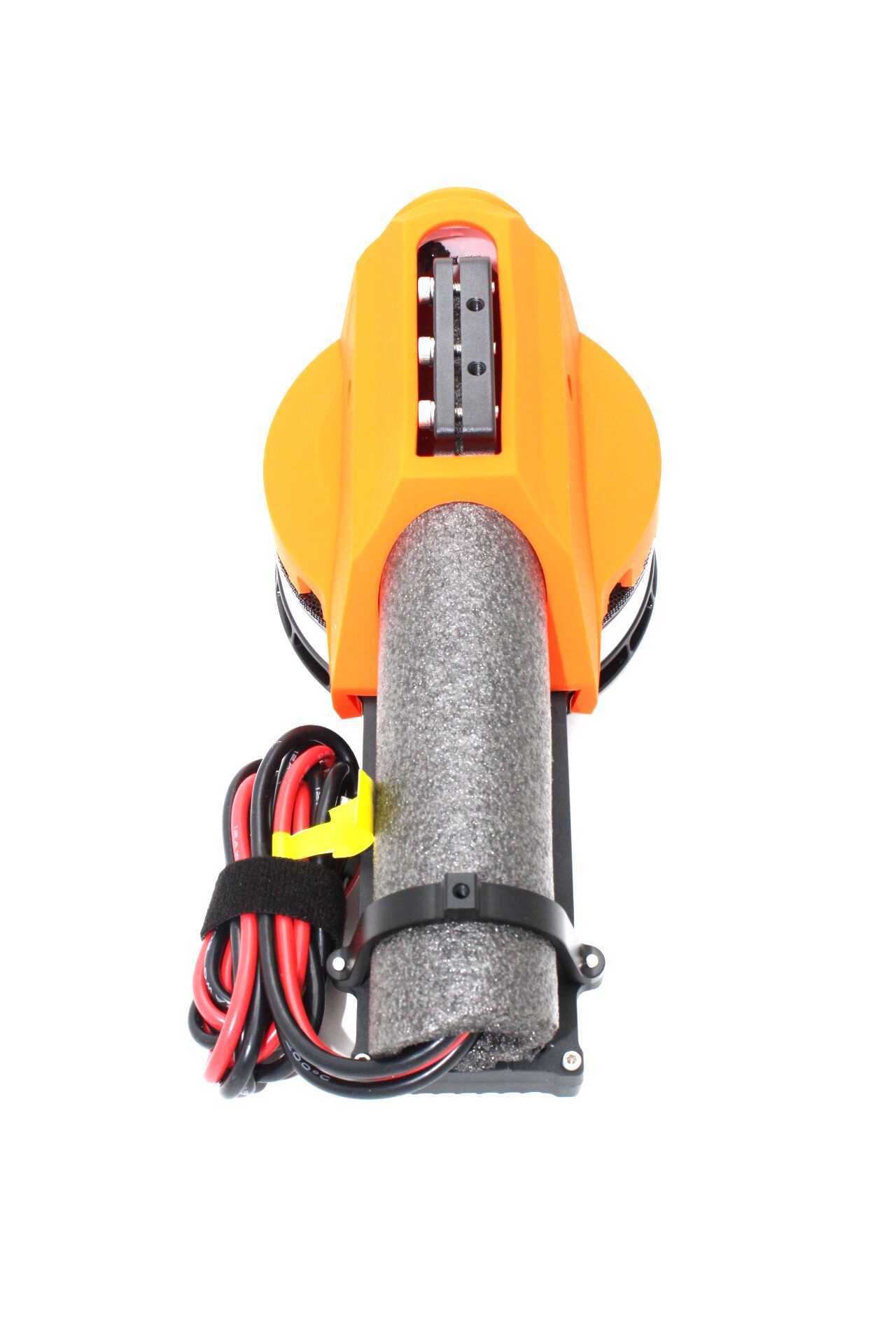
T-Motor A10-KV120-CW Modular Propulsion System
Pair with the CCW version for a complete CW/CCW motor set for your hexacopter. The A10 series from T-Motor is trusted by professional UAV operators globally for its reliability and consistent output.
View on Zbotic4. Flight Efficiency and Battery Life
Here’s where the comparison gets counterintuitive. Adding motors doesn’t automatically reduce efficiency — it depends on how you configure the hexacopter.
Why More Motors Can Be More Efficient
Efficiency in a multirotor is fundamentally about disc loading — the ratio of thrust to the swept area of the propellers. Lower disc loading = more efficient flight.
A hexacopter with six 10-inch props has significantly more total swept area than a quad with four 10-inch props. If the hex is carrying a heavy payload, its disc loading may actually be lower than a quad with the same payload using the same prop size — meaning the hex is more efficient at that payload.
When the Quad Wins on Efficiency
For light-payload or no-payload flying (racing, casual photography, surveying), a quad is more efficient. The extra two motors and their associated mechanical and electrical losses outweigh any disc loading benefit when there’s no payload to carry.
Bottom line: For payloads above 500g, the hexacopter matches or beats the quad on efficiency. For light work, the quad wins.
5. Stability, Vibration, and Camera Work
Hexacopters are smoother. This is a consistent observation among cinematographers and aerial survey operators:
- More motors = finer-grained control: Six smaller control inputs from six motors means each adjustment is more subtle and gradual than with four larger inputs.
- Lower RPM per motor: For the same total thrust, each hex motor runs at lower RPM than each quad motor. Lower RPM = less vibration transmitted to the airframe and camera mount.
- Better wind resistance: The additional control authority from six motors gives the flight controller more options to counteract wind, resulting in more stable hover in breezy conditions.
For serious aerial photography in India — where unpredictable winds are common and vibration affects camera sharpness — hexacopters produce noticeably cleaner footage.
6. Cost Comparison: Build and Maintenance
Build Cost
A hexacopter costs more to build than an equivalent quad. Two extra motors, two extra ESCs, a larger frame, more wire, more connectors — the overhead is real. Budget approximately 40–60% more for a hex build compared to an equivalent quad.
Maintenance Cost
Maintenance per flight is higher for a hex — six motor bearings to check instead of four, six ESCs to monitor, six motor connections to inspect. However, the redundancy means a single motor failure doesn’t automatically result in a crash, which can save the cost of repairing crash damage.
Indian Market Pricing (Approximate, 2024)
| Configuration | Entry Level Build | Professional Build |
|---|---|---|
| 5-inch Quadcopter | ₹12,000–₹20,000 | ₹30,000–₹60,000 |
| 550mm Quadcopter | ₹18,000–₹35,000 | ₹50,000–₹1,00,000 |
| 550mm Hexacopter | ₹28,000–₹50,000 | ₹80,000–₹1,60,000 |
| 800mm Hexacopter | ₹50,000–₹80,000 | ₹1,50,000–₹3,50,000 |
7. Noise Levels: Hex is Quieter
For the same total thrust, a hexacopter can use larger, slower-spinning propellers compared to a quad. Lower RPM produces lower frequency noise, which human ears perceive as quieter and less annoying.
This matters for:
- Aerial photography near people: A quieter drone is less disruptive during shoots at events or public locations.
- Wildlife observation: Lower-frequency sound disturbs animals less than the high-pitched buzz of a racing quad.
- Urban operations: Compliance with noise-sensitive environments in Indian cities.
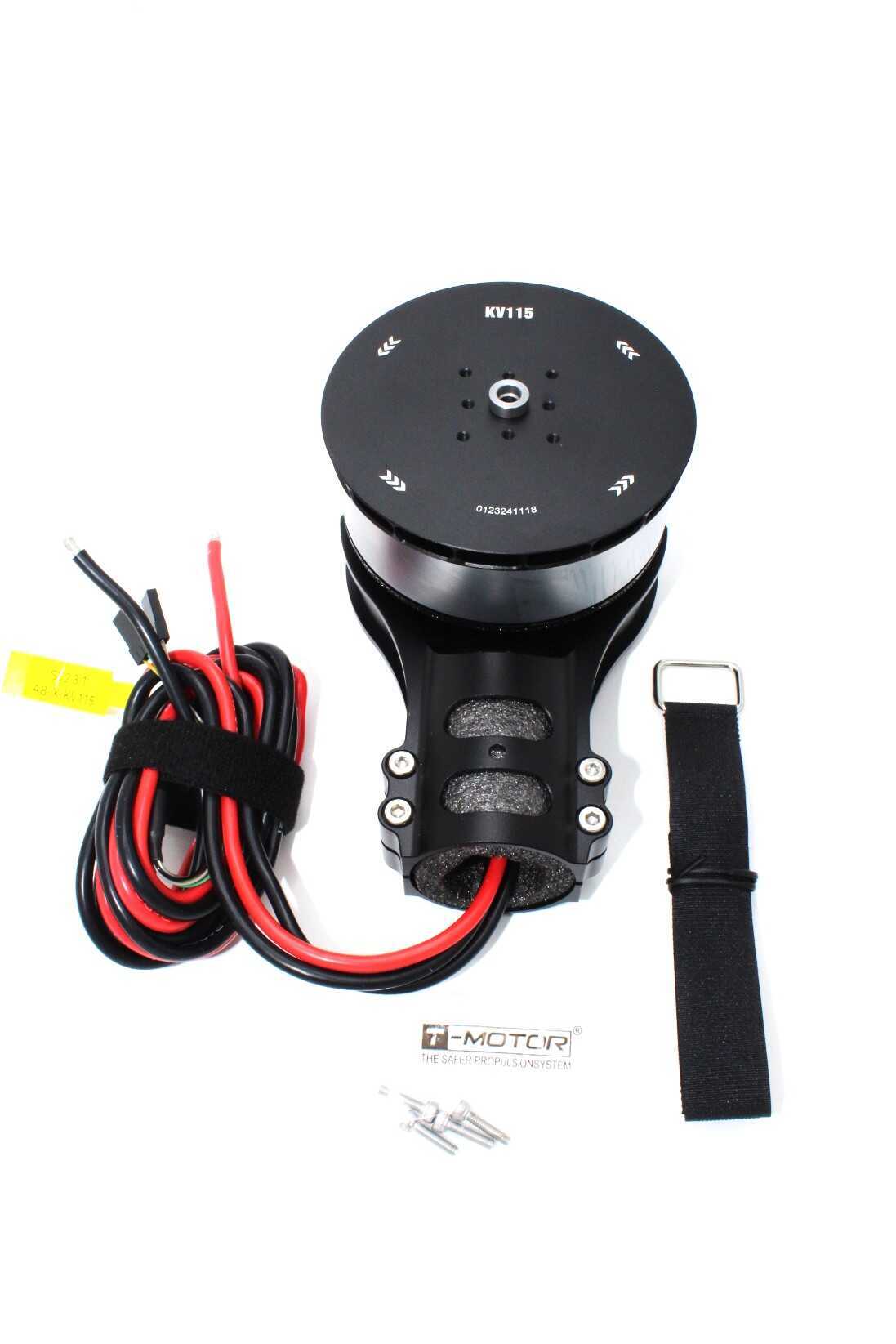
T-Motor A8-X-KV115-CCW Modular Propulsion System
Ultra-low 115 KV motor for large propeller hexacopter builds. Runs large, slow, quiet props to maximise payload efficiency and minimise operational noise — ideal for professional survey and inspection hexacopters.
View on Zbotic8. Use Cases: Which Configuration Wins?
Choose a Quadcopter When:
- Flying for sport, racing, or FPV freestyle
- Carrying payloads under 500g (most GoPro-class cameras)
- Budget is a primary constraint
- Portability matters (quads are more compact for the same thrust)
- You want maximum agility and response
- Hobby photography with a lightweight gimbal
Choose a Hexacopter When:
- Carrying professional cinema cameras (RED, BMPCC, Sony FX series)
- Agricultural spraying or precision payload delivery
- Infrastructure inspection where a crash is unacceptable
- Thermal or multi-spectral sensor platforms
- Long-duration survey missions requiring smooth, stable flight
- Flying over people or critical infrastructure where motor redundancy is essential
9. Agriculture Drones: The Hexacopter Advantage in India
India’s drone agriculture market is among the fastest-growing in the world. DGCA regulations now explicitly allow Type Certificate agricultural drones for pesticide spraying, and the government’s PLI scheme for drones has spurred domestic manufacturing.
In the Indian agriculture drone space, hexacopters and custom-configuration drones (often 6 or 8 motors) dominate the commercial market. Here’s why:
- Payload: Agricultural spraying drones carry 10–20 litres of liquid — a payload that only large hexacopters and octocopters can handle.
- Reliability: One motor failure during a spraying run can mean a drone crash into crops or irrigation infrastructure. Redundancy is not a luxury — it’s an operational requirement.
- Flight duration: Agriculture drones cover large areas. Hexacopters with efficient large-diameter props run longer on the same battery capacity.
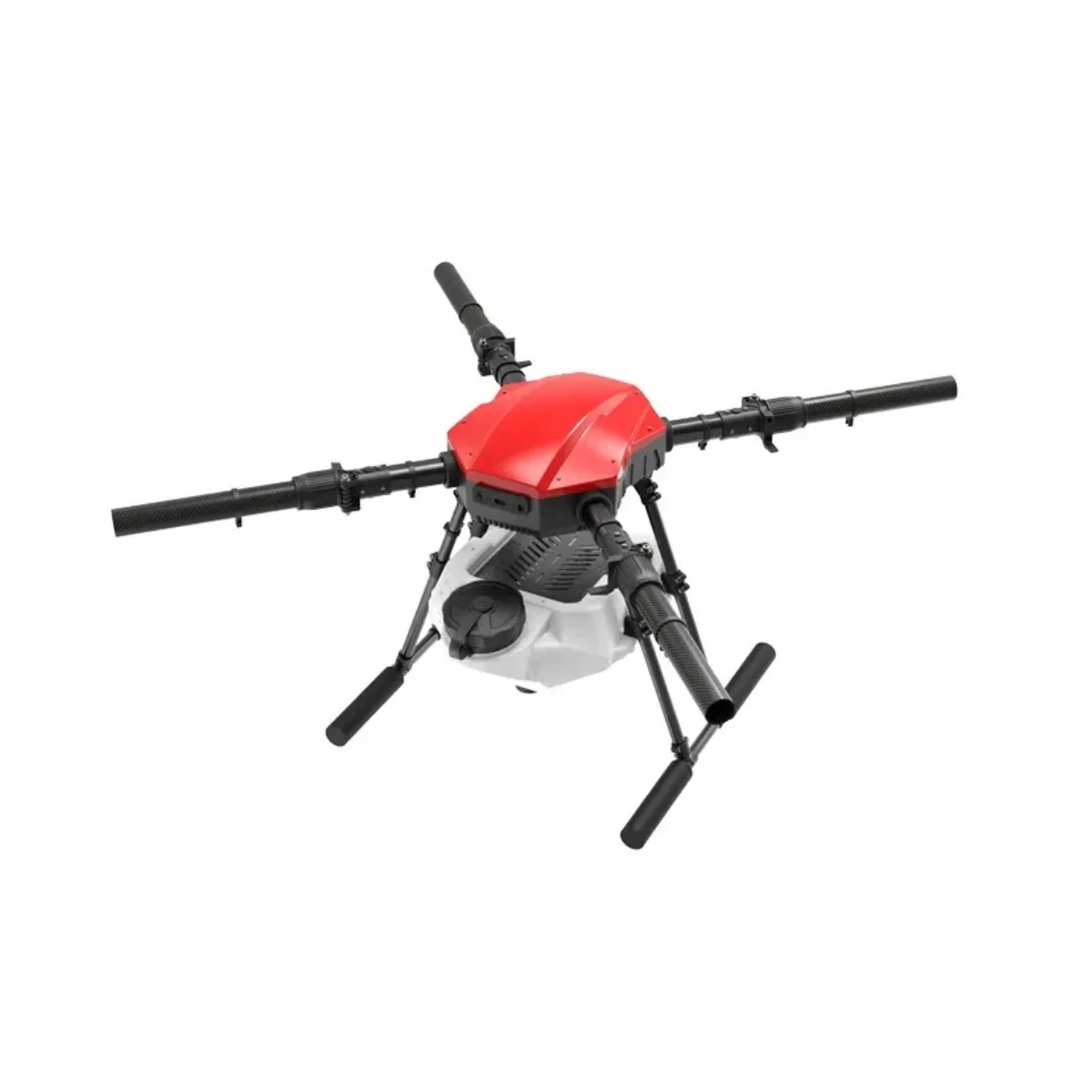
EFT E410P 10L 4 Axis Agricultural Drone Frame
A professional-grade agricultural drone frame designed for 10-litre spraying tanks. Robust construction with integrated arm folding for transport — ideal as a foundation for agricultural spray drone builds.
View on ZboticFrequently Asked Questions
Can a hexacopter really fly with one motor failed?
Yes, with a compatible flight controller (ArduPilot or similar). The FC detects the motor failure via RPM sensor or current monitoring, then adjusts the mixer to compensate using the remaining 5 motors. Flight stability is reduced but sufficient for a controlled landing. Note: this only works cleanly if the failed motor is not spinning erratically — a locked-up motor is easier to compensate for than one spinning at random speeds.
Is a hexacopter harder to build and set up than a quad?
Moderately harder — there are two more motors to wire, calibrate, and tune. The frame is larger and more complex. But if you’ve built a quad, building a hexacopter is a natural progression rather than a radical jump in difficulty. Plan for approximately 20–30% more build time.
What motor configuration is best for a hexacopter — flat hex or Y6?
Flat hex (six arms in a horizontal plane) is more stable and efficient. Y6 (three arms with coaxial motor pairs) is more compact but less efficient (the lower motor loses efficiency due to the wash from the upper motor). For payload and stability, choose flat hex. For compactness, Y6 is viable.
What is the maximum payload for a hexacopter?
Depends entirely on motor selection and frame size. A properly spec’d 800mm hexacopter with quality motors can carry 4–6 kg of payload. Large custom hexacopters with high-power motors (like the Hobbywing X9 or T-Motor U15) can carry 10+ kg. Agricultural spraying drones routinely carry 10–16 litres of liquid (10–16 kg payload).
Is a hexacopter legal to fly in India for agriculture?
Agricultural spraying drones must have a valid Type Certificate from DGCA and be operated by a licensed Remote Pilot. The DGCA’s Drone Rules 2021 and subsequent amendments govern this. Consult the Digital Sky portal and relevant DGCA circulars for current requirements, as these evolve regularly.
Final Verdict
The hexacopter vs quadcopter question doesn’t have a universal answer — it has a context-dependent answer. For sport flying, FPV, and light camera work, the quadcopter wins on efficiency, simplicity, and cost. For heavy-lift commercial work, professional cinematography, and any application where motor failure must not mean a crash, the hexacopter’s redundancy, payload capacity, and smoothness make it the clear choice.
In India’s growing commercial drone sector — particularly agriculture, survey, and inspection — hexacopters are increasingly the professional standard. As airspace regulations mature and commercial drone operations scale, the investment in a hexacopter’s extra capability and safety margin becomes increasingly justified.
Know your payload, know your use case, and choose accordingly.
Build Your Hexacopter with Components from Zbotic
From high-torque motors and industrial frames to power distribution boards and telemetry systems — Zbotic.in stocks the components that serious hexacopter builds require.
Browse Heavy-Lift Drone Components






Add comment