
The price of capable 3D scanning hardware has fallen dramatically. In 2020, getting a scan accurate to 0.1 mm required a ₹5 lakh+ professional instrument. In 2026, handheld scanners costing ₹40,000–₹2,00,000 can achieve results that professional service bureaus would have charged tens of thousands per scan to deliver. This guide helps you navigate the Indian market for 3D scanners, from budget-friendly photogrammetry setups to professional FARO-class instruments.
How 3D Scanning Works
A 3D scanner captures the geometry of a physical object and converts it to a digital 3D model. The output is typically a point cloud (millions of 3D coordinates) which is then processed into a mesh (a surface made of triangles) and exported as an STL, OBJ, or PLY file that can be imported into CAD software, 3D printing slicers, or visualisation tools.
The scanning process works by measuring the distance from the scanner to the surface at many points simultaneously. Different technologies achieve this measurement differently — some use visible light patterns, some use lasers, some use time-of-flight infrared sensors. Each approach has trade-offs in accuracy, scan volume, speed, cost, and sensitivity to ambient conditions.
Most 3D scanning workflows involve capturing multiple scans from different angles, then using software to align (register) and merge them into a complete 360° model. Retroreflective alignment markers (often small adhesive dots placed around the object) help the software precisely align consecutive scans. For large objects, external targets or SLAM (simultaneous localisation and mapping) algorithms are used.
3D Scanning Technologies Explained
Structured Light Scanning
A structured light scanner projects a pattern of lines, grids, or coded patterns onto the object’s surface using a projector. One or more cameras observe how these patterns deform as they follow the surface geometry. By analysing the deformation, the scanner calculates precise 3D coordinates for each projected pattern element.
Structured light offers very high accuracy (as low as 0.01 mm for desktop systems) and captures full-frame scans quickly (fractions of a second per frame). It is the dominant technology in mid-range consumer and professional 3D scanners. The limitation: structured light scanners struggle with very shiny, transparent, or very dark surfaces, which either over- or under-reflect the projected patterns. Scanning spray (temporary matte coating) is commonly used on problematic surfaces.
Laser Triangulation
A laser line or dot is projected onto the surface, and a camera positioned at a known angle observes where the laser falls. The displacement of the laser in the camera image is trigonometrically converted to a surface distance. Laser scanners are highly accurate and can be very compact, but they scan line by line, making them slower than structured light for full-object capture.
Handheld laser scanners like the older Artec Eva use laser triangulation to achieve high accuracy while the user slowly moves the scanner around the object. Modern handheld scanners often combine laser lines with tracking cameras for self-positioning.
Time-of-Flight (ToF) and LiDAR
ToF sensors measure the time it takes for a pulse of light (infrared or laser) to travel to the surface and return. Since light speed is known, distance is calculated precisely. ToF is well-suited for room-scale scanning and outdoor environments. The iPhone/iPad LiDAR sensors introduced in 2020 use this principle. Dedicated room-scale LiDAR scanners are used for architecture, construction site documentation, and reverse engineering of large industrial machinery.
ToF accuracy (typically 3–10 mm at close range) is lower than structured light (0.05–0.5 mm), so it is not suitable for precision engineering but is excellent for large-scale documentation, architecture, and film/game asset creation.
Photogrammetry
Photogrammetry reconstructs 3D geometry from overlapping photographs using computer vision algorithms (specifically feature matching and bundle adjustment). It requires only a standard camera — even a good smartphone — and free or low-cost software. The accuracy and quality depend heavily on lighting, photo quality, number of photos, and object texture. Photogrammetry is covered in detail in a dedicated section below.
Key Specifications to Understand
- Accuracy: The deviation from true dimensions (e.g., ±0.1 mm). Higher is not always necessary — match accuracy to your application.
- Resolution: The smallest feature the scanner can detect (often expressed as point distance, e.g., 0.2 mm point spacing). Note this is distinct from accuracy.
- Scan volume: The physical size of object the scanner can capture in one pass or comfortably in a session. Some scanners excel at small objects (jewellery, teeth), others at large objects (car bodies, machinery).
- Scan speed: Measured in frames per second (fps) or points per second. Higher speed means less motion blur and faster capture.
- Texture capture: Can the scanner also capture colour texture maps? Essential for visual presentations, not needed for manufacturing.
- Working distance: The optimal distance from scanner to object surface. Shorter working distance often means higher resolution but requires more passes for large objects.
- Output formats: STL, OBJ, PLY, XYZ point cloud. Ensure compatibility with your downstream software.
Budget Options Under ₹50,000
Revopoint RANGE 2 (approximately ₹35,000–₹45,000)
Revopoint has established itself as the value leader in consumer 3D scanning. The RANGE 2 uses a combination of structured light and infrared point cloud for body and large object scanning. Accuracy of approximately 0.05 mm and single-frame accuracy of 0.04 mm make it genuinely useful for engineering applications despite its price. The RVBODY/RANGE combination excels at body scanning (full-body scan in under 2 minutes) and medium-size objects (30 cm to 3 m).
Limitations: struggles with fine details smaller than 1–2 mm, outdoor scanning in bright sunlight is difficult, and post-processing software (Revo Scan) is capable but less mature than professional alternatives.
Revopoint MINI (approximately ₹40,000–₹55,000)
Where the RANGE targets large objects, the MINI is optimised for small, detailed objects: coins, jewellery, dental casts, small mechanical parts. It achieves 0.02 mm single-scan accuracy and 0.05 mm volumetric accuracy — remarkable at this price point. The scanning volume is small (limited to objects roughly 10 × 10 × 10 cm comfortably), so it is a specialist tool rather than an all-rounder.
Creality Raptor (approximately ₹30,000–₹40,000)
Creality, known for FDM printers, has entered the 3D scanner market with the Raptor — a handheld structured light scanner aimed at their existing printer user base. Accuracy claims of ±0.05 mm and a workflow that feeds directly into Creality’s slicer ecosystem make it an attractive option if you’re already in the Creality ecosystem. As a newer product (2025), real-world user data is still accumulating.
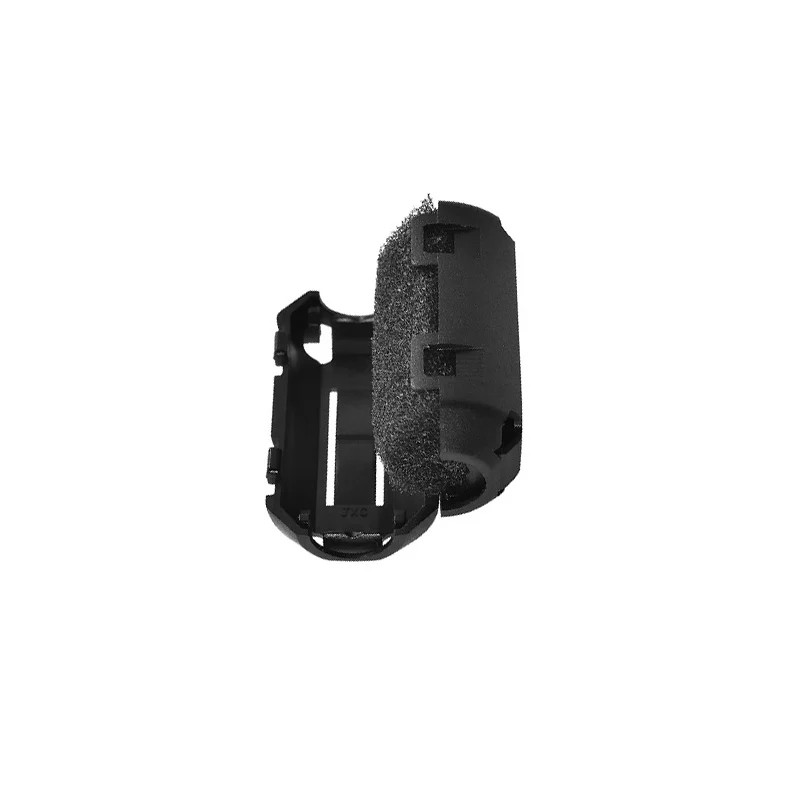
Filament Dust Filter & Cleaner for 3D Printers
Complete your 3D scan-to-print workflow with quality accessories. This dust filter keeps your filament clean for reliable prints from scanned models.
Mid-Range Scanners (₹50,000–₹2,00,000)
Einstar (approximately ₹55,000–₹75,000)
Shining3D’s Einstar sits at an interesting intersection: consumer price, semi-professional capability. It scans using near-infrared structured light and achieves ±0.1 mm accuracy. The Einstar is particularly strong at full-body and human scanning — the face tracking mode captures facial details in real time during a walking scan. It’s used extensively by Indian photographers, artists, and metaverse content creators building 3D avatars.
Artec Leo (approximately ₹8,00,000 — listed here for context)
The Artec Leo represents the upper end of the handheld category — an autonomous, screen-equipped scanner that shows you the point cloud in real time without a tethered laptop. While expensive, Artec resellers in India (Mumbai, Bangalore, Pune) offer rental programmes at roughly ₹15,000–₹25,000 per day, making professional scans accessible for one-off projects without the capital investment.
Shining3D EinScan series (₹1,50,000–₹5,00,000)
The EinScan H2 and Pro HD are the most popular professional-grade scanners in India across a range of industries. Accuracy of 0.045–0.05 mm, texure capture, large scanning volume, and a mature software ecosystem (Exscan) make these the default choice for Indian reverse engineering service bureaus, automotive Tier 1 suppliers, and precision manufacturing.
Professional Scanners (₹2,00,000+)
For accuracy requirements below 0.05 mm, large-volume industrial scanning, or quality assurance applications, professional systems dominate. In India, Shining3D, Creaform, FARO, and Zeiss all have either direct presence or authorised resellers with local support.
Creaform Go!SCAN SPARK: Portable, quick-change nozzle-less calibration, 0.05 mm accuracy, auto-positioning. Popular with Indian automotive suppliers for on-line QA inspection.
FARO Freestyle 2: Easy-to-use handheld for large objects (rooms, vehicles, archaeological sites). Less precise than structured light (1–3 mm) but remarkable speed and range. Used by Indian heritage conservation departments and film set documentation teams.
Zeiss T-SCAN hawk 2: Laser line scanner with 0.023 mm accuracy. The choice for aerospace and defence metrology in India. Very expensive but provides court-admissible measurement traceability.
Photogrammetry: The Free Alternative
Before investing in any 3D scanner, every Indian maker should experiment with photogrammetry. The workflow is simple: photograph the object from many angles with significant overlap, then feed those photos into reconstruction software. The results can be stunning — and the entire setup costs only your existing camera and a computer.
Free/low-cost photogrammetry software available in 2026:
- Meshroom (free, open-source): AliceVision-based, runs on NVIDIA GPU, produces high-quality meshes from 50–200 photos. The learning curve is moderate but the output rivals ₹50,000 scanners for textured models.
- Metashape (₹10,000/year for professional): The industry standard for photogrammetry professionals. Used by Indian heritage surveys, forestry departments, and construction firms.
- Reality Capture (pay-per-input model): Extremely fast processing, excellent quality, pay only when you export. Good for occasional professional use.
- 3DF Zephyr (free tier): 50-photo limit on free version, good for learning and small objects.
Tips for good photogrammetry results: diffuse, consistent lighting (overcast day or large softboxes), matte surface (spray scanning powder on reflective objects), minimum 60% overlap between adjacent photos, turntable for small objects (use a Lazy Susan), camera in manual mode with fixed exposure.
What photogrammetry struggles with: very shiny or transparent surfaces, thin features (wires, hair, grass), uniform textureless surfaces (white foam, plain cardboard). These are the cases where structured light scanners have an advantage.
Use Cases in India
The Indian market is developing unique applications for 3D scanning that differ from Western markets:
Heritage documentation: India’s extraordinary depth of temples, monuments, and artefacts creates massive demand for 3D scanning preservation projects. The Archaeological Survey of India and state departments are actively adopting photogrammetry and LiDAR for documentation. Individual photographers are building careers scanning temples for digital preservation.
Orthotics and prosthetics: Custom-fit prosthetic limb sockets traditionally required plaster casting. 3D scanning enables digital fitting workflows that are faster, cleaner, and more precise. Several Indian startups are now offering scan-to-print prosthetics at a fraction of imported device costs.
Automotive reverse engineering: India’s massive automotive aftermarket — particularly the retrofit and restoration sector — uses 3D scanning to copy and reproduce legacy parts for vehicles no longer supported by OEM suppliers. Pune and Chennai machine shops are early adopters.
Garment and footwear fit: Body scanners for personalised clothing are emerging in Indian malls and boutiques, enabling made-to-measure garments at closer-to-ready-made prices. Footwear brands use foot scanners for custom insole production.
Education: IITs, NITs, and engineering colleges are building reverse engineering labs combining 3D scanners and 3D printers. Students scan real mechanical parts, import them into CAD, redesign, and 3D print prototypes — a workflow that teaches real-world engineering.
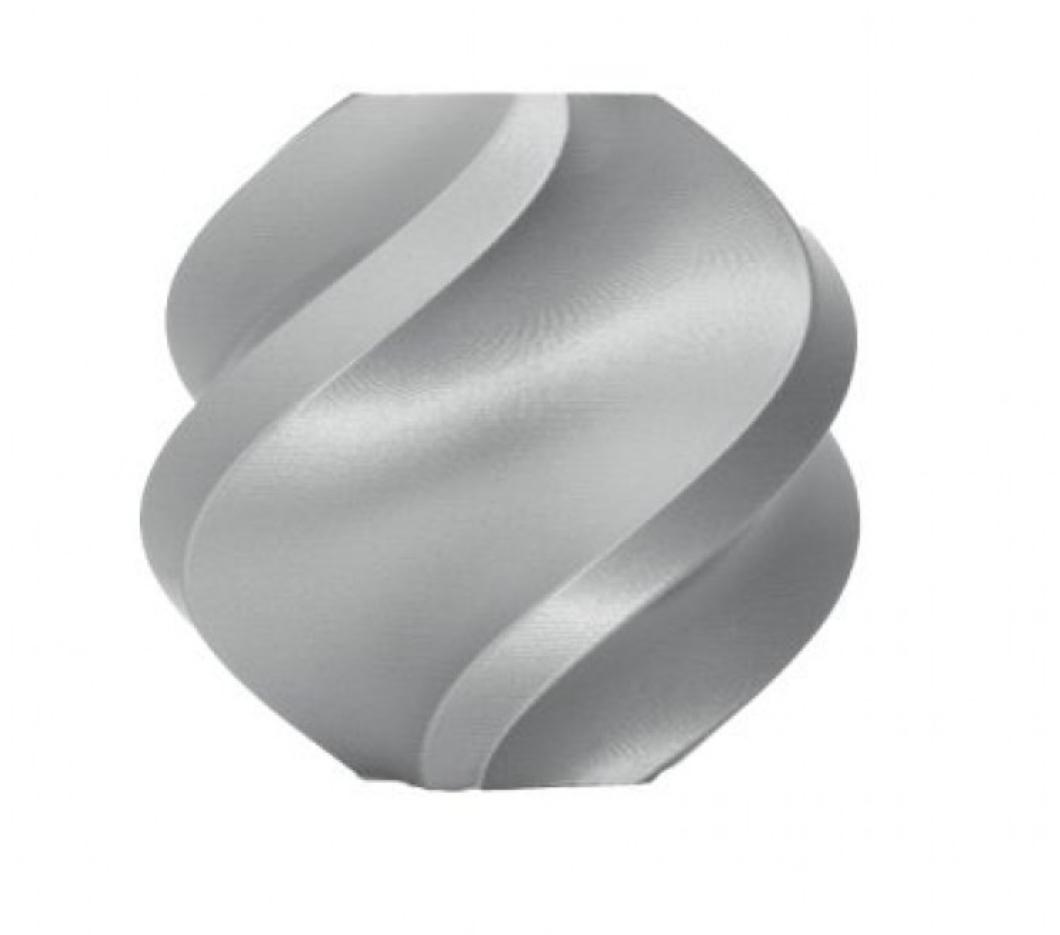
Bambu Lab PLA 3D Printer Filament – Silver 1.75mm
Print your 3D scans with Bambu Lab’s premium silver PLA — consistent extrusion and vibrant metallic finish on a reusable spool. Perfect for prototype prints from scanned models.
Software Ecosystem
Scanner hardware is only half the story. The software that processes raw scan data into usable meshes is equally important. Most consumer scanners bundle proprietary software, but third-party options often produce better results:
- Revo Scan 5 (Revopoint): Bundled, handles alignment and merging. Good for beginners; limited editing tools.
- Exscan Pro (Shining3D): Mature, professional workflow, supports turntable and handheld modes, exports to common formats.
- Artec Studio: Best-in-class processing quality. Can import scans from non-Artec hardware (point clouds) in the Pro version.
- Meshmixer / Meshy: Free mesh editing tools for cleaning, hollowing, and repairing scan meshes before 3D printing.
- GeoMagic Design X / Wrap: Industry-standard tools for converting scan meshes to parametric CAD (NURBS surfaces, Solid bodies in SOLIDWORKS/CATIA). Essential for reverse engineering to manufacturing-ready CAD.
Frequently Asked Questions
What is the minimum budget to get into 3D scanning in India?
You can start photogrammetry today for free if you have a smartphone and a computer. For a dedicated 3D scanner, the Revopoint RANGE 2 at approximately ₹35,000–₹45,000 is the most capable entry point. Below ₹15,000, purpose-built scanners don’t yet offer reliable results — at that budget, photogrammetry is the better choice.
Can I scan my own face or body with a consumer scanner?
Yes. The Revopoint RANGE 2 and Shining3D Einstar both include body/face scanning modes. An assistant needs to scan around the subject (the subject must hold still), or a turntable is used. Full-body scans in one pass are possible with high-end systems like the Artec Leo. For face-only scanning at high detail, the Revopoint MINI or a good photogrammetry setup with multiple cameras gives excellent results.
How accurate does my scanner need to be for 3D printing reverse engineering?
For fit-critical parts (mechanical assemblies, joints), you want ±0.1 mm or better. Most mid-range scanners achieve this. For decorative or artistic applications, ±0.5 mm is typically adequate. For medical applications (dental, orthotics, prosthetics), ±0.05 mm is the typical clinical requirement.
Can 3D scanners scan shiny metal or glass objects?
Not without preparation. Apply a temporary scanning spray (like Aesub Blue, which self-evaporates) or chalk spray to create a matte surface. Both SLA and MSLA structured light scanners rely on diffuse reflection — specular (shiny) surfaces return light away from the cameras, leaving data gaps. After scanning, the spray evaporates or is wiped off without damaging the part.
Is 3D scanning a viable career or business in India?
Yes. 3D scanning services are in growing demand from architecture firms, forensic departments, heritage organisations, automotive companies, jewellery manufacturers, and orthotics providers. A Revopoint or Shining3D mid-range scanner plus photogrammetry software represents a starting investment under ₹1.5 lakh that can generate ₹3,000–₹15,000 per scan job. Multiple full-time Indian 3D scanning service businesses operate profitably from Tier 2 cities.
Complete Your 3D Scan-to-Print Workflow
Once your 3D scan is ready, Zbotic has everything you need to turn it into a printed object: filaments, nozzles, hotend components, and build plate accessories for FDM printers of all types.

Add comment