
Choosing the right motor driver IC can make or break your robotics or automation project. The three most common options you will encounter in Indian maker circles — the L298N, DRV8833, and TB6612FNG — look similar on paper but behave very differently in practice. This comprehensive motor driver IC comparison breaks down every important parameter so you can pick the right chip for your next DC motor, stepper, or robot drive project without burning components or wasting money.
Quick Overview of All Three ICs
All three ICs are H-bridge motor drivers — they use transistors arranged in an H pattern to allow bidirectional current flow through a motor, enabling both forward and reverse rotation, as well as PWM speed control. Beyond that basic function, they differ significantly in technology, efficiency, voltage range, and package size.
- L298N: Legacy bipolar (BJT) H-bridge. High voltage tolerance, poor efficiency, generates heat, needs heatsink.
- DRV8833: Modern MOSFET H-bridge from Texas Instruments. Low voltage, excellent efficiency, tiny package, built-in protection.
- TB6612FNG: MOSFET H-bridge from Toshiba. Middle ground — wider voltage range than DRV8833, much better efficiency than L298N.
L298N: The Classic Workhorse
The L298N has been around since the 1980s and is still one of the most popular motor driver ICs in India — largely because of its availability, low cost (modules available for ₹60–100), and large community tutorials. It is a bipolar (BJT) double H-bridge capable of driving two DC motors or one stepper motor.
Key Characteristics
- Supply voltage: 5V–46V (motor power supply), 5V logic
- Continuous current: 2A per channel (4A peak)
- Control interface: Direction pins (IN1–IN4), Enable pins for PWM speed control
- Package: PowerSO20 or Multiwatt15 (large, through-hole friendly)
The Voltage Drop Problem
Here is the critical weakness of the L298N that most beginners overlook: it uses BJT transistors, which have a forward voltage drop of approximately 1.4V to 2V across the H-bridge (two transistors in series). This means if you feed it 6V, your motor only sees around 4–4.6V. At 12V, you lose 15% of your supply just to heat. This wasted power heats the IC, often requiring the large metal heatsink you see on L298N modules.
For a 12V motor drawing 1A, the L298N dissipates approximately 2W as heat — enough to get very warm. In Indian summer temperatures (35–42°C ambient), proper heatsinking is mandatory.
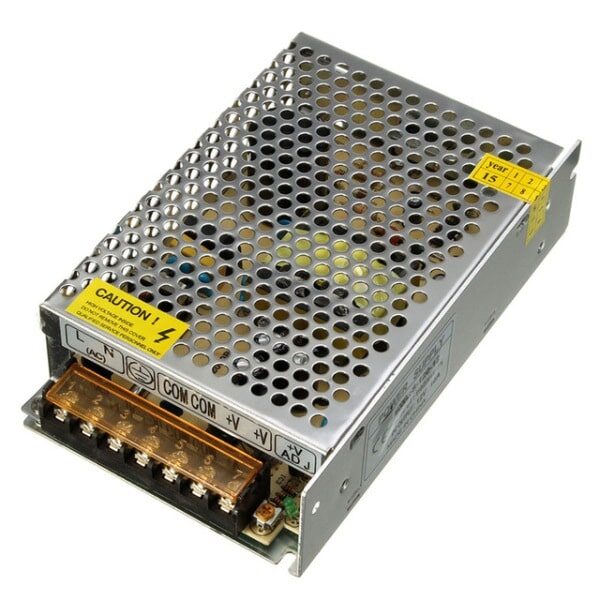
12V 10A SMPS – 120W DC Metal Power Supply
Power your L298N or TB6612FNG motor driver circuits reliably. This 12V 10A SMPS handles multi-motor setups with plenty of current headroom.
DRV8833: The Modern Low-Voltage Choice
The DRV8833 from Texas Instruments represents a generation leap over the L298N. It uses N-channel MOSFET transistors in an H-bridge configuration, dramatically reducing voltage drop and heat generation. It is the go-to choice for battery-powered robots, small 3V–10V motors, and projects where efficiency matters.
Key Characteristics
- Supply voltage: 2.7V–10.8V (motor), 1.8V–7V (logic — I2C/GPIO compatible)
- Continuous current: 1.5A per channel (2A peak)
- On-resistance (RDS_ON): ~360 mΩ per FET (very low power loss)
- Package: WSON-16 (tiny 3mm × 3mm SMD) or HTSSOP-16
- Built-in protection: Over-current (current-limit mode), thermal shutdown, under-voltage lockout
Standout Features
The DRV8833 has a unique current limit / decay mode control. Unlike the L298N which just brakes or coasts, the DRV8833 can regulate motor current actively — extremely useful for stepper motors, giving smoother and quieter operation. It also supports a sleep mode that cuts quiescent current to under 1 µA, critical for battery-powered applications.
The main limitation is voltage — 10.8V maximum motor supply means it is not suitable for 12V standard DC motors without careful voltage management. It is perfect for N20 micro-gear motors, TT motors (those yellow robot chassis motors sold widely in India), and 5V–9V geared DC motors.
TB6612FNG: The Balanced Performer
The TB6612FNG from Toshiba sits squarely between the L298N and DRV8833. It uses MOSFET technology like the DRV8833 (so far better efficiency than L298N), handles up to 13.5V motor supply (covers standard 12V motors), and comes in a small SOP24 package. The Sparkfun and Pololu breakout boards for this IC are extremely popular worldwide, and clones are readily available in India for ₹30–80.
Key Characteristics
- Supply voltage: 2.5V–13.5V (motor), 2.7V–5.5V (logic)
- Continuous current: 1.2A per channel (3.2A peak)
- On-resistance (RDS_ON): ~0.5 Ω total (both FETs combined)
- Package: SSOP24 (small but hand-solderable)
- Built-in protection: Thermal shutdown, under-voltage lockout, standby mode (0 µA)
Control Interface
The TB6612FNG has a clean control interface: two direction pins (AIN1/AIN2, BIN1/BIN2) and one PWM pin (PWMA/PWMB) per channel, plus a STBY (standby) pin to enable/disable the chip. This maps perfectly to most microcontroller GPIO configurations and is compatible with both 3.3V and 5V logic.
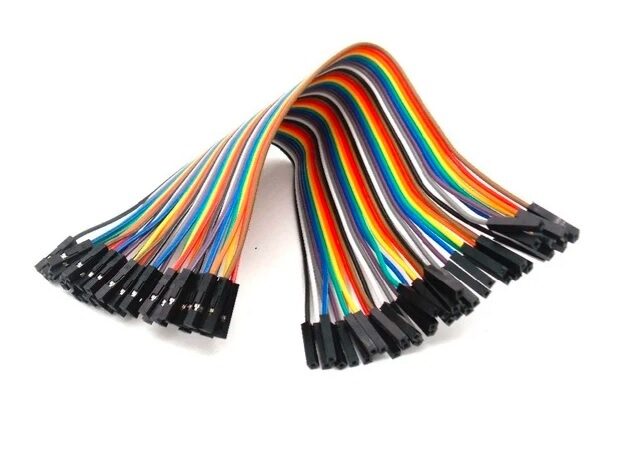
10CM Female To Female Breadboard Jumper Wires – 40Pcs
Perfect for connecting motor driver breakout boards (L298N, TB6612FNG) to your Arduino or STM32 on the breadboard without soldering.
Side-by-Side Specifications Table
| Parameter | L298N | DRV8833 | TB6612FNG |
|---|---|---|---|
| Technology | BJT | N-MOSFET | N-MOSFET |
| Motor Voltage | 5V–46V | 2.7V–10.8V | 2.5V–13.5V |
| Continuous Current | 2A/ch | 1.5A/ch | 1.2A/ch |
| Peak Current | 4A | 2A | 3.2A |
| Voltage Drop | 1.4V–2V | ~0.1V | ~0.2V |
| Efficiency | ~70% | ~95% | ~90% |
| Logic Voltage | 5V only | 1.8V–7V | 2.7V–5.5V |
| Heatsink Needed? | Yes (>0.5A) | No | No |
| Standby/Sleep | No | Yes (1µA) | Yes (0µA) |
| Price (India, bare IC) | ₹30–50 | ₹50–80 | ₹60–100 |
| Best For | 12V–24V motors, steppers, high voltage | Battery robots, 3V–9V motors | 5V–12V motors, balanced use |
Efficiency and Heat Dissipation
The efficiency difference is dramatic and matters especially in battery-powered applications. Consider a robot with two 6V motors drawing 500mA each (total 1A at 6V = 6W mechanical load):
- L298N at 6V, 1A total: ~1.8V drop → 1.8W wasted as heat → 70% efficiency. Battery drains ~43% faster than ideal.
- TB6612FNG at 6V, 1A total: ~0.2V drop → 0.2W wasted → 97% efficiency. Almost no heat.
- DRV8833 at 6V, 1A total: ~0.1V drop → 0.1W wasted → 98.3% efficiency. Barely warm to touch.
For a robot running on a 3000mAh Li-ion pack at 7.4V, the difference in run time between L298N and TB6612FNG can be 20–30 minutes of extra operation. In Indian robotics competitions like Robocon or university tech fests, that runtime advantage can be decisive.
Which Motor Driver Should You Choose?
Here is a direct decision guide:
Choose L298N if:
- Your motor runs on 12V–46V (the MOSFET alternatives cannot handle this)
- You need the absolute cheapest option and have a heat sink available
- You are using a legacy design that already specifies L298N
- You need to drive stepper motors with higher voltage coils (24V steppers)
Choose DRV8833 if:
- Your motor runs on 3V–9V (N20 geared motors, TT chassis motors, small hobby servos)
- You are building a battery-powered robot where every mAh counts
- You need the smallest possible footprint (sensor robots, wearables)
- Your MCU is 3.3V (ESP32, nRF52, STM32) — no level shifting needed
Choose TB6612FNG if:
- Your motors run on 5V–12V (standard hobby DC motors)
- You need better efficiency than L298N without the voltage limitation of DRV8833
- You want a clean, well-documented control interface
- You are building a wheeled robot with standard yellow TT motors or N20 motors
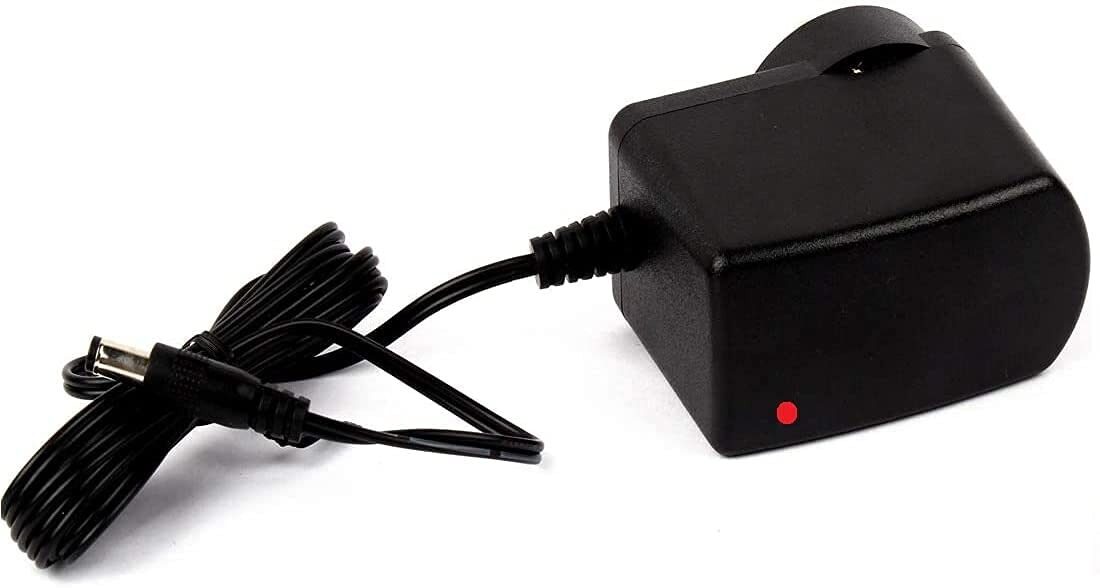
12V 2A Power Supply with 5.5mm DC Plug Adapter
A reliable 12V supply for benchtop motor driver testing. Compatible with L298N and TB6612FNG circuits operating at 12V.
Basic Wiring and Control Tips
Decoupling Capacitors — Non-Negotiable
All three motor driver ICs generate fast current spikes when switching. Always place a 100µF electrolytic + 100nF ceramic across the motor supply pins as close to the IC as possible. Without these, the switching noise can reset your MCU or corrupt SPI/I2C communication.
Separate Motor and Logic Power
Motor supply and MCU logic supply should share a common ground but have separate power traces. Use a separate regulator or power supply for the motor side. This prevents motor current spikes from drooping the MCU supply voltage.
PWM Frequency
- L298N: Works well from 1 kHz to 20 kHz. Above 20 kHz, BJT switching losses increase significantly.
- DRV8833 and TB6612FNG: MOSFET ICs can switch at 100 kHz+. However, 20–50 kHz is typically optimal — above audible range without excessive switching losses.

0.1µF Ceramic Capacitor (Pack of 50)
Essential decoupling capacitors for motor driver circuits. Place one 100nF ceramic cap right across each motor driver power supply pin to suppress switching noise.
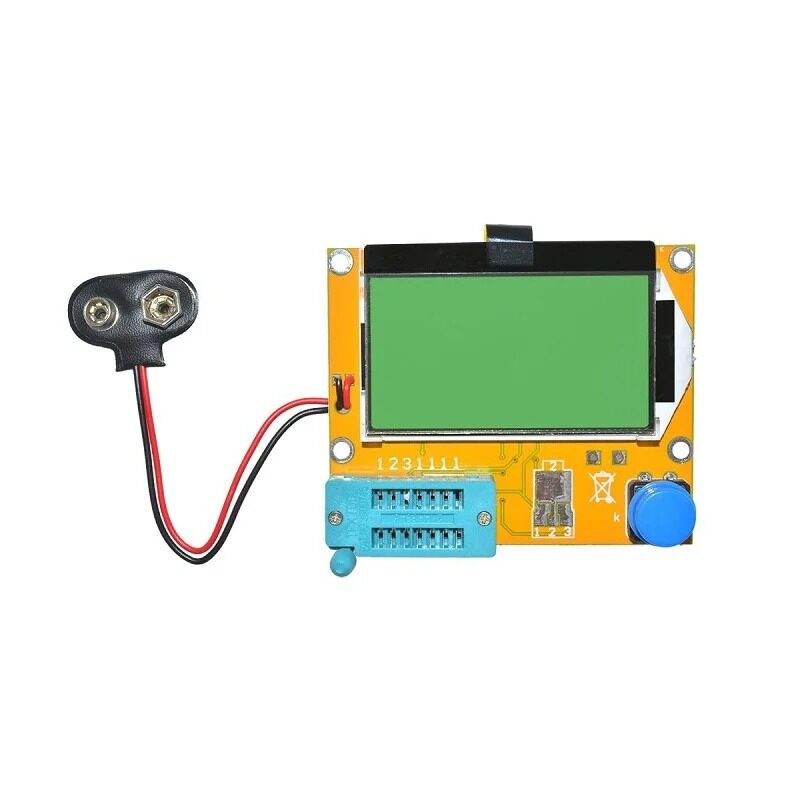
LCR-T4 Transistor Tester – Resistance, Capacitance & ESR Meter
Quickly verify transistors and MOSFETs in your motor driver circuits. Identifies component type, pinout, and key parameters in seconds.
Frequently Asked Questions
Q1: Can I use the L298N with a 3.3V microcontroller like ESP32?
The L298N’s enable and direction inputs typically need 2.3V HIGH threshold, so 3.3V logic usually works. However, the 5V logic supply pin (VSS) must still be connected to 5V. In practice, many ESP32 + L298N setups work, but for clean operation use a 3.3V-to-5V level shifter on the control lines.
Q2: Why does my L298N module get very hot?
The L298N’s BJT design dissipates significant power as heat even at moderate currents. The onboard heatsink on most modules is undersized. Ensure motor voltage is not excessively higher than motor rated voltage, keep current below 1.5A per channel, and add an external heatsink if needed. If heat persists, consider switching to TB6612FNG.
Q3: Can these ICs drive stepper motors?
Yes, all three can drive bipolar stepper motors (two coils). The L298N is commonly used for NEMA17 stepper motors in 3D printers (though it has since been replaced by more efficient A4988/DRV8825). The DRV8833 can drive small bipolar steppers with its current limiting feature for microstepping.
Q4: What is the maximum PWM frequency for the TB6612FNG?
The TB6612FNG datasheet specifies up to 100 kHz PWM input. In practice, 20–50 kHz gives optimal efficiency and cool operation. Above 100 kHz, switching losses start to matter.
Q5: Is the DRV8833 available on breakout boards in India?
Yes, DRV8833 dual H-bridge breakout boards (similar to the Pololu design) are available from Indian electronics shops and online marketplaces for ₹100–250. They include protection diodes, decoupling caps, and pin headers for easy breadboard use.
Build Your Robot with the Right Components
Find motor drivers, power supplies, capacitors, and all electronics components at Zbotic.in — India’s maker-friendly electronics store with fast shipping across India.







Add comment