
Most FPV pilots fly X frames. It’s the default, the standard, the safe choice. But spend enough time in FPV communities and you’ll encounter the Vtail — a frame geometry that looks unusual, flies differently, and inspires either strong loyalty or complete dismissal.
So which is better: Vtail or X frame? The honest answer is: it depends on what you’re optimising for. This guide gives you the full aerodynamic and practical comparison so you can make an informed decision for your next build.
1. FPV Frame Basics: Arms, Geometry, and Airflow
Before comparing specific geometries, let’s establish how frame design affects drone performance:
What Does Frame Geometry Affect?
- Propwash and airflow interaction: Props generate downwash. Arms and the central body can interfere with this airflow, creating turbulence — especially during fast forward flight where the front prop wash hits the rear props.
- Weight distribution: Arm length and angle determine where motors sit relative to the CG (centre of gravity). This affects roll rate, pitch rate, and the moment of inertia.
- Camera view: On FPV quads, rear props appearing in the camera FOV is a nuisance. Frame geometry determines how much prop intrudes into the view.
- Crashworthiness: Arm geometry determines which direction forces travel on impact — some designs fail more gracefully than others.
- Yaw authority: Yaw is controlled by motor torque differential between CW and CCW motors. The number and arrangement of CW vs CCW motors determines yaw authority.
2. The X Frame: The Universal Standard
The X frame places all four arms at equal angles from the body, with the front two arms and rear two arms mirroring each other. Viewed from above, the motor positions form a square (True X) or a slightly stretched rectangle (Stretch X).
Why X Frame Is the Default
- Symmetric handling: Roll and pitch response are identical (assuming True X). Flip forward = flip backward = same feel. Easier to learn on.
- Proven tuning baselines: Betaflight’s default PID values are optimised for X frames. Community presets, YouTube tutorials, and forum advice almost universally assumes X frame.
- Easy repairability: X frame arms are standardised. If you break a front arm, the rear arm is identical — stock fewer unique spares.
- Clear propeller-to-prop spacing: With motors at 90° angles, each motor’s prop wash has maximum separation from adjacent props in hover.
True X vs Stretch X
A key distinction within X frames:
- True X: Motor positions form a square. Equal roll and pitch moment of inertia. Symmetric, balanced feel.
- Stretch X: Motor positions form a rectangle, wider than long. The front-rear motor separation is greater than left-right. This reduces rear prop wash interference with front props in fast forward flight (the front props’ wash doesn’t hit the rear props as easily). Popular for racing builds where forward speed matters more than hover stability.
X Frame Weaknesses
- Prop wash in fast flight: In forward flight, the front prop downwash flows backwards and can be ingested by the rear props. This creates turbulence and propwash oscillations. Stretch X mitigates this.
- Prop in FPV view: Depending on camera angle (typically 30–45° for freestyle), rear props may appear at the edges of the FOV on wide-angle cameras.
3. The Vtail Frame: The Engineering Oddity That Works
A Vtail (or Y6, tricopter-inspired quad) has a distinct geometry: the rear two motors are angled inward (forming a V shape when viewed from above), while the front two motors are parallel (or the entire frame is tilted so rear props angle down).
Wait — isn’t that a traditional helicopter Vtail where the tail rotors are angled? Not quite. In FPV drones, there are actually two common uses of “Vtail”:
Type 1: Vtail Geometry (Angled Rear Arms)
The rear arms angle inward and slightly downward. The rear motors cant at an angle. This means the rear props generate both upward thrust AND a sideways/inward component. This sideways thrust component provides yaw authority — one rear motor pushes inward-left, the other inward-right, so differential throttle creates yaw. This is exactly how helicopters use their tail rotors, applied to a quadcopter.
Type 2: Vtail as “Deadcat” or “Cinematic” Layout
Some frames called Vtail are actually closer to a deadcat layout — the front arms are far apart (wide V) and the rear arms are close together. This pulls the rear props behind and below the camera field of view. More accurately a deadcat with V-shaped arm configuration. Popular for cinematic FPV where prop-free video is essential.
For this comparison, we’ll focus on Type 1 — the true Vtail with angled rear motors — since that’s the aerodynamically interesting case.
How Vtail Provides Yaw
In a standard X frame, yaw comes entirely from torque differential between the two CW motors and two CCW motors. In a Vtail where rear motors are canted, yaw comes from BOTH torque differential AND the horizontal thrust component from the angled rear motors. This is called “vectored thrust yaw” and it’s significantly more powerful than torque-only yaw — which is why Vtail drones have noticeably snappier yaw response.
4. Aerodynamic Comparison
Let’s compare head-to-head across the key aerodynamic factors:
| Factor | X Frame (True X) | Vtail (Angled Rear) |
|---|---|---|
| Hover efficiency | Excellent — all thrust is vertical | Slightly lower — rear props waste some thrust sideways |
| Yaw authority | Moderate — torque only | High — vectored thrust + torque |
| Propwash in forward flight | Moderate — rear props in front-prop wake | Reduced — angled rear props partially avoid wake |
| Roll/pitch symmetry | Perfect (True X) | Asymmetric — pitch responds differently fore/aft |
| Yaw symmetry | Symmetric | Symmetric |
| Front-to-rear prop wash | Significant in fast flight | Reduced (rear props angle down, partially exiting wake) |
| Tuning complexity | Low — well-documented | High — non-standard mixer, less community data |
| Motor temperature (hover) | Baseline | Rear motors run hotter (extra lateral load) |
The Propwash Advantage of Vtail
In fast forward flight (30–50+ km/h), the front props generate a strong downwash that streams backward and slightly downward. In a standard X frame, the rear props are directly in this wake path — they’re ingesting disturbed, turbulent air, which reduces efficiency and creates control challenges (the dreaded propwash oscillation in Betaflight).
In a Vtail, the rear props are canted at an angle. At typical forward flight speeds, this angle means the rear prop discs are partially outside the wake of the front props. The exact benefit depends on flight speed, cant angle, and frame geometry — but in practice, well-designed Vtail quads do show reduced propwash wobble at high speeds.
The Efficiency Trade-off
Hover efficiency in a Vtail is inherently lower than X frame. The canted rear motors produce both vertical thrust (useful) and horizontal thrust (wasted). This inefficiency is proportional to the cant angle — a 10° cant wastes about cos(10°) = ~1.5% of rear motor thrust, while a 20° cant wastes ~6%. Real efficiency reduction at typical cant angles: 2–5%. Not dramatic, but real.
5. Flight Characteristics in Practice
Yaw: Where Vtail Shines
If you’ve ever flown a Vtail next to an X frame, the snappier yaw is immediately obvious. Yaw input transitions that feel sluggish on an X frame feel crisp and punchy on a Vtail. For freestyle pilots who do yaw spins, yaw-heavy tricks, or racing turns that use yaw, this is a meaningful advantage.
Roll and Pitch: Where X Frame Wins
The angled rear motors in a Vtail mean the quad’s effective moment of inertia is different fore-to-aft than on an X frame. Pitch forward manoeuvres may feel slightly different from pitch backward. This asymmetry bothers some pilots and is barely noticeable to others — it depends on flying style. X frame’s perfect symmetry makes it the more predictable choice for learning and consistency.
High-Speed Flight Feel
Multiple experienced FPV pilots report that Vtail quads feel more “planted” and less prone to wobbling at high forward speeds. Whether this is attributable to the aerodynamic propwash reduction or placebo effect is debated — but the observation is consistent enough to take seriously.
Wind Resistance
The X frame’s symmetric design means it responds to wind from any horizontal direction identically. The Vtail’s asymmetry means crosswind handling fore/aft may differ slightly. This is minor for most FPV flying conditions in India.
6. Configuring Vtail in Betaflight
This is where many Vtail builders stumble. A Vtail requires different mixer configuration in Betaflight compared to a standard X quad.
Mixer Type
In Betaflight Configurator → Configuration → Mixer, select QuadX as the base type — DO NOT select “Vtail4” as that’s for a traditional RC plane vtail elevator configuration, not a multirotor.
For true Vtail motor canting, you use the Custom Mixer in Betaflight’s CLI to define the motor thrust directions and moment arms. This is more complex than standard X frame setup.
CLI Custom Mixer Example
A simplified custom mixer for a Vtail quad with 15° rear motor cant (approximate values — adjust for your specific geometry):
mmix reset
# Motor 0 (front right, CCW): normal
mmix 0  1.0 -1.0  1.0 -1.0
# Motor 1 (rear left, CCW): canted inward
mmix 1  1.0 -1.0 -0.9  0.5
# Motor 2 (front left, CW): normal
mmix 2  1.0  1.0  1.0  1.0
# Motor 3 (rear right, CW): canted inward
mmix 3  1.0  1.0 -0.9 -0.5
The exact values depend on your specific cant angle. Consult the Betaflight custom mixer documentation and your frame manufacturer’s specifications for precise values.
PID Tuning Notes for Vtail
- Yaw P can typically be lower than on X frame — yaw authority is higher, so less gain is needed
- Pitch P/D may need independent tuning from roll since the effective moment of inertia may differ
- RPM filter should be set up as normal — the motor RPM data from bidirectional DSHOT is geometry-independent
- Anti-gravity may need adjustment — the rear motor cant affects how throttle changes impact pitch
7. Other Frame Types: H, Stretch X, True X, Deadcat
For completeness, here’s how other common FPV frame types compare:
H Frame
Arms run front-to-back, joined by a crossbar. The central body is rectangular. H frames were common in early FPV and are still used in some long-range builds where the electronics fit nicely in the central body. Aerodynamically similar to X frame but with more central body drag and slightly different CG characteristics.
Deadcat
Front arms are angled wide (like a cat standing on its front legs). Rear arms angle close together. The result: front props are far apart and forward, rear props are close and behind the camera FOV. Almost zero prop in FPV view — excellent for cinematic flying. Pitch forward is faster than pitch backward due to arm length differences.
Stretch X
Standard X but with greater front-to-rear motor separation vs left-to-right. Pitch response is faster than roll (shorter roll moment arm). Reduced front-to-rear propwash at high speed. Extremely popular in racing. More challenging to tune than True X due to asymmetric pitch/roll response.
Hex and Octo Frames
Six or eight motor configurations for redundancy and heavy payload capacity. Not FPV racing relevant but important for professional drones. Both X6 (hexacopter with X layout) and Y6 (tricopter layout with coaxial motors) are used in professional applications.
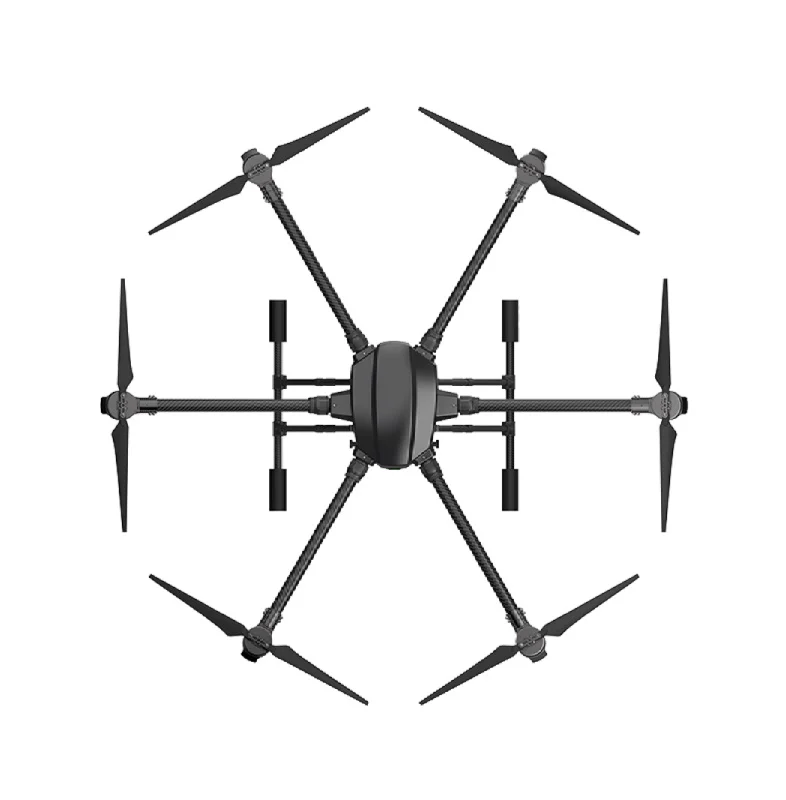
EFT 6120 Multifunction Surveillance Drone Frame
A professional hexacopter frame for surveillance applications. The hex geometry provides motor redundancy — it can continue flying even with one motor failure. For professional applications in India where a crash could be costly, the hex configuration is worth the extra weight and complexity.
8. Which Frame to Choose?
Choose X Frame (True X) If:
- You’re a beginner — less complexity, better documented
- You want to use community presets and standard Betaflight defaults
- You fly both freestyle and racing — symmetric response is versatile
- You want the easiest spare parts management
- You’re building a learning/training quad
Choose Stretch X If:
- You race — the propwash reduction at high forward speeds is a real advantage
- You want faster pitch response than roll
- You’re an intermediate+ pilot comfortable with asymmetric PID tuning
Choose Vtail If:
- You prioritise yaw authority and want snappy yaw performance
- You’re an experienced builder comfortable with custom mixer configuration
- You fly at high speeds where propwash is your primary problem and you want the aerodynamic benefit
- You enjoy experimenting and are prepared to do more in-depth tuning
Choose Deadcat If:
- You’re building a cinematic FPV drone and prop-free video is essential
- You fly smooth, flowing lines rather than aggressive freestyle
- You’re willing to accept asymmetric pitch handling
9. Components That Work Across Frame Types
Regardless of which frame geometry you choose, the core components — motors, ESCs, propellers, and flight controllers — are all compatible across frame types. Choose quality components and they’ll perform well in any geometry.
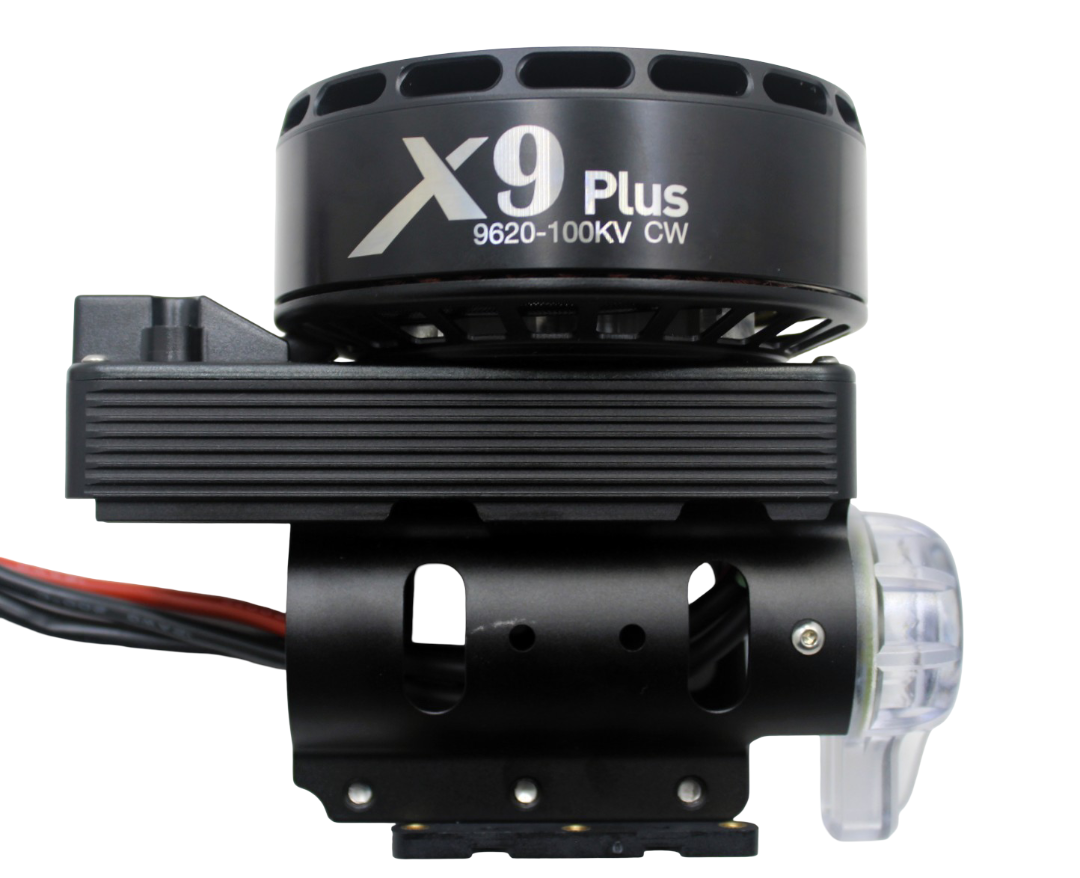
Hobbywing X9 Plus Motor CW
Premium CW motor from Hobbywing’s X9 Plus series. Whether building an X frame or Vtail, matched CW/CCW motor pairs ensure identical performance in both rotation directions — particularly important for Vtail builds where yaw authority depends on rear motor torque balance.
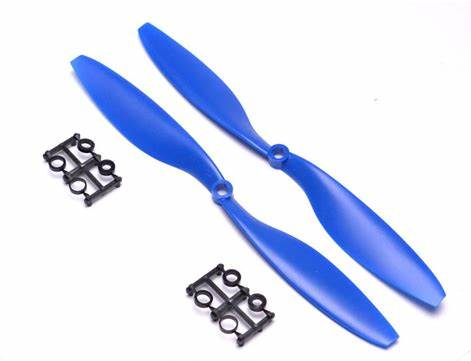
1045 2-Blade Propeller CW & CCW (Blue)
These coloured props are handy for Vtail builds where tracking which motor spins which direction is more complex. Blue for one direction, a different colour for the other — makes configuration verification quick and reduces wiring mistakes during assembly.
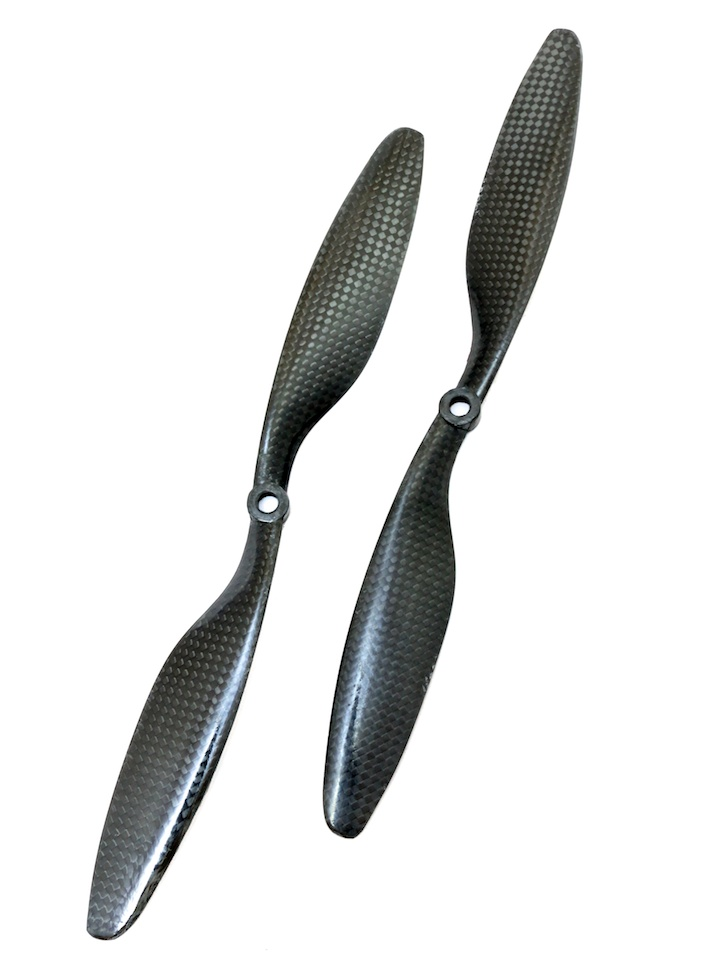
1045 2-Blade Carbon Fiber Propeller CW & CCW for DJI
Carbon fibre DJI-pattern propellers. On Vtail builds where rear motors are canted and already under higher load (providing vectored thrust), the reduced weight and increased stiffness of carbon props reduces the additional efficiency penalty of the canted configuration.
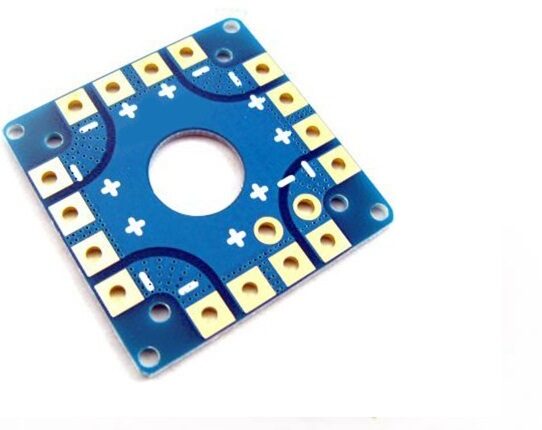
100A Multirotor ESC Power Distribution Battery Board
A solid power distribution board for quad builds of any frame geometry. The 100A rating handles high-performance 4S and 6S builds comfortably. Good PDB design with separate 5V/12V regulated outputs for FC and camera power.
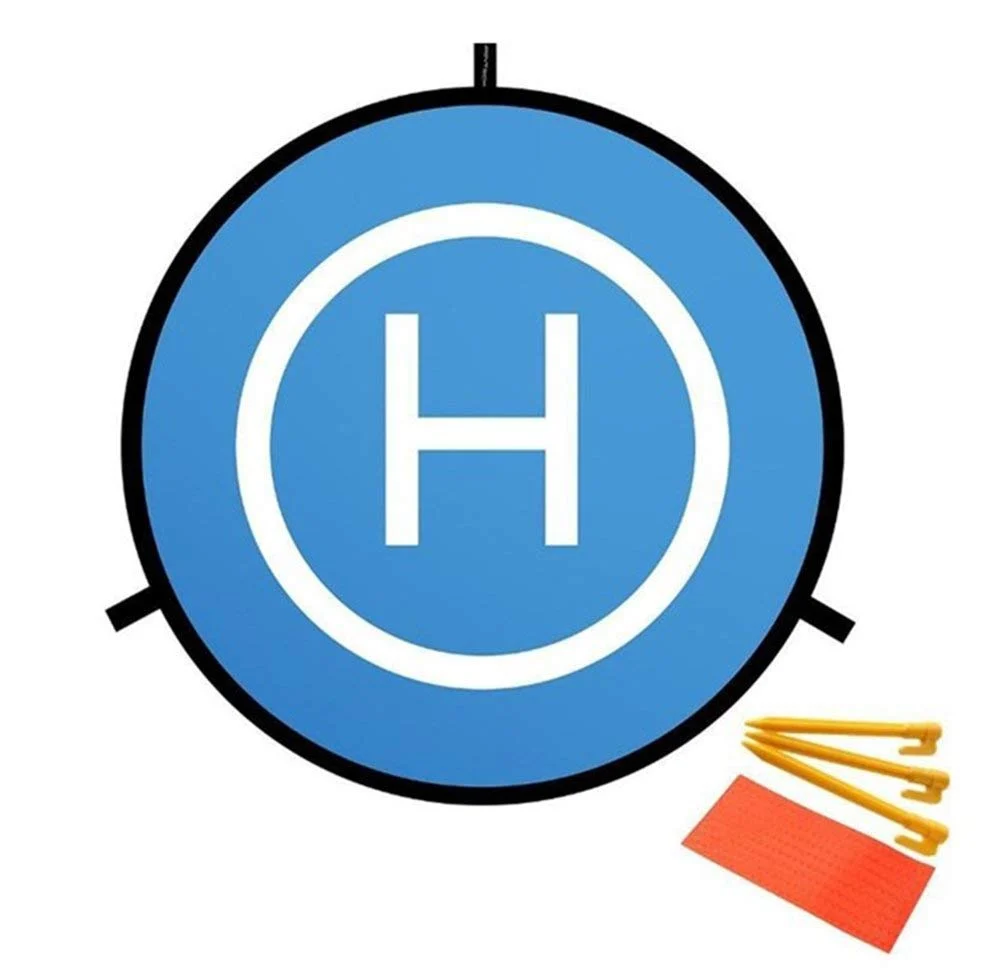
110cm Diameter Fast-Fold Landing Pad for RC Drone
A portable landing pad is especially useful when testing new frame geometries in the field. It gives you a clean, level surface for takeoff and landing when evaluating your Vtail or X frame behaviour — and protects your camera during those first tentative hover tests.
FAQ
Q: Is Vtail harder to build than X frame?
A: Yes, somewhat. The angled motor mounts require more precise assembly to ensure the cant angles are consistent across both rear arms. Motor direction and rotation must be verified carefully since Betaflight’s standard motor test assumes X geometry. Custom mixer configuration also requires CLI knowledge that X frame builders don’t need.
Q: Are Vtail drones more efficient than X frames overall?
A: In hover, no — X frame is more efficient. In fast forward flight, Vtail can be marginally more efficient due to reduced propwash interference. The net effect on flight time is usually negligible (within 5%) for most flying styles.
Q: Can I use standard Betaflight PIDs on a Vtail?
A: Not without modification. The custom mixer changes how PID outputs map to motor commands. The default PID values designed for X frame will behave differently on a Vtail — you should expect to tune from scratch, starting with lower gains and working up carefully.
Q: Do professional FPV racers use Vtail frames?
A: Rarely at the top competitive level. While Vtail has aerodynamic advantages in some speed conditions, the tuning complexity and less familiar handling compared to standard X makes it unpopular in organised competition. Stretch X dominates competitive racing. Vtail is more of a hobbyist experiment and specialty freestyle configuration.
Q: Does frame size affect which geometry to choose?
A: Frame size affects the magnitude of the differences but not the fundamental trade-offs. The propwash benefit of Vtail/Stretch X is more noticeable on larger, heavier builds (5-inch and above) flying at high speeds. On a tiny 3-inch indoor toothpick, geometry differences are nearly irrelevant — build whichever you want.
Conclusion
The Vtail vs X frame debate doesn’t have a universal winner. The X frame wins on simplicity, documentation, and symmetric handling — making it the right choice for the vast majority of FPV pilots, especially those learning. The Vtail wins on yaw authority and, in certain high-speed conditions, reduced propwash — making it an interesting choice for experienced builders who want to experiment with something different and are willing to invest in proper custom mixer configuration and from-scratch tuning.
For Indian FPV builders in 2026: start on X frame. Master it. Then, when you’ve got 50+ packs of experience and you’re curious about what else is possible, experiment with Vtail or Stretch X. The fundamentals — quality motors, stiff carbon props, good ESC with bidirectional DSHOT, and patient Betaflight tuning — apply equally to both.
Whatever frame you choose, the journey of building, tuning, and flying your own FPV quad is deeply rewarding. India’s FPV community is growing fast — get into it.
Build Your Custom FPV Frame at Zbotic
Motors, ESCs, propellers, power distribution boards, and landing pads for X frame, Vtail, and every FPV geometry — all shipped across India.







Add comment