
Table of Contents
- Why Outdoor Filaments Are Different
- Key Challenges: UV, Heat and Moisture
- Best Filaments for Outdoor Use
- ASA — The Gold Standard
- PETG — Balanced Performance
- ABS — Budget Option with Caveats
- Nylon and PA — For Mechanical Parts
- Why PLA Fails Outdoors
- India-Specific Considerations
- Tips for Printing Outdoor Parts
- Post-Processing for Extra Durability
- Frequently Asked Questions
- Conclusion
Why Outdoor Filaments Are Different
If you have ever printed an enclosure hook, a plant pot label or a drone mount with regular PLA and left it outside, you know the heartbreak. Within weeks — sometimes days in harsh Indian summers — the part warps, fades, or simply crumbles apart. The culprit is almost never poor printing technique. It is the material itself.
Outdoor environments throw three relentless stressors at your printed parts: ultraviolet radiation that breaks down polymer chains, elevated temperatures that soften thermoplastics, and moisture or rain that can swell or hydrolyse certain materials. Choosing the right filament from the beginning saves you reprints, wasted filament and frustration.
In India, these stresses are more extreme than in temperate countries. Our summers routinely push ambient temperatures past 40°C, with direct sunlight heating dark-coloured plastic surfaces to 60–80°C. The monsoon brings sustained humidity and occasional flooding. Understanding which filaments survive these conditions is essential for anyone printing parts intended for rooftop solar mounts, agricultural sensors, outdoor signage, drone frames or garden accessories.
Key Challenges: UV, Heat and Moisture
Ultraviolet Radiation
UV light carries enough energy to break the chemical bonds in most thermoplastics. This process — called photodegradation — causes yellowing, brittleness and surface chalking. The rate of degradation depends on the polymer’s molecular structure. Materials without aromatic rings in their backbone (like ASA) are far more UV-stable than those with them (like ABS). Adding UV stabiliser additives to the melt during manufacturing further extends outdoor life.
Heat Distortion
Every thermoplastic has a heat deflection temperature (HDT) — the point at which it begins to soften under a standard load. PLA’s HDT is only 52–65°C, meaning a black PLA part in direct Mumbai or Delhi summer sun can deform. PETG manages 70–80°C, ABS around 90–100°C and ASA around 95–100°C. For truly demanding applications like under-bonnet automotive or engine bay parts, you need PEEK or PA-CF, but for most outdoor consumer and maker projects, ASA or PETG is sufficient.
Moisture and Rain
Moisture affects 3D printed parts in two ways: it can cause surface swelling in hygroscopic materials like Nylon, and it can seep into inter-layer gaps and cause delamination under freeze-thaw cycles. India’s monsoon regions see sustained high humidity for months, making moisture resistance a real concern. PETG and ASA both absorb very little moisture in their printed state. However, they must still be kept dry during storage to print well.
Best Filaments for Outdoor Use
Here is a quick comparison before we dive deep:
| Filament | UV Resistance | HDT | Moisture | Print Difficulty |
|---|---|---|---|---|
| PLA | Poor | 52–65°C | Low | Very Easy |
| PETG | Good | 70–80°C | Low | Easy–Medium |
| ABS | Fair | 90–100°C | Low | Medium–Hard |
| ASA | Excellent | 95–100°C | Very Low | Medium–Hard |
| Nylon (PA12) | Good | 120–150°C | High (hygroscopic) | Hard |
ASA — The Gold Standard for Outdoor 3D Printing
Acrylonitrile Styrene Acrylate (ASA) was engineered specifically for outdoor applications. It shares ABS’s high-temperature performance but replaces the butadiene rubber phase (which is UV-sensitive) with acrylate rubber, which is far more resistant to photodegradation. The result is a filament that can survive years of direct sunlight with minimal colour fading and no significant brittleness.
ASA is the material of choice for automotive exterior parts, outdoor electrical enclosures and garden equipment. For Indian makers, it is ideal for:
- Rooftop weather station enclosures
- Solar panel monitoring brackets
- Outdoor camera or IoT sensor housings
- Agricultural drone arms and body panels
- Signage letters and logos
Printing ASA
ASA prints similarly to ABS. Nozzle temperature: 240–260°C. Bed temperature: 90–110°C. Enclosure: strongly recommended to prevent warping and layer cracking. Use a PEI-coated or glass bed with glue stick for adhesion. ASA fumes are similar to ABS — print in a ventilated area or with a carbon-filter enclosure.
Bambu Lab’s ABS filament (their formulation is functionally close to an ASA-ABS blend for everyday use) is a strong starting point if you cannot source dedicated ASA locally. For outdoor parts that are primarily decorative (signage, garden planters), even standard Bambu ABS with UV-protective clear coat post-processing will last well through an Indian summer.
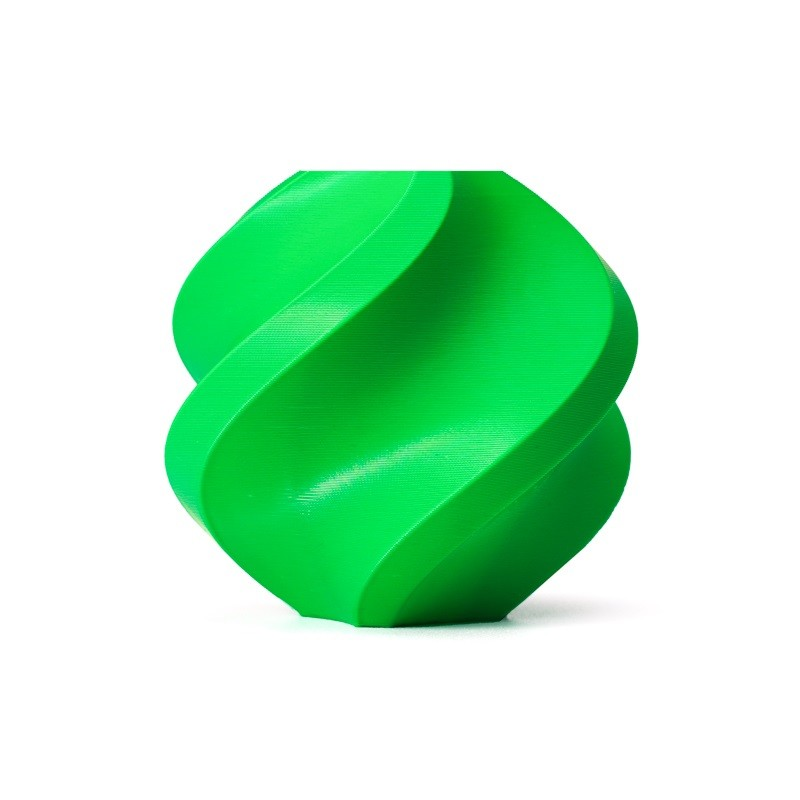
Bambu Lab ABS Filament – Bambu Green, 1.75mm with Reusable Spool
High-quality Bambu Lab ABS filament with excellent heat resistance and good outdoor durability. Comes on a reusable eco-friendly spool, perfect for AMS multi-material systems.
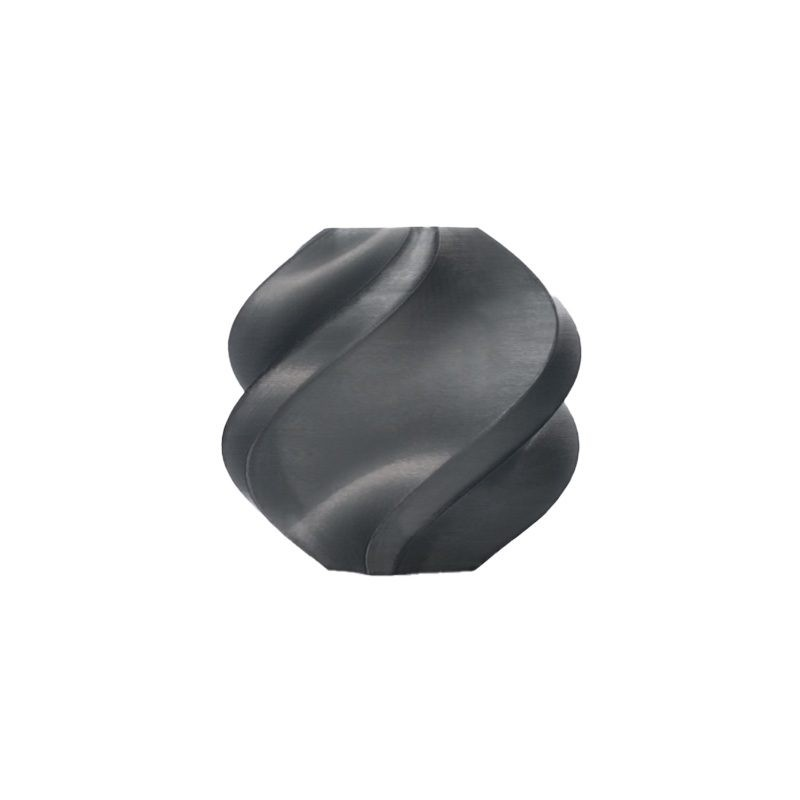
Bambu Lab ABS Filament – Black, 1.75mm
Bambu Lab’s ABS black filament — heat-resistant, stiff and suitable for structural outdoor parts. Black pigment also provides additional UV protection through light absorption.
PETG — The Balanced, Beginner-Friendly Outdoor Filament
Polyethylene Terephthalate Glycol (PETG) is arguably the best all-round choice for makers who are transitioning from PLA to outdoor-capable materials. It is significantly easier to print than ABS or ASA, requires no enclosure in most cases, and delivers substantially better UV and heat performance than PLA.
PETG’s glycol modification makes it less brittle and more impact-resistant than standard PET. It is chemically resistant to many common solvents, which matters if your outdoor part might encounter rain mixed with fertilisers, cleaning fluids or fuel vapours. Its transparency in natural form makes it excellent for light diffusers, plant propagator covers and rain gauges.
Limitations to Know
PETG is not perfect. It is prone to stringing and can be sticky on the first layer, requiring a very clean bed surface (PEI sheets work beautifully). It absorbs moisture from the air faster than ABS or ASA, so drying before printing is essential if the filament has been stored unsealed for more than a day or two. At temperatures above 75°C — which can happen with dark parts in direct summer sun — PETG may begin to soften slightly. For parts that must maintain dimensional accuracy under direct high-summer sun, ASA is the safer choice.
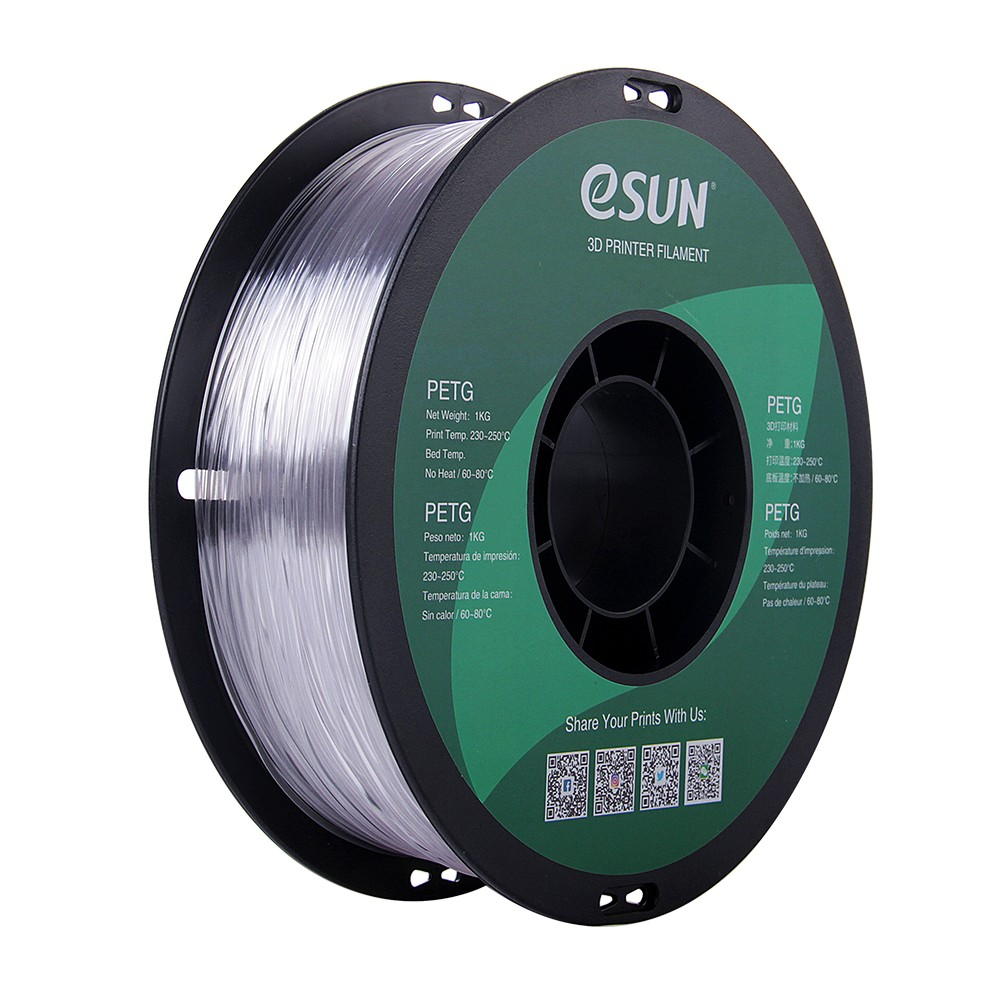
eSUN PETG 1.75mm Filament 1kg – Clear
eSUN’s clear PETG delivers excellent layer adhesion and UV resistance. Ideal for light diffusers, plant covers and transparent enclosures that need to survive the elements.
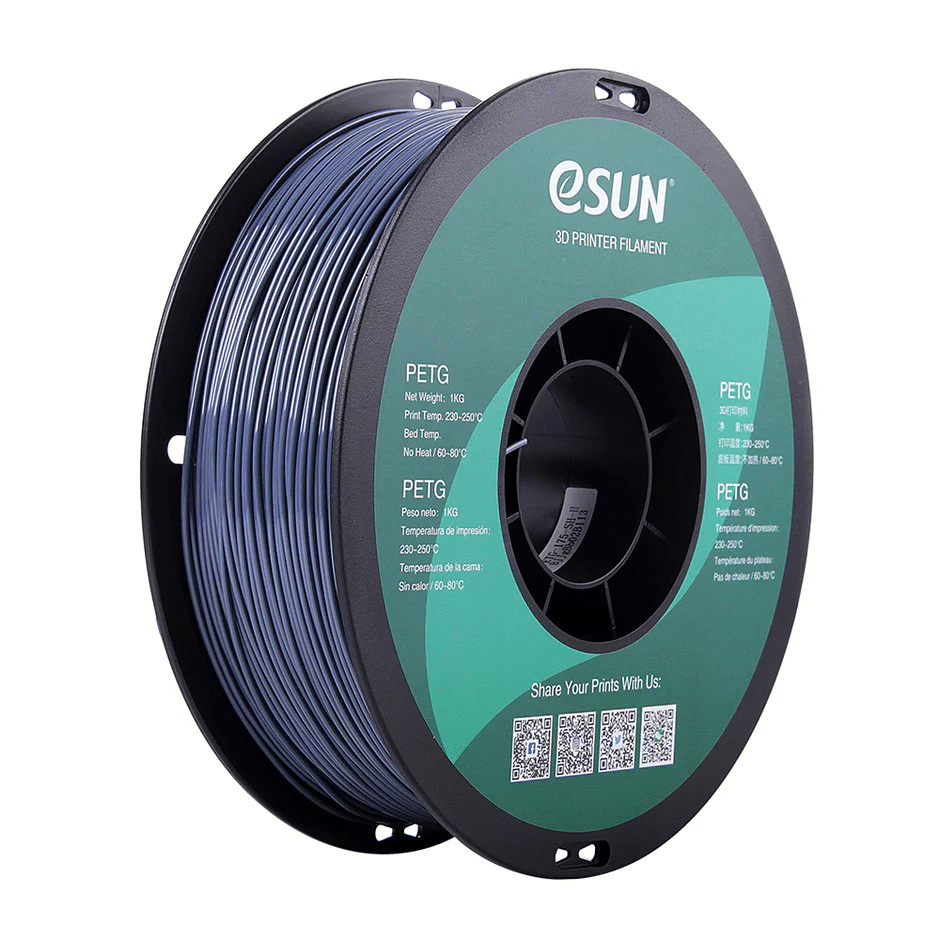
eSUN PETG 1.75mm Filament 1kg – Grey
Grey PETG from eSUN — a neutral, professional colour that absorbs less solar heat than black, making it a smart choice for outdoor parts exposed to direct sunlight.
ABS — Budget Option with Important Caveats
Acrylonitrile Butadiene Styrene (ABS) was the default engineering filament before PETG and ASA became widely available. It offers good heat resistance (HDT around 90–100°C) and impact strength. For short-term outdoor use or for parts that are painted or coated, ABS can serve well. However, its butadiene rubber phase is UV-sensitive, and unprotected ABS left in direct sunlight will become brittle and chalky within 6–18 months depending on your location.
The practical conclusion: use ABS for outdoor parts only if you plan to apply UV-protective paint or clear coat, or if the part is not exposed to direct continuous sunlight. ABS is also harder to print than PETG — it requires an enclosure to prevent warping and produces stronger fumes, which need proper ventilation.
Nylon and PA — For Demanding Mechanical Outdoor Parts
When your outdoor application involves mechanical stress, wear and elevated temperatures simultaneously — think drone landing gear, farm equipment brackets, or outdoor pulleys — Nylon (PA) becomes relevant. PA12 in particular has excellent UV resistance, flexibility and impact strength. Its heat deflection temperature goes well above 100°C in some formulations.
The catch is hygroscopicity. Nylon absorbs moisture aggressively, both during printing and in service. You must dry Nylon filament to below 0.2% moisture content before printing (typically 12 hours at 70–80°C). Printed Nylon parts swell measurably in high-humidity environments, which can affect tight-tolerance fits. For this reason, Nylon is usually reserved for applications where its mechanical superiority genuinely justifies the added complexity.
Why PLA Fails Outdoors (And When It Might Be Acceptable)
PLA (Polylactic Acid) is biodegradable by design. That is a feature in some contexts, but an absolute failure mode outdoors. With an HDT of only 52–65°C, a black PLA part in direct summer sun can deform within minutes. UV degradation causes chalking and microcracking within weeks. Moisture accelerates hydrolysis of the polymer chains.
There is one exception: indoor-outdoor parts that are shaded, stay below 45°C and face minimal UV. A PLA bracket inside a ventilated shed, under an awning, or inside a translucent polycarbonate enclosure can last indefinitely. But for genuine outdoor exposure in India’s climate, PLA is simply the wrong tool.
India-Specific Considerations for Outdoor Printing
Colour Choice Matters More Here
Dark colours — especially black — absorb significantly more solar radiation than light colours. A black PETG part in direct Rajasthan summer sun can reach surface temperatures of 70–75°C, approaching PETG’s HDT. The same part in white or light grey might stay below 55°C. When printing outdoor parts in India, prefer lighter colours for parts under direct sun, or choose materials with higher HDTs (ASA, ABS) for dark-coloured outdoor parts.
Monsoon and Coastal Humidity
In coastal cities like Mumbai, Chennai and Kochi, salt-laden humid air accelerates degradation of any polymer. PETG and ASA both perform well here — their low water absorption means they will not swell or delaminate like Nylon. For metal-inset parts (threaded brass inserts, for example), ensure the insert material is stainless or coated, as steel inserts will rust in coastal environments and crack the surrounding plastic.
Dust and Abrasion
Indian outdoor environments, particularly in industrial areas and construction zones, carry fine abrasive dust. PETG’s slightly softer surface will show surface scratches over time. If abrasion resistance matters (e.g., a sliding gate latch, a wheel axle cap), ASA or Nylon will outperform PETG over the long term.
Tips for Printing Outdoor Parts Successfully
1. Maximise Wall Count and Infill
For outdoor structural parts, use at least 4–5 perimeters (walls) and 40–60% infill. The additional plastic thickness significantly reduces UV penetration to the infill structure and improves overall stiffness. For waterproofing, more walls mean fewer inter-layer gaps.
2. Optimise Print Orientation
Layer lines are the weakest plane in any FDM print. Orient parts so that the primary stress direction is within a layer rather than across layer boundaries. For mounting brackets, this usually means printing with the base flat on the bed so the main tensile load runs across layer lines rather than between them.
3. Keep Filament Dry
Moisture in filament causes steam bubbles, poor layer adhesion and surface pitting that accelerates degradation outdoors. PETG especially should be dried for 6–8 hours at 65°C before a critical outdoor print. A low-cost filament dryer or even a food dehydrator set to the correct temperature works perfectly.
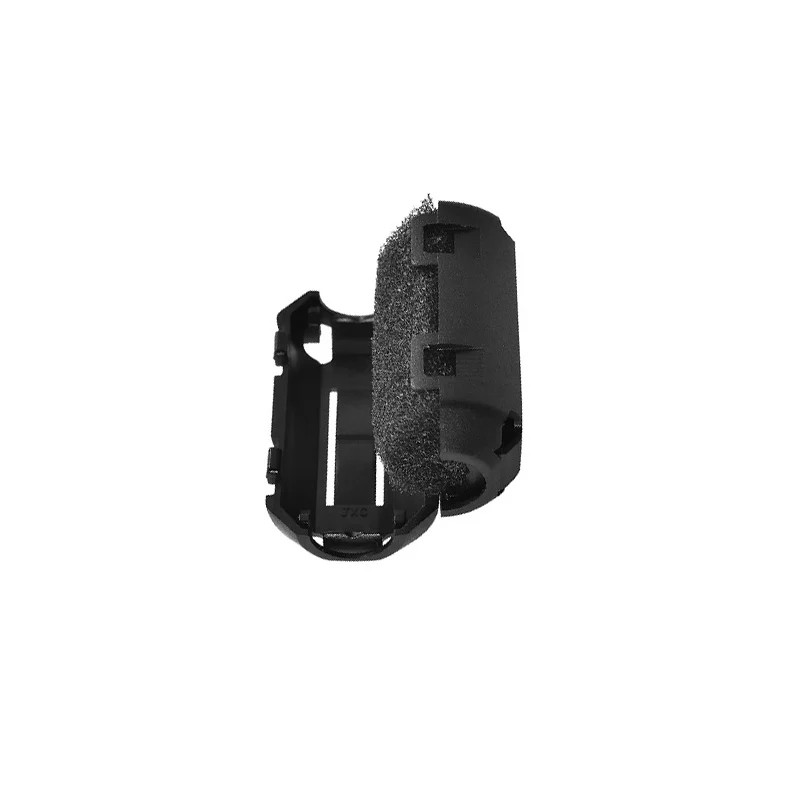
ABS PLA PETG Filament Filter Cleaner – Dust Removal Block for 3D Printers
Keep your filament clean and debris-free with this foam-based filament filter. Removes dust and particles before they enter the hotend, improving print quality and extending nozzle life.
4. Use Solvent Smoothing for PETG (Carefully)
Light sanding followed by spray painting with UV-resistant outdoor paint is the most accessible post-processing method for PETG. Chloroform or dichloromethane can chemically smooth PETG but are hazardous chemicals requiring proper PPE. For most Indian makers, a sanded and painted surface is sufficient and far safer.
Post-Processing for Extra Durability
UV-Protective Clear Coat
Even ASA benefits from a UV-protective clear coat if you want maximum longevity — think 5+ years rather than 2–3 years. Automotive-grade UV-clear coats (available at any car accessories store for ₹150–₹400 per can) can be applied directly to sanded PETG or ASA surfaces. Two light coats are typically sufficient. This single step can double the outdoor lifespan of a PETG part.
Epoxy Coating
Two-part epoxy (like Araldite AW106/HV953U or equivalent) applied as a thin coat on the outer surface fills inter-layer gaps, providing a moisture-impermeable shell and excellent UV resistance. This is particularly useful for rain gauges, waterproof enclosures and anything that must be truly watertight. The epoxy also substantially increases impact resistance.
Painting
Any exterior-grade acrylic or enamel paint provides UV protection. White or light-coloured paint simultaneously improves heat resistance by reflecting solar radiation. Proper surface preparation — sanding with 400–800 grit paper and a wipe with isopropyl alcohol — is essential for paint adhesion on PETG and ASA.
Frequently Asked Questions
Q: Is PETG really good enough for outdoor use in India?
A: For most applications, yes. PETG’s UV resistance is considerably better than PLA, and its HDT of 70–80°C is sufficient for shaded or light-coloured outdoor parts in most Indian climates. If your part will be black and in direct summer sun in North India, consider ASA instead.
Q: Can I use PLA for outdoor parts if I apply UV-protective spray?
A: The UV spray helps, but PLA’s bigger problem outdoors is its low heat distortion temperature (52–65°C), which no coating can fix. A coated PLA part will still warp in direct summer sunlight. Use PETG or ASA for any part that must retain its shape outdoors.
Q: What is the best filament for a weather station enclosure on a rooftop in Chennai?
A: ASA is ideal — excellent UV resistance, good HDT (95–100°C) and very low moisture absorption. If you cannot source ASA, use PETG in a light colour and apply UV-protective clear coat. Avoid PLA or standard ABS without coating.
Q: Does the nozzle material matter for outdoor filament printing?
A: Yes, slightly. Brass nozzles handle all standard outdoor filaments (PETG, ABS, ASA) perfectly. You only need hardened steel nozzles if you are printing abrasive materials like carbon-fibre composites (PETG-CF, ASA-CF). For standard outdoor filaments, your stock nozzle is fine.
Q: How do I clean my nozzle when switching from PLA to PETG for outdoor prints?
A: Perform a cold pull (atomic pull) at 80–90°C to remove residual PLA. Then run a few centimetres of PETG through at print temperature before starting your actual print. Using a filament cleaning block or filter also helps prevent debris from entering the hotend during filament changes.
Q: Are carbon-fibre composite filaments (PETG-CF, ABS-CF) better for outdoor use?
A: CF composites are stiffer and lighter, but their UV resistance is similar to the base material. Carbon fibres are inherently UV-stable, so PETG-CF may be slightly better than plain PETG for UV, but the main benefit is stiffness and reduced weight, not UV protection per se.
Conclusion
Choosing the right filament for outdoor 3D printing is not complicated once you understand the core trade-offs. For the vast majority of Indian outdoor applications, the decision comes down to two materials: PETG for ease of printing, balanced performance and lower cost, and ASA for maximum UV resistance and heat tolerance.
PLA belongs indoors. ABS can work outdoors with post-processing but ASA is simply the better version of it for outdoor use. Nylon is reserved for demanding mechanical applications where its strength justifies the difficulty of printing and its hygroscopic nature in humid climates.
Combine the right filament with smart print orientation, adequate walls, dry filament and a UV-protective clear coat, and your outdoor 3D printed parts will survive Indian summers, monsoons and the relentless coastal humidity for years rather than weeks.
Browse our full range of filaments at Zbotic’s 3D Printing store and get your next outdoor project started with the right material from day one.







Add comment