
Hardened Steel vs Brass Nozzle: When to Upgrade Your 3D Printer Nozzle
The nozzle is the last point of contact between your filament and the finished print — a tiny 0.4mm hole that makes all the difference. Most FDM printers ship with a brass nozzle. For 80% of everyday printing, that’s perfectly fine. But for certain filaments and applications, a brass nozzle will wear out within hours, clogging your hotend and ruining your results.
In this guide, we’ll cover everything you need to know about nozzle materials — brass, hardened steel, stainless steel, ruby-tipped — what makes each one suitable for different filaments, when to upgrade, and what Indian 3D printer users should look for when buying replacement nozzles.
Why Nozzle Material Matters
The nozzle does two things: it meters the flow of filament (diameter and shape of the opening determines line width and shape) and it transfers heat from the heater block to the filament. Both of these functions degrade if the nozzle wears out or corrodes.
Nozzle wear causes:
- Enlarged opening → thicker extrusion lines than expected → dimensional inaccuracy
- Irregular opening shape → inconsistent extrusion → surface defects
- Surface roughness inside nozzle → increased friction → clogging and under-extrusion
Some filaments are much more abrasive than others. Printing 1kg of carbon fibre-filled PLA through a brass nozzle can wear it out in a single spool. That same brass nozzle can print hundreds of kilograms of plain PLA.
Brass Nozzles: The Standard Choice
Brass (typically CuZn39Pb3 — a copper-zinc-lead alloy) is the default nozzle material because it has excellent properties for standard printing:
- Excellent thermal conductivity — brass transfers heat from the heater block to the filament very efficiently. This means better melt consistency and the ability to print at higher speeds.
- Good machinability — brass is easy to machine precisely, which is why nozzle dimensions are most accurate in brass.
- Low cost — ₹50–₹150 per nozzle in India.
- Non-food-safe — brass contains lead, which can leach. Avoid for food-contact applications.
Best for: PLA, PETG, ABS, ASA, TPU, Nylon (non-filled), standard resins (FDM). Essentially any non-abrasive filament.
Lifespan: Hundreds of kilograms of non-abrasive filament. With abrasive filaments, can wear out in under 1kg.
Hardened Steel Nozzles: The Workhorse
Hardened steel nozzles are made from tool steel (often stainless or alloyed steel hardened to HRC 60+). They are significantly harder than brass — this hardness is what resists abrasion from filled filaments.
Pros:
- Highly resistant to abrasive filaments — will outlast brass by 10–50x with carbon fibre, glass fibre, or metal-filled materials
- Food-safe grades available (no lead)
- Good long-term dimensional stability
- Moderate cost — ₹200–₹600 per nozzle
Cons:
- Lower thermal conductivity than brass — steel is a worse heat conductor. This can cause issues at very high print speeds unless you compensate with slightly higher temperature (+5–10°C vs brass). Also means less headroom before the nozzle is heat-limited.
- Slightly more prone to corrosion if not handled carefully (not an issue in normal printing)
Best for: Carbon fibre-filled PLA/PETG/Nylon, glass fibre-filled filaments, metal-filled filaments (brass fill, copper fill, steel fill), glow-in-the-dark (contains aluminium oxide), wood-fill (contains wood particles which are surprisingly abrasive).
Lifespan: Many kilograms of abrasive filament. Essentially the last nozzle you’ll need for most applications.
Stainless Steel Nozzles
Stainless steel nozzles are positioned between brass and hardened steel — harder than brass, softer than hardened steel. They are specifically used when food safety is a concern, since food-grade stainless (316L) contains no lead.
Pros: Food-safe, corrosion-resistant, better than brass for mildly abrasive filaments, reasonable thermal conductivity.
Cons: Less abrasion-resistant than hardened steel, still not suitable for highly abrasive filaments like CF or GF fills.
Best for: Food-contact parts, cookie cutters, kitchenware prototypes. Or as a mild upgrade if you print occasionally with slightly abrasive materials but don’t want to go full hardened steel.
Ruby-Tipped Nozzles
Ruby-tipped nozzles use brass or stainless body with a synthetic ruby insert at the tip. Ruby (aluminium oxide) is extremely hard (Mohs 9) and essentially indestructible in normal 3D printing contexts.
Pros: The most abrasion-resistant option available. Outlasts all other nozzle types. Maintains precise orifice diameter indefinitely.
Cons: Expensive (₹2,000–₹5,000+). Overkill for most users. Can chip if dropped or subjected to extreme thermal cycling.
Best for: Professional, high-volume printing with abrasive filaments. Industrial prototyping. Not practical for hobbyists unless you print CF or GF filament every single day.
Side-by-Side Comparison
| Property | Brass | Hardened Steel | Stainless | Ruby-Tipped |
|---|---|---|---|---|
| Abrasion Resistance | Low | High | Medium | Excellent |
| Thermal Conductivity | Excellent | Good | Good | Good |
| Price (India) | ₹50–150 | ₹200–600 | ₹150–400 | ₹2000+ |
| Food Safe | No (lead) | Some grades | Yes | Yes |
| Best For | PLA, PETG, ABS | CF, GF, Metal-fill | Food-safe parts | High-vol abrasive |
Abrasive Filaments: The Main Reason to Upgrade
The primary reason to move beyond brass is abrasive filaments. Here’s a ranked list of common filament types from least to most abrasive:
- PLA / ABS / PETG (plain) — Not abrasive. Brass nozzles last essentially forever.
- Silk PLA — Very slightly abrasive due to some formulations. Brass nozzles are fine.
- Wood-fill / Stone-fill — Mildly abrasive. Brass will wear noticeably faster. Hardened steel recommended for regular use.
- Glow-in-the-dark PLA — Contains aluminium oxide (strontium aluminate phosphor). Moderately abrasive. Hardened steel strongly recommended.
- Glass Fibre (GF) filled — Very abrasive. Brass will wear out in 1–2 kg. Hardened steel required.
- Carbon Fibre (CF) filled — Extremely abrasive. Brass nozzle can wear out in under 500g. Hardened steel is non-negotiable.
- Metal-filled (bronze, copper, iron) — Extremely abrasive. Hardened steel or ruby required.
- Abrasive composite (CF + GF combined) — The most aggressive. Ruby-tipped nozzle recommended for regular use.
When Should You Upgrade?
Here’s the practical decision framework for Indian 3D printer users:
Stick with Brass If:
- You primarily print PLA, PETG, or ABS in standard colours
- You occasionally print wood-fill or silk PLA
- You’re budget-constrained — buy a pack of spare brass nozzles and replace as needed
Upgrade to Hardened Steel If:
- You want to try carbon fibre-filled filament (CF-PLA, CF-Nylon, CF-PETG)
- You regularly print glow-in-the-dark filament
- You’re printing engineering materials like glass-filled Nylon
- You do high-volume printing and want to reduce nozzle replacements
Signs Your Nozzle Has Worn Out:
- Parts are coming out slightly oversize (the opening has worn larger)
- Under-extrusion that wasn’t there before
- The nozzle tip looks visibly scratched or rounded under magnification
- Increased stringing despite unchanged settings
Nozzle Installation Tips
Changing a nozzle incorrectly is a common cause of leaks and clogs. Follow this procedure:
- Heat the hotend to printing temperature — don’t try to remove a cold nozzle. The thermal expansion makes removal much easier and avoids snapping the heater block threads.
- Hold the heater block steady with pliers or a spanner — don’t let it rotate. Rotating the heater block can break the thermistor wires.
- Unscrew the old nozzle with a correct-size spanner (usually 6.5mm or 7mm depending on nozzle brand).
- Install the new nozzle hand-tight first, then cool the hotend to around 100°C and torque to approximately 1–1.5 Nm (snug but not overtightened). The slight tightening at lower temperature ensures a leak-free seal.
- Test for leaks by heating to printing temperature and visually inspecting around the nozzle. Any ooze from the threads indicates insufficient torque or cross-threading.
For Bambu Lab printers, the nozzle assembly is replaced as a complete hotend unit — this is by design for fast, fool-proof changes.
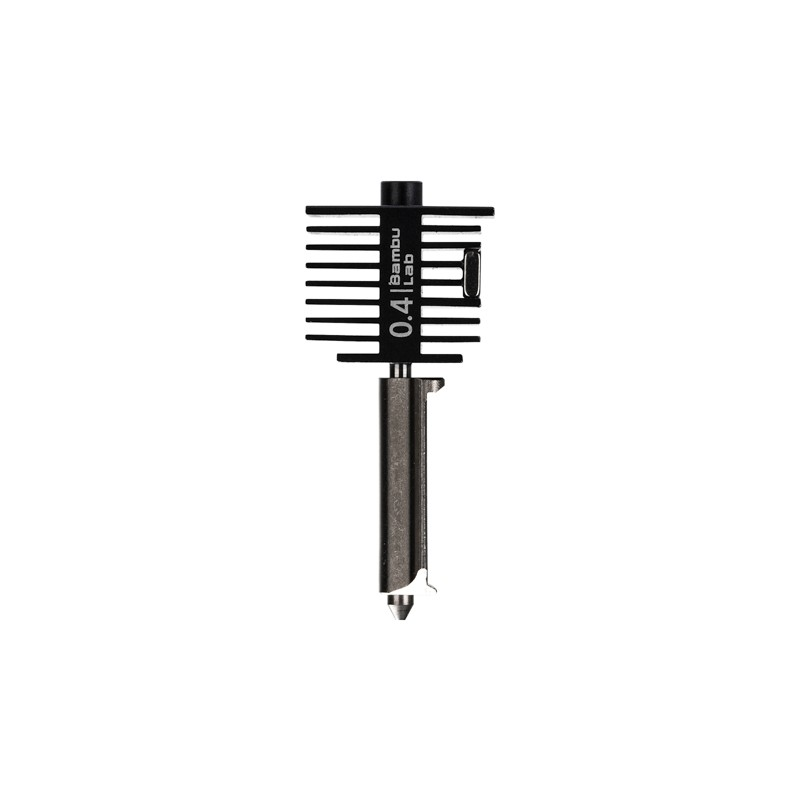
Bambu Lab Hotend with Hardened Steel Nozzle – 0.4mm
Official Bambu Lab complete hotend assembly with hardened steel nozzle. Ready for carbon fibre and abrasive filaments on A1, A1 Mini, and P1 series printers.
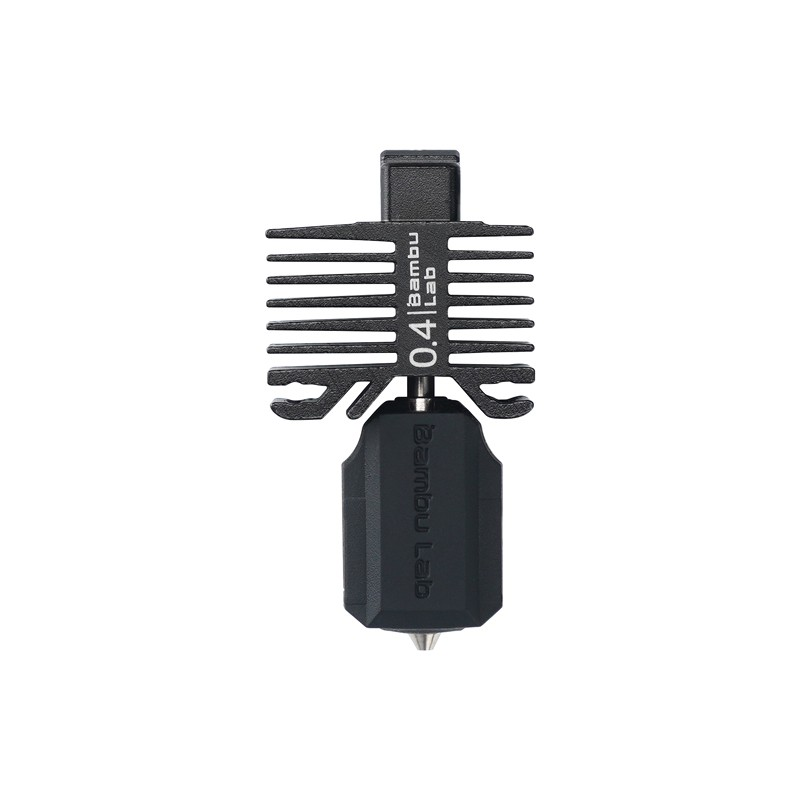
Bambu Lab Hotend with Hardened Steel Nozzle – 0.4mm for P1P, P1S, X1C
Complete hotend with hardened steel nozzle specifically for Bambu P1P, P1S, and X1C. Swaps in minutes. No calibration needed.
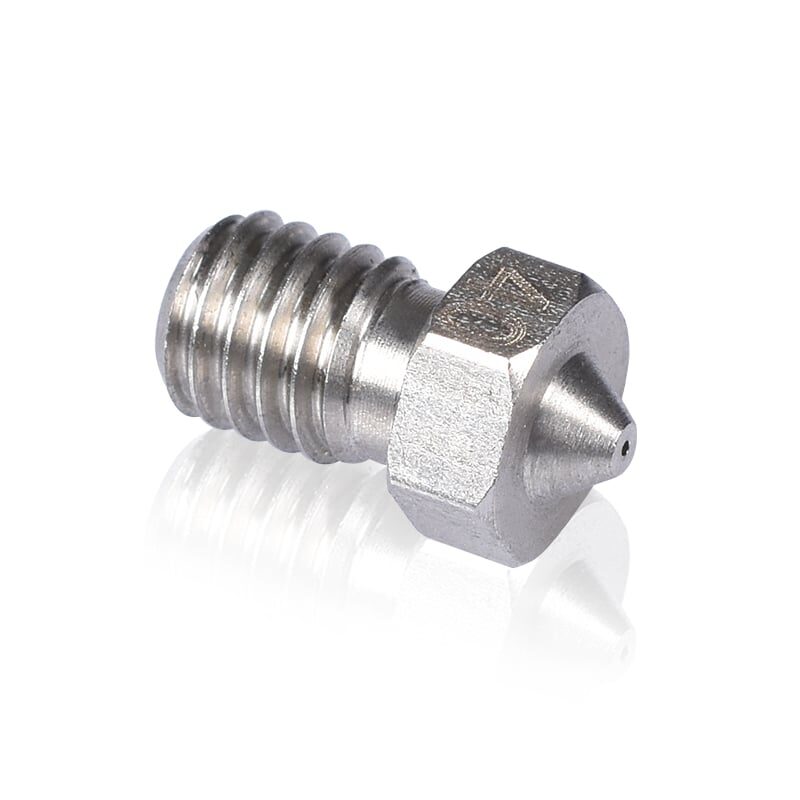
3D Printers Stainless Steel Nozzle 0.4mm
Stainless steel nozzle for Ender 3, CR-10, and other Creality-compatible printers. Good upgrade from brass for mild abrasive filaments and food-safe applications.
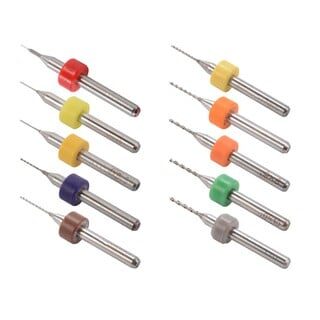
0.1–1.0mm Mixed 3D Printer Nozzle Cleaning Drill Bit Kit – 10Pcs
Keep your nozzle clear of clogs with this mixed drill bit kit. Especially handy when transitioning between abrasive and standard filaments.
Frequently Asked Questions
Do I need a hardened steel nozzle for CF-PLA?
Yes, absolutely. Carbon fibre-filled PLA is one of the most abrasive filaments available. A brass nozzle will wear out within 1–2 spools — sometimes faster. The hardened steel nozzle will pay for itself in less than one spool compared to the brass nozzle replacement costs.
Does a hardened steel nozzle affect print quality vs brass?
Slightly. Hardened steel has lower thermal conductivity than brass, which can cause inconsistency at very high print speeds (above 150–200mm/s) if you don’t compensate. Increase printing temperature by 5–10°C when switching from brass to steel. For normal speeds (50–120mm/s), the difference is negligible in print quality.
Can I use a Bambu Lab hardened steel nozzle on other printers?
No — Bambu Lab uses a proprietary complete hotend assembly rather than standalone nozzles. These are specific to Bambu printers (A1, A1 Mini, P1P, P1S, X1C). For Ender 3, CR-10, and other MK8-compatible printers, buy standard MK8-format nozzles in brass, stainless, or hardened steel.
How do I know when my nozzle is worn out?
Signs include: under-extrusion that wasn’t present before, parts coming out slightly oversized, inconsistent extrusion lines visible in the print, and increased stringing. The definitive test is to measure the nozzle orifice diameter with calipers or a drill bit set — a worn 0.4mm brass nozzle may be 0.5–0.6mm after heavy abrasive use.
Is a 0.4mm hardened steel nozzle slower than 0.4mm brass?
Not meaningfully at typical print speeds. At very high volumetric flow rates (used by fast printers like Bambu or Voron), the lower thermal conductivity of steel can become a limiting factor. In practice, for most users printing at 50–150mm/s, the difference is negligible.
Whether you’re upgrading to hardened steel for abrasive filaments or stocking up on brass nozzles, Zbotic has you covered. Fast delivery across India.
Conclusion
For most hobby 3D printing with PLA, PETG, and ABS, the stock brass nozzle is perfectly adequate. Keep a few spares and replace when worn — they’re cheap and readily available.
The moment you want to explore carbon fibre-filled filament, glass-filled engineering grades, or glow-in-the-dark materials, switch to a hardened steel nozzle before you start. Don’t risk ruining a spool or two learning the hard way that brass doesn’t hold up against abrasives.
Bambu Lab users have it easy — swap the entire hotend assembly in minutes. For everyone else, the process takes 10 minutes and is something every FDM printer owner should know how to do confidently.
The right nozzle for the right filament — that’s the simple rule that will save you from wasted spools and frustrating print failures.





Add comment